Skip to content

Workers Rights and Jobs

Fast Track And TPP: Lost Jobs, Lower Wages

When ordinary Americans learn more about “fast track” authority and the Trans-Pacific Partnership, they recognize it as a bad deal for workers’ jobs and wages, small business, food safety and the environment. This trade deal has been negotiated in secret for nearly four years. Now, as the multinational corporations and trade negotiators are closing in on the final round, they’re pushing for “fast track” authority, which would block Congress from amending or improving the deal in any way. The House and Senate would be limited to an up-or-down vote on the entire package. CWA and a diverse group of allies has been shining a bright light on the secrecy surrounding the TPP and 600 corporate advisers who have access to all the texts while members of Congress, unions, and all public interest groups can only speculate about what this massive trade deal would do to working and middle class families.

Connecticut Bill Would Fine Corporations For Low Wages

Connecticut lawmakers are moving forward with a proposal that could effectively raise the minimum wage of many of the state’s low-wage workers to $15 an hour. The bill, SB 1044, would subject for-profit companies with 500 or more employees to a fine for every employee who is paid less than $15 an hour, essentially forcing those companies to raise wages or pay if they refuse. The bill would be the first of its kind in the country. Connecticut has in the past few years enacted other first-of-its-kind laws to support low-wage workers in the state, among them a 2011 law mandating paid sick leave for the hundreds of thousands of service employees in the state.

Holding Companies That Use Sweatshop Labor Accountable

We as labor activists must begin to think about how to build international labor solidarity by fighting for legislation that would create this accountability—specifically giving workers around the world the right to sue in American courts if companies or their subcontractors violated basic labor rights such as workplace violence, avoiding paying a nation’s minimum wage, or pollution discharges that sicken and kill people. Despite recent Supreme Court decisions reducing the power of international agencies to sue in U.S. courts under the Alien Tort Statute of 1789, empowering workers to demand accountability through this law is our best bet to working toward better labor conditions worldwide. This law gives foreigners the right to sue if they have suffered from actions “in violation of the law of nations or a treaty of the United States.”

Strikes Proliferate In China As Working Class Awakens

Timid by nature, Shi Jieying took a risk last month and joined fellow workers in a strike at her handbag factory, one of a surging number of such labor protests across China. Riot police flooded into the factory compound, broke up the strike and hauled away dozens of workers. Terrified by the violence, Shi was hospitalized with heart trouble, but with a feeble voice from her sickbed expressed a newfound boldness. "We deserve fair compensation," said Shi, 41, who makes $4,700 a year at Cuiheng Handbag Factory in Nanlang, in southern China. Only recently, she had learned she had the right to social security funding and a housing allowance — two of the issues at stake in the strike.

The Dim Sum Revolution

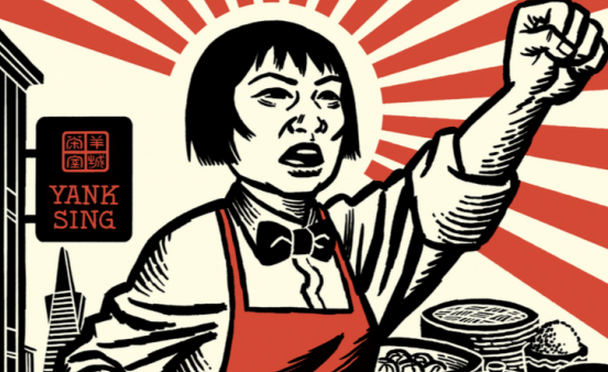
Even after Zhen LI leads a rousing chant—“Workers organize, everybody wins!”—no one else wants to step up to the microphone. Tiny and bespectacled, her hair in a jet-black bob, Li has the look of a Chinatown matron, one of those tenacious hagglers who elbows her way through the crowds on Stockton Street to purchase jade-green gai lan and silvery carp. Wearing jeans, sturdy black shoes, and a puffy striped jacket, she exhorts her fellow proletarians to join her up front and holds out the mic to a nearby woman. The woman tries to beg off, pleading, “I’m sick—my throat hurts,” but cheers draw her to her feet, and she sheepishly echoes Li’s rallying cry. On this rainy evening in early December at the Chinese Cultural Center, Li and dozens of workers—mostly women, mostly middle-aged and older— are celebrating with greasy takeout, cake, a slideshow, and speeches.

Why Workers Won’t Unite

The Ludlow strikers, were they able to time-travel to Lower Manhattan in 2011, would have found much that seemed familiar, starting with the statistics about economic inequality: the richest 1 percent of the nation controls 40 percent of the wealth and earns 20 percent of the national income, proportions similar to those in the early 20th century (and up from about 25 percent and 9 percent, respectively, in the 1970s). The miners would have recognized, too, the anger about widespread unemployment, the spectacle of lavish upper-crust consumption, and the increasing influence of private money in politics. But they might well have wondered: Where are the unions? Even though it got some support from labor groups, Occupy Wall Street was more directly focused on unemployment, student-loan and consumer debt, and the generous terms of the 2008 bailout for the financial sector than on specific issues related to working conditions.

The Good Samaritan, A Catholic Worker On LA’s Skid Row

This new book is autobiographical for Dietrich and is again a collection of essays from Los Angeles Catholic Worker newspaper, Catholic Agitator. These reflect Dietrich's untiring service of feeding and aiding the poor, and his unabated passion for speaking truth to power. As I write this review, I am listening to the news about the killing of another homeless person, a man on Skid Row, a 50-square-block section of downtown Los Angeles. No one knows his real name, but he was known by his street name, "Africa." The Los Angeles Police Department's long-standing crusade against the homeless, especially veterans, is well-documented in The Good Samaritan: Stories from the Los Angeles Catholic Worker on Skid Row, which details some of the court cases won by the homeless, with support of the American Civil Liberties Union. Dietrich describes the city's uneasy and sometimes cruel relationship with the homeless and calls it "punitive policing."

50 Years After Farm Workers Boycott, New Movement Needed

If Chavez were alive today and grappling with the nation’s epidemic of economic inequality, he might well embrace another tactic: building a consumer movement to support good jobs. While activists have yet to seize on this strategy, the opportunity is there for a 21st century visionary to rally the public in the same way that Chavez did half a century ago. A mass movement for good jobs may seem like the polar opposite of a boycott, but it is really just the other side of the same coin. It relies on the same principle as the boycott -- that consumers should not patronize companies that mistreat their employees -- but offers a different call to action.

Salvadoran Maquila Plants Use Gangs To Break Unions

Textile companies that make clothing for transnational brands in El Salvador are accused of forging alliances with gang members to make death threats against workers and break up their unions, according to employees who talked to IPS and to international organisations. Workers at maquila or maquiladora plants – which import materials and equipment duty-free for assembly or manufacturing for re-export – speaking on condition of anonymity said that since 2012 the threats have escalated, as part of the generalised climate of violence in this Central American country.

UNITE HERE’s New Pro-Rahm Emanuel Ads Gush “Rahm Love”

The hospitality workers union UNITE HERE Local 1 has an idea: an ad campaign with workers emphasizing "Rahm Love." The union, which has endorsed Emanuel (and of which, full disclosure, I was briefly a member in 2010), rolled out a new ad campaign today in which local hospitality workers, all women of color, talk about the mayor and their feelings of "Rahm Love." "Rahm Love," one unidentified worker says. "It's how the mayor fights so that hotel workers earn a decent living. We have health insurance, pensions, and sick days off. We have Rahm Love." The video's message is a bizarre one for a union that has made worker militancy a central part of its campaigns in recent years, regularly going on strike and engaging in civil disobedience. The union’s Congress Hotel strike in Chicago, for example, was the nation's longest, lasting a decade before Local 1 called it off in 2013.

Hundreds March In Atlanta Seeking Boost In Minimum Wage

Hundreds of people marched from Ebenezer Baptist Church to a McDonald’s restaurant a mile away Saturday afternoon demanding fast-food restaurants and other businesses lift the minimum wage. Carrying signs that said, “People and Planet over Profit,” the crowd of close to 500 flooded the fast-food restaurant. They chanted, “If we don’t get it, shut it down!” Robertson Anderson, 23, who has worked at McDonald’s for about two and a half years in the maintenance department was so moved, he walked off the job. Outside, he seemed visibly shaken, and he said he wasn’t sure whether he would return to his job.

Viewpoint: A Smart Strategy To Defeat ‘Right To Work’

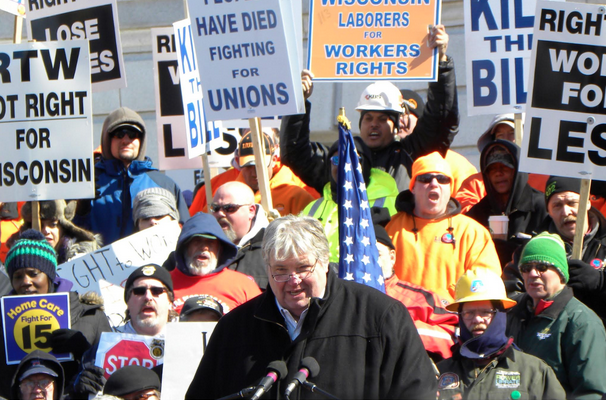
Wisconsin is now the 25th state to adopt a so-called “right-to-work” law, which allows workers to benefit from collective bargaining without having to pay for it. It joins Michigan and Indiana, which both adopted right to work in 2012. Similar initiatives, or variants, are spreading to Illinois, Kentucky, Maine, Missouri, New Hampshire, New Mexico, and West Virginia—and the National Right to Work Committee and the American Legislative Exchange Council probably have a well-developed list of additional targets. Without aggressive action, the right-to-work tsunami will sweep more states. To defeat it, the first step is committing to fight back, rather than resigning ourselves to what some say is inevitable.
assetto corsa mods

Urgent End Of Year Fundraising Campaign

Online donations are back! Keep independent media alive. 

Due to the attacks on our fiscal sponsor, we were unable to raise funds online for nearly two years.  As the bills pile up, your help is needed now to cover the monthly costs of operating Popular Resistance.

Urgent End Of Year Fundraising Campaign

Online donations are back! 

Keep independent media alive. 

Due to the attacks on our fiscal sponsor, we were unable to raise funds online for nearly two years.  As the bills pile up, your help is needed now to cover the monthly costs of operating Popular Resistance.

Sign Up To Our Daily Digest

Independent media outlets are being suppressed and dropped by corporations like Google, Facebook and Twitter. Sign up for our daily email digest before it’s too late so you don’t miss the latest movement news.