Skip to content

Cooperatives

New Maine Co-Op Draws Most Health Care Enrollments

Maine Community Health Options, the co-op that’s competing for customers in the state’s new health insurance marketplace, is so far capturing nearly three of every four people who are signing up for benefits through www.healthcare.gov, the co-op’s top official said Thursday. It’s unknown why the start-up nonprofit is drawing more customers than Anthem Blue Cross Blue Shield, a longtime health insurance provider in the state. The premiums and deductibles for both are largely similar. Kevin Lewis, executive director of Maine Community Health Options, said 73 percent of the 1,727 Mainers who signed up for insurance in the marketplace through Nov. 30 chose co-op plans over Anthem. Nationally, it’s too early to tell how well the co-ops, which were formed with $2 billion in federal loan money, will perform relative to traditional, for-profit insurance companies with plans in the marketplace, said John Morrison, president of the National Alliance of State Health Co-Ops, a trade association. The co-ops were created under the Affordable Care Act to give consumers an alternative to traditional insurance companies. While they were initially planned in most or all states, federal cutbacks limited the co-ops to 23 states. Morrison said that, at least anecdotally, some co-ops are capturing significant market share. In South Carolina, for instance, the co-op plan got 65 percent of the consumers who enrolled in the first month, according to the co-op, Consumers’ Choice Health Plan.

Converting Existing Businesses To Worker Cooperatives

Conversions are potentially so important for several reasons. Most broadly, there is a tremendous potential with such a large number of “baby boomer” business owners retiring in the coming years and decades. What will they do with their businesses? With conversions we have a huge opportunity to save businesses and jobs that might otherwise be lost if the retiring owner closes the doors or sells the business. We see conversions in all sectors, industries and regions—but we see more and more of them in places where the business is a real pillar of the community, either because it employs people in good jobs or because it provides a critical product or service, or both. So we have a whole system of existing small, locally-owned businesses that provide jobs, anchor capital, in some cases anchor downtown businesses in rural areas or whole neighborhoods in cities, and are part of the economic and social fabric of a place—and we should be spending a lot of energy and thought around how to preserve these.

Birthplace Of Co-operative Movement Under US Hedge Fund Attack

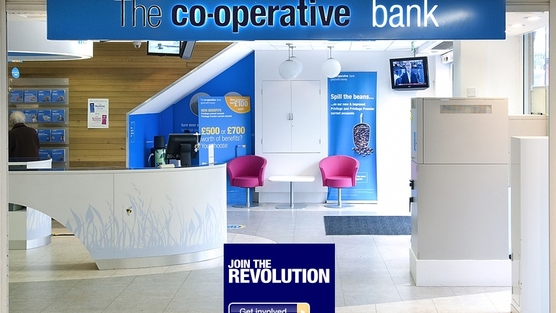
The Co-operative Group traces its history directly to the Rochdale Pioneers – recognised by the International Co-operative Alliance (ICA) as the birthplace of the co-operative movement. The Co‑operative Group is currently under threat from US hedge funds because its banking subsidiary – The Co-operative Bank – has been forced to plug a £1.5 billion ‘shortfall’ in its capital reserves. A few months ago, the Co-operative Group put forward a proposal to hold 70% of shares in a restructured bank, with the other 30% held by bondholders. Investors - led by New York hedge funds Silver Point and Aurelius Capital, taking advice from the investment bank Moelis – have rejected this proposal. Under a new proposal, outside investors will take a 70% stake and reduce the the Co-operative Group’s stake to 30%.

Mondragón And The System Problem

As America moves more deeply into its growing systemic crisis, it is becoming increasingly important for activists and theorists to distinguish clearly between important projects and "institutional elements," on the one hand, and systemic change and systemic design, on the other. The recent economic failure of one of the most important units of the Mondragón cooperatives offers an opportunity to clarify the issue and begin to think more clearly about our own strategy in the United States. Mondragón Corporation is an extraordinary 80,000-person grouping of worker-owned cooperatives based in Spain's Basque region that is teaching the world how to move the ideas of worker-ownership and cooperation into high gear and large scale.

New Economy Week — October 12-18, 2013

It’s becoming clearer every day that something is wrong in America. We see symptoms of a deeper problem through our own experiences with growing inequality, chronic unemployment, financial instability, undemocratic consolidations of power, environmental crisis, and the declining well being of communities, families, and individuals. Many of us have come to the realization that our economy is out of control; undermining many of those things we hold most dear. For some this leads to despair or resignation, for others it inspires activism, and for increasingly more Americans it leads to a desire and a commitment to innovate and build something that works better for the people, planet, and places we love. New Economy Week is a celebration of this innovative spirit, an opportunity to shine a light on the thousands upon thousands of things that everyday people are doing right now to build a new kind of economy.

From Housing to Health Care, 7 Co-ops That Are Changing Our Economy

Ideas for co-ops may flourish, but few people understand exactly how to make theirs real. The Co-op Academy is providing answers. Founded four years ago by Omar Freilla (who recently made Ebony magazine’s list of the Power 100), the academy runs 16-week courses that offer intensive mentoring, legal and financial advice, and help designing logos and websites. Run by the South Bronx-based Green Worker Cooperative, the academy guides up to four teams per session through the startup process and has graduated four organizations now thriving in New York City.

Mondragon And National Coop Bank To Support US Coop Movement

For the first time in their respective operating histories, both Mondragon's Laboral Kutxa and National Cooperative Bank (NCB) will collaborate to support each other's banking customers including subsidiaries of cooperatives operating in the United States belonging to the Mondragon Group. National Cooperative Bank fulfills its singular mandate to strengthen America's cooperatives, their members and other socially responsible organizations through the delivery of social impact banking products and services. NCB's customers are cooperatives such as grocery wholesaler co-ops, food co-ops, purchasing co-ops, credit unions and housing co-ops who share in the spirit of joining and working cooperatively to meet personal, social, and business needs.
assetto corsa mods

Urgent End Of Year Fundraising Campaign

Online donations are back! Keep independent media alive. 

Due to the attacks on our fiscal sponsor, we were unable to raise funds online for nearly two years.  As the bills pile up, your help is needed now to cover the monthly costs of operating Popular Resistance.

Urgent End Of Year Fundraising Campaign

Online donations are back! 

Keep independent media alive. 

Due to the attacks on our fiscal sponsor, we were unable to raise funds online for nearly two years.  As the bills pile up, your help is needed now to cover the monthly costs of operating Popular Resistance.

Sign Up To Our Daily Digest

Independent media outlets are being suppressed and dropped by corporations like Google, Facebook and Twitter. Sign up for our daily email digest before it’s too late so you don’t miss the latest movement news.