
Climate Change Tests The Wildlife Conservation Model In Namibia
“I want my children to see a rhino with their own eyes — not only in Etosha [National Park],” says Sofia /Nuas, a member of the Sesfontein Conservancy Committee, located in Namibia’s arid northwest. She’s sitting in the shade of a large sausage tree, yet even on this winter morning temperatures have quickly soared to more than 30° Celsius (86° Fahrenheit). Life in this hot and dry region is already tough, but climate change will intensify it.
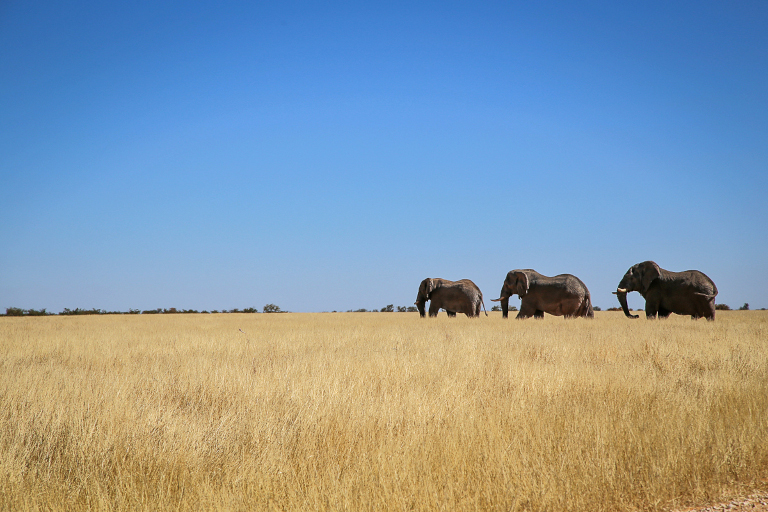
With a population of less than 3,000, Sesfontein is a small settlement located in the Northwestern Escarpment and Inselbergs of the Nama Karoo Biome. Cattle and goats meander across dusty roads, but tourists are also drawn to the desert-like outpost for its enigmatic landscapes and a chance to glimpse some of the world’s last free-roaming, critically endangered black rhinos (Diceros bicornis), as well as Namibia’s famed desert-adapted lions (Panthera leo) and African savanna elephants (Loxodonta africana).


