Skip to content

Alliance of Sahel States (AES)

Agroecology Is A Form Of Resistance And Decolonization

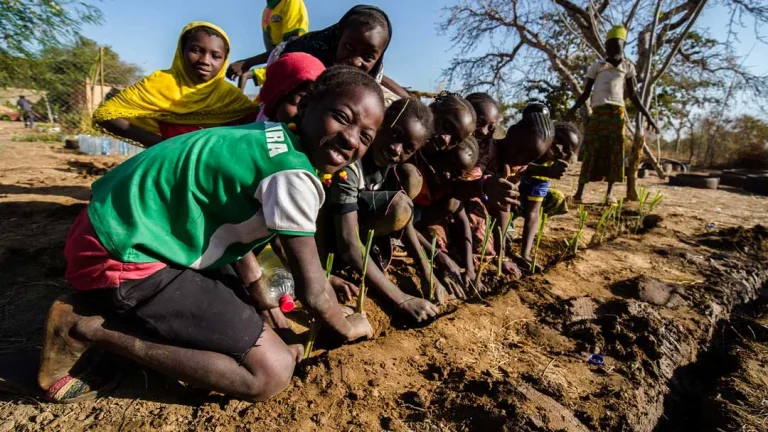
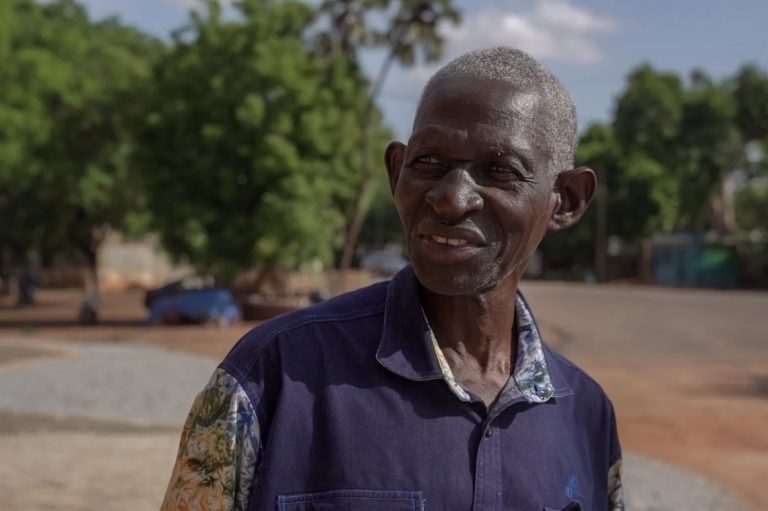
In Burkina Faso, agroecology flourishes as an act of resistance. In a country where more than 80% of the active population makes their living off agriculture, peasant movements and social organizations have defended the production of healthy food and food self-sufficiency as a path to liberation from the wounds left by French neocolonialism. Leading this effort is the Yelemani Association, founded in 2009 by Blandine Sankara, sister of revolutionary leader and former president Thomas Sankara, who governed the country from 1983 to 1987, when he was assassinated.

Burkina Faso Is Moving Towards Self-Sufficiency In Food Production

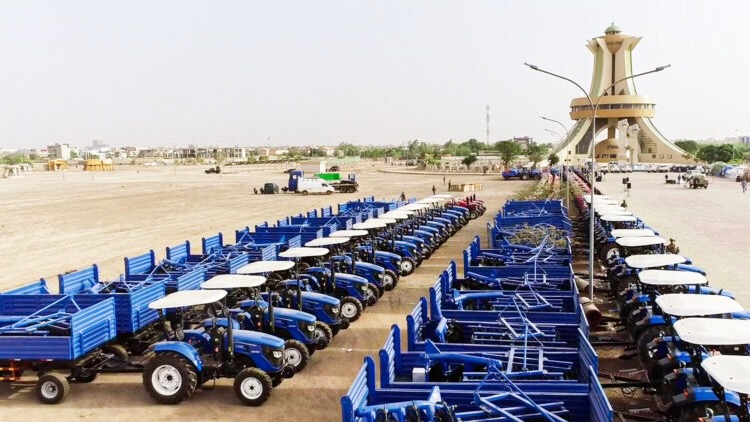
Dependence on foreign aid, political instability, chronic poverty, and the effects of climate change are among the obstacles preventing Burkina Faso from achieving its longed-for food sovereignty. Currently, about 80% of the population of the Sahelian nation is involved in agricultural activity, which accounts for a third of the GDP. Even so, the country still imports more than 200,000 tons of rice per year. In response to this challenge, President Ibrahim Traoré’s government launched the so-called Agricultural Offensive in 2023, which has been revolutionizing the rural environment and serving as a model for the continent.

France Is A State Sponsor Of Terror, AES Countries Declare

“Terrorism is being used” by imperialist forces “to pillage African resources,” said Burkina Faso’s Prime Minister Rimtalba Ouédraogo in his address at the 80th UN General Assembly (UNGA). “A case in point is France,” whose troops Burkina Faso expelled in early 2023. Mali, which had also expelled French troops the year before, had sought a meeting of the UN Security Council in 2022, “so that my country could provide irrefutable proof of France’s support for terrorist activities,” recalled its Prime Minister Abdoulaye Maïga in his address. “So far, this request has not been followed up on,” while France continues its “sabotage”.

AES Countries Exit ICC, Denounce It As Instrument Of Neo-Colonial Repression

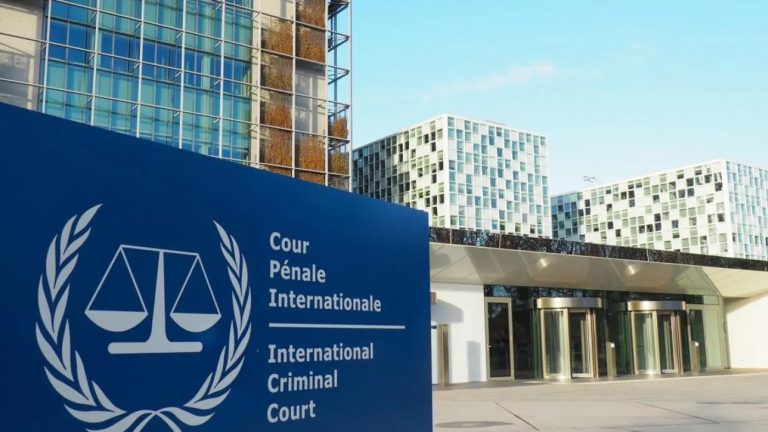
The Alliance of Sahel States (AES) announced its immediate withdrawal from the International Criminal Court (ICC) on Monday, condemning it as a tool of “imperialism”, silent about the worst crimes by the West and its allies while selectively pursuing its opponents. Ratifying the Rome Statute in the early 2000s, its three member countries – Mali, Burkina Faso, and Niger – have been members of the ICC for over three decades. “However, over time, they have come to observe that this jurisdiction has transformed into an instrument of neo-colonial repression in the hands of imperialism, thereby becoming the global example of selective justice,” states the AES communique on September 22.

Understanding The Plot To Break Ghana And Destroy The AES Countries

There’s a storm brewing over Ghana, and it didn’t start yesterday. The tragedy is layered, the signs are familiar, and for those who have lived through history’s brutal cycles of foreign meddling and orchestrated collapse, it’s déjà vu all over again. Since President John D. Mahama came to power, Ghana has been quietly strengthening ties with Sahel countries, especially Burkina Faso and Mali, who have rejected French and American military presence and charted new Pan-African courses. The AES alliance threatens Western hegemony. It signals a post-FRANCOPHONE, post-NATO Africa. Ghana’s collaboration with these countries raised alarm bells in London, Paris, and Washington.

Brother Of Pan-Africanist Leader Thomas Sankara Grateful For Traore

We’re standing in front of the Thomas Sankara Memorial, in Ouagadougou, Burkina Faso’s capital. Inaugurated on May 17 in the presence of various African heads of state and public figures, the site symbolizes a collective desire to preserve the legacy of the Burkinabé pan-Africanist leader Thomas Sankara and his 12 comrades who were assassinated in the 1987 coup d’état. The massacre, orchestrated by Sankara’s then-ally Blaise Compaoré – who became president and ruled until 2014 with support from France – interrupted a wave of transformative reforms meant to eliminate the scars of neocolonialism in the Sahel nation. In just four years, Sankara redistributed land to peasants and raised the literacy rate from 13% in 1983 to 73% in 1987. His radical transformation also extended to public health: 2.5 million children were vaccinated against meningitis, yellow fever, and measles.

Niger’s Revolution Against French Neocolonialism Enters Third Year

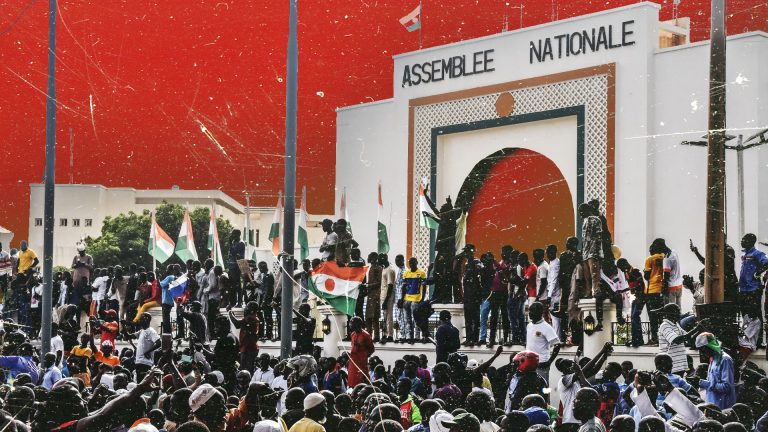
Under siege by France’s monetary strangulation and a war against their state by armed groups, Nigeriens marked the second anniversary of the July 26 revolution against French neocolonialism. The wave of mass protests against French military deployment in its former colonies had already washed away the regimes it had propped up in Mali and Burkina Faso when Niger’s then-president, Mohamad Bazoum, was also toppled in a coup on this date in 2023. With the support of pan-Africanists, the left, and the mass movement protesting against French domination, the coup leader, General Abdourahamane Tchiani, established the National Council for the Safeguard of the Homeland (CNSP) as a military government.

AES To Establish A Sahelian Criminal And Human Rights Court

Advancing towards the harmonization of laws and judicial system in the Alliance of Sahel States (AES), its member countries – Mali, Burkina Faso, and Niger – have decided to establish the Sahelian Criminal and Human Rights Court (CPS-DH).  As the three countries jointly intensify the fight against the Islamist terror groups that have ravaged the Sahel for over a decade – since they were unleashed by NATO’s destruction of Libya – combating impunity for human rights violations will be a key task of this court.  It will also have the authority to judge cases of terrorism and its financing, and the most serious offenses such as war crimes, crimes against humanity, and genocide, Agence d’Information d’Afrique Centrale (ADIAC) reported earlier this week.

Burkina Faso, Ibrahim Traoré, And The Land Of The Upright People

Since his ascension to power on September 30, 2022, Captain Ibrahim Traoré has become a powerful symbol of Pan-Africanism and a stark contrast to the previous state of affairs in Burkina Faso. His leadership embodies unquestionable patriotism, committed sovereignty, and a clear vision for the future. The emergence of Captain Ibrahim Traoré and a similar style of leadership in the Sahel has reignited confidence in Pan-Africanism and inspired the youth throughout Africa. This beacon of hope has triggered aspirations among citizens across the continent regarding how their countries should be governed. Indeed, due to his unwavering commitment and patriotism, Captain Ibrahim Traoré has become a star, an inspiration, and a champion of anti-imperialism, posing a genuine threat to imperialism in Africa.

Using Lessons From The Horn Of Africa To Protect Alliance Of Sahelian States

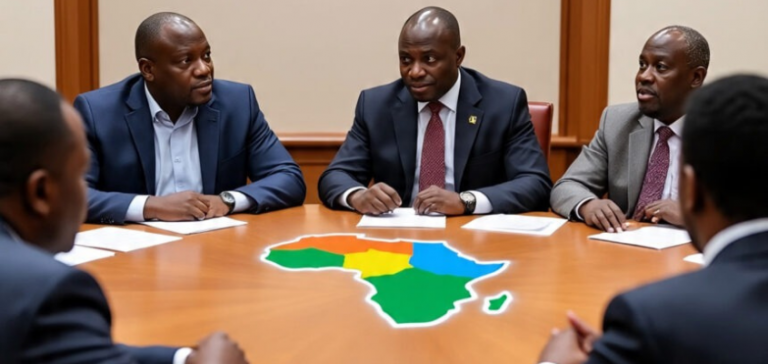
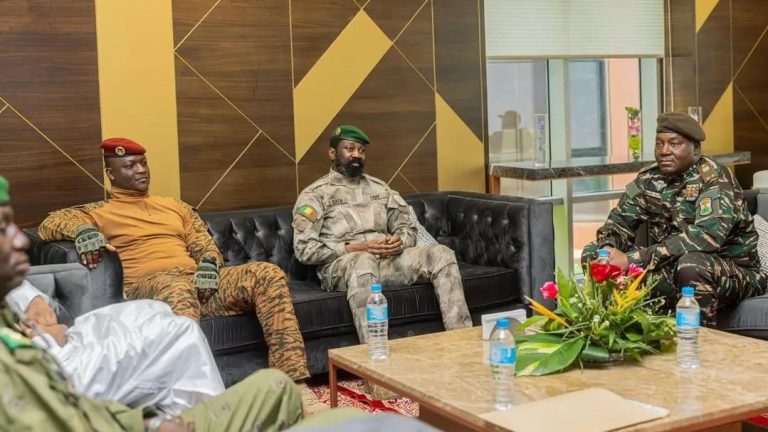
The Sahel region, stretching between the Sahara and the savannas of Africa, is once again emerging as a battleground, not only of geography but of ideas, sovereignty, and neocolonial entrenchment. The formation of the Alliance of Sahelian States (AES) , uniting Burkina Faso, Mali, and Niger into a confederation, marks a bold attempt to reclaim Pan-African agency and assert sovereignty free from foreign domination. Officially established on July 6, 2024, in Niamey, Niger, the AES reflects a transitional phase toward a unified federation, a development met with celebration across Africa and the Global South, but with growing alarm in Western capitals.

Burkina Faso: They’re Not Vassals

In the middle of April, the provisional government of Burkina Faso, led by Captain Ibrahim Traoré, announced that it had uncovered and dismantled a plot to “sow total chaos” in Burkina, in yet another “attempt to destabilize republican institutions.” The masterminds of the plot are said to have benefited from the help of neighboring Côte d’Ivoire, a veritable French neo-colony. In Burkina Faso, thousands of people demonstrated on April 30 in Ouagadougou and other cities in support of the government, which previously revealed that it had foiled a “great conspiracy” hatched in Ivory Coast and rejected interference by the United States of America.

Why We Must Reclaim African Liberation Day

Our generation is living through a seismic shift in the struggle for African liberation. We are witnessing the rise of a new revolutionary Pan-Africanism that challenges imperialism not just in words, but in action. On one front, Captain Ibrahim Traoré stands as a living embodiment of our ancestors’ dreams. In the spirit of Kwame Nkrumah, he is leading Burkina Faso through a profound dialectical transformation – reclaiming land and resources, dismantling neo-colonial dependencies, and ensuring the wealth of the soil serves the people of Burkina Faso. It is a rupture with imperialism, a bold step toward a dignified and sovereign Africa.

Terrorism We Are Witnessing Today Comes From Imperialism

The “terrorism we are witnessing today comes from imperialism, and we are fighting it,” Burkina Faso’s charismatic president, 37-year-old Capt. Ibrahim Traoré told Vladimir Putin on May 10. The Russian president in turn assured him, “We are united by a common goal of fighting terrorism and extremism. We will continue to help the Republic in… suppressing the radical (Jihadist) groups that are still active in certain parts of Burkina Faso.” The leaders met in Moscow a day after attending the Victory Day Parade on May 9, commemorating the 80th anniversary of the defeat of Nazi Germany by the Soviet Union in 1945.

Time For All Anti-Imperialists And Justice Loving People To Defend Burkina Faso

It is no surprise to the Black Alliance for Peace’s (BAP) Africa Team and U.S. Out of Africa Network (USOAN) that aggression is stepping up against the countries in the anti-imperialist Alliance of Sahel States. This was reflected in the flagrantly baseless accusations against Burkina Faso’s leader Ibrahim Traoré. On April 3, 2025, U.S. AFRICOM Commander Michael Langley testified to the Senate Armed Services Committee and claimed without evidence that interim President Traoré is misusing the country's gold mineral wealth in exchange for protection. Langley provided no details on how these supposed exchanges are carried out or from what Traoré needs protection.

Planting Seeds Of Sovereignty: Lessons From The Sahel And Beyond

As the U.S. doubles down on tariffs and trade wars, African nations—particularly in the Sahel—find themselves at a critical juncture. The West calls its protectionism “economic security” and “national interest.” But when African states make similar moves to assert control over their land, labor, and futures, they are labeled authoritarian, unstable, or dangerous. Sovereignty for the West is lauded. Sovereignty for the South is a threat. The truth is that protectionism has always been political. From Alexander Hamilton’s “infant industry” policies in the U.S. to South Korea’s strategic shielding of domestic industries in the 1960s and 1970s, protectionism has never been about fairness.
assetto corsa mods

Urgent End Of Year Fundraising Campaign

Online donations are back! Keep independent media alive. 

Due to the attacks on our fiscal sponsor, we were unable to raise funds online for nearly two years.  As the bills pile up, your help is needed now to cover the monthly costs of operating Popular Resistance.

Urgent End Of Year Fundraising Campaign

Online donations are back! 

Keep independent media alive. 

Due to the attacks on our fiscal sponsor, we were unable to raise funds online for nearly two years.  As the bills pile up, your help is needed now to cover the monthly costs of operating Popular Resistance.

Sign Up To Our Daily Digest

Independent media outlets are being suppressed and dropped by corporations like Google, Facebook and Twitter. Sign up for our daily email digest before it’s too late so you don’t miss the latest movement news.