Skip to content

Regulations

Europe Is Regulating AI Hiring; Why Isn’t The United States?

In 2018, Amazon unveiled a groundbreaking AI hiring tool. But what began as a promise to revolutionize how the company identified talent devolved into an algorithm that “did not like women.” The model, trained on a decade of old resumes mostly from men, penalized references to women’s organizations and graduates of women’s colleges. Although Amazon abandoned the tool, the incident revealed a more fundamental problem: In automating hiring, employers are also automating bias. Today, AI plays a major role in hiring, yet the U.S. has failed to establish coherent guardrails even as jurisdictions like the European Union have acted decisively.
Data Centers Are Fueling The Lobbying Industry

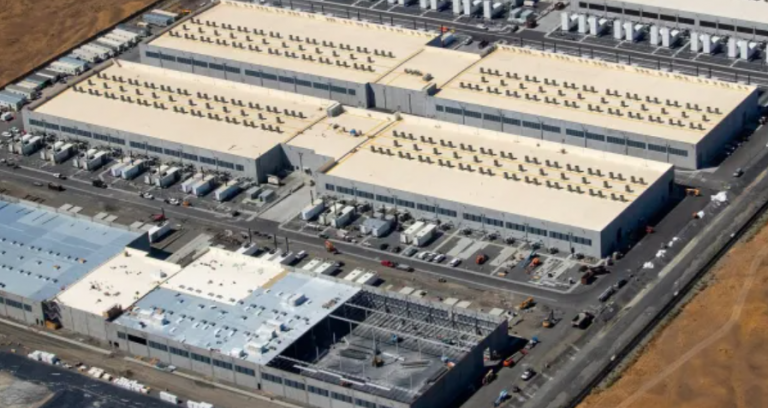
From the farmlands of Northern Virginia to the industrial parks of New Jersey, massive new data centers are popping up across the country to power America’s artificial intelligence revolution. The energy needed to power these data centers is driving national energy usage to record levels, and these costs are falling on American households as soaring electricity consumption has translated into higher home utility bills, as well as health and environmental risks. As the demand for computing power increases, the technology, utility and finance industries have poured millions into supporting the policies and resource allotment they need to expand data centers.

Major American LNG Exporters Habitually Break Air Pollution Laws

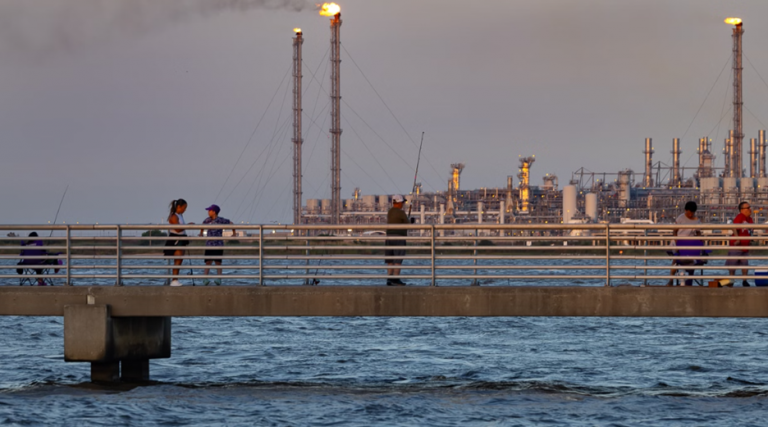
During the past five years, all seven of the fully operational LNG export terminals in the U.S. violated the Clean Air Act, America’s cornerstone law on air pollution, a new report from the Environmental Integrity Project (EIP) finds. The report comes as the Trump administration has moved to accelerate the approval of new export terminals to sell more U.S. LNG around the world, particularly to Asia and Europe. Several major terminals rarely, if ever, managed to spend a full quarter in compliance with environmental laws over the past three years, the report found.

How Deeply Trump Has Cut Federal Health Agencies

When the Trump administration announced massive cuts to federal health agencies earlier this year, Health and Human Services Secretary Robert F. Kennedy Jr. said he was getting rid of excess administrators who were larding the government with bureaucratic bloat. But a groundbreaking data analysis by ProPublica shows the administration has cut deeper than it has acknowledged. Though Kennedy said he would add scientists to the workforce, agencies have lost thousands of them, along with colleagues who those scientists depended on to dispatch checks, fix computers and order lab supplies, enabling them to do their jobs. Done in the name of government efficiency, these reductions have left departments stretching to perform their basic functions, ProPublica found, according to interviews with more than three dozen former and current federal employees.

Truckers Petition Feds To Enforce HAZMAT Rules On Oil And Gas Waste

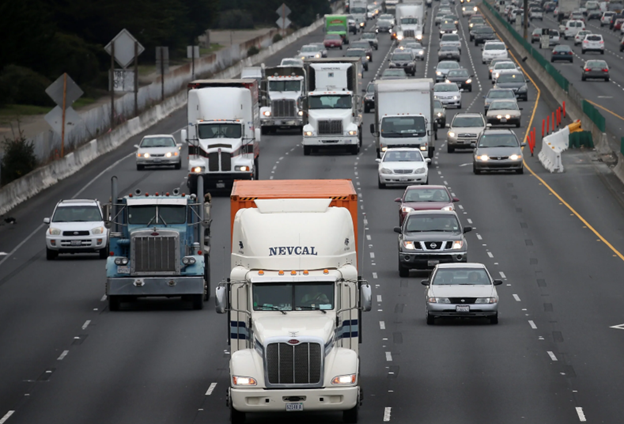
Washington, D.C.—Truckers and environmentalists have joined together to demand Department of Transportation (DOT) agencies to enforce existing hazardous material rules when it comes to hauling oilfield waste—including the water and sands used to frack and extract oil and gas. The organizations, led by Truckers Movement for Justice, claim hazardous payloads are often not tested, leaving drivers and communities vulnerable to exposure to hazardous materials. “These guys put their lives on the line every day, and they deserve the proper training and certifications to handle these hazardous loads,” says Billy Randel, leader of Truckers Movement for Justice and retired hazmat truck driver.

Where Is The Artificial Intelligence Safety Movement?

Whether or not we realize it, artificial intelligence is reshaping the world with breathtaking speed. Promoted as a panacea to cure diseases, revolutionize industries and tackle the world’s most intractable problems, AI is also quietly displacing workers, amplifying biases and creating surveillance systems pervasive and pernicious enough for any dystopian. As if that weren’t enough, there’s the prospect of super intelligent AI outpacing human control altogether. So where are the humans in all this? Where are the protests, the people out on the streets, the demands for safeguards, for oversight, for input from normal people?

Alberta’s ‘Zero Tolerance’ Enforcement Strategy Doesn’t Apply To Polluters

“Alberta is taking a zero-tolerance approach to crime,” bragged Alberta Premier Danielle Smith in 2023 on social media after her government announced more enforcement, greater emphasis on public safety, and limited discretion of prosecutors to let offenders off the hook. “ “There is an increasing sense that the system is not holding criminals properly accountable and letting the public suffer the consequences,” chimed in Alberta Minister of Justice Mickey Amery during the announcement. “This is simply unacceptable.” If only the governing United Conservative Party applied those laudable principles to oil sands companies that repeatedly flout legal requirements not to pollute waterways, air and land.

We Are All Nicaragua: The Sexual Diversity Community

In 2008, following the Sandinista party’s return to power, a law was passed overturning the penalization of homosexuality and making it illegal to discriminate against someone based on sexual orientation. Since then, the Sandinista government has also passed laws specifically guaranteeing equal rights and opportunities for the LGBTQ+ community. Additionally, public institutions have administrative regulations in place to ensure that no one faces discrimination for their sexual orientation or gender identity. “If I compare Nicaragua with other countries in the world,” explains Julio, “we have regulations, public policy, legal framework and laws that support us.

The Livestock Industry Has Side-Stepped Scrutiny Again

The U.S. Securities and Exchange Commission (SEC) made headlines around the world this week by voting to move forward with rules that will require public companies to disclose climate-related business risks to investors. Some lawmakers have welcomed the mandate from the U.S.’s most powerful financial regulator, which will now force firms to share at least some emissions data. But climate and environment campaigners are concerned about loopholes in the new rules, which have failed to include “Scope 3,” i.e. indirect, greenhouse gas emissions.

Fed Up With Inaction, Rail Unions Draft And Push Their Own Safety Plan

Washington - Fed up with the big Class I freight railroads’ incessant drive to put profits over people, and safety, and with federal regulators’ piecemeal and often pro-corporate responses, a coalition of rail freight unions issued a comprehensive analysis of the problem, with key recommendations to the government to force the carriers to put people first. The study, including pages of internal railroad documents and e-mails, reveals the horrible impacts of the railroads’ system, Precision Scheduled Railroading (PSR). It’s designed to cut costs and workers, including safety workers who inspect freight cars and locomotives.

Ex-EPA Scientist Calls Pollution Regulations A ‘Smokescreen’

Minneapolis, MN — On January 11, 2024, community members gathered to discuss the future of the Smith Foundry in Minneapolis’ East Phillips neighborhood. The iron-casting facility has been found to violate health regulations, thereby likely threatening the well-being of people living nearby. In November, residents had called for the closure of the foundry after discovering records from the Environmental Protection Agency (EPA) indicating that the company had been exceeding Minnesota emission limits of particulate matter since 2018 — without notifying the state. Despite the Minnesota Pollution Control Agency (MPCA) pledging to meet regularly with the community, MPCA authorities were absent from the meeting, citing a “conflict of interest” and a lack of staff.

Does Your Employer Have Illegal Rules On The Books?

On August 2, the National Labor Relations Board (NLRB), now controlled by Democratic appointees, issued a game-changing decision known as Stericycle. The ruling enables unions to effectively challenge company rules that intimidate or chill workers from engaging in protests, picketing, demonstrations, and other legitimate union activities. Marvin Kaplan, the one dissenting Republican board member, bitterly complained that the new standard returns the board to “a bygone era... when the Board rarely saw a rule it did not find unlawful." Stericycle, a Pennsylvania medical waste disposal company whose employees are represented by Teamsters Local 628, maintained handbook policies governing personal conduct, conflicts of interest, and confidentiality.

‘The Great Taking’: How They Can Own It All

The derivatives bubble has been estimated to exceed one quadrillion dollars (a quadrillion is 1,000 trillion). The entire GDP of the world is estimated at $105 trillion, or 10% of one quadrillion; and the collective wealth of the world is an estimated $360 trillion. Clearly, there is not enough collateral anywhere to satisfy all the derivative claims. The majority of derivatives now involve interest rate swaps, and interest rates have shot up. The bubble looks ready to pop. Who were the intrepid counterparties signing up to take the other side of these risky derivative bets? Initially, it seems, they were banks –led by four mega-banks, JP Morgan Chase, Citibank, Goldman Sachs and Bank of America.

Clarence Thomas Reversed Position After Gifts And Family Payments

Supreme Court Justice Clarence Thomas changed his position on one of America’s most significant regulatory doctrines after his wife reportedly accepted secret payments from a shadowy conservative network pushing for the change. Thomas’ shift also came while he was receiving lavish gifts from a billionaire linked to other groups criticizing the same doctrine — which is now headed back to the high court. The so-called “Chevron deference” doctrine stipulates that the executive branch — not the federal courts — has the power to interpret laws passed by Congress in certain circumstances. Conservatives for years have fought to overturn the doctrine, a move that would empower legal challenges to federal agency regulations on everything from climate policy to workplace safety to overtime pay.

Flexible Work Without Exploitation

Digital platform companies like Uber, Lyft, Instacart, and DoorDash are waging increasingly aggressive campaigns to erode long-standing labor rights and consumer protections in states across the country. Though they rely on the labor of millions of workers to provide their services, platform companies have established a business model on the premise that they employ no one. This business model has been built by denying workers fundamental rights and protections through outright refusal to follow existing laws, widespread misclassification of workers as “independent contractors,” payment of subminimum wages, and shifting of primary risks and costs of doing business onto individual workers, consumers, and public safety net programs.
assetto corsa mods

Urgent End Of Year Fundraising Campaign

Online donations are back! Keep independent media alive. 

Due to the attacks on our fiscal sponsor, we were unable to raise funds online for nearly two years.  As the bills pile up, your help is needed now to cover the monthly costs of operating Popular Resistance.

Urgent End Of Year Fundraising Campaign

Online donations are back! 

Keep independent media alive. 

Due to the attacks on our fiscal sponsor, we were unable to raise funds online for nearly two years.  As the bills pile up, your help is needed now to cover the monthly costs of operating Popular Resistance.

Sign Up To Our Daily Digest

Independent media outlets are being suppressed and dropped by corporations like Google, Facebook and Twitter. Sign up for our daily email digest before it’s too late so you don’t miss the latest movement news.