Skip to content

COP30

Lessons For Climate Advocates From Bill Gates ‘Climate Hack’

Many were frustrated, justifiably, by Bill Gates’ ability to steal headlines ahead of this year’s just-concluded round of U.N. climate talks, COP30. Gates did so by telling the climate community, on his blog, what he believes is a ‘hard truth’: that we are ‘diverting resources from the most effective things that should be done to to improve life in a warming world,’ notably fighting poverty and disease, including by boosting economic growth. By focusing on limiting the rise in average global temperatures as the sole metric of success, climate advocates are missing opportunities to ‘prevent suffering, particularly for those in the toughest conditions who live in the world’s poorest countries.’

Theme From The Bottom: Post COP30 Reflections

The first Conference of the Parties (COP) summit I attended was back in 2015, COP 21, which took place in Paris, France. At this point in my climate and environmental justice journey I was wide-eyed and perhaps even a bit naive as I believed that nation states, international bodies like the United Nations, and so-called Civil Society Organizations contained the requisite mettle and principles to take on the crisis of climate change at scale while and the root causes that maintain and exacerbate it - white “supremacy” ideology, patriarchy, and colonization - contemporaneously.

COP30 Backpedals On Climate Action

Belem, Brazil—After negotiators at COP30 retreated from meaningful climate action by failing to specifically mention the need to stop using fossil fuels in the final conference documents published Saturday, the disappointment inside the COP30 conference center was as pervasive as the diesel fumes from the generators outside the tent. This year’s United Nations Framework Convention on Climate Change was billed as the “COP of Truth” by host country Brazil, but it could go down in history “as the deadliest talk show ever,” said Harjeet Singh, founding director of the Satat Sampada Climate Foundation in India and strategic advisor to the Fossil Fuel Non-Proliferation Treaty Initiative.

Pesticide Industry ‘Hijacked’ Climate Stage At COP30

Syngenta and other pesticide companies used the COP30 climate conference in Brazil to promote programmes to recover damaged pastureland that campaigners fear will drive increased use of toxic chemicals. Trade groups hosted multiple events to promote a technique known as ‘degraded pasture recovery’, in which land that has been damaged by overgrazing or other forms of poor management is converted to grow soy, sugarcane, corn, or other crops.  Brazil says the approach will help reduce pressure on forests by opening up fresh tracts of arable land. The country has set a target to convert 40 million hectares of damaged pasture into production zones for food crops and biofuels over the next decade — an area almost twice the size of the UK.

COP30 Isn’t A Failure, It’s A Farce

Belem, Brazil — As the COP30 climate summit comes to a close here in Belém, in the Brazilian state of Pará, conference organizers have little to show after two weeks of highly publicized talks. This is bad for everyone. The United Nations Climate Change Conference desperately needed to restore its reputation. After all, last year’s COP29 took place in Azerbaijan, where fossil fuels make up 90% of the exports and where the government was being accused of carrying out genocide in the months leading up to the conference. The previous year, the COP28 was held in Dubai, capital of another petrostate.

Brazilian Hosts Seek COP30’s Blessing For Biofuels

With the clock running down at the COP30 climate talks, the Brazilian hosts are working hand-in-hand with industry groups to secure backing for biofuels in the final text – despite fears that scaling production will drive deforestation and violate Indigenous rights. National delegations are at loggerheads over a proposal to include language backing the use of “transitional fuels” – which could be read as an open door for biofuels – in a draft Just Transition Work Plan to guide a fair and equitable transition away from fossil fuels. 

A Xipai Journalist On Attending COP30

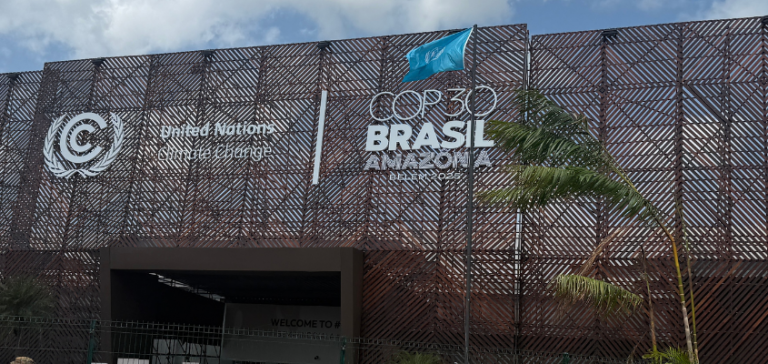
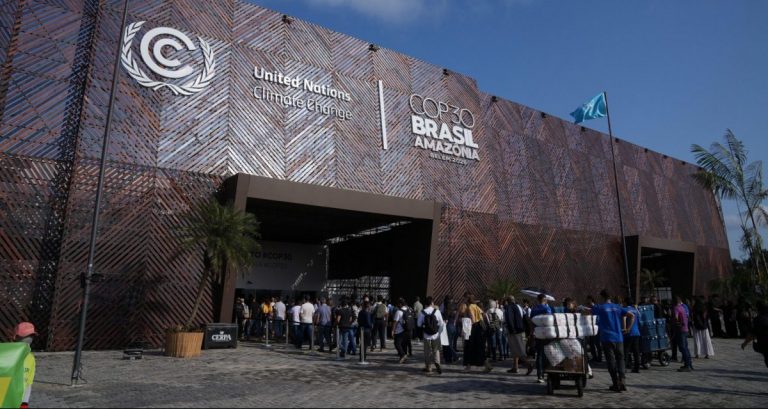
I feel as if I’ve been swallowed. And in the creature’s stomach, I walk with the sensation of being drowned. My nose hurts, with the same pain we feel when we are struggling to breathe. That’s my perception of the blue zone of Cop30, the official area for the negotiations. The architecture makes me think of the stomach of an animal. My eyes hurt, seeing so many people coming and going through the main corridor. This is the scene of a makeshift forest. On the walls are large paintings of a jaguar, a monkey, an anteater and a lizard. In the middle of the corridor are plants that resemble açaí palm trees, and below them, small shrubs. The place of nature within the blue zone is ornamental.

How The United Nations Reduces Its Legitimacy More Than Global Emissions

Belem, Brazil - The 30th Conference of the Parties (COP) held this year in Belem, Brazil - a nation where 56% of the population identifies as Black or brown, global Black/Afro Descendant movements believed there could have been opportunities to center and prioritize the specific and nuanced ways the climate crisis impacts their communities. A study conducted by Brazilian based, Geledés - the Black Women’s Institute and the Center for Applied Research in Law and Racial Justice at the Fundacao Getulia Vargas School of Law indicates, “The specificity of the Afro-descendant experience in the Americas lies at the intersection of structural racism, colonial legacies, and erasure attempts through ideologies of miscegenation and racial democracy.”

More Than 300 Lobbyists For Industrial Agriculture Attend COP30

More than 300 lobbyists for food and farming organisations have participated at this year’s UN climate talks, known as COP30, taking place in the Brazilian Amazon, where agribusiness is the leading cause of deforestation, a new investigation has found. The number of lobbyists representing the interests of industrial cattle farming, commodity grains and pesticides is up 14 percent over last year’s summit in Baku — and is larger than the delegation of the world’s 10th largest economy, Canada, which brought 220 delegates to COP30 in Belém, according to the joint investigation between DeSmog and the Guardian. 

70,000 People March In Belém For Climate Justice

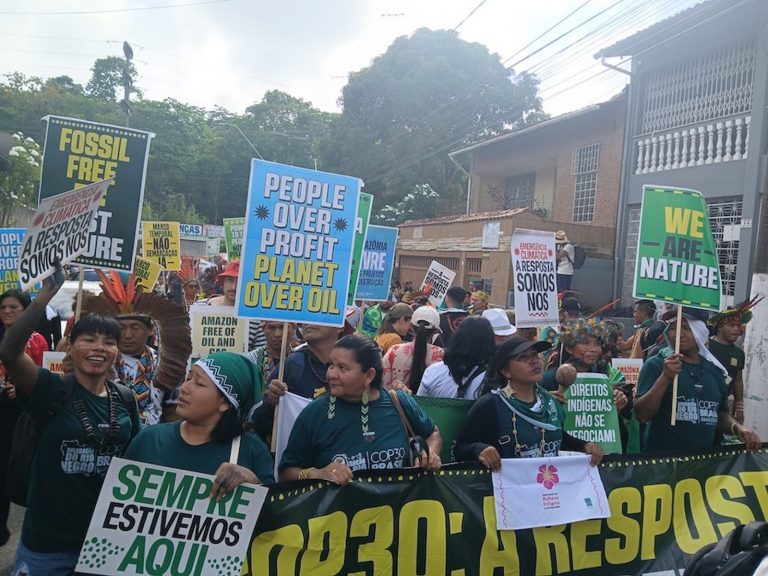
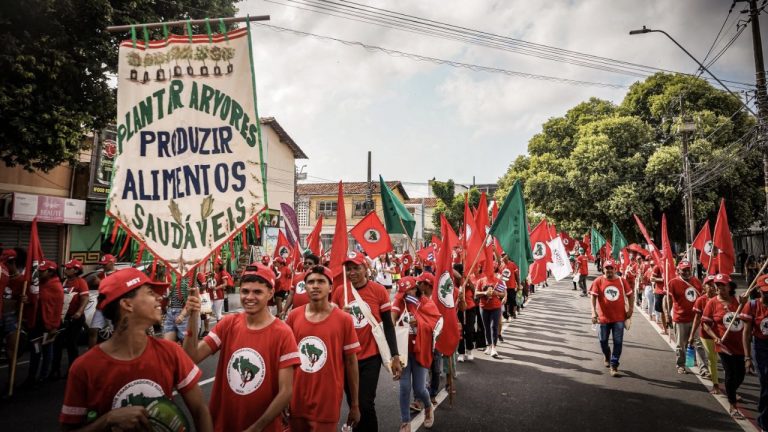
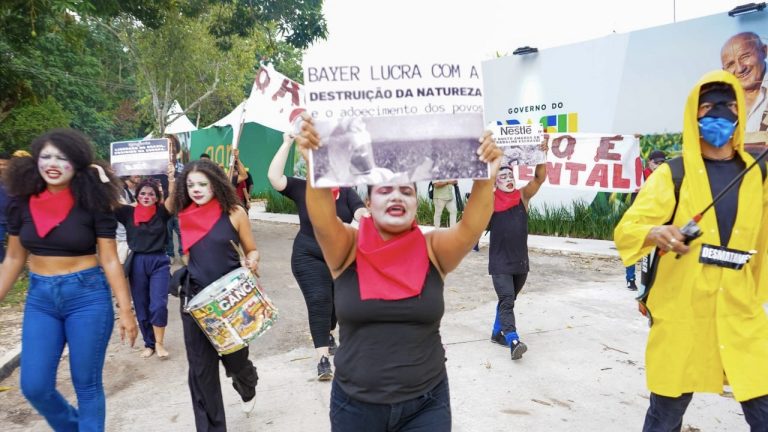
The streets of Belém were occupied, according to organizers, by more than 70,000 people on Saturday, November 15, for the historic Global Climate March. Unlike the official COP30 spaces, the march brought together the diversity of peoples and demands from civil society in defense of climate justice. With the force of the motto “We are the answer”, the tens of thousands of members of people’s movements held signs such as “Agribusiness is fire”, “There is no climate justice without popular agrarian reform” and “environmental collapse is capitalist”.

Rich Countries At COP30 Are Robbing The Global South

UN climate conferences are primarily announcement summits. For 30 years, industrialized countries, which are primarily responsible for the climate crisis, have been promising that they will reduce greenhouse gas emissions consistent with the climate science, promote the energy transition, and combat the effects of climate change. Additional promises have also been made regarding climate financing at the UN Conference of the Parties (COP) climate summits in Copenhagen (2009) and Paris (2015). At COP30 in Brazil, governments have once again declared their intention to support developing countries with climate funding, repeating their promise at the COP29 in Baku, Azerbaijan, to increase climate financing to $300 billion annually from 2035. But promises are not yet actions.

People’s Summit Begins In Brazil As An Alternative To COP30

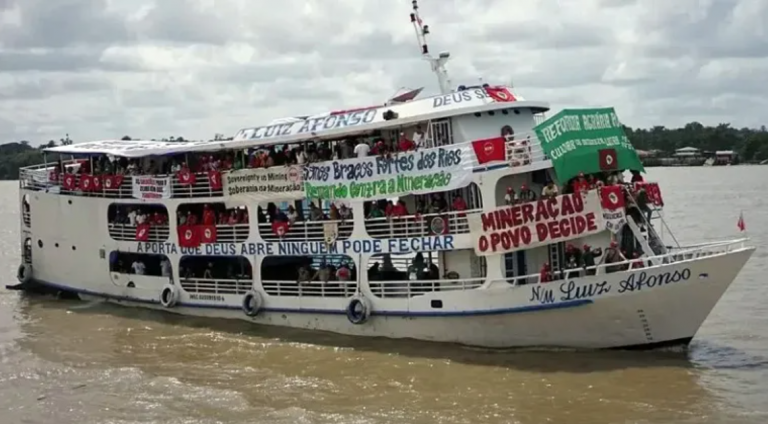
The People’s Summit began on Wednesday, November 12, in Belém, Brazil, as a space for resistance and an alternative proposal to the official discussions of the 30th United Nations Climate Change Conference (COP30). The opening ceremony brought together some 5,000 people aboard 200 boats, which sailed along the Amazon River basin. This initial mobilization represents the arrival of popular movements from 62 countries. The event, which will run until November 16 at the Federal University of Pará (UFPA), Guamá campus, seeks to counter what popular movements describe as “false solutions” to the global climate crisis.

US Oil Executives Flock To COP30

Top American oil and gas producers are using trade groups to gain access to this year’s COP30 climate summit in the absence of an official U.S. delegation, DeSmog can report. ExxonMobil and Chevron — which are among the fossil fuel industry’s biggest greenhouse gas emitters — have sent a combined total of 13 executives to the talks, while both companies have either sponsored events or pavilions at the conference. In addition, Exxon CEO Darren Woods spoke at a number of COP30 side events, including one in Sao Paolo on November 3, where he noted in an interview with Reuters that crude oil and hydrocarbons were “going to play a critical role in everybody’s life for a long time to come”.

COP30’s Agrizone Showcases Companies Responsible For Environmental Crisis

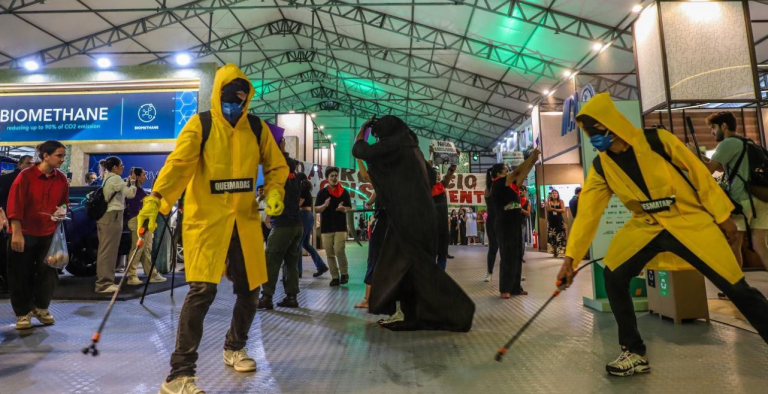
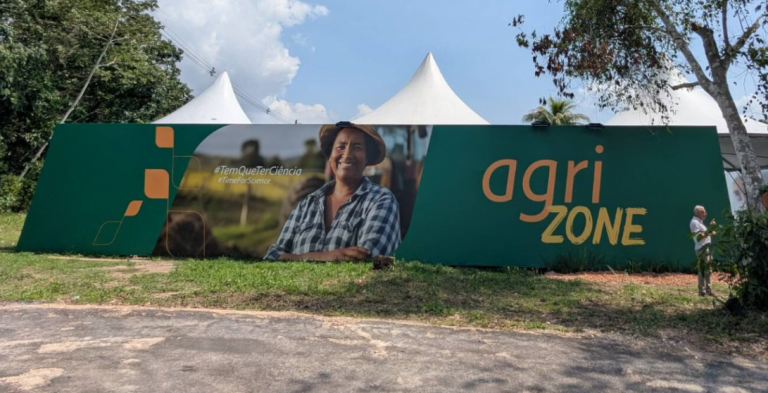
The United Nations Climate Conference COP30, is currently underway in Belém, Brazil and will conclude on November 21. It has become increasingly clear that, just as the Landless Rural Workers’ Movement (MST) and several other organizations, movements, collectives, and groups warned, agribusiness is at the forefront of the supposed search for solutions to the environmental crisis. This, in itself, sheds light on the fact that the Conference has become a large business expo, in which the assets will be our territories, communities, and nature.

Amazonian Indigenous Peoples Protest At COP30

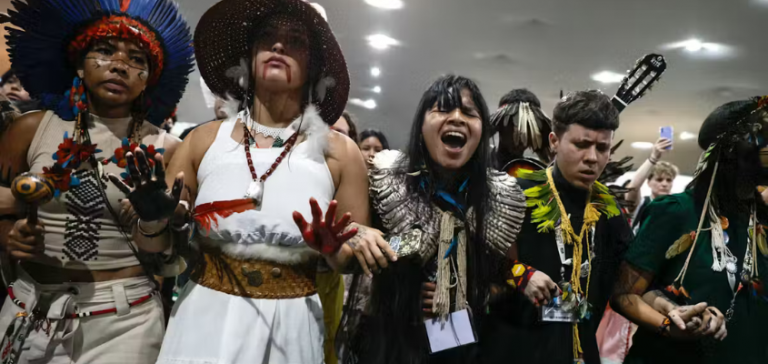
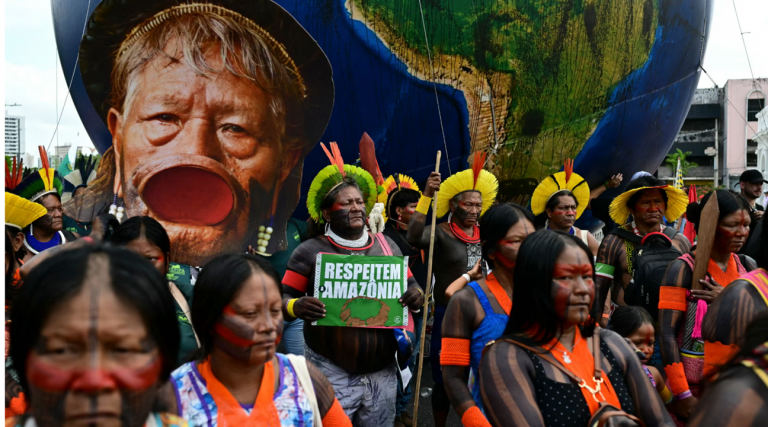
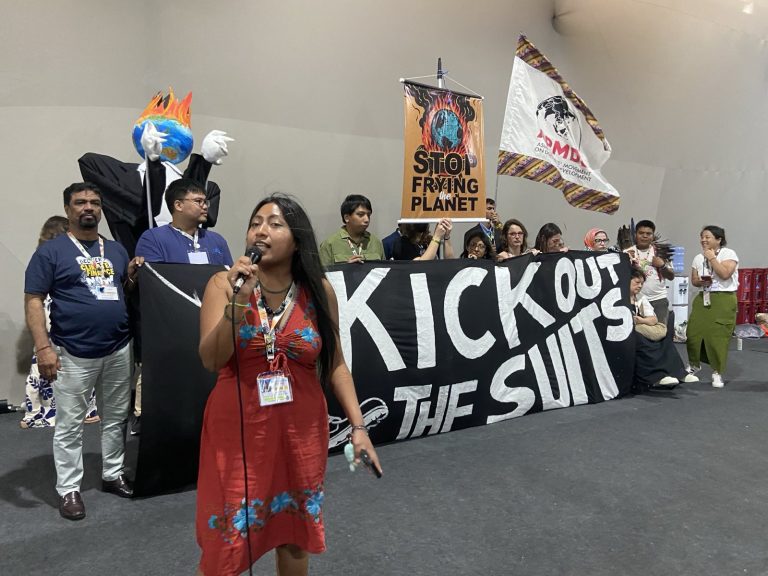
On Tuesday, Brazilian Indigenous leaders and activists clashed with security guards as they tried to enter the site where the United Nations Climate Change Conference (COP30) is being held in Belem. The protesters demanded access to the hall hosting the climate summit and several of them carried banners and flags with demands for land rights, such as “Our land is not for sale.” In response, security forces at the venue attempted to block them, using tables to obstruct their entry. However, the protesters bypassed the security checkpoints and entered the lobby of the UN-run tent where the negotiations take place. At that moment, members of the national delegations were preparing to leave the venue.
assetto corsa mods

Urgent End Of Year Fundraising Campaign

Online donations are back! Keep independent media alive. 

Due to the attacks on our fiscal sponsor, we were unable to raise funds online for nearly two years.  As the bills pile up, your help is needed now to cover the monthly costs of operating Popular Resistance.

Urgent End Of Year Fundraising Campaign

Online donations are back! 

Keep independent media alive. 

Due to the attacks on our fiscal sponsor, we were unable to raise funds online for nearly two years.  As the bills pile up, your help is needed now to cover the monthly costs of operating Popular Resistance.

Sign Up To Our Daily Digest

Independent media outlets are being suppressed and dropped by corporations like Google, Facebook and Twitter. Sign up for our daily email digest before it’s too late so you don’t miss the latest movement news.