Skip to content

Energy

The Consequences Of Imperialist Arrogance

In almost all the tragedies of ancient Greek theater, the protagonist has committed a fatal moral offense which leads them to a deadly outcome, almost always facilitated by their overweening arrogance. In the case of the progressive collapse of the collective West, one is dealing with five centuries of countless crimes of genocidal conquest and slavery. But their hateful culture of arrogance does not allow Western leaders to admit that they owe the wealth and political-military power of their countries to this genocidal criminality. This arrogance in the face of the collective West’s decline gets expressed in diplomatic bad faith and unilateral aggression, exacerbating the lack of cooperation and trust that characterizes the current international crisis.

With Federal Climate Progress Stalled, Simplify Solar Advances Local Solutions

“We have the groundwork in place to make solar power and renewable energy much more accessible than they are now,” celebrated climate activist Bill McKibben told people from all over the country on a Sept. 25 Zoom call. The virtual gathering was organized by Third Act, a national organization of people over 60 confronting the climate crisis. It took place just days after a Third Act-coordinated nationwide day of action called Sun Day, which saw over 500 events in 49 states draw attention to renewable energy’s vast potential. At a time when U.S. climate organizations are largely on the defensive, fighting the Trump administration’s rollbacks to climate action at the federal level, McKibben’s words underscored how Third Act has identified a rare opportunity to make real, short-term progress toward a clean energy future.

The AI Race: How The Surge In Data Centers Harms Us

There are more than 5,400 data centers in the United States, which is almost half of the number of data centers worldwide. In the past four years, there has been a surge in data center construction, particularly in poor communities in the South. Clearing the FOG speaks with Jai Dulani of Media Justice, who authored a new report: The People Say No: Resisting Data Centers in the South, and Kali Akuno of Cooperation Jackson, about the harms that these centers are causing in local communities, particularly in their enormous consumption of water and energy, and the risk they pose to the US economy. Akuno also addresses the bigger picture of the deleterious impact of artificial intelligence on our lives.

The Methane Hunters Of Melendugno

For centuries, farmers in Melendugno, a town located at the tip of southern Italy’s boot heel, built stone walls to mark the boundaries of their fields, shield their crops from the winds blowing out of North Africa, and divide farmland from pasture. Today, those same ancient stones stand watch over a changed landscape of parched olive groves, tall metal fences, and barbed wire. Beyond the fences, framed by a few remaining ancient olive trees, sits the Melendugno Reception Terminal — the western endpoint of the Trans Adriatic Pipeline (TAP).

Whitewashing Gas Exploration In Post-Genocide Gaza

In December 2022, Israeli Ministry of Energy launched the Fourth Offshore Bid Round offering new exploration licenses. A year later, it awarded licenses to several Israeli and international companies: Eni (Italy), Dana Petroleum (UK, a subsidiary of a South Korean company, and Ratio Petroleum (Israel). The problem is that these tenders violated international law. A few months later in June 2023, following years of stalled talks, Israel approved the development of the Gaza Marine field, while Egypt’s state-owned EGAS (Egyptian Natural Gas Holding Company) was to lead extraction efforts in cooperation with the Palestinian Authority.

On Louisiana’s Gulf Coast, Residents Fume As Insurers Hike Rates

“I’ve never seen it this bad.” Eddie LeJuine has been fishing and shrimping along the southwestern coast of Louisiana for about four decades. The garrulous 62-year-old can talk for hours about the best fishing spots and the quiet moments at dusk when the ospreys glide through the marshes. He’s raised a family in Cameron Parish, the heel of the boot, as the state is known, with five kids and 10 grandchildren, one of whom just joined the local sheriff’s office. But his life and livelihood have been upended in recent years by the proliferation of liquefied natural gas (LNG) terminals in the region — once the largest producer of seafood in the entire country. The LNG activity has devastated the environment and polluted the water, leading to significant declines in catches for fishermen.

From Capital To Commons: A Review

Environmental news, paradoxically, approaches banality as every day a new horror finds resonance in the media we consume and which consumes us. These daily reports enervate us and lead to resignation. Is our passivity the intention? If we refuse to be immobilized, how do we find a route out of our misery? We don’t suffer from a lack of proffered paths for our “engagement.” A multiplicity of them pursue our attention, many illusory, and often provided as a service for a “slight fee.” In frustration, and as a kind of therapy, the most committed rush to clean a beach, while mostly we sign online petitions, or make donations to allay the futility we feel. The complexity of our ecological predicament, when we are methodically informed, clarifies matters.

China Is Greening The Global South

According to an extensive study by Bloomberg NEF, it requires a staggering $7 trillion a year in renewable investments to achieve net zero by 2050, totaling $175 trillion by 2050. Hmm. Accordingly, in 2024 the world invested a record amount, or roughly $2 trillion, which was $5 trillion short of what is necessary per annum for net zero/2050. That $5 trillion shortfall increases the bogey next year and the years after for every year below $7 trillion, until it’ll take $8 trillion in one year, then $9T, then more. For comparison purposes: The Marshall Plan, or European Recovery Program, cost approximately $13.3 billion between 1948 and 1952. Adjusted for inflation, it would be roughly $130 billion in today’s dollars, looking very peaked next to Net Zero.

Trump’s War On Wind: Tens Of Thousands Of Jobs Destroyed

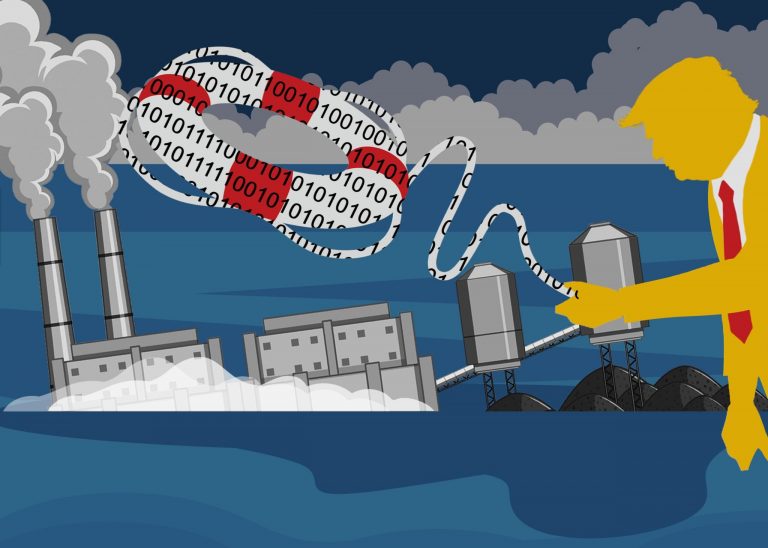
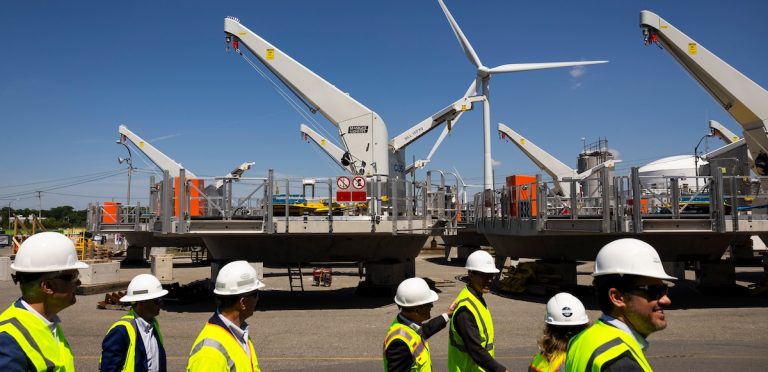
Environmental groups and unions representing construction workers found common ground this summer over President Trump’s blocking of offshore wind projects. The Revolution Wind offshore turbine farm off the coast of Rhode Island is 80 percent complete, but its fate remains uncertain after the Department of Interior issued a stop-work order on August 22. “The full thing was finally getting put together, and having it stopped like that was out of nowhere,” said Antonio Gianfrancesco, a Laborer from Local 271 who has been working the project for more than two years. The project’s halt resulted in a fiery statement from Sean McGarvey, president of North America’s Building Trades Unions (NABTU), an alliance of 14 construction unions: “Trump just fired 1,000 of our members who had already labored to complete 80 percent of this major energy project.

Understanding Alberta’s Expensive, Ideological War On Renewable Energy

“This is what happens when ideology runs the power grid,” said Alberta Premier Danielle Smith in July 2023 when asked about the province’s sky-high electricity rates. Smith was attempting to cast blame on renewable energy policies of the former New Democratic Party government that had left office more than four years earlier. Just one month later the premier abruptly signed a moratorium on all wind and solar projects followed by additional onerous restrictions that eventually drove almost 11 gigawatts of proposed renewable electricity projects out of the province. Alberta currently has the highest electricity rates in the country by a wide margin while also producing almost eight times the emissions per kilowatt hour compared to Ontario.

Following Sol Power Solar’s Example, R.I. Worker Co-Ops Gain Energy

Charlestown, R.I. – Sol Power Solar has installed renewable energy for more than 1,100 customers since becoming an early pioneer in Rhode Island’s solar industry in 2013. The staff credit this success to the company’s business model, in which each employee is an equal owner of the company. Now, Sol Power and a group of fellow cooperative businesses are trying to pave the way for workers to democratically run their own workplaces across the state. When Eric Beecher founded Sol Power, he always knew he wanted it to be democratically run. “It just seemed to me like the best way to run a company, kind of the fairest and most sustainable way to do it,” said Beecher, who notes the company is technically an LLC because it was established before the state allowed businesses to register as workers’ cooperatives.

A Handbook For Public Power Campaigns

The Public Power Handbook is a guide for communities exploring models of publicly owned power, such as a municipal electric utility, as a path toward local control, clean and affordable energy investment, and democratic accountability. The handbook provides step-by-step guidance for advocates and community members on how to municipalize (or take over) a private utility, from building a winning coalition to anticipating and countering utility pushback. The handbook also outlines alternatives to full municipalization that still further the goals of local energy control and utility accountability.

Georgia County Puts Off Key Data Center Vote

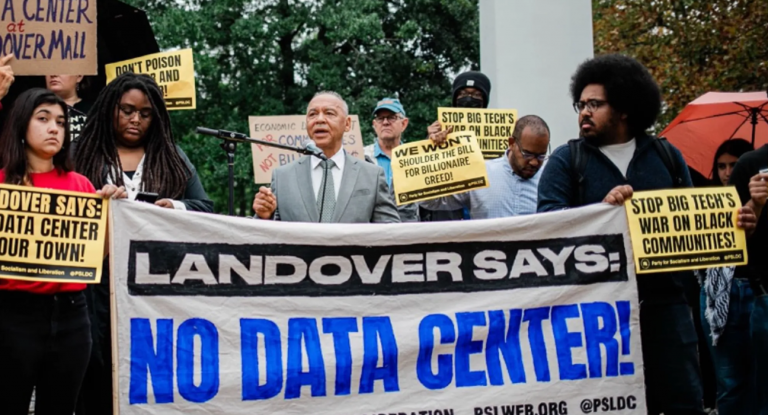
Commissioners in a Georgia county unanimously decided to delay a vote on contentious new rules governing massive data center projects, during a meeting that drew an unusual overflow crowd. Dozens of local residents packed the Commissioner Chambers in Newnan, 40 miles southwest of Atlanta, with more standing outside. Many wore red to show their unified opposition to “Project Sail,” a $17 billion “hyperscale” data center proposed in the Coweta County community of Sargent. “Folks, we’ve got a long night ahead of us,” said County Commission Chairman Bill McKenzie at the start of the August 19 evening meeting, according to a livestream.

Data Centers Consume Massive Amounts Of Water

As demand for artificial intelligence technology boosts construction and proposed construction of data centers around the world, those computers require not just electricity and land, but also a significant amount of water. Data centers use water directly, with cooling water pumped through pipes in and around the computer equipment. They also use water indirectly, through the water required to produce the electricity to power the facility. The amount of water used to produce electricity increases dramatically when the source is fossil fuels compared with solar or wind. A 2024 report from the Lawrence Berkeley National Laboratory estimated that in 2023, U.S. data centers consumed 17 billion gallons (64 billion liters) of water directly through cooling, and projects that by 2028, those figures could double – or even quadruple.

Data Center Lobbyists Clear The Way For Mega-Projects In Rural Georgia

County commissioners in Georgia may pave the way for a $17 billion “hyperscale” data center on Tuesday by adopting new planning laws shaped by industry lobbyists. If passed, the latest draft of the laws will ease requirements for “Project Sail” — a proposed data center in a rural area of Coweta County, 40 miles southwest of Atlanta — relative to a more stringent version proposed last month. One of the biggest planned complexes of its kind, Project Sail is a joint venture between San Francisco-based Prologis (NYSE:PLD), the world’s largest industrial real estate company, and Georgia-based developer Atlas Development. A DeSmog review of public records suggests that industry lobbyists and company representatives prevailed upon Coweta County officials to dilute earlier versions of the proposed planning rules for data centers.
assetto corsa mods

Urgent End Of Year Fundraising Campaign

Online donations are back! Keep independent media alive. 

Due to the attacks on our fiscal sponsor, we were unable to raise funds online for nearly two years.  As the bills pile up, your help is needed now to cover the monthly costs of operating Popular Resistance.

Urgent End Of Year Fundraising Campaign

Online donations are back! 

Keep independent media alive. 

Due to the attacks on our fiscal sponsor, we were unable to raise funds online for nearly two years.  As the bills pile up, your help is needed now to cover the monthly costs of operating Popular Resistance.

Sign Up To Our Daily Digest

Independent media outlets are being suppressed and dropped by corporations like Google, Facebook and Twitter. Sign up for our daily email digest before it’s too late so you don’t miss the latest movement news.