Skip to content

Food and Agriculture

Green Shadow Cabinet Joins Critical Struggle to Defeat the Trans-Pacific Partnership

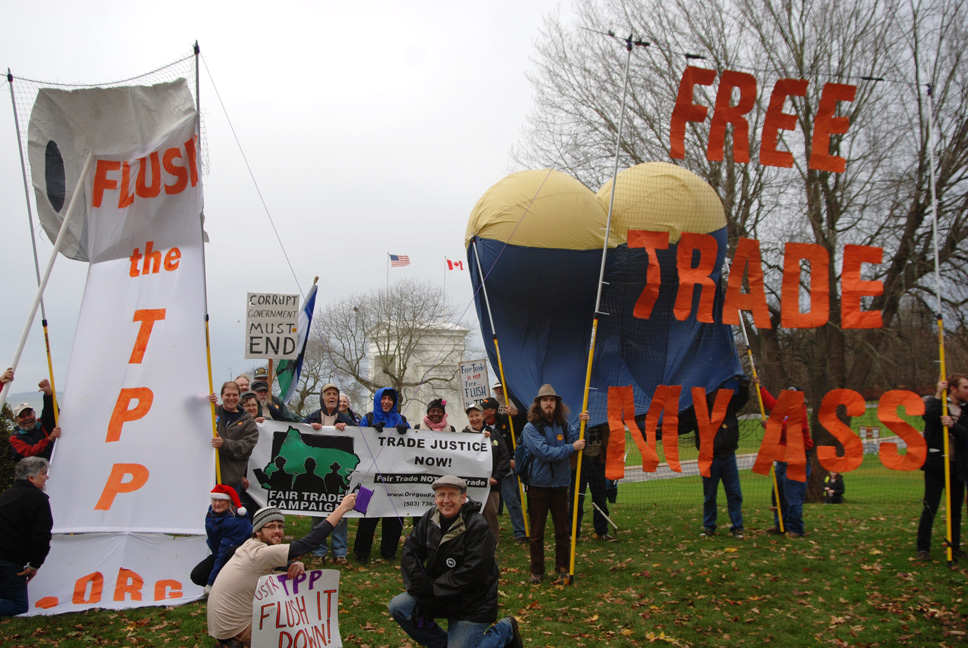
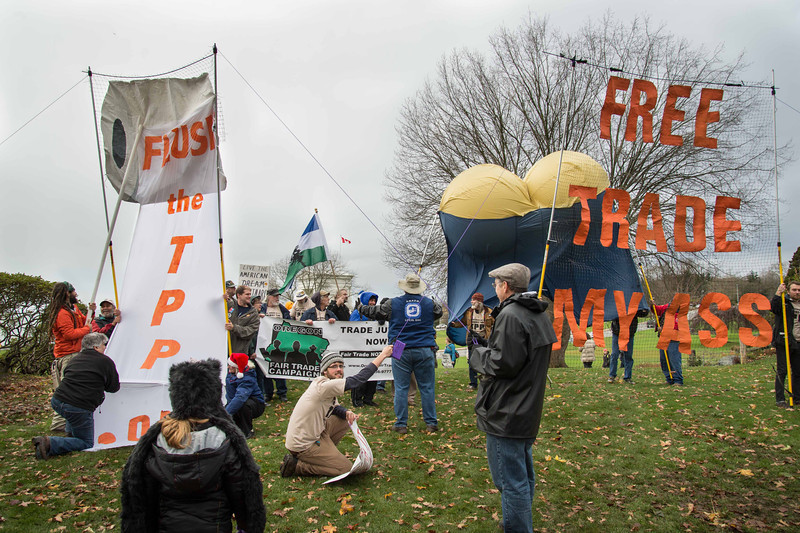
Those who defend corporate capitalism also understand that another world is possible, and the Trans-Pacific Partnership is their attempt to foreclose our new world. The TPP gives major corporations legal personhood to sue in transnational courts dominated by judges who themselves are lawyers for major corporations. Under the TPP, corporations would be able to claim that environmental, labor, financial, health and other laws cost them profits, and to extract damages from our governments - and from us as taxpayers - if they enforce those laws.

Who is Polluting in Your Community?

NPR and the Center for Public Integrity (CPI) reported in their 2011 “Poisoned Places” series that companies who have exposed their neighbors to risky concentrations of hazardous chemicals often underreport the chemicals released in such accidents. Regulatory loopholes and confusion between state and local environmental agencies allow them to get away with it. The VOCs leaked in Baton Rouge can cause smog and respiratory problems, like asthma — and after a major benzene spill at the facility last year, initially played down by Exxon, the refinery’s residential neighbors worry that the plant is having an adverse effect on their health. This interactive map, compiled by NPR and CPI, shows serious polluters across America that release hazardous chemicals — including lead, mercury and arsenic — into the air or water.

Getting Corporations Out of Our Food: Mobilizing for Food and Farm Justice

From the school cafeteria to rural tomato farms, and all the way to pickets at the White House, people are challenging the ways in which government programs benefit big agribusiness to the detriment of small- and mid-sized farmers. Urban gardeners, PTA parents, ranchers, food coops, and a host of others are organizing to make the policies that govern our food and agricultural systems more just, accountable, and transparent. They are spearheading alternative policies on the local, state, national, and international levels. Despite the activism on the most recent Farm Bill, it was allowed to expire at the end of 2012 due to a stalemate in Congress around payments to farmers and broader budget issues. Congress implemented a nine-month extension, but several important programs were de-funded, including support for new farmers and farmers of color, conservation efforts, research into organic farming, and other progressive initiatives.

The City that Ended Hunger

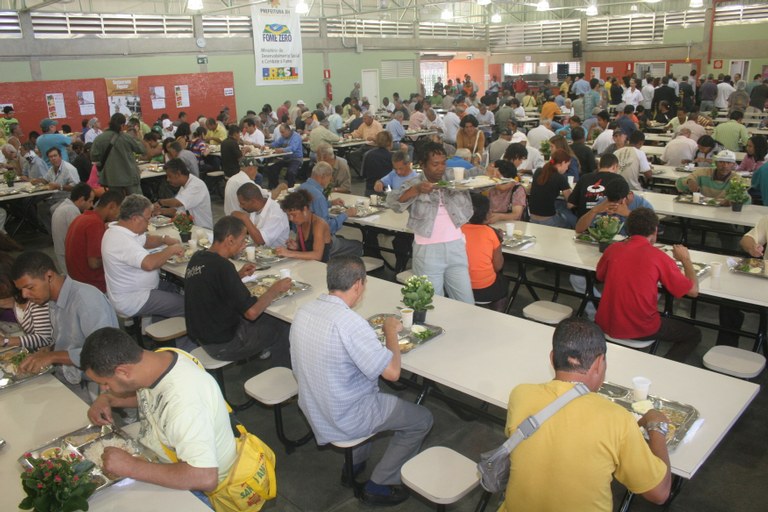
Brazil. During the first six years of Belo’s food-as-a-right policy, perhaps in response to the new emphasis on food security, the number of citizens engaging in the city’s participatory budgeting process doubled to more than 31,000. The city agency developed dozens of innovations to assure everyone the right to food, especially by weaving together the interests of farmers and consumers. It offered local family farmers dozens of choice spots of public space on which to sell to urban consumers, essentially redistributing retailer mark-ups on produce—which often reached 100 percent—to consumers and the farmers. Farmers’ profits grew, since there was no wholesaler taking a cut. And poor people got access to fresh, healthy food.

7 Treesitters Arrested Blocking Development of Occupy Farm

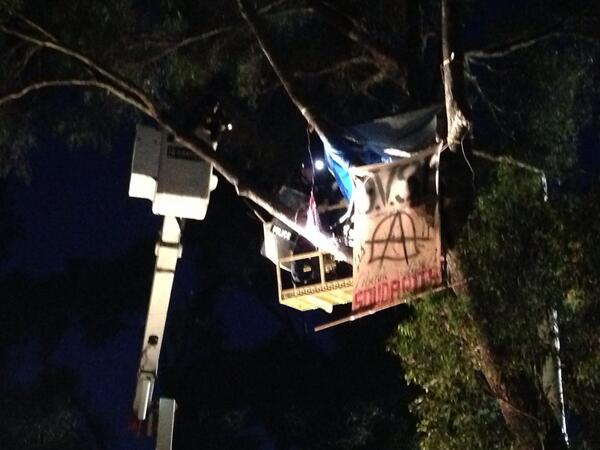
Workers sent to cut down trees on the site were locked out around 8 a.m. today, the protestors said. Protestors said Thursday that they had been served with a notice to vacate the land by San Francisco police. A San Francisco police spokesman denied that officers had served any notices to the site and said police were not on the scene as of this morning. Hayes Valley Farm had operated under a temporary interim use agreement, in which the city granted fiscal support and use of the land formerly occupied by a freeway on-ramp that was torn down. It began in January 2010. But the land, which the city sold to developers Avalon Bay and Build Inc., was always slated for development. A 182-unit housing project is slated to start construction later this year.

Secret Trade Agreements Threaten Food Safety, Subvert Democracy

If you think the U.S. government is doing a sub-par job of keeping your food safe, brace yourself. You could soon be eating imported seafood, beef or chicken products that don’t meet even basic U.S. food safety standards. Under two new trade agreements, currently in negotiation, the U.S. Food and Drug Administration (FDA) could be powerless to shut down imports of unsafe food or food ingredients. And if it tries, multinational corporations will be able to sue the U.S. government for the loss of anticipated future profits. More frightening? Negotiations for both agreements are taking place behind closed doors, with input allowed almost exclusively from the corporations and industry trade groups that stand to benefit the most. And the Obama Administration intends to push the agreements through Congress without so much as giving lawmakers access to draft texts, much less the opportunity for debate.

Fishy Car Protest Art Makes a Spectacle

Meanwhile, 300-pound structures can’t fit inside rowhouses, so Madrid and her colleagues mounted them on the cars early. These are the toils of creating protest art. It’s hardly an unusual activity in Washington, a magnet for protesters of all sorts. But it’s jarring to see the art without the context, as Madrid and her colleagues use the cars for routine daily errands — going to work, picking people up from the airport and bulk-buying groceries. Nikolas Schiller, 32, who drives Goldie the Apple, doesn’t mind the baffled stares. No one fully understands what’s going in their food anymore either, he says. “That [confusion] is kind of what we’re going for,” he said. The kids smile when they see Goldie the Apple, because Goldie the Apple is smiling at them. It’s not unusual for someone to come up to Schiller or Madrid during lunchtime, asking whether the cars are new food trucks.

U.S. Regulatory System “Stymied by Special Interests”

“[The U.S.] regulatory system is frequently subject to undue influence from regulated industries during the development and review of standards and rules,” a new CSS report, released Tuesday, states. That system “is not as responsive in the face of new knowledge and new risks as the … public has a right to expect. Instead, it is plagued by a number of problems that make it difficult for federal regulatory agencies to react to identifiable hazards in a timely, proactive fashion.” CSS is an umbrella of nearly 150 state and national business, labour, science, health, advocacy and environment groups. Nearly four decades after U.S. public interest regulation began in earnest – covering issues such as public health, safety and the environment – the report points to a slew of regulations that have already been approved by legislators but currently remain mired in judicial or executive approval processes.

Maybe Nestle is the World’s Most Evil Corporation

All over the world, Nestle has been draining the water from financially beleaguered regions. The technique Nestlé uses is this: Find an economically weak region, buy up the land surrounding the water source and grease the political wheels by making a proposal the residents can’t possibly refuse. How can depressed regions resist new jobs and added local revenue? But, the revenue generated by these regions natural resource by and large goes to a corporation headquartered in Lake Geneva, Switzerland. And if the financial incentives aren’t enough to assuage concerned citizens, Nestlé’s more than happy to battle it out in court. Just so that’s clear, they find places that are already struggling with poverty.

Videos – March Against Monsanto

Here are two youtube videos concerning last week's international day of action against Monsanto. The first is about the total lack of corporate media coverage despite protests involving over a million people in more than 400 countries. The second is an inspiring speech by retired Police Captain Ray Lewis, participating in the march against Monsanto in Philadelphia.

Occupy Oklahoma Relief: Mutual Aid Without the Bureaucracy

Money sent to the big players was ending up in Washington, DC. Certainly some would be spent on affected people in Oklahoma, but the vast majority would be sent to other areas or spent on overhead, administration costs. At last count, the Red Cross was still sitting on $110 million allocated for Superstorm Sandy. While some NGOs have done some fantastic work , Oklahoma communities know their needs best. There had to be a better way. OpOK Relief stepped in to fill the gaps as part of the People’s Response. As a convergence of Occupy groups, anarchists, libertarian socialists, Food Not Bombs, Rainbow Family, IWW, teachers, social workers, and non-hierarchical, non-bureaucratic relief groups.

Connecticut First State to Pass GE Food Labeling Law

While the labeling provisions of the bill are strong, unfortunately, legislators added a “trigger clause,” which requires that four other states in the northeast region enact similar bills before the law takes effect in Connecticut. Cook-Littman told me that the advocates fought to keep this provision out, but at the end of day, they were advised to take the compromise or else risk the bill going down to defeat, with an uncertain future. She is quite confident that the clause will actually motivate other states to get bill passed. And as a member of theRight to Know Coalition of States, she is determined to help others in doing so.

Monsanto Gives Up Fight for GM Plants in Europe

The German Agriculture Ministry said Monsanto's move was a corporate decision and would not comment further. But it added it was no secret the ministry had been highly critical of gene modification technologies. "The promises of GM industry have not come true for European agriculture, nor have they for the agriculture in developing and emerging economies," the ministry said in a statement. In Germany, the protest movement against GM plants has been particularly strong for years. Vociferous rallying prompted the government in 2009 to prohibit the growing of Monsanto's MON810 GM maize variety.

A Realistic Radical Remaking of the Economy

We are in a “prehistory” of a radical remaking of the economy—not corporate capitalist, state socialist, or welfare-statist. The historian Howard Brick, in Transcending Capitalism: Visions of a New Society in Modern American Thought, criticized the post-capitalist imaginings of the past century for failing to make clear how and when the segue to the next stage would take place. The merit of economic democracy thinking is that it is pragmatic and realistic. The present system while failing most Americans and in collapse is resilient but there are growing patterns of resistance. How and, when will resistance get us out of the economic corruption of corporate capitalism? Economic democracy is developing a comprehensive alternative that is as theoretically rigorous and practical, with a blueprint for an economic democracy political program.

Monsanto Threatens Democracy: 16 of 22 Monsanto Lobbyists Held Government Jobs

Ninety-three percent of Americans support labeling foods that contain genetically altered crops. The discrepancy between public opinion and the status quo can be explained by two competing theories. Either the polling methodology used by seasoned media organizations is flawed, or there is an active lobbying effort designed thwart the democratic process. Michael Taylor, Obama's 'food czar', was former head of Monstanto’s food and drug law practice, and was appointed to the FDA position by President Barack Obama in 2013. Coincidently, Obama was ranked No. 2 in political action committee contributions from Monstanto between 2011 and 2012.
assetto corsa mods

Urgent End Of Year Fundraising Campaign

Online donations are back! Keep independent media alive. 

Due to the attacks on our fiscal sponsor, we were unable to raise funds online for nearly two years.  As the bills pile up, your help is needed now to cover the monthly costs of operating Popular Resistance.

Urgent End Of Year Fundraising Campaign

Online donations are back! 

Keep independent media alive. 

Due to the attacks on our fiscal sponsor, we were unable to raise funds online for nearly two years.  As the bills pile up, your help is needed now to cover the monthly costs of operating Popular Resistance.

Sign Up To Our Daily Digest

Independent media outlets are being suppressed and dropped by corporations like Google, Facebook and Twitter. Sign up for our daily email digest before it’s too late so you don’t miss the latest movement news.