Skip to content

Transportation

20-Mile Bike Lane Is Also Massive Solar Array

Until it’s actually possible to pave our parking lots and roads in solar panels, here’s a promising compromise from South Korea. In between the cities of Daejeon to Sejong, there’s a 20-mile bike lane that’s covered by an impressive solar array. The overhead solar panels not only generate renewable power but also provide shade and cover from rain for the bicyclists. A bike lane that’s also a solar farm is a wonderful concept, but does it have to be smack in the middle of a busy highway? Some have pointed out that cyclists are exposed to vehicular fumes and emissions of the fast-moving cars and trucks zipping down the road. And although bikers are protected by a barrier, a BBCarticle once observed that Seoul drivers are “notorious for ignoring any traffic rules, especially red lights, and will drive across intersections over red lights.”

The Co-op Alternative To Uber

Gebremariam isn’t just complaining about it. Instead, he and 644 other drivers are on a mission to form a new taxi company that will be both worker-owned and unionized. The new co-op, Green Taxi, will have a fleet of hybrid or high-efficiency vehicles, and will offer a ride-hailing app. The drivers aren’t going it alone. The Communications Workers of America Local 7777 union is playing a key role in helping them break into Denver’s heavily regulated taxi industry. The new cooperative faces many legal barriers before they can get taxis on the road. For example, the Public Utilities Commission, which oversees the industry, requires potential new companies to prove that they have a viable business plan, that more drivers are needed, and that the new company won’t put existing ones out of businesses.

Five Important Questions About DEA’s Vehicle Surveillance Program

With each week, we seem to learn about a new government location tracking program. This time, it’s the expanded use of license plate readers. According to The Wall Street Journal, relying on interviews with officials and documents obtained by the ACLU through a FOIA request, the Drug Enforcement Administration has been collecting hundreds of millions of records about cars traveling on U.S. roads. The uses for the data sound compelling: combating drug and weapons trafficking and finding suspects in serious crimes. But as usual, the devil is in the details, and plenty of important questions remain about those details. First, who approved the program, and under what circumstances? We don’t know. The DEA is an arm of the Department of Justice, so presumably the Attorney General’s office has been involved, but details aren’t yet available. Also unknown is whether there has been any judicial oversight.

Electrified Rail One Of Best Clean Transport Options

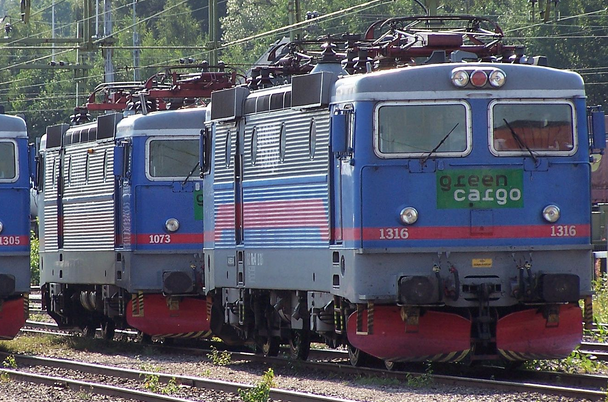
Electrified Rail offers one of the best options to provide transportation powered by renewable energy. This meets one of the largest challenges to transitioning from fossil fuels, clean mobility. Following is an excerpt from an upcoming paper on Solutionary Rail, a Backbone Campaign effort to promote renewable-powered electrified rail for freight and passengers. This excerpt explores the tremendous carbon pollution reductions offered by shifting freight from trucks to trains. Solutionary Rail will be focused in several upcoming events, a teach-in this coming Saturday, Feb. 21 in Seattle, and two Future of Rail conferences cosponsored by Backbone and Railroad Workers United In Olympia, Washington and Richmond, California.

US Ports Shutdown Continues, Labor Secretary To Intervene

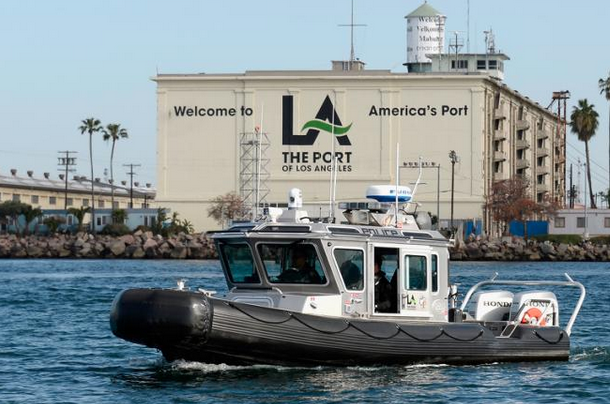
A partial shutdown of 29 U.S. West Coast ports stretched into a third day on Monday ahead of the U.S. labor secretary's scheduled arrival in San Francisco to try to broker a settlement ending months of disruptions on the cargo-clogged docks. President Barack Obama, under pressure to weigh in on a labor dispute that has rippled through the U.S. commercial supply chain and beyond, said on Saturday he would dispatch Labor Secretary Tom Perez to meet with the two sides in the conflict. A spokeswoman said the labor secretary was due to arrive in San Francisco on Tuesday to join in talks between the shipping companies and the union representing 20,000 dockworkers. The secretary's spokeswoman, Xochitl Hinojosa, declined to detail his itinerary or his meetings schedule. The White House said last week that Perez had already been in contact with the parties and would keep Obama informed.

Huge Fire In West Virginia After Oil Train Derails

A train carrying more than 100 tankers of crude oil derailed in southern West Virginia on Monday, sending at least one tanker into the Kanawha River, igniting at least 14 and sparking a house fire, officials said. There were no immediate reports of injuries. Nearby residents were told to evacuate as a state emergency response team and environmental officials headed to the scene about 30 miles south-east of Charleston. The state was under a winter storm warning and getting heavy snowfall at times, with as much as 5in in some places. It was not clear if the weather had anything to do with the derailment, which occurred about 1.20pm ET along a flat stretch of rail. A public safety spokesman, Lawrence Messina, said responders reported one tanker and possibly another went into the river.

Northern Dene Trappers Alliance Holding The Line

The Northern Dene Trapper Alliance have been staying in trapper tents for the past 60 days, 10 km north of LaLoche, Saskatchewan along Hwy #955. They established the Camp on November 19, 2014 to show their grave concern over the amount of uranium and oilsands exploration that is taking place in their traditional trapping, hunting, and fishing areas. On November 22, 2014 they erected a checkpoint to prevent vehicles associated with this exploration from going through. Saskatchewan Government sent a negotiator to the Camp in late November. On December 1, 2014 a dozen RCMP with their hands on their pistols and two video cameras rolling served them an injunction removed the barricade and a trailer from the side of the road. The people at the Camp are not going away. They have been keeping a presence despite the injunction.

8 Reasons To Adopt A Car-Free Lifestyle

Numerous studies are showing that Americans are driving less. Younger people no longer see buying their first car as an eagerly anticipated rite of passage. Fewer own cars for reasons ranging from cost—they’re paying off student loans, not making major purchases—to the fact that many are moving back to cities where a car is not only not a necessity but a costly nuisance. The number of miles driven by the population as a whole has been declining for years for many reasons, not just the cost of gas. So the trend is unlikely to reverse, despite the drop in gas prices. And that’s good news in more ways than you might think. 1. It’s good for your bank account. Between payments, upkeep, insurance and gas, owning a car can take a major bite out of a household budget.

The First Four-Seater, Solar-Powered Vehicle Hits The U.S. Road

Stella, the first ever family sized road vehicle that runs on the sun has made its U.S. debut. The car took first place in the World Solar Challenge and won the Michelin Cruiser Class for completing a 3,000 kilometer journey from Darwin to Adelaide in Australia last fall. While other solar-powered vehicles have been made for racing, the solar-powered Stella is the first vehicle made for road travel. A large solar panel sits atop the roof to power the car up to 500 miles on a single charge. Compare that to a Tesla Roadster, which can run on an electric charge for 245-300 miles. The Netherlands team that designed the vehicle took Stella for a U.S. tour to help kick off National Drive Electric Week.

Officials Ban Die-Ins At Grand Central Station

On Tuesday, New York City’s Metropolitan Transit Authority announced it would no longer permit die-ins at Grand Central Terminal. Since the failure to indict the police officer who killed Eric Garner, protesters have been participating in die-ins at the Terminal nearly every night. This sort of demonstration has become an increasingly popular tactic of the Black Lives Matter movement, in which protesters raise awareness of racist police violence by lying down to symbolize its end result: the death of people of color. “They were happening on a regular basis since the Eric Garner non-indictment,” said Aaron Donovan, spokesman for the MTA. “Not exactly nightly, but almost nightly.”

China’s New Silk Road Threatens US Imperialism

November 18, 2014: it’s a day that should live forever in history. On that day, in the city of Yiwu in China’s Zhejiang province, 300 kilometers south of Shanghai, the first train carrying 82 containers of export goods weighing more than 1,000 tons left a massive warehouse complex heading for Madrid. It arrived on December 9th. Welcome to the new trans-Eurasia choo-choo train. At over 13,000 kilometers, it will regularly traverse the longest freight train route in the world, 40% farther than the legendary Trans-Siberian Railway. Its cargo will cross China from East to West, then Kazakhstan, Russia, Belarus, Poland, Germany, France, and finally Spain. Today, 90% of the global container trade still travels by ocean, and that’s what Beijing plans to change. Its embryonic, still relatively slow New Silk Road represents its first breakthrough in what is bound to be an overland trans-continental container trade revolution.

Nader: Oil Trains Unsafe (& Unecessary) At Any Speed

Now, in the midst of a North American oil boom, oil companies are using fracking and tar sands mining to produce crude in remote areas of the U.S. and Canada. To get the crude to refineries on the coasts the oil industry is ramping up transport by oil trains. In 2008, 9,500 crude oil tank cars moved on US rails. In 2013 the number was more than 400,000! With this rapid growth comes a looming threat to public safety and the environment. No one — not federal regulators or local firefighters — are prepared for oil train derailments, spills and explosions. Unfortunately, the rapid increase in oil trains has already meant many more oil train disasters. Railroads spilled more oil in 2013 than in the previous 40 years combined.

People Protest Oil Trains, Then Tax Dollars Used To Fund It

For the past 18 months, Americans from Albany to Oregon have voiced growing alarm over the rising number of oil-laden freight trains coursing through their cities, a trend they fear is endangering public safety. In at least a handful of places, the public is also helping fund it. States and the federal government have handed out tens of millions in public dollars to rail companies and government agencies to expand crude oil rail transportation across the country, a Reuters analysis has found. The public assistance in states like New York, Pennsylvania, Ohio, Oklahoma and Oregon comes as railroads are posting record profits, and as state and federal authorities press for safety overhauls that the oil and rail industries have opposed, following several explosive derailments.

The Dangerous Deadly Reality Of Oil Trains

Much of North Dakota's oil is being transported by rail, rather than through pipelines, which are the safest way to move crude. Tank carloads of crude are up 50 percent this year from last. Using rail networks has saved the oil and gas industry the time and capital it takes to build new pipelines, but the trade-off is greater risk: Researchers estimates that trains are three and a half times as likely as pipelines to suffer safety lapses. Indeed, since 2012, when petroleum crude oil first began moving by rail in large quantities, there have been eight major accidents involving trains carrying crude in North America. In the worst of these incidents, in July, 2013, a train derailed at Lac-Mégantic, Quebec and exploded, killing 47 and burning down a quarter of the town.

Bicyclists Demonstrate How Bikes Reduce Traffic Jams

In Latvia, as part of International Car Free Day, some cyclists went to a lot of trouble to tangibly demonstrate one huge difference between bikes and cars: the amount of space they take up on the road. These photos, which the European cycling group Let's Bike It posted to the social network Vk.com, show a group of bikers in Riga that strapped rickety car-sized constructions to their bikes to show how much space they'd take up if they were actually driving one. The implication here is pretty obvious: if those cyclists actually were in cars, they'd dramatically increase traffic congestion. On the other hand, getting people out of cars and onto bikes is one way of cutting it. The photos also call to mind a particularly well-known demonstration of the road space people in cars take up, in comparison to both bikes and buses.
assetto corsa mods

Urgent End Of Year Fundraising Campaign

Online donations are back! Keep independent media alive. 

Due to the attacks on our fiscal sponsor, we were unable to raise funds online for nearly two years.  As the bills pile up, your help is needed now to cover the monthly costs of operating Popular Resistance.

Urgent End Of Year Fundraising Campaign

Online donations are back! 

Keep independent media alive. 

Due to the attacks on our fiscal sponsor, we were unable to raise funds online for nearly two years.  As the bills pile up, your help is needed now to cover the monthly costs of operating Popular Resistance.

Sign Up To Our Daily Digest

Independent media outlets are being suppressed and dropped by corporations like Google, Facebook and Twitter. Sign up for our daily email digest before it’s too late so you don’t miss the latest movement news.