Skip to content

Women’s Rights

Arizona Student Fights Oppressive Anti Sex-Work Law

Monica Jones, an activist and student of social work at Arizona State University (ASU) in Phoenix, will be on trial April 11 for "manifesting prostitution." It’s a charge made under a vague local statute that allows cops to arrest suspected sex workers for doing as little as repeatedly waving at cars, even if no money is exchanged for sex. Jones and other advocates say the law allows the police to profile and discriminately target poor people, queer people and people of color. Although she is risking missing her classes if she is found guilty and given jail time, Jones is determined to beat the charges in court.

Reproductive Justice Denied to Indigenous Women

In October of last year, Irma Lopez Aurelio arrived at a state health clinic in Oaxaca, Mexico, in labor with her third child. The doctors at the clinic told her to come back, that her labor was not advanced enough and no doctor was available to help her. Irma, who is indigenous, spoke little Spanish and was unable to communicate how advanced her labor was to the monolingual doctors. After hours of waiting, Irma gave birth on the lawn outside of the clinic. In the past nine months, seven indigenous women in Mexico have been documented having their babies in the yard, waiting rooms, or front steps of state clinics. The vast majority have occurred in Oaxaca, the third poorest state, with the largest indigenous population in the country.

Black Girls’ Struggle: Why We Lose When Black Boys Dominate the Discourse

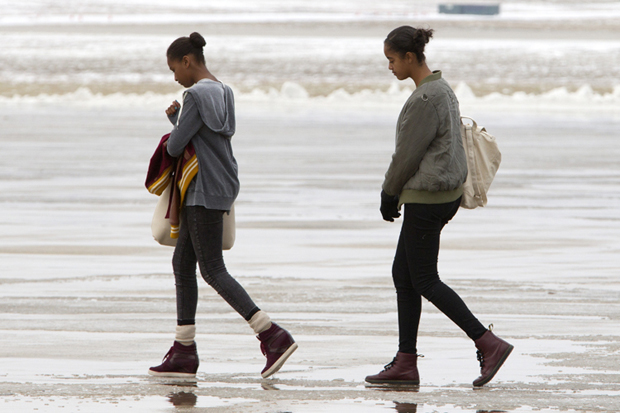
Two African-American girls live in the White House. But Malia and Sasha Obama’s presence there, in a traditional two-parent home, alongside their highly accomplished mother and their devoted grandmother, feeds a dangerous and false narrative about the progress of African-American girls and women. Though President Obama has been able to provide this kind of life for his daughters, he seems oblivious to all the ways in which Malia and Sasha’s educational and economic trajectory, even prior to coming to the White House, looks in no way similar to that of the masses of African-American girls.

Women of Bhopal Call on UN to Address Chemical Disaster

On the occasion of International Women’s Day, and in light of the Millennium Development Goals (MDGs), which emphasize the importance of improving maternal/reproductive health, The International Campaign for Justice in Bhopal (ICJB) wishes to draw your attention to the ongoing plight of women impacted by the Bhopal gas disaster. December 3, 2014 will mark 30 years of the Bhopal gas disaster and an extraordinary struggle for justice led by ordinary Bhopali woman.

Women Learn Skills, Gain Empowerment At Barefoot College

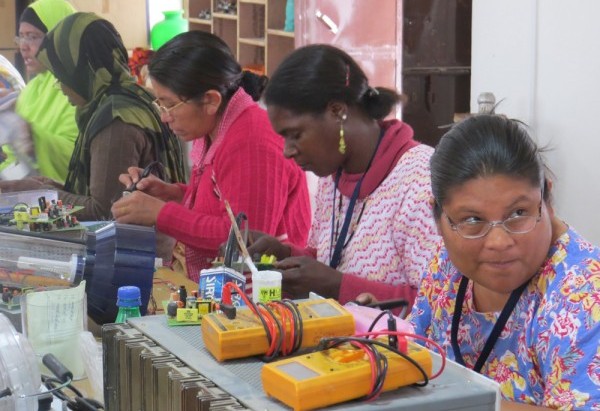
A few months ago, the Afghan Peace Volunteers began planning to send a small delegation of young women to India as guests of Barefoot College, a renowned initiative that uses village wisdom, local knowledge and practical skills available in the rural areas to improve villagers' lives. After several suspenseful weeks wondering if families and governments would give permission for travel, we were finally able to tell hosts at the Barefoot College that we would soon be on our way. Now we are beginning the last day of our brief but rewarding visit to Tilonia, the small village in India's Rajasthan State, where two Barefoot College campuses are thriving. One of the villagers, Ram Niwas, has helped us learn about Barefoot College by telling us parts of his own life story and introducing us to people who have become barefoot dentists, accountants, solar engineers, radio broadcasters, teachers, water treatment specialists and puppeteers.

A Small Victory For Native Women & Tribal Sovereignty

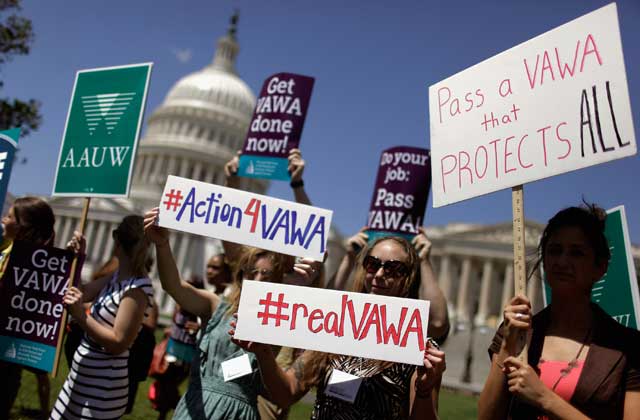
When President Obama signed the Violence Against Women Reauthorization Act (VAWA) in 2013, he enacted legislation that allows Native American tribes to use their own courts to prosecute non-Natives accused of committing dating and domestic violence against Natives on tribal land. The jurisdictional changes take effect in March 2015 but a pilot program, coordinated by the Department of Justice (DOJ), has authorized three tribes to exercise the prosecutions starting this week. Tribal authority over non-Natives is not new but was completely halted in 1978. But the pilot project—and VAWA itself—is a big acknowledgement of tribal sovereignty. And, because non-Native attacks on Natives on the reservation are so prevalent, it’s expected that its first case under the pilot project will emerge soon.

Women Unite To Fight Climate Change

Given that women in North America make 80 percent of all consumer purchases, Lake believes women can impact what’s being done to lessen the effects of climate change on multiple levels. “[I]magine how that market power could be mobilized to significantly reduce carbon emissions through purchasing choices, including demanding an end to fossil fuels and a radical increase in renewable energy,” she said. Nathalie Issacs, co-founder of 1 Million Women, an organization that focuses on sustainability and climate awareness, agrees women have real economic power when it comes to influencing climate change. Issacs said that the power comes from our everyday choices, including how we live, what we buy, don’t buy, how much we save, how much we spend, where we invest, how much we donate, where we work, and who we do business with. “By mobilizing this economic power of women, built on the individual choices we make with our money, the objective of 1 Million Women is to change to a fossil free economy,” she said.

What To Do About Injustice Against Women

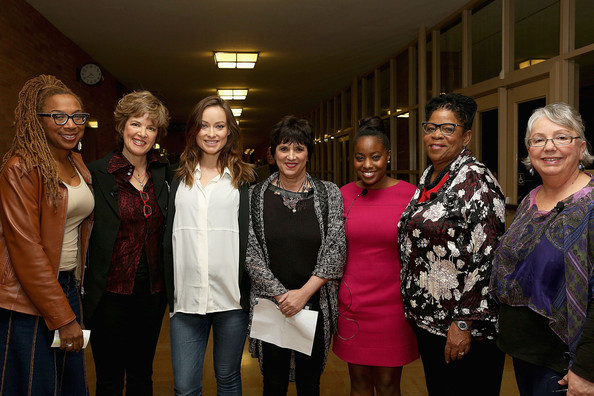
The panelists shared a variety of stories, illustrating the various ways women experience violence and how these ways intersect. They also discussed how violence disassociates women from their bodies and how women can reclaim them. The panelists then talked about the best ways to help other women, as well as their visions for the future. Ensler concluded the panel with her vision: My vision is that we look at the people next to us, and we remember that everyone has been left out of something, everybody has been disappeared, everybody has been erased one way or another. Our job is to see each other, to recognize each other, and love each other because that's how we'll rise. The discussion is truly a must-view. Below is the video of the panel

‘One Billion Rising’: Global Action Against Gender Violence

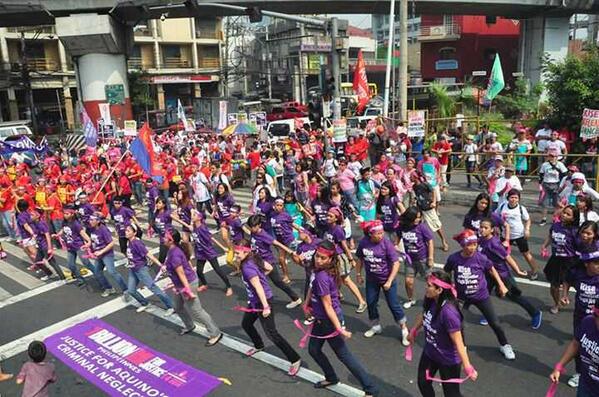
One billion women, men, and youth from 200 countries joined forces Friday for the second annual "One Billion Rising for Justice" day of action, rising up to demand an end to violence against women and girls across the world. "Women are putting their bodies at the site where vulnerabilities intersect," Kimberlé Crenshaw, co-founder of the African American Policy Forum, recently told Democracy Now! in anticipation of the event. "By that I mean where vulnerability to gender violence, vulnerability to economic exploitation, vulnerability to the drug war — all these things come together to create unique risks, many times risks that poor women, marginalized women, women of color face." Protesters will be gathering outside places "where they are entitled to justice" over the course of 48 hours.

Indigenous Feminism Is Not For Later. It’s For Today

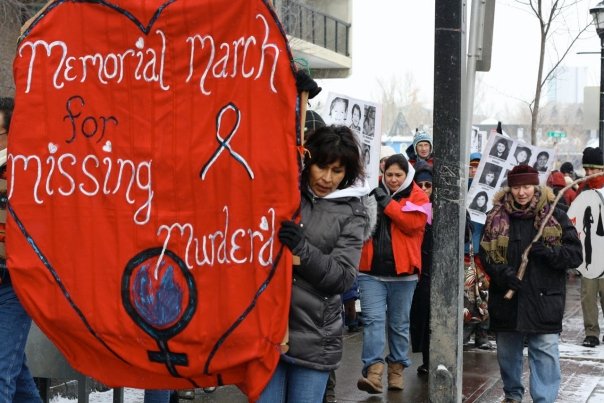
“Just the fact that we’re women and we’re indigenous makes us susceptible for violence for no other reason other than those two factors,” the University of Alberta alumna, lawyer and community activist says. “(But) not just the physical forms — the mental, the emotional and the spiritual forms that indigenous women face more highly than any other group in the country. “This is a continued reality, it hasn’t stopped, and it’s not a historical thing.” It’s revelations like these that have enticed impassioned and frustrated calls for justice, respect and social change, especially since indigenous women 15 years and older are 3.5 times more likely to encounter violence than non-indigenous women. This has prompted the Native Women’s Association of Canada to compile a database of 582 missing and murdered indigenous women nationwide, with more than half of the cases in the database remaining unsolved.

Stealing Roe One Law At A Time

"Forty-one years after Roe v. Wade, the U.S. Supreme Court decision that made abortion legal, the attacks on reproductive rights are escalating--so much so that, according to a recent study, more legislation restricting abortion has been passed in the last three years than in the decade before that. According to a study by the Guttmacher Institute, over the course of 2013, 39 states enacted 141 provisions related to reproductive health and rights. Half of these provisions--70 in 22 states--restricted access to abortion services. Some 205 abortion restrictions went into effect between 2011 and 2013, compared to 189 between 2001 and 2010."

Video: Reproductive Rights in a State of Emergency

This Wednesday marked the 41st anniversary of the Roe v. Wade Supreme Court decision, which protected a women’s decision to have an abortion was marked by thousands of anti-abortion activists taking part in a march for life in Washington, D.C. Carrying signs saying “I AM the pro-life generation”, and “conceived from rape, I love my life” marches converged on the National Mall Wednesday and marched to the Supreme Court. While public opinion on abortion has not shifted much since the 1970s, the war on female reproductive rights, which was raging at a fever pitch in 2013, continues to escalate. A 2013 Gallup poll showed that “52 percent of Americans support access to legal abortions under certain circumstances, with 26 percent holding it should always be legal and 20 percent in favor of an outright ban.” Those numbers have shifted little in a generation. However, as Sunsara Taylor of Stop Patriarchy, points out Reproductive rights are in a state of emergency.

Rise Of Women In Labor Could Save The Movement

Even as the traditional labor movement falters, hitting a ninety-seven-year low in membership rates, female labor leaders like Jayaraman are on the rise and becoming highly visible. Women workers, who were all but shut out from unions in the 1930s, when the movement first gained real power, have been pushing into the top ranks. Mary Kay Henry is president of SEIU, one of the largest unions in the country. Randi Weingarten heads the American Federation of Teachers. At the AFL-CIO, Elizabeth Shuler is the secretary-treasurer and Arlene Holt-Baker recently retired as executive vice president. Lower-profile leaders are also making headway—and meeting with success. Karen Lewis, president of the Chicago Teachers Union, made headlines around the country when her members went on strike in 2012 and won important concessions. At the helm of the New York Taxi Workers Alliance, Bhairavi Desai secured a fare hike that benefits taxi drivers. And outside the traditional labor movement, in the so-called “alt-labor” sector, female leaders dominate: Jayaraman at ROC United, Ai-jen Poo at the National Domestic Workers Alliance and Caring Across Generations, Nadia Marin Molina with day laborers at the National Day Laborer Organizing Network, Sarita Gupta at Jobs With Justice, and Madeline Janis bringing workers together with other groups in Los Angeles through LAANE. These women are bringing new ideas and strategies to labor organizing, many of which are borrowed from the women’s movement—like making the connection between what workers face on the job and what they’re dealing with at home. They don’t only target corporate bosses but bring together a variety of stakeholders within communities to fight for change in the workplace and beyond.

Global Feminism in One Place? It’s Possible!

If you’ve been looking for a way to connect with other feminists and organizations worldwide, there’s a new tool to enable you to do just that: The Feminist Network Project. The Network was created by a group of feminist activists who met this past May at the World Social Forum in Tunis. The group of five women—from Canada, France, Morocco, Spain, and Tunisia—came from very different backgrounds but shared a common vision: to create a means for feminists from many countries to connect and communicate. They recognized that the more that individuals and small, local groups can connect with each other, the more they build their strength and reach. Within several weeks, content in English, French, and Spanish was available on the site, with its centerpiece, the interactive World Map of Feminists, where individuals can add their names, social media platforms, organization, and location to join the worldwide network.

Paraguay: Woman At The Center Of Resistance

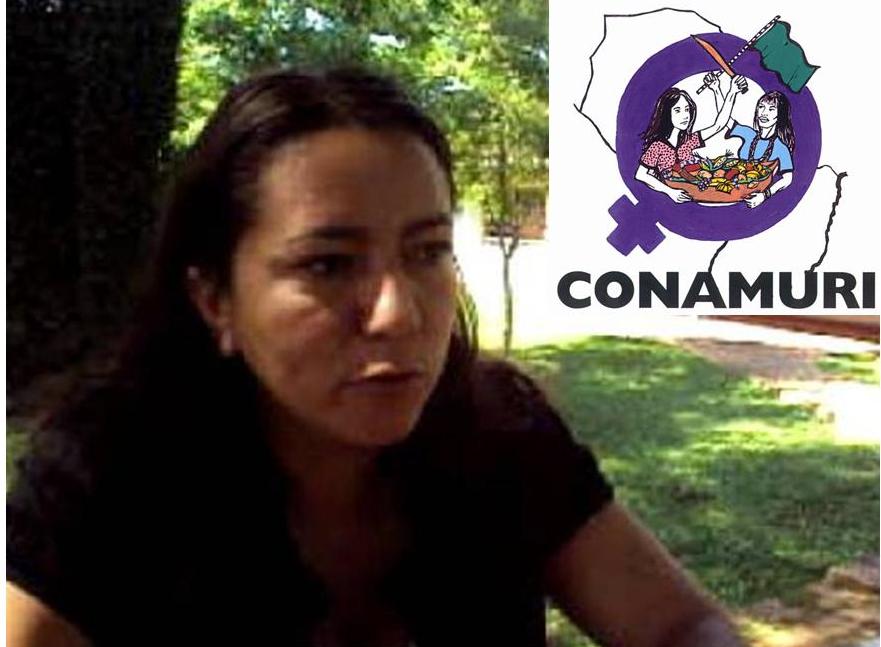
They begin to talk about the news in Los Bañados, in particular the construction of the dreaded Franja Costera [coastal strip] project that threatens to “urbanize” a barrio of 150,000 inhabitants. Thanks to the to the neighborhood’s hard work in land recovery, the area is now prized by real estate speculators. The last flood two months ago was the excuse used by the authorities to renew threats to evict thousands from their homes. Maria points to the street where she lives, which would be the boundary set by the government for families to be evicted and houses to be destroyed. These two organizations—one rural with campesinas and indigenous women and the other urban with members of Asunción’s working class—are very different. But they have several things in common: A vocation for community resistance to the advance of capital over their lives (soy and agrotoxins or real estate speculation, in these cases), most of the members are women, and they are open to working with young men.
assetto corsa mods

Urgent End Of Year Fundraising Campaign

Online donations are back! Keep independent media alive. 

Due to the attacks on our fiscal sponsor, we were unable to raise funds online for nearly two years.  As the bills pile up, your help is needed now to cover the monthly costs of operating Popular Resistance.

Urgent End Of Year Fundraising Campaign

Online donations are back! 

Keep independent media alive. 

Due to the attacks on our fiscal sponsor, we were unable to raise funds online for nearly two years.  As the bills pile up, your help is needed now to cover the monthly costs of operating Popular Resistance.

Sign Up To Our Daily Digest

Independent media outlets are being suppressed and dropped by corporations like Google, Facebook and Twitter. Sign up for our daily email digest before it’s too late so you don’t miss the latest movement news.