Skip to content

Food and Agriculture

USAID, EU & Gates Foundation Back Agribusiness Takeover In Africa

A battle is currently being waged over Africa's seed systems. After decades of neglect and weak investment in African agriculture, there is renewed interest in funding African agriculture. These new investments take the form of philanthropic and international development aid as well as private investment funds. They are based on the potentially huge profitability of African agriculture - and seed systems are a key target. Right now ministers are co-ordinating their next steps at the 34th COMESA (Common Market for Eastern and Southern Africa) Intergovernmental Committee meeting that kicked off yesterday, 22nd March, in preparation for the main Summit that will follow on 30th and 31st March 2015.

Sharing Seeds When Government Says Its Illegal

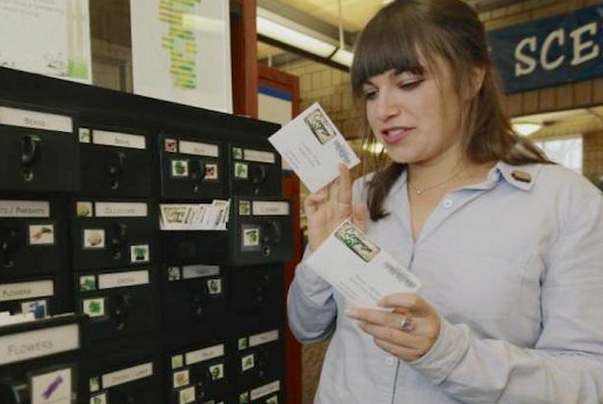
After the Pennsylvania Department of Agriculture cracked down on a seed bank in the Joseph T. Simpson Public Library in Mechanicsburg, Pennsylvania, hundreds of seed libraries in the U.S. are suddenly wondering if they are breaking the law. According to Pennsylvania regulators, in order to give out member-donated seeds, the Simpson Seed Library would have to put around 400 seeds of each variety through impractical seed testing procedures in order to determine quality, germination rate, and so on. The result of the Pennsylvania crackdown is that the library will no longer give out seeds other than those which are commercially packaged. Ironically, this is in the name of “protecting and maintaining the food sources of America.” In this news article that went viral, regulators said that “agri-terrorism is a very, very real scenario.” In reality, seed libraries have emerged to protect our food sources and ensure access to locally adapted and heirloom varieties. The public’s access to seeds has been decreasing since a 1980 Supreme Court ruling that a life-form could be patented. Since then, big seed companies have shifted away from open-pollinated seeds to patented hybridized and genetically engineered varieties. The companies prohibit farmers from saving and replanting such seeds, requiring that they buy new seeds each year. Counter to this trend, seed libraries give members free seeds and request that members later harvest seed and give back to the library thereby growing the pool of seeds available to everyone.

A Complete Urban Farm In A Shipping Container

The Freight Farms design is based on a conventional insulated shipping container measuring 40' x 8' (~12.2m x 2.4m), but are extensively retrofitted to serve as a micro-farm that can grow some 4,500 plants at a time. The rows of plants are grown vertically, with the LED lighting strips between them delivering "the optimal wavelengths for uniform plant growth" and the hydroponic system supplying the nutrients that the plants need, directly to their roots, using 90% less water than conventional growing does. And not only do the units grow mature crops, but the LGM also integrates a dedicated germination and seedling station (also using LED lighting and hydroponic irrigation) that can handle up to 2500 plant starts, which then get planted into the growing towers a few weeks after sprouting. This aspect of the LGM is probably one of the most essential elements for a production farm, and one that isn't so obvious to non-farmers, as it enables the growers to start seeds and continuously feed those seedlings into the system for regular harvests, all within the walls of the shipping container.

Oregonians Are ‘Mad as Hell’ About Trade Deals

According to people I’ve talked to on the ground in Oregon, that may be something close to what many residents there are feeling right now. But instead of shouting out the window, Oregonians are petitioning and phoning their senator, Ron Wyden, to ask him to oppose granting so-called fast track authority to President Obama. Granting that authority would allow the president to speed two dangerous international trade pacts through Congress, and Wyden, the ranking member of the Senate Committee on Finance, is a critically important figure whose support will be necessary for the passage of the agreements—known as the Trans-Pacific Partnership, or TPP, and the Trans-Atlantic Trade and Investment Partnership, or TTIP.

Campaign To Stop Glyphosate, Protect Food

Toxic herbicide GLYPHOSATE, an active ingredient in Roundup, has been found in the breast milk of nursing mothers and in urine collected from people living far from the sites where Roundup is applied to crops. This means that it is IN OUR FOOD supply, on food crops, in processed foods of all kinds, including pediatric and feeding supplements for the most vulnerable children, the elderly, and people with compromised immune systems. Monsanto tells us that Glyphosate does not accumulate in our bodies, but the research being conducted does not back up their statements. Only organically grown, Non GMO (genetically modified) food and food products are free from glyphosate and other toxic herbicides. How dangerous is GLYPHOSATE?

Californians Protest At Oil Industry Workshop

Hazmat suit-wearing demonstrators with Californians Against Fracking protested Tuesday outside and inside a state-run “aquifer exemption” workshop in Long Beach aimed at helping oil companies get federal permission to dump oil waste into California’s underground water. The protest started at Noon in front of the Holiday Inn Long Beach Airport, and continued inside the workshop when activists disrupted the proceedings by handing regulators bottles filled with black “frack-water” and asked them if they wanted to drink it. “Instead of this ‘Toxic Dumping for Dummies’ class, Gov. Jerry Brown’s regulators should protect our water from oil waste,” said Ash Lauth of Californians Against Fracking. “During this devastating drought, oil companies shouldn’t be allowed to use our aquifers as trash dumps forfracking flowback and other dangerous fluids.”

Thoughts On Reclaiming Space As Resistance

While our acts of resistance via catapulting our bodies into trees, in front of bulldozers, or onto the streets—screaming with dozens of others—does much to assert our ideology and desires in many realms—I find it more than worthwhile to acknowledge all those others who are also actively responding to oppression in all forms imposed on us by capitalism via creating alternative spaces, reoccupying land, or by generally taking back skills we’ve lost as urbanites and empowering themselves to create a world, presently, in which they’d like to see and share. It seems there are so many of us who subscribe to similar visions of a post-capitalistic world, and yet it seems that action or conversation on that behalf is oftentimes lacking in our circles.Screen Shot 2015-03-25 at 9.03.11 AM

Wave Of Disruption Sweeping In To Challenge Neoliberalism

I have always been attracted to the notion that disruption to powerful systems comes not from the heart of the empire, but from the margins. This idea first fired my imagination while I was learning about the role of the monasteries of the early Celtic church, located on the wild and windswept fringes of western Europe, in reseeding the continent with art, literacy and a love of learning that had been eclipsed by the dark ages. Today, I sense a similar wave of disruption sweeping in from various marginal corners of our globalised system, a mosaic of localised responses weaving into what begins to look like a new narrative to challenge the dominant neoliberal hegemony.

El Salvador Farmers Successfully Defy Monsanto

The perils of ingesting food that has any contact with a Monsanto-produced product are in the news on nearly a weekly basis. As Dr. Jeff Ritterman has documented, Monstanto's herbicide, Roundup, has beenlinked to a fatal kidney disease epidemic, and has also been repeatedly linked to cancer. Recently, a senior research scientist at MIT predicted that glyphosate, the key ingredient in Roundup, will cause half of all children to have autism by 2025. Farmers in El Salvador are acutely aware of the importance of producing their own seeds, and avoiding those from the bioengineering giant.

Protests Target Gates Foundation Meeting On Africa Seed Systems

The Bill and Melinda Gates Foundation (BMGF) and the United States Agency for International Development (USAID) are sponsoring a secret meeting Monday in London to promote a recent report detailing in clear terms how to privatize the seed and agricultural markets of Africa– without African stakeholders having a seat at the table. The meeting is being criticized for including corporations, development bodies, trade bodies and aid donors, yet excluding any African farmers or representatives of affected organizations. Today protesters on both sides of the Atlantic are picketing to protest the corporate capture of seed, and to urge the foundation to support African food sovereignty. Both in London and Seattle protesters will distribute open-pollinated seeds as a symbol of the alternative to the corporate model promoted by USAID and BMGF.

Four Court Victories Uphold GMO Ban In Mexico

The legal battles over the existing ban on the planting of transgenic maize in Mexico continue to unfold with a string of four important court victories by anti-GMO activists. On February 28, 2015, the collective of social movement organizations known asAcción Colectiva del Maíz announced that they had secured four more favorable court decisions involving amparo (shelter) corporate challenges seeking to end the GMO corn ban in Mexico. These are pivotal victories but the group explains that more administrative and judicial reviews remain to be adjudicated, including five by Monsanto and Syngenta against the use of precautionary measures to manage the biosafety risks posed by transgenic corn.

Urban Farmers Want To Feed Whole Neighborhood For Free

Seattle, WA - The Beacon Food Forest is giving away dozens of strawberry plants. For free. It’s a drizzly, chilly, gray Saturday, typical of January in Seattle. In just a few hours, the Seahawks will host the Packers for the NFC Championship. While the rest of the city slugs its first tailgate beer of what will become an epic afternoon of football, 60 or so unpaid farmhands are hard at work. They wheelbarrow wood chips, prune pear trees, and remove invasive species from the hillside urban garden, preparing it for spring. Some are uprooting the profusion of propagating strawberry plants that are taking over pathways and smothering other ground-cover herbage (hence the gratis strawberry plants).

Banana Workers’ Strike Highlights Abuses By Corporations

A strike that has brought activity to a halt since January on three major banana plantations on Costa Rica’s southern Caribbean coast, along the border with Panama, has highlighted the abuses in a sector in the hands of transnational corporations and has forced the governments of both countries to intervene. More than 300 labourers, almost all of them indigenous Panamanians working on plantations for a branch of the U.S. corporation Del Monte Foods, have been on strike since Jan. 16 to protest harassment of trade unionists, changes in schedules and working conditions, delayed payment of wages and dismissals considered illegal.

Seed Libraries Fight For The Right To Share

It’s easy to take seeds for granted. Tiny dry pods hidden in packets and sacks, they make a brief appearance as gardeners and farmers collect them for future planting then later drop them into soil. They are not “what’s for dinner,” yet without them there would be no dinner. Seeds are the forgotten heroes of food—and of life itself. Sharing these wellsprings of sustenance may sound innocuous enough, yet this increasingly popular exchange—and wider seed access—is up against a host of legal and economic obstacles. The players in this surreal saga, wherein the mere sharing of seeds is under attack, range from agriculture officials interpreting seed laws, to powerful corporations expanding their proprietary and market control.

Rural India Fights For Its Rights

It took eight days of walking for 80-year-old Dhanmatya Mumat to reach New Delhi. Like thousands of other farmers from rural India, Mumat - from the state of Bihar - made the 1,000km-long trip to the Indian capital to protest proposed changes to a little known land law that he said would destroy his life. "We came with the hope that our land will be saved, if the government takes away our land, we will die of poverty," Mumat told Al Jazeera. "I request the politicians of the country to kill me rather than taking away my bread and butter." Organisers say some 7,000 people arrived by foot to demonstrate in New Delhi to coincide with a parliamentary session on Wednesday that will decide on proposed changes to the land act - revisions that have raised the ire of many rural Indians.
assetto corsa mods

Urgent End Of Year Fundraising Campaign

Online donations are back! Keep independent media alive. 

Due to the attacks on our fiscal sponsor, we were unable to raise funds online for nearly two years.  As the bills pile up, your help is needed now to cover the monthly costs of operating Popular Resistance.

Urgent End Of Year Fundraising Campaign

Online donations are back! 

Keep independent media alive. 

Due to the attacks on our fiscal sponsor, we were unable to raise funds online for nearly two years.  As the bills pile up, your help is needed now to cover the monthly costs of operating Popular Resistance.

Sign Up To Our Daily Digest

Independent media outlets are being suppressed and dropped by corporations like Google, Facebook and Twitter. Sign up for our daily email digest before it’s too late so you don’t miss the latest movement news.