Skip to content

Food and Agriculture

Don’t Be Fooled: The PR Assault On Organic Food

The New York Post loves a good villain, but you’d think it would be hard to cast a bad light on the group of people profiled in an April 19 story: moms who feed their kids organic food. Naomi Schaefer Riley took on the challenge in “The Tyranny of the Organic Mommy Mafia,” and built a case against “the arrogance and class snobbery” of people who buy and eat food that’s been grown without artificial chemicals. “Organic food does not necessarily mean better. It’s a term that’s been co-opted and manipulated into a billion-dollar industry by some of the biggest food companies in America,” Riley wrote. The anti–organic food narrative is a recurring theme in the media of late. What’s going on with these stories? In January, Slate (1/28/14) served up “Organic Schmorganic” by Melinda Wenner Moyer—shared 45,000 times on Facebook. The story concluded that it’s not worth feeding your kids organic fruits and vegetables because there is no documented harm from conventional produce treated with chemicals, especially when the residues are below levels deemed safe by the US Environmental Protection Agency.

New Garden Grows Conversation On Food Security

A new garden at the University of Alberta is teaching urbanites that a solution to food insecurity lies in their own backyards. The Prairie Urban Farm–a one-and-a-half-acre mixed-crop garden on South Campus–was created by members of the Faculty of Agricultural, Life and Environmental Sciences who identified a gap in the university’s research and teaching on food security. “The purpose of the farm is to motivate more food growing and food literacy amongst local people in the Edmonton area and beyond, and also to encourage all sorts of consumers in cities to play a more active role in their relationship to food,” said Debra Davidson, a director of the farm and a professor in the Department of Resource Economics and Environmental Sociology. The farm is funded through a Sustainability Enhancement Grant from the university’s Office of Sustainability. About 50 volunteers from both inside and outside the university help out with the garden by taking care of crops and doing aesthetic upkeep on the land. Davidson says urban gardening creates a safety net for people in cities, who are most vulnerable to food security issues because they don’t grow their own food. “There’s a tremendous amount of potential for cities themselves to provide a food safety net for their residents for those time periods in which food prices spike because of drought in California, or because of wildfires, or whatever the case may be,” she said.

October: Protest The ‘Wall Street Of Food’

"The World Food Prize is for us in Iowa, what Wall Street is for the Occupy movement in NYC. The very same corporate/financial elites that run Wall Street are the same corporate/financial elites that own the World Food Prize and control the world food supply. " Frank Cordaro -June 2012 We want to invite you to come to Des Moines and join us and many others in a two day Occupation of the World Food Prize. Spend a few minutes on this web page and you will understand why this prize needs to be occupied!) Using our experience form the 2012 Occupy the IA Caucus campaign, for the third year in a row we hope to direct the public discourse about our Global World Food System through the use of direct action & nonviolent civil disobedience.

Eco-Friendly Agriculture Puts Down Roots In Spain

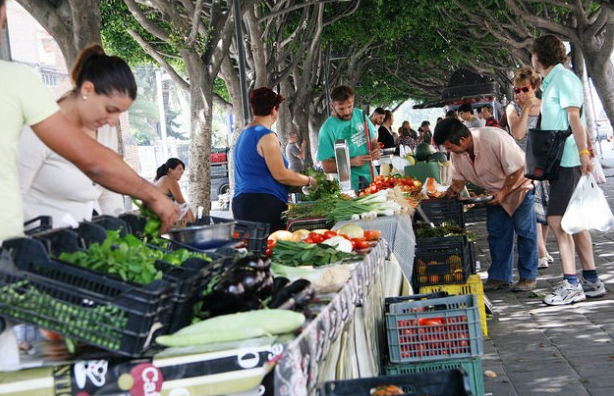
José María Gómez squats and pulls up a bunch of carrots from the soil as well as a few leeks. This farmer from southern Spain believes organic farming is more than just not using pesticides and other chemicals – it’s a way of life, he says, which requires creativity and respect for nature. Gómez, 44, goes to organic food markets in Málaga to sell the vegetables and citrus fruits he grows on his three-hectare farm in the Valle del Guadalhorce, 40 km west of Málaga, a city in southern Spain, And every week Gómez, whose parents and grandparents were farmers, does home deliveries of several dozen baskets of fresh produce, “thus closing the circle from the field to the table,” he told Tierramérica on his farm. The economic crisis in Spain, where the unemployment rate stands at 25 percent, hasn’t put a curb on ecological farming. In 2012, organic farming covered 1.7 million hectares of land, compared to 988,323 in 2007, according to the latest statistics from the Ministry of Agriculture and Environment. Organic farming generated 913,610 euros (1.22 million dollars) in 2012, 9.6 percent more than in 2011.

Setting The Record Straight On The Legality Of Seed Libraries

After the Pennsylvania Department of Agriculture cracked down on a seed bank in the Joseph T. Simpson Public Library in Mechanicsburg, Pennsylvania, hundreds of seed libraries in the U.S. are suddenly wondering if they are breaking the law. According to Pennsylvania regulators, in order to give out member-donated seeds, the Simpson Seed Library would have to put around 400 seeds of each variety through impractical seed testing procedures in order to determine quality, germination rate, and so on. The result of the Pennsylvania crackdown is that the library will no longer give out seeds other than those which are commercially packaged. Ironically, this is in the name of “protecting and maintaining the food sources of America.” In this news article that went viral, regulators said that “agri-terrorism is a very, very real scenario.” In reality, seed libraries have emerged to protect our food sources and ensure access to locally adapted and heirloom varieties. The public’s access to seeds has been decreasing since a 1980 Supreme Court ruling that a life-form could be patented. Since then, big seed companies have shifted away from open-pollinated seeds to patented hybridized and genetically engineered varieties. The companies prohibit farmers from saving and replanting such seeds, requiring that they buy new seeds each year. Counter to this trend, seed libraries give members free seeds and request that members later harvest seed and give back to the library thereby growing the pool of seeds available to everyone.

Sowing Health, Sustainability And Climate Stability

A nation that destroys its soil destroys itself.” – Franklin D. Roosevelt In his opening address to the Savory Institute global conference in London on August 1, Alan Savory said that while agriculture is the foundation of civilization and of any stable economy, it is also, when poorly practiced, the most destructive industry—even more so than coal mining. The World Wildlife Fund estimates that since 1960, a third of the world’s arable land has been lost through erosion and other degradation. Much of the destruction is caused by increased demand for GMO corn, soy, cotton, canola, sugar beet and alfalfa crops, used to feed factory farm animals, to produce highly-subsidized yet inefficient biofuels and to make processed foods. The perpetual cycle of planting mono-crops, saturating the crops and fields with toxic chemicals, tilling them under and replanting them destroys the soil and degrades the land by depleting soil nutrients and causing erosion. Overgrazing pastures instead of managing livestock herds holistically, using a system of planned rotational grazing, is equally destructive.

Fish & Wildlife Service To Stop Use Of GMO’s

National Wildlife Refuge System chief James Kurth has directed the agency to stop using GMO crops and neonicontinoids on refuge farms by January 2016, according to a July 17 memo obtained by activists last week. The Fish and Wildlife Service is the first federal agency to restrict the use of GMOs and neonicotinoids in farming practices. Neonicitinoids are a class of insecticides related to nicotine that act as nerve agents and are typically sprayed on crop seeds to kill insects. Scientists suspect that some neonicitinoids are responsible for declining populations of pollinating insects, and researchers in the Netherlands recently linked neonicotinoids to deaths among farmland birds. For over a decade, GMO crops and neonicotinoid pesticides were used on a regular basis at farming projects on national wildlife refuges across the country.

Shipping Containers As Building Blocks For Vertical Urban Farms

Shipping containers already make great portable storage units, without any modifications, but they also lend themselves to being used as homes, offices, and food production systems with a bit of customization. One idea for repurposing shipping containers in the city comes from the Hong Kong design studio OVA, the firm behind a shipping container hotel concept that Lloyd previously covered, but their Hive-Inn City Farms design takes aim at urban food production instead of lodging. The design centers around a grid frame capable of securely holding shipping containers and allowing them to "plug in" to the core structure, as well as be removed and replaced (or moved to a different location) as needed.

Corporate Victory Will ‘Screw’ Local Farmers As Amendment Passes In Missouri

Agribusiness giants scored a victory in Missouri on Tuesday when voters narrowly approved a corporate-backed state constitutional amendment that critics say will threaten animal rights, remove checks and balances around food safety, and make it more difficult to regulate industrial farming practices. The ballot question, which was supported by big-ag players like Monsanto and Cargill, asked: "Shall the Missouri Constitution be amended to ensure that the right of Missouri citizens to engage in agricultural and ranching practices shall not be infringed?" With all precincts reporting, the measure passed 498,751 to 496,223 — a margin of just 2,528 votes, or less than one percentage point. This makes Missouri the second state in the nation, after North Dakota, to adopt such a provision. The American Legislative Exchange Council (ALEC) has been promoting similar legislation in state capitols for almost two decades. While supporters of the so-called "Right to Farm" amendment described it as "a way for us to push back a little bit" against environmental groups and animal welfare organizations, opponents said it would open the door for foreign-owned factory farming in Missouri and "strip most local governments of their ability to stop foreign companies from polluting and contaminating our land."

Dept Of Ag Cracks Down On Seed Libraries

It was a letter officials with the Cumberland County Library System were surprised to receive. The system had spent some time working in partnership with the Cumberland County Commission for Women and getting information from the local Penn State Ag Extension office to create a pilot seed library at Mechanicsburg’s Joseph T. Simpson Public Library. The effort was a new seed-gardening initiative that would allow for residents to “borrow” seeds and replace them with new ones harvested at the end of the season. Mechanicsburg’s effort had launched on April 26 as part of the borough’s Earth Day Festival, but there were plenty of similar efforts that had already cropped up across the state before the local initiative. Through researching other efforts and how to start their own, Cumberland County Library System Executive Director Jonelle Darr said Thursday that no one ever came across information that indicated anything was wrong with the idea. Sixty residents had signed up for the seed library in Mechanicsburg, and officials thought it could grow into something more. That was, until, the library system received a letter from the Pennsylvania Department of Agriculture telling them they were in violation of the Seed Act of 2004.

Is Hamas Rhetoric A Natural Outgrowth of Israel’s Genocide?

According to Kash Nikazmrad of Students for Justice in Palestine, one should view passages from the Hamas charter like the one above as hyperbolic political rhetoric meant to stoke a political base, and not, he says, as something to be taken literally. The focus, he says should be on the genocidal conditions imposed by Isreal that give birth to the resistance. “The UN recognizes Genocide as anything deterring the progression of human life,” says Nikazmrad, “and that is what (Israel) does in Gaza. They don’t allow them to fish. Settlers come and cut down Oliver trees and put concrete on the olive trees. And (Israel) is all outside, and they blame Palestinians for building tunnels to try to bring medical supplies in. What do you think will happen when you build a prison (Gaza) and you prevent people from having any kind of right to life? They are going to try and build tunnels and they are going to try and resist the occupation that is there.”

USDA Plans To Privatize Poultry Inspection

“Today, the U.S. Department of Agriculture released the final rule that will transfer most poultry inspection from government inspectors to the companies so they can police themselves. With the poultry industry standing to gain financially due to increased production and fewer regulatory requirements, the plan is a gift from the Obama administration to the industry, one that will undermine consumer and worker safety, as well as animal welfare. “One of the changes that has been made to the original proposed rule is to cap the line speed in chicken slaughter facilities at 140 birds per minute, instead of 175 birds per minute. This is not a meaningful victory because there are not accompanying worker safety regulations to deal with the musculoskeletal disorders and other work-related injuries that both the plant workers and USDA inspectors suffer every day working in the poultry slaughter plants. In addition, the one USDA inspector left on the slaughter line under this new rule will still have to inspect 2.33 birds every second – an impossible task that leaves consumers at risk. “The change in regulations was first proposed in January of 2012, but after strong opposition from consumer organizations, worker safety advocates and animal welfare groups, its implementation was delayed. When the comment period closed on the proposed rule, USDA had received over 175,000 public comments – most of them opposed to the proposal.

Fish & Wildlife Service To Phase Out Neonicotinoids

Following Center for Food Safety Petition, Government Agrees to Eliminate Bee-Toxic Pesticide in NW Wildlife Refuges Late last week, the U.S. Fish and Wildlife Service (FWS) quietly announced plans to phase out neonicotinoid insecticides in wildlife refuges in the Pacific Region, including Hawaii and other Pacific Islands, Idaho, Oregon, and Washington. According to the new policy, refuge managers will be asked to exhaust all alternatives before allowing the use of neonicotinoids on National Wildlife Refuge System Lands. FWS is the first agency to restrict the use of neonicotinoids—a class of pesticides implicated in pollinator losses around the world—in farming in the U.S. In February 2014, CFS filed a legal petition asking FWS to ban the use of neonicotinoids on wildlife refuges. “FWS has taken a responsible and necessary first step in the Pacific region, but the agency must permanently institute this policy on all refuge lands across the country,” said Paige Tomaselli, senior attorney for Center for Food Safety. “As our legal challenges have repeatedly stated, the costs of these chemicals severely outweigh the benefits; we must eliminate their use immediately.”

People Organize To Oppose Concentration Of Food Industry

Today, a coalition of 82 farm, ranch, consumer, rural and faith-based groups sent a letter demanding that the U.S. Department of Justice extend its review of the proposed Tyson Foods (Tyson) takeover of Hillshire Brands, Co. (Hillshire). The proposed merger would join the largest U.S. meat and poultry company, Tyson, with the 11th largest meat company, Hillshire, and would substantially undermine competition in the pork processing and hog purchasing sectors, disadvantaging farmers and consumers and undermining rural communities. “Fewer buyers of hogs and sows result in a less competitive market for family farmers,” said Roger Johnson, president of National Farmers Union. “The rapid consolidation of market power in the hands of just a few pork processors resulted in the loss of more than 90 percent of all hog farms since 1980. Tyson’s takeover of Hillshire certainly warrants further investigation by the Department of Justice and should be stopped. It’s time for the Justice Department to enforce our anti-trust laws.” Tyson won a protracted and expensive bidding war to initiate the hostile takeover of Hillshire. The Justice Department reviews hostile takeovers on an accelerated 14-day timeline, rather than the typical 30-days to consider a more thorough merger review. The letter notes that the complexity of the proposed merger warrants a much more comprehensive review because of Tyson’s significant hog and sow purchasing and marketing and because the proposed merger would enable Tyson to undermine Hillshire’s sausage and lunchmeat rivals by disrupting their access to pork supplies.

Indigenous Peoples Hold Sustainable Solutions To Environmental Crises

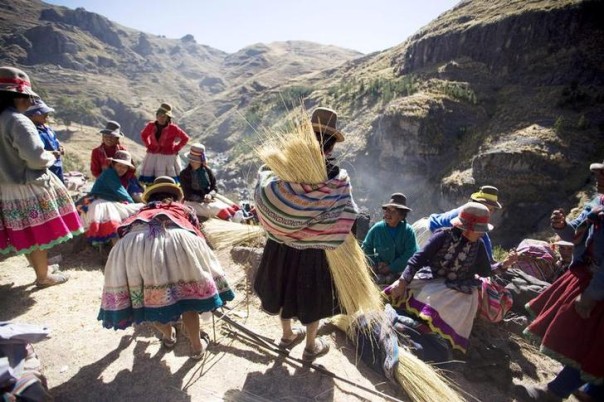
I first met Victoria Tauli-Corpuz 11 years ago in Rome. An indigenous Filipina activist, Vicky was attending a meeting on indigenous peoples' rights at the International Fund for Agricultural Development (IFAD), the United Nations rural development agency where I work. In fact, it was the first time indigenous peoples' representatives had ever been invited to IFAD's offices on the outskirts of the Eternal City. Since then, IFAD and the UN system as a whole have made progress on bringing indigenous issues and priorities into the mainstream of our work – though we still have plenty more to do. Flash forward to New York this spring, when I heard Vicky's name called by the chair of the UN Permanent Forum on Indigenous Issues in the General Assembly hall at UN headquarters.
assetto corsa mods

Urgent End Of Year Fundraising Campaign

Online donations are back! Keep independent media alive. 

Due to the attacks on our fiscal sponsor, we were unable to raise funds online for nearly two years.  As the bills pile up, your help is needed now to cover the monthly costs of operating Popular Resistance.

Urgent End Of Year Fundraising Campaign

Online donations are back! 

Keep independent media alive. 

Due to the attacks on our fiscal sponsor, we were unable to raise funds online for nearly two years.  As the bills pile up, your help is needed now to cover the monthly costs of operating Popular Resistance.

Sign Up To Our Daily Digest

Independent media outlets are being suppressed and dropped by corporations like Google, Facebook and Twitter. Sign up for our daily email digest before it’s too late so you don’t miss the latest movement news.