Skip to content

Food and Agriculture

People Die Of Starvation In Besieged Damascus Refugee Camp

Dozens of children, elderly people and others displaced by the Syrian conflict have starved to death in a besieged camp in Damascus, according to reports. The sprawling Yarmouk camp, in the southern suburbs of the city, is home to tens of thousands of Palestinian refugees and displaced Syrians who have been trapped under a year-long blockade. "There are no more people in Yarmouk, only skeletons with yellow skin," said Umm Hassan, a 27-year-old resident and mother of two toddlers. "Children are crying from hunger. The hospital has no medicine. People are just dying." Her three-year-old daughter and two-year-old son were rapidly losing weight from lack of food, she added. Since October, 46 people have died of starvation, illnesses exacerbated by hunger or because they could not obtain medical aid, residents said.

Poverty Is Making People Sick Because They Can’t Afford Food

Income inequality is making us sick. Well, it's not making all of us sick. Only the poorest of us. That's what a new paper in Health Affairs found they looked at when people go to the hospital for hypoglycemia (low blood sugar). The basic idea is that people struggling to make it paycheck-to-paycheck (or benefits-to-benefits) might run out of money at the end of the month—and have to cut back on food. If they have diabetes, this hunger could turn into an even more severe health problem: low blood sugar. So we should expect a surge of hypoglycemia cases at the end of each month for low-income people, but not for anybody else. That's what researchers found when they looked at the numbers for California between 2000 and 2008.

Ethical Eaters of The World Unite…For Workers Rights

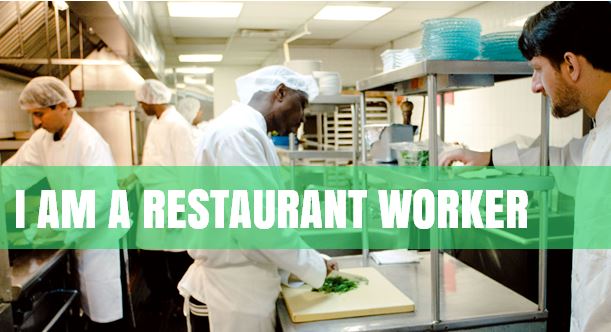
Last year’s multi-city protests by fast food workers focused long overdue attention on the job problems of ten million Americans employed in restaurants. Saru Jayaraman, the charismatic co-founder of Restaurant Opportunities Centers United (ROC), has been assisting workers in finer dining establishments for more than a decade, an organizing career impressively chronicled in her new book, Behind The Kitchen Door, from Cornell University Press. As Fast Food Nation author Eric Schlosser says in his introduction, ROC “doesn’t just represent workers. It seeks to empower them, gain them respect, and give them a voice at work.” Jayaraman is a Yale-educated lawyer who directs the Food Labor Research Center at the University of California, Berkeley. She got her start, with much help from UNITE-HERE Local 100, after the 9/11 attacks destroyed Windows on the World, a swank New York City restaurant that sat atop one of the Trade Center towers. Seventy-three workers died and 250 lost their jobs. Windows workers became the nucleus of the original ROC, which provided support services for families of the deceased.

Cities Are Addressing Sustainable Development

Planning for smart municipal growth is crucial for achieving long term sustainability. Affordable, energy efficient housing, and green spaces are components of sustainable cities in the future. In Paris, this vision is already taking shape at Parc Clichy-Batignolles, a 133-acre development in the 17th arrondissement. The city has reclaimed land formerly used as railroad freight yards to build a sustainable community. The central park features low maintenance plants, wind turbines, solar collectors and a rainwater harvesting system. Building sustainability into a city’s infrastructure creates long-term livability, jobs and increases the quality of life. Planning for a low carbon future, while preserving resources such as water and green space, is critical in terms of meeting the challenges of climate change and population growth.

Maine Second Nation To Enact GMO Labeling Law

The Maine Organic Farmers and Gardeners Association (MOFGA) is delighted by the confirmation that Governor Paul LePage has signed LD 718 - An Act To Protect Maine Food Consumers' Right To Know about Genetically Engineered Food. The news came soon after MOFGA delivered to the Governor hundreds of postcards encouraging the prompt signing of the bill requiring labeling of foods produced from genetically modified organisms (GMOs), which passed both chambers of the Legislature last year with overwhelming bipartisan support. Time ran out in the legislative session of 2013, but Governor LePage pledged to sign the bill upon reconvening in January.

Why It’s a Good Idea to Stop Eating Shrimp

Shrimp farmers have destroyed an estimated 38 percent of the world’s mangroves to create shrimp ponds, and the damage is permanent. Not only do the mangroves not return long after production has ended, but the surrounding areas become wastelands. According to a Yale University research paper, shrimp farming has made certain areas of Bangladesh completely unlivable for people: “The introduction of brackish-water shrimp aquaculture… has, in turn, caused massive depeasantization and ecological crisis throughout the region.”

Supreme Court Denies Family Farmers Right To Self-Defense From Monsanto

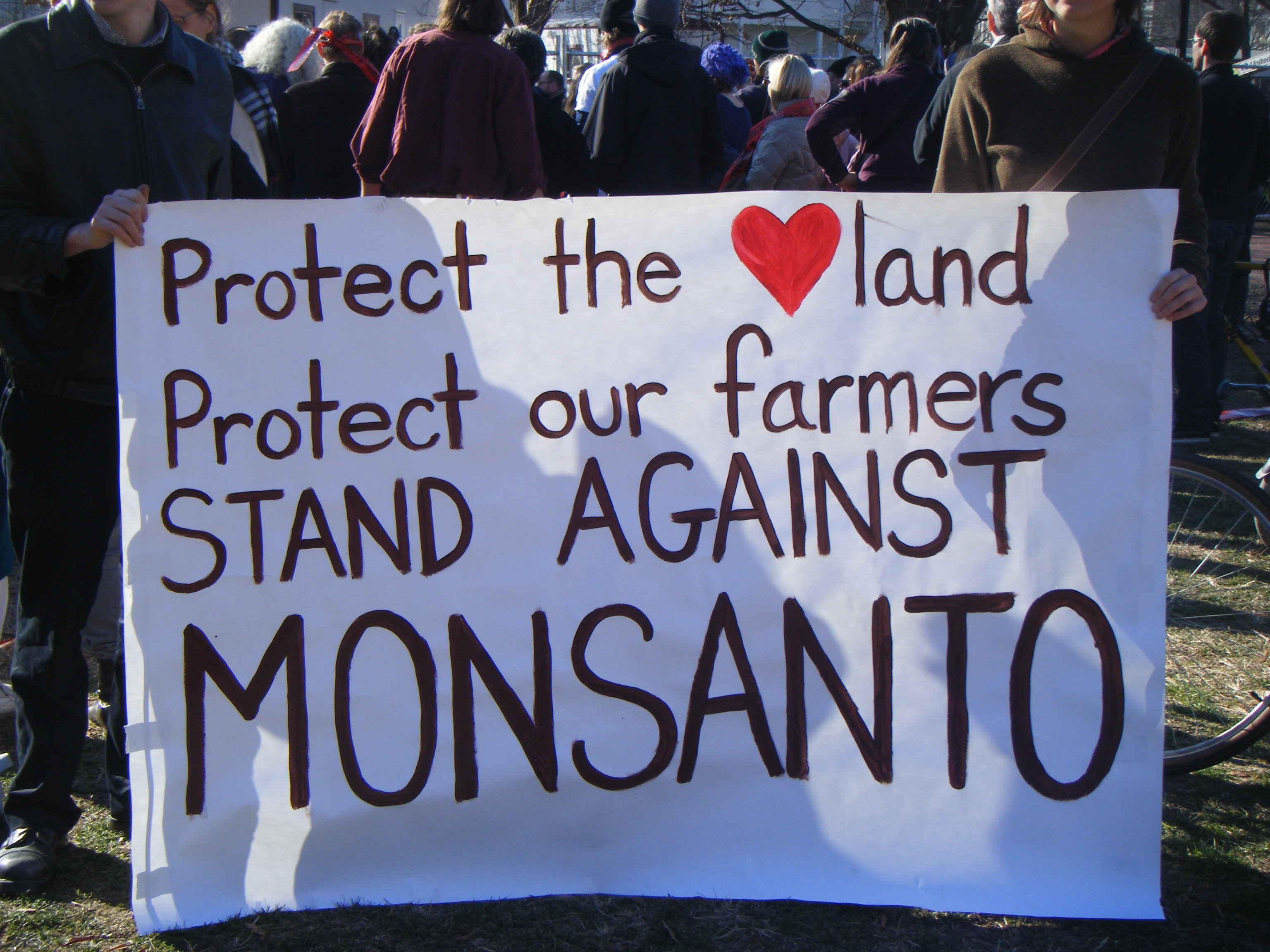
The U.S. Supreme Court today issued a decision in the landmark federal lawsuit, Organic Seed Growers and Trade Association (OSGATA) et al v. Monsanto. Farmers were denied the right to argue their case in court and gain protection from potential abuse by the agrochemical and genetic engineering giant, Monsanto. Additionally, the high court decision dashes the hopes of family farmers who sought the opportunity to prove in court Monsanto’s genetically engineered seed patents are invalid. “While the Supreme Court’s decision to not give organic and other non-GMO farmers the right to seek preemptive protection from Monsanto’s patents at this time is disappointing, it should not be misinterpreted as meaning that Monsanto has the right to bring such suits,” said Daniel Ravicher, executive director of the Public Patent Foundation and lead counsel to the plaintiffs in OSGATA et al v. Monsanto. “Indeed, in light of the Court of Appeals decision, Monsanto may not sue any contaminated farmer for patent infringement if the level of contamination is less than one percent,” Ravicher explained.

Large-Scale Farming Is Iowa’s ‘Breaking Bad’

As Nick Reading put it in “Methland,” “all drug epidemics are only in part about the drug. Meth is indeed uniquely suited to Middle America, though this is only tangentially related to the idea that it can be made in the sink. Meth’s basic components lie equally in the action of government lobbyists, long-term trends in agricultural and pharmaceutical industries, and the effects of globalization and free trade.” During a conversation over coffee, I asked several friends what enterprise in Iowa would parallel the tragedy portrayed in “Breaking Bad”? To my surprise, without missing a beat, several people independently nominated commodity agriculture and the vast network of global corporations behind it.

Steve Lipsky Responds To Report Clearing EPA Of Wrongdoing

"Steven Lipsky's phone was busy on the morning of Christmas Eve. The Environmental Protection Agency’s Inspector General had just released its report concluding the EPA was justified in intervening to protect drinking water from hydraulic fracturing in Weatherford, Texas, despite assertions to the contrary from the oil and gas industry and Congressional Republicans. In 2010, Mr. Lipsky alerted the agency to his contaminated well water and the fact that he could light his water on fire. An EPA investigation determined that Range Resources' hydraulic fracturing activities caused the contamination[…]So does Mr. Lipsky feel vindicated? No, he does not, and he says he won't until the entire story is told and the truth is completely revealed. Additionally, Lipsky wants to see an end to the $3 million defamation lawsuit filed by Range Resources against him. When I spoke to Lipsky on Christmas day, he told me the findings in the Inspector General report are just the tip of the iceberg. His neighbors are still in a perilous situation and no specific actions are being taken to provide a remedy for explosive contaminates in their water. "

Big Ag’s Big Lie: Factory farms, Your Health and the New Politics of Antibiotics

The new guidelines, known as Final Guidance 213, were officially released two weeks ago, just in time for Christmas. “Two-thirteen is an early holiday gift to industry,” says Avinash Kar, a health attorney at the Natural Resources Defense Council. “The FDA has essentially followed a voluntary approach for more than 35 years, but use of these drugs to raise animals has increased. There’s no reason why voluntary recommendations will make a difference now, especially when FDA’s policy covers only some of the many uses of antibiotics on animals that are not sick.”

Video: 24 hrs with Long Island Food Not Bombs

The hunger relief efforts of a small group of dedicated and caring Long Islanders operating on a near-zero budget is eclipsing that of the relief efforts of many well-funded 501-c3 organizations, both in number of people served and in the volume of food distributed. The group, a Long Island chapter of the decentralized, grassroots, hunger relief group, Food Not Bombs, is serving to both inspire the local community and simultaneously raise questions as to how an autonomous group with a shoestring budget can outmatch non-profits of similar purpose whose operating budget exceeds millions of dollars annually.

Economic Decentralization A Solution To Crisis

There are many forms of decentralization – of opting out of the herd before it goes over the cliff. What they have in common is local resilience, a focus on local self-reliance and a thorough grounding in relationships of trust. As economies contract, so does the trust horizon. Where there is no trust, systems cease to function effectively. Local initiatives work because they operate within the social space where trust still exists, and as they function, they reinforce those foundational relationships. We need to be thinking in terms of local currencies, time banking (ie bartering skills), small transport networks, basic local healthcare, neighbourhood watch programs, adapting properties to multiple dwellings and permaculture initiatives that can rebuild soil fertility over time.

Tools To Find Healthy And Local Foods

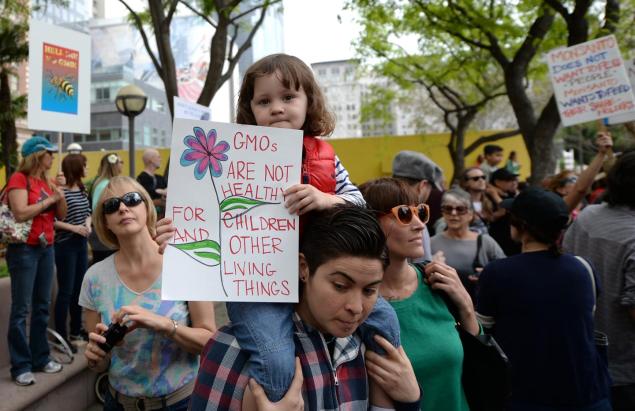
Given the health problems that are already showing up, we should be kicking the practice of consuming GMOs. Corporations are pushing GMOs more aggressively than ever; fortunately this is only a serious problem in North America as most other places in the world have banned the production and sale of GMO products all together. When we make the choice to not consume these restructured foods, we are not only making more health-conscious choices for our own wellness, but we are also choosing to support the companies that are doing the work to ultimately end GMO food production once and for all. The Non GMO Project has put together an ever-updating list of GMO-free food brands so that you can check to see if the food you are eating or thinking of buying is GMO-free.

Farmers Block Bridge At US Border To Protest 20 Years Of NAFTA

The National Association of Producers' Enterprises (ANEC) makes this day a lock on the international bridge in Ciudad Juarez, Chihuahua, to protest the plight of farmers live 20 years after the entry into force of the Free Trade Agreement (NAFTA). Through a statement read in mobilizing the peasant organization criticizes the consequences of two decades of neglect of the field by the federal government. "We are not poor, impoverished us NAFTA and policies of contempt, neglect, dispossession and exclusion", denounced the peasants. Moreover, ANEC said that organized "autonomous mobilizations and fair prices for our crops of corn, coffee, sugarcane, beans, rice, sorghum and wheat among others, in defense of our lands and our territory, and all struggling because we recognize that we are productive subjects and individual and collective subjects of law. " Farmers charge that NAFTA is "an ocean of lies and broken promises" because two decades ago the federal government promised that Mexico would be a first world country. "We reject NAFTA and now the Trans (TPP) Treaty being negotiated in secret, without our participation and equal or worse than NAFTA. Also know the call Energy Reform for not having consulted and therefore lack legitimacy, "said the peasant organization.

2014 Could Be A Decisive Year For Food And Farming

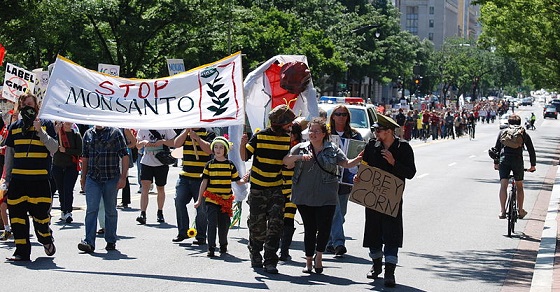
2014 is shaping up to be a decisive year for the future of food and farming. Grassroots activists are gearing up for new legislative battles, including state GMO labeling laws and county bans on growing genetically engineered crops. Meanwhile the multinational food corporations last month raised the stakes in the ongoing David vs. Goliath battle by petitioning the U.S. Food & Drug Administration (FDA) to allow companies to continue to label or market products that contain genetically modified organisms (GMOs) as "natural." And all signs point to efforts by industry and the FDA to float either voluntary, or watered-down mandatory GMO labeling laws that would take away states’ rights to impose strict GMO labeling laws, and also exempt a large percentage of GMO ingredients from labeling.
assetto corsa mods

Urgent End Of Year Fundraising Campaign

Online donations are back! Keep independent media alive. 

Due to the attacks on our fiscal sponsor, we were unable to raise funds online for nearly two years.  As the bills pile up, your help is needed now to cover the monthly costs of operating Popular Resistance.

Urgent End Of Year Fundraising Campaign

Online donations are back! 

Keep independent media alive. 

Due to the attacks on our fiscal sponsor, we were unable to raise funds online for nearly two years.  As the bills pile up, your help is needed now to cover the monthly costs of operating Popular Resistance.

Sign Up To Our Daily Digest

Independent media outlets are being suppressed and dropped by corporations like Google, Facebook and Twitter. Sign up for our daily email digest before it’s too late so you don’t miss the latest movement news.