Skip to content

Water

Standing Rock Spawned A Generation Of Water Protectors

By Joseph Bullington for In These Times - BISMARCK, N.D.—Forty miles north of where the Standing Rock resistance camps once stood, Matt Lone Bear and Carter Gunderson crouch on the curb, changing the brakes on a Chevy Blazer. As they wrestle a worn rotor off the axle, they discuss their plans. They’ll stick around until their court dates later in June, then hit the road for a tour of the Standing Rock diaspora—camps that have sprung up across the country to oppose fossil fuel projects, living on after the battle against the Dakota Access Pipeline (DAPL). To the east, in Huntingdon County, Penn., the Gerhart family and their supporters have formed Camp White Pine on family property, which lies in the path of the Mariner East 2 natural gas pipeline. The pipeline’s owner, Energy Transfer Partners—the same company behind DAPL—hasinvoked eminent domain to cross the property, but construction faces resistance in the form of tree sits and other direct actions. Farther east, in Mahwah, N.J., the Native-led Split Rock Sweetwater Prayer Camp stands in the way of the Pilgrim pipeline. The camp’s Facebook page declares “solidarity with Standing Rock & all who resist the black snake worldwide.”

DuPont, Chemours Sued For Contaminating Drinking Water

By Sharon Lerner for The Intercept - AFTER YEARS of litigation over PFOA, an industrial toxin used to make Teflon and other non-stick and stain-resistant products, in 2009 DuPont introduced GenX. Now the slippery substitute has followed the path of the molecule it replaced, contaminating water near plants in West Virginia and North Carolina, and attracting its own intense legal interest. The lawsuits over PFOA exposed the chemical’s links to several diseases, including kidney and testicular cancer. Like PFOA, also known as C8, GenX is a perfluorinated compound and similarly, was the subject of internal DuPont research showing it poses many of the same health concerns as the original chemical. Also like PFOA, GenX persists indefinitely in the environment. In the past two weeks, two citizens groups in North Carolina announced plans to sue Chemours, the DuPont spinoff company that now makes GenX, over its release of the chemical from its plant in Fayetteville, North Carolina. The Cape Fear Public Utility Authority issued a letter of intent to sue both Chemours and DuPont last week over violations of the Clean Water Act and the Resource Conservation and Recovery Act over release of GenX into the Cape Fear River, which is a source of drinking water for more than 250,000 people in the Wilmington area.

Feds Back In Pa. ‘Gasland’ Town To Test Water, Air

By Michael Rubinkam for The Sentinel - The federal government has returned to a Pennsylvania village that became a flashpoint in the national debate over fracking to investigate ongoing complaints about the quality of the drinking water. Government scientists are collecting water and air samples this week from about 25 homes in Dimock, a tiny crossroads about 150 miles north of Philadelphia. “Residents have continued to raise concerns about natural gas activities impacting their private water well quality,” the Agency for Toxic Substances and Disease Registry said Thursday in a statement to The Associated Press. Dimock was the scene of the most highly publicized case of methane contamination to emerge from the early days of Pennsylvania’s natural-gas drilling boom. State regulators blamed faulty gas wells drilled by Cabot Oil & Gas Corp. for leaking combustible methane into Dimock’s groundwater. Cabot, one of the largest natural gas producers in the state, has consistently denied responsibility, saying methane was an issue in the groundwater long before it began drilling. The ATSDR, a federal public health agency, said Thursday that it is “conducting an exposure investigation to determine if there are drinking water quality issues that may continue to pose a health threat.”

Pollutants in Virtually All U.S. Public Water Systems

By Staff for Environmental Working Group. The disturbing truth is that, all too often, a glass of tap water also comes with a dose of industrial and agricultural contaminants that have been linked to cancer, brain and nervous system damage, or developmental defects. “Just because your tap water gets a passing grade from the government doesn’t always mean it’s safe,” Cook said. “It’s time to stop basing environmental regulations on political or economic compromises, and instead listen to what scientists say about the long-term effects of toxic chemicals and empower Americans to protect themselves from pollutants even as they demand the protective action they deserve from government.” The vast majority of utilities are in compliance with federal regulations, but their water still often contains contaminants in concentrations exceeding the levels that scientists say pose health risks. Many of the existing legal limits are set far above levels that are truly health protective.

Trump Administration Makes Key Decision That Threatens Water Supply Of Millions

By Reynard Loki for AlterNet - The U.S. Environmental Protection Agency is reportedly issuing a proposed rule to undo the Clean Water Rule that was enacted in May 2015, under President Obama’s last term. The rule protects the water supply for more than 117 million Americans. Also known as the Waters of the United States (WOTUS), the Clean Water Rule puts limits on pollution in the wetlands, rivers and streams that feed the nation's larger waterways. Those limits are essential for protecting the safety of the drinking water on which millions of American rely. The rule also safeguards those waters for swimming, fishing and other activities. In addition, the rule helps to maintain the biological integrity of those smaller waterways, in turn protecting wildlife by keeping aquatic ecosystems healthy. When the rule was issued, the EPA and the Army Corps of Engineers resolved decades of legal debate among politicians, environmentalists and public health advocates, saying that smaller waterways across the nations—tens of millions of acres of wetlands and thousands of streams—actually qualify for legal protection under the Clean Water Act, the primary federal law that protects communities and ecosystems from water pollution.

2 Billion People Don’t Have Access To Clean Water, Opens Up Fissures Of Inequality

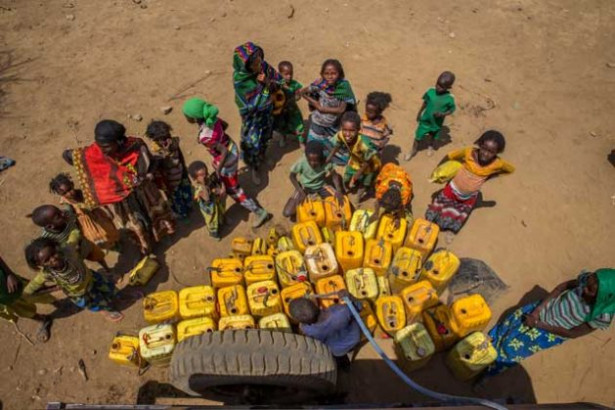
By Roshni Majumdar for IPS - UNITED NATIONS, Jul 13 2017 (IPS) - More than two billion people lack access to clean and safe drinking water, according to a new report released by the World Health Organisation (WHO). Although significant progress to ensure access to drinking water has been achieved, there is still a long way to go to ensure its quality—deemed free from pollutants and safe for drinking. “Clean water and sanitation is central to other outcomes, for example, nutrition among children. While many countries like India have made it a top priority, many others haven’t been able to emphasise the issue yet,” Sanjay Wijesekera, Chief of Water, Sanitation and Hygiene at UNICEF, told IPS. As many as 400 million people still rely on distant water sources—travelling to and fro from their homes to pick it up. Some 159 million people, according to the report, rely on untreated water from lakes and streams. This puts lives, especially of young children, at great risk. “Every day, 800 children under the age of five die from waterborne diseases like diarrhoea. In fact, diarrhoea is the second biggest cause of death in the world.” Wijesekera added. A lack of access to clean drinking water is also bad news for hygiene and sanitary levels. In many countries, open defecation due to the lack of in-house toilets poses a significant challenge. “The sheer indignity of openly defecating, especially among young girls, takes a toll on other aspects of their lives—such as their poor attendance in school where there aren’t toilets,” Wijesekera explained.

Nine Activists Put Their Bodies On The Line For Water In Detroit

By Drew Philp for The Guardian - In 1964, while still in her early twenties, Marian Kramer sat at a lunch counter in Monroe, Louisiana, and was served a tuna fish sandwich and a glass of dishwater. A committed civil rights activist, Kramer would regularly participate in integrated lunch counter sit-ins, organize picket lines and register black people to vote. For this, both the Ku Klux Klan and the police were after her. The first time Kramer drove an automobile was because of the KKK, in fact. While being chased by the hate group, the original driver of the vehicle had lost her nerve and Kramer, never one to give up, took the wheel and drove to the house of a black farmer, where they were hidden. When the owner of a local store shot at a young black man, Kramer helped organize a picket line, a full-on boycott. For her trouble in facilitating the sea change of human rights for African Americans in the 20th century, the policethrew her into a recently emptied garbage truck, the walls dripping with the sludge from the trash of a nation. She was placed in jail and, alongside other leaders, spent eight days and nights in solitary confinement. She was charged with disorderly conduct. But that’s ancient history. Isn’t it? More than 50 years and the turn of a century later, Kramer, now 73, sat in a chintzy Detroit courtroom charged with the exact same offense. Her co-defendant, an ordained Methodist minister named Bill Wylie-Kellermann, sat next to her.

Our Nation’s Growing Water Crisis: What You Need To Know

By Staff of EKU Online - The existing water pipes used to supply water to homes, businesses, schools and commercial buildings were installed at different times and were made from different materials and manufacturing techniques. Therefore, they have different life expectancies. Cast iron pipes have a lifespan of around 120 years and were introduced in the late 19th century. On the other hand, ductile iron pipes have an average life expectancy of 50 to 70 years and were introduced in the 1950′s. The water pipes used in many cities across the United States were installed between 70 to 90 years ago. In Washington DC, the average age of existing water pipes is 77 years. This is a real shame considering that the United States is the most developed country in the world as well as the richest nation on the planet, but it’s not able to deliver clean drinking water to it’s citizens safely and efficiently. Take the case of Flint, MI, where the city supplied dirty water contaminated with unbelievable quantities of lead. This was a classic example of areas in which the country is lagging behind. Every single year, an average of 240,000 water breaks are reported. The cost of repairing these broken pipes is incredibly high. In fact, 75% of the cost of drinking water can be attributed to pipe repair costs. On average, 1.7 trillion gallons of water is wasted every year due to broken pipes and lack of pipe replacement.

Battle To Oppose Water Privatization Returns Greece To Frontlines Of E.U. Crisis

By Maria Paradia for Occupy - In late September 2016, the Syriza administration laid the groundwork to begin Greece's water privatization, achieving a majority of 152 parliamentary votes and enacting series of new measures to transfer the state-run water companies of Athens (EYDAP) and Thessaloniki (EYATH) into a privatization superfund. The duration of the government's participation in the superfund was set at 99 years, with lenders promising the Greek government a bailout of barely 2.8 billion euros – far lower than the projected 50 billion euros estimated earlier in the year. While Greece was forced to privatize its water sources, however, other countries like Germany were undergoing the opposite: a phase of de-privatization. In Berlin, after 12 years of poor management and exorbitant price hikes, the local government several years ago reclaimed its water resources. This turn of events caused a series of similar de-privatization initiatives across the country, revealing that the projected economic outcomes via privatization weren't viable in the long term. In fact, the re-established state-run services were proven to be far more efficient, better organized and capable of providing higher-quality services than their privatized counterparts.

Water And Oil, Death And Life In Louisiana

By Nora Belblidia for Uneven Earth - Six months ago, a routine public hearing was scheduled in a nondescript gray government building in downtown Baton Rouge, Louisiana. “Normally these hearings go over really quietly,” said Scott Eustis, the Wetlands Specialist for Gulf Restoration Network (GRN). “Usually it’s me, my associates, and like ten people.” Instead, over 400 people showed up to the Baton Rouge hearing, and stayed for nearly six hours. The debate centered on the Bayou Bridge Pipeline, a proposed route that would run 163 miles from Lake Charles to St. James, forming the “tail” of the Dakota Access Pipeline (DAPL), and effectively connecting oil fracked in North Dakota to Louisiana refineries. If built, Bayou Bridge would cross 11 parishes, 600 acres of wetlands, 700 bodies of water, and the state-designated Coastal Zone Boundary. Energy Transfer Partners (ETP) is behind both the Bayou Bridge project and the more infamous DAPL, but the parallels run deeper than a mutual stakeholder. Just like in DAPL, those who resist the project are drawing connections between past wrongdoings, conditions today, and a future climate. Residents cite safety concerns, environmental racism, pollution, and threats to the region’s wetlands and seafood industries as reasons to oppose its construction.

No Pipelines Under The Potomac Camp To Launch

By No Potomac Pipeline. From Standing Rock to Hancock people are rising up to resist fracked gas pipelines in their community. Following a historic fight in Maryland, where we became the first state with gas reserves to legislatively ban fracking, we still find our communities our under attack by Big Oil and Gas. TransCanada the same company behind the Keystone Pipeline that spilled over 16000 gallons of crude oil on South Dakota land now wants to build a pipeline that would transport fracked gas between Pennsylvania and West Virginia. How are they going to do this? They are going to do it through the shortest and cheapest route by cutting through Maryland and underneath the Potomac River that serves as the source of drinking water for millions of residents in our state and the DC suburbs.

Greece Forced To Sell Public Water Utilities Under EU-Imposed Privatization Plan

By Michael Nevradakis for Mint Press News - GREECE — In May 2016, the SYRIZA-led Greek government passed a new comprehensive set of economic austerity policies in exchange for receiving new loans that are intended to keep the country’s fragile economy afloat. This represents the fourth such “memorandum” between Greece and its creditors since the onset of the country’s economic crisis in 2009. It follows the third memorandum agreement passed by the SYRIZA-led government in the summer of 2015, just weeks after 62 percent of Greek voters rejected more EU-demanded austerity measures in the historic Greek referendum of July 5. What both of these memorandum agreements have in common, along with the first two agreements voted upon by previous Greek governments, is the wholesale imposition of economic austerity measures, including pension and wage cuts, in addition to a wide-ranging program of privatizations of key public assets. Just in the past year, 14 major regional Greek airports were privatized, as was the port of Piraeus, Greece’s largest port and one of the largest in Europe. More recently, the port of Thessaloniki, Greece’s second-largest city, was also privatized to a consortium of investors.

Right To Life And Water: Drought And Turmoil For Coke And Pepsi In Tamil Nadu

By Keith Schneider for Circle of Blue - TIRUNELVELI, India – Just after dusk on a warm mid-January evening, attorney DA Prabakar greeted several visitors on the dimly lit street in front of his home here in southern India. The air was desert-dry and dusty in this rain-scarce river city. All of Tamil Nadu, from Chennai in the north to this city of 500,000 residents near India’s southern tip, has wilted in the state’s worst drought in 140 years. The Thamirabarani River, which runs through the city and is famed for its steady flow even in dry years, meandered through a sickly progression of shallow ponds and mudflats. All of Tamil Nadu, from Chennai in the north to this city of 500,000 residents near India’s southern tip, has wilted in the state’s worst drought in 140 years. A lawyer with decades of courtroom experience, Prabakar was in high spirits despite the wearying dry spell. The law office on his home’s ground floor is a hive of legal activism. He explained that the next morning the Madurai Bench of the Madras High Court would consider motions in his high-profile “public interest litigation,” a judicial complaint filed last summer that temporarily halted the city’s Coca-Cola and PepsiCo bottling plants from drawing water from the Thamirabarani.

Huge Victory: Blackfeet Nation To Control Its Own Water After 35 Years Battle

By Staff for Counter Current News - Harry Barnes, Chairman of the Blackfeet Tribal Business Council, called it a “historic day for the Blackfeet people,” and well worth the time that Blackfeet staff and leaders had put into the effort the past four decades. “My faith in the wisdom of the people’s vote has come to reality,” he said in a statement. The history of the struggle between the tribes in Montana, and the State of Montana, over water rights began in the 1970s, when the federal government filed court water rights cases on behalf of all Montana tribes. Montana filed competing water rights cases in state court. The U.S. and the tribes challenged Montana’s assertion that it had jurisdiction over Indian water rights on the reservation. What ensued was a history of court battles, meetings and negotiations that eventually led to the compact agreed to by Montana and the federal government. The last step was an April 20 vote by the Blackfeet membership. The compact confirms the Tribe’s water quantity and rights, the Tribe’s jurisdiction and its authority to manage those rights on the reservation. Montana’s legislature ratified it in 2009, Congress approved the bill, and it was signed by President Barack Obama in January 2017.

THAAD Rocket Fuel: Likely Ground Water Contamination Coming To Seongju, South Korea

By Bruce K. Gagnon for Organizing Notes - The unwelcome US deployment of the THAAD (Terminal High Altitude Area Defense) missile defense (MD) system in Seongju, South Korea is not only a significant threat to regional peace but is also a major environmental catastrophe waiting to happen. The reason is that rocket fuel contains a deadly chemical component called perchlorate. And since the Seongju area is a melon farming community the risk of ground water contamination by perchlorate should be alarming to all concerned. Perchlorate, the explosive ingredient in solid rocket fuel, has leaked from military bases and weapons and aerospace contractors' plants in at least 22 states, contaminating drinking water for millions of Americans. In the US scientists have warned that perchlorate could cause thyroid deficiency in more than 2.2 million women of childbearing age. This thyroid deficiency could damage the fetus of pregnant women, if left untreated. Reports indicate that 20 million to 40 million Americans may be exposed to the chemical.
assetto corsa mods

Urgent End Of Year Fundraising Campaign

Online donations are back! Keep independent media alive. 

Due to the attacks on our fiscal sponsor, we were unable to raise funds online for nearly two years.  As the bills pile up, your help is needed now to cover the monthly costs of operating Popular Resistance.

Urgent End Of Year Fundraising Campaign

Online donations are back! 

Keep independent media alive. 

Due to the attacks on our fiscal sponsor, we were unable to raise funds online for nearly two years.  As the bills pile up, your help is needed now to cover the monthly costs of operating Popular Resistance.

Sign Up To Our Daily Digest

Independent media outlets are being suppressed and dropped by corporations like Google, Facebook and Twitter. Sign up for our daily email digest before it’s too late so you don’t miss the latest movement news.