Skip to content

Africa

Black Women’s Resistance To The Legacy Of The Arab Slave Trade

Blackness and the Islamic Empire slave trade For the past fourteen centuries Arab, Turkish, Persian and some African nations and empires have conducted the Arab slave trade, also known as the “Islamic Empire slave trade” or “Eastern slave trade.” This slave trade was practiced primarily in North Africa, the Horn of Africa and in what is today known as the Middle East, as well as in southern Europe. People were captured from the interior of Africa and then sold in slave markets in the Middle East, North Africa and the Horn of Africa. Even though what the true numbers, a conservative estimate from some historians say that from the 8th century till present day, around 20 million people were taken from southern and central Africa and through the Red Sea, Indian Ocean and the Sahara desert. Black refugee women face further issues in Egyptian society. Single women and Black refugee mothers find it difficult to find housing because Egyptian landlords only want to rent to two-parent households. Furthermore, the common job for refugee in the informal economy is as a domestic workers, in which they often are subjected to psychological, physical and sexual abuse from their employers.

USAID, EU & Gates Foundation Back Agribusiness Takeover In Africa

A battle is currently being waged over Africa's seed systems. After decades of neglect and weak investment in African agriculture, there is renewed interest in funding African agriculture. These new investments take the form of philanthropic and international development aid as well as private investment funds. They are based on the potentially huge profitability of African agriculture - and seed systems are a key target. Right now ministers are co-ordinating their next steps at the 34th COMESA (Common Market for Eastern and Southern Africa) Intergovernmental Committee meeting that kicked off yesterday, 22nd March, in preparation for the main Summit that will follow on 30th and 31st March 2015.

Protests Target Gates Foundation Meeting On Africa Seed Systems

The Bill and Melinda Gates Foundation (BMGF) and the United States Agency for International Development (USAID) are sponsoring a secret meeting Monday in London to promote a recent report detailing in clear terms how to privatize the seed and agricultural markets of Africa– without African stakeholders having a seat at the table. The meeting is being criticized for including corporations, development bodies, trade bodies and aid donors, yet excluding any African farmers or representatives of affected organizations. Today protesters on both sides of the Atlantic are picketing to protest the corporate capture of seed, and to urge the foundation to support African food sovereignty. Both in London and Seattle protesters will distribute open-pollinated seeds as a symbol of the alternative to the corporate model promoted by USAID and BMGF.

US Offering Its ‘Assistance’ To Push GMOs On Africa: Report

The U.S. government and multinational corporations have capitalized on African nations' voids in regulatory frameworks to push genetically modified (GM) crops, standing to gain lucrative corporate profits while decimating food sovereignty, a new report states. Released Monday from the African Centre for Biosafety and commissioned by environmental network Friends of the Earth International, Who benefits from GM crops? The expansion of agribusiness interests in Africa through biosafety policy (pdf) looks at how U.S. interests have used the mantra of addressing food security to push these crops despite local opposition. "The U.S., the world's top producer of GM crops, is seeking new markets for American GM crops in Africa," stated report author Haidee Swanby. "The U.S. administration's strategy consists of assisting African nations to produce biosafety laws that promote agribusiness interests instead of protecting Africans from the potential threats of GM crops."

The Re-Colonization Of Africa

Most of the world's food is grown by small scale farmers. While it is called "traditional" agriculture, it is never static and farmers constantly adapt. This traditional agriculture relies on a varied and changing mix of crops, a polyculture, which provides a balanced diet, is affordable for local farmers and can accommodate changing local conditions. The Green Revolution relied on increasing acreages of monocultures, mostly cereal grains, which also increased the use of herbicides, insecticides and fertilizers as well as new varieties of high yielding crops. Inputs that small farmers, those who fed the people, were never meant to afford. It was an unsustainable system that called for too many inputs, too much machinery and too much energy.

Ebola Highlights Neglect Of Public Health

The outbreak of Ebola that is affecting parts of Africa is the worst ever seen. The cumulative number of cases stands at nearly 4,000, with 2,000 of those resulting in death — figures that surpass the numbers seen in all previous outbreaks combined. This is an unforgiving virus that shows no mercy. To date, nearly 300 medical staff have been infected, and around half of them have died. The three hardest-hit countries, where cases now number in the thousands and where the capital cities are affected, are in West Africa: Guinea, Liberia, and Sierra Leone. These countries, which have just emerged from years of civil war, are among the poorest in the world. The World Health Organization (WHO) estimates that the three countries have only one to two doctors per 100,000 people. Guinea’s neighbor, Senegal, connected by an extremely porous border, has also announced a case of Ebola. Nigeria has reported a small number of cases — first in Lagos and now in Port Harcourt, the country’s oil and natural gas hub. An assessment by Nigerian health staff and WHO epidemiologists reveals a situation there with great potential to explode, both in terms of cases and volatile social unrest. Military escorts are needed for movements into the Ebola isolation and treatment center. This fast-moving outbreak has a number of unprecedented features and is delivering one surprise after another.

Obama Unleashes US Imperialism To Loot Africa

President Obama is definitely “into” Africa. As much as possible in a world riven by multiple crises, the president has made the continent a focus of his policymaking. Turning his own Kenyan heritage into a personal bridge to the region, he has visited Africa three times as president – in 2009, 2011, and 2013. He has touted his administration’s multi-billion initiatives such as Power Africa to bring electricity to millions of homes, a fellowship program for young African leaders, and the continuation of efforts to fight HIV-AIDS and other infectious diseases. At a time when criticism is mounting about the way the president is handling the rest of the world, Africa is shaping up to be Obama’s major play for a legacy. This week, to better position this effort, Obama welcomed delegations from 51 African countries to Washington for an unprecedented summit. As part of its press blitz, the White House released a fact sheet that detailed all the State Department’s high-profile programs including support for democracy in Nigeria, an expansion of civil society activity in Liberia, and an open government initiative in Sierra Leone. Many of these initiatives are indeed admirable, and I can imagine State Department staffers grumbling that the media focus on Ebola and Boko Haram has left no space for these more upbeat stories.

Ebola Driven By Corporate Agenda

It's been nearly 40 years since the discovery of Ebola, yet we're dealing with its deadliest outbreak in history and one that is four times larger the first. Back then, in 1976, the scientific community knew nothing about the hemorrhagic fever. Blood containing the mystery virus was innocently sent in a blue thermos to Belgium, where Flemish scientists figured out they were unwittingly handling a violently lethal pathogen, and named it after a river in what was then Zaire. Since then, we've learned a lot about Ebola: that it's spread through contact with the bodily fluids of an infected person, that we can stop it by using simple precautionary measures and basic hygiene practices. But every once in a while, these nightmarish outbreaks pop up and capture the international imagination. Worries about global spread are worsened by the fact that Ebola has no vaccine and no cure. Here's what's surprising and interesting about this state of affairs: it is not caused by a lack of human ingenuity or scientific capacity to come up with Ebola remedies. It's because this is an African disease, and our global innovation system largely ignores the health problems of the poor.

South Africa Toilet Protest

Police fired rubber bullets and tear gas to disperse protesters who bared their rears during a protest over a lack of proper toilets in South Africa. Hundreds of residents barricaded a major road in Soweto protesting against bucket toilets. During the apartheid era, residents in black townships were provided with an outside bucket instead of flush toilets like those in houses in white suburbs. Protesters say the "bucket system" should no longer exist. In years following the end of white minority rule in South Africa in 1994, a government programme had aimed to replace the bucket system in informal settlements by 2007. The BBC's Pumza Fihlani in Johannesburg says while protests about the lack of basic amenities are common in South Africa, this is a rare show of displeasure.

Covert US Military Training Goes To Africa

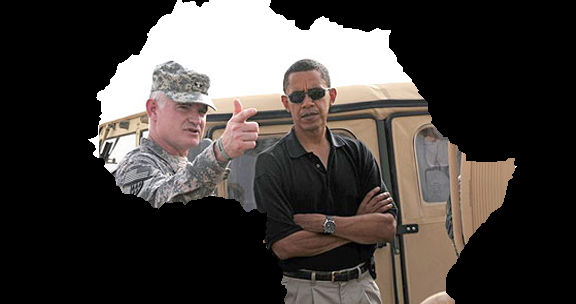
New US plans for training security forces in four African countries recall similar programs around the world, which often ended in the hand-picked trainees slaughtering civilians or staging military coups. With everyone’s attention focused on the European elections or President Barack Obama’s speech at West Point or the Ukraine, a story by Eric Schmitt in The New York Times on Tuesday may not have caught your attention. I believe, however, that it provides an insight into some of the major problems of American foreign policy. What Mr. Schmitt reports is that the U.S. has set up covert programs to train and equip native teams patterned on their instructors, the U.S. Army Delta Force, in several African countries. The program was advocated by Michael A. Sheehan who formerly was in charge of special operations planning in the Department of Defense and is now, according to Mr. Schmitt, holder of the “distinguished chair at West Point’s Combating Terrorism Center.”

US Military Operations Growing In Africa

MAP: The U.S. military currently has troops in these African countries: President Obama's announcement that United States has deployed 80 troops to Chad came as a surprise to many. But as my colleague Craig Whitlock points out, the United States already has boots on the ground in a surprising number of African countries. This map shows what sub-Saharan nations currently have a U.S. military presence engaged in actual military operations. It should be noted that in most of these countries, there is a pretty small number of troops. But it is a clear sign of the U.S. Africa Command's increasingly broad position on the continent in what could be described as a growing shadow war against al-Qaeda affiliates and other militant groups. It also shows an increasingly blurred line between U.S. military operations and the CIA in Africa. More details of the troops deployed are below.

Burkina Faso’s ‘West African Spring’

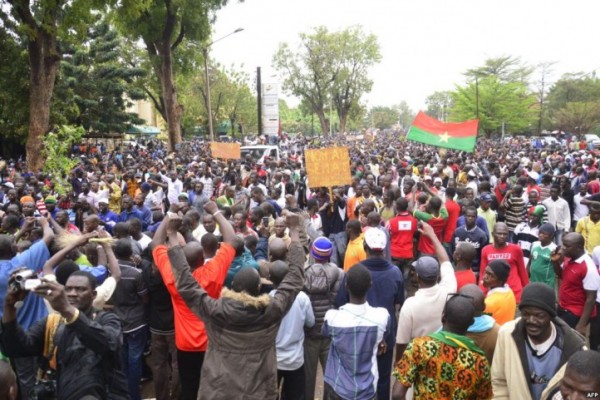
Since January, tensions have flared between the West African country’s authoritarian government and the impoverished masses yearning for democratic reforms. Depending on how developments unfold, the protests in Burkina Faso could serve as a catalyst for further uprisings in the region. On January 18, over 10,000 Burkinabe citizens rallied in the nation’s capital, Ouagadougou (WAH-gah-DOO-goo), and other cities to protest the concentration of political power in one man — President Blaise Compaore, who has ruled Burkina Faso since 1987. While Compaore claims democratic legitimacy, the opposition demands his departure from power, maintaining that Compaore’s past electoral victories were fraudulent and rigged. West Africa Since January, tensions have flared between Burkina Faso’s authoritarian government and pro-democracy activists. Photo Agence France-Presse

14 African Nations Forced To Pay French Colonial Tax

At this very moment I’m writing this article, 14 african countries are obliged by France, trough a colonial pact, to put 85% of their foreign reserve into France central bank under French minister of Finance control. Until now, 2014, Togo and about 13 other african countries still have to pay colonial debt to France. African leaders who refuse are killed or victim of coup. Those who obey are supported and rewarded by France with lavish lifestyle while their people endure extreme poverty, and desperation. It’s such an evil system even denounced by the European Union, but France is not ready to move from that colonial system which puts about 500 billions dollars from Africa to its treasury year in year out. We often accuse African leaders of corruption and serving western nations interests instead, but there is a clear explanation for that behavior. They behave so because they are afraid the be killed or victim of a coup. They want a powerful nation to back them in case of aggression or trouble. But, contrary to a friendly nation protection, the western protection is often offered in exchange of these leaders renouncing to serve their own people or nations’ interests.

Obama Mission Accomplished: US Sends Troops To Africa

New Dawn For “America’s Africa”: Obama Deploys First Contingent of US Ground Troops to South Sudan Mission creep? More like a ‘new dawn’ for Africa. AfriCom growing on the ground in Africa. Indeed, famous last words of many a US President, now coming out of Barack Obama’s mouth today: “These troops will remain in South Sudan until the security situation becomes such that it is no longer needed.” Watch this space, as US AFRICOM’s first major set piece in the new Africa – the partitioning of Sudan and South Sudan – begins heating up this month. “The US has deployed 45 troops to protect US personnel and assets in South Sudan amid ongoing fighting between rebels and government forces, the White House said. President Barack Obama sent a letter to Congress, saying the group of soldiers was sent Wednesday, AFP reported. The small force will remain in South Sudan “until the security situation becomes such that it is no longer needed,” Obama said.“Although equipped for combat, this force was deployed for the purpose of protecting US citizens and property.”

Protesters Are Dodging Sudan’s Internet Shutdown With A Phone-Powered Crowdmap

"Since Wednesday afternoon, Sudan's internet has been sporadically shut off amid a fifth day of protests against President Omar al Bashir’s regime. Despite the attempt to cut off communications and limit organization and reporting on the ground, a group of tech-savvy people based in Khartoum have developed a map for recording key data about the protests that's powered by cell networks. Called the Abena crowd map, the map is the product of Mohammed Hashim Saleh and Abeer Khairy, engineers both, and Ahmed Hassan, the co-founder of Khartoum Geeks. In the short amount of time the internet was on yesterday, they deployed the map, which follows events on the ground in Sudan with direct reports."
assetto corsa mods

Urgent End Of Year Fundraising Campaign

Online donations are back! Keep independent media alive. 

Due to the attacks on our fiscal sponsor, we were unable to raise funds online for nearly two years.  As the bills pile up, your help is needed now to cover the monthly costs of operating Popular Resistance.

Urgent End Of Year Fundraising Campaign

Online donations are back! 

Keep independent media alive. 

Due to the attacks on our fiscal sponsor, we were unable to raise funds online for nearly two years.  As the bills pile up, your help is needed now to cover the monthly costs of operating Popular Resistance.

Sign Up To Our Daily Digest

Independent media outlets are being suppressed and dropped by corporations like Google, Facebook and Twitter. Sign up for our daily email digest before it’s too late so you don’t miss the latest movement news.