Skip to content

Banks

Undeterred By Trump Victory, #NoDAPL Pursues Campaign Against Lenders

By Mark Hand for DC Media Group - Washington, DC — Protests against the Dakota Access Pipeline resumed one day after Donald Trump shocked most prognosticators by winning the U.S. presidential election. In Washington, DC, people gathered in Farragut Square in the early evening on Nov. 9 to express their opposition to the construction of the $3.8 billion pipeline and the financial institutions that are providing loans to its developers.

Aide Planted Anti-Bank Comments In Paid Clinton Speech

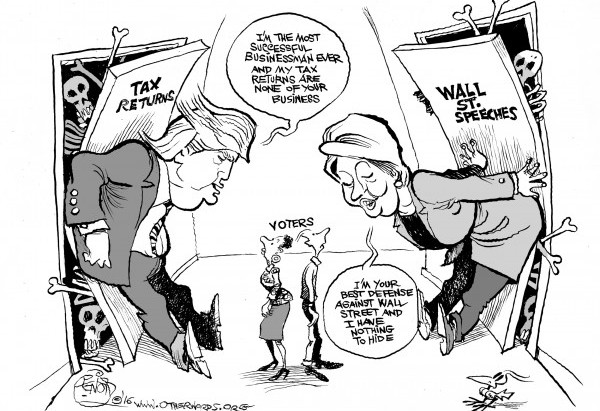
By Zaid Jilani for The Intercept - A TOP AIDE calculatingly inserted a passage critical of the financial industry into one of Hillary Clinton’s many highly-paid speeches to big banks, “precisely for the purpose of having something we could show people if ever asked what she was saying behind closed doors for two years to all those fat cats,” he wrote in an email posted by Wikileaks.

Big Bank ‘Greenwashing’ Exposed As Major Climate Week Sponsors Fund Fossil Fuels

By Deirdre Fulton for Common Dreams - Big bank sponsorship of Climate Week 2016, which kicked off Monday in New York City, "amounts to little more than greenwashing," according one environmental organization, given financial institutions' business-as-usual investment in fossil fuels. Indeed, Rainforest Action Network (RAN) charges three major sponsors—Bank of America, JP Morgan Chase, and Bank of the West (BNP Paribas)—with "helping [to] drive the climate crisis" through their ongoing funding of extreme fossil fuels such as coal and tar sands oil.

Wells Fargo Fined $185M For Fake Accounts; 5,300 Were Fired

By Kevin McCoy for USA Today - Wells Fargo Bank, one of the nation's largest banks, has been hit with $185 million in civil penalties for secretly opening millions of unauthorized deposit and credit card accounts that harmed customers, federal and state officials said Thursday. Employees of Wells Fargo (WFC) boosted sales figures by covertly opening the accounts and funding them by transferring money from customers' authorized accounts without permission, the Consumer Financial Protection Bureau, Office of the Comptroller of the Currency and Los Angeles city officials said.

‘Blockupy’ Protesters Descend On Berlin

By Staff for DW. "Blockupy" is back, demonstrating against austerity, consumerism, and the plight of refugees in Germany. Supporters could be seen all over Berlin demanding a more egalitarian approach to integration and economic policy. Anti-capitalism protesters of the "Blockupy" movement took to the streets of Berlin on Friday to protest the policies of the Federal Ministry of Labor and Social Affairs. Although there were 50 arrests and a brief scuffle in which some demonstrators threw rocks at officers, authorities categorized the atmosphere as largely calm. The collective has its origins in Frankfurt in 2012, where protesters began to gather regularly outside the European Central Bank (ECB) and takes its name from the Occupy movement that took place on New York City's Wall Street.

Did Inside Information Allow Bankers To Minimize Their Harm?

By Ozlem Akin, José M Marín, and José-Luis Peydró for INET - Banking crises are recurrent phenomena that often trigger deep and long-lasting recessions with enormous economic and political costs. Yet the empirical evidence is now overwhelming that banking crises do not come as bolts from the blue – they come after periods of strong bank credit growth and risk-taking, often associated with real-estate bubbles. The crisis of 2008 was no different: it is clear that banks took on more and more risk as bubbles swelled in many countries.

Founder Of Largest Black-Owned Bank: Racism Rampant

By Rob Wile for Fusion - The day before he was assassinated in Memphis, Dr. Martin Luther King Jr. gave a speech urging black Americans to change where they kept their money. “I call upon you to take your money out of the banks downtown and deposit your money in Tri-State Bank,” King said, referring to a black-owned bank in Memphis. Urging a “bank-in” movement, King continued: “These are some practical things that we can do. We begin the process of building a greater economic base. And at the same time, we are putting pressure where it really hurts.”

Top Bank Execs Saw Crash Coming And Sold Off Shares In Their Own Institutions

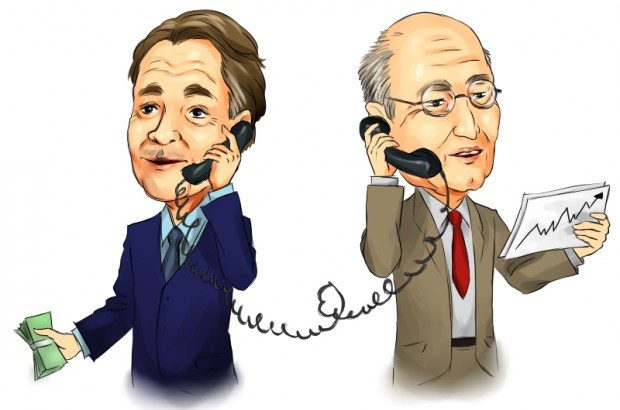
By Cory Doctorow for BB - In a new working paper from the Center for Economic Policy Research, scholars look at the trading records of shareholders, directors and top executives of major financial institutions in the runup to the crash of 2007, and find that the sell-offs by the top five executives at a bank strongly correlated with that bank's losses in the crash, but that other stakeholders' trading do not correlate: in other words, the very top brass of banks knew that they were sitting on piles of worthless paper and sold before anyone else knew about it, and kept their shareholders, direct reports, and the board of directors in the dark.

How Banks Stole Homes From Most Vulnerable New Yorkers

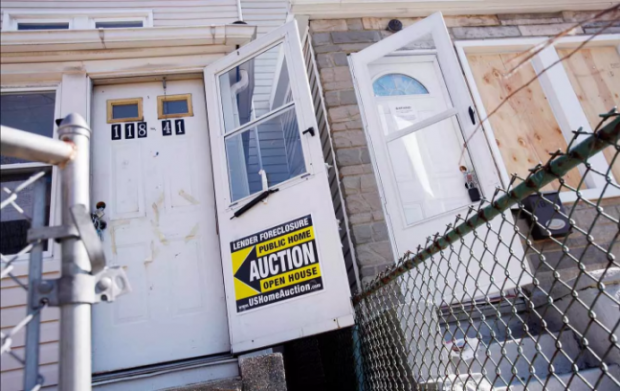
By Michelle Chen for The Nation - The Great Recession has technically started to recede, but the banks that sparked it have mostly been allowed to walk. Some even prospered in the aftermath. But a jury just hit back against one predatory lender, restoring a little of the confidence in the system that Wall Street stripped away from Brooklyn during the financial crisis.

Can Moral Principles Stop Bankers From Stealing?

By Lynn Parramore for Institute for New Economic Thinking - Does the question of morality have a place in the realm of banking and regulation? That it feels awkward to even raise the issue is convenient for bankers who engage in reckless and harmful activities every day without fear of punishment. Ed Kane, Professor of Finance at Boston College, believes it’s vital to discuss moral questions, in plain English, without abstractions.

Revisiting Public Banks And Worker-Owned Cooperatives

By Matt Stannard for Public Banking Institute - Foreign corporations could sue to undermine US protections for consumers’ health, safety and financial security under a provision added to the proposed Trans-Pacific Partnership trade deal (TPP) after executives of big banks pressed the nation’s chief trade negotiator, himself a former big-bank executive, to include it.

The Big Banks Can Be Beaten

By Sarah Anderson for Other Worlds - When the 2008 financial crash slammed the New York City construction industry, Maribel Touré’s husband lost his job as an architect. On top of that, Maribel suffered a serious accident. But what really plunged the family into financial trouble was sending their daughter to college. As a child growing up in Mexico, Maribel’s father had repeatedly told her that la educación es la clave — “education is the key.” So she worked hard to obtain a college degree in Mexico and then moved to the United States, where she became a radiology technician.

Fighting For An Alternative To Big Banks

By Katherine Isaac for Inequality - We’ve heard a lot about Wall Street reform in this presidential primary season. Most of the attention has been on the need to break up the “too big to fail” banks, curbing short-term speculation, and reining in executive bonuses. But we also need to create a financial system that serves the everyday need for accessible, affordable financial services. Nearly 28 percent of U.S. households are at least partially outside the financial mainstream, or underserved by traditional banks. A shocking 54 percent of African-American and 47 percent of Latino households are underserved.

Sue Your Bank! Better To Go To Court Than To Arbitrate

By Suzanne McGee for The Guardian - New rules aim to return a consumer’s right to sue financial institutions – and the banks and credit card companies aren’t happy about it. If your bank hits you with what you consider to be unfair overdraft fees, or fails to notify you in a timely manner of new, higher fees – thus making it impossible for you to avoid them – you may end up losing enough money for it to be painful. But getting it back may be even more costly, too costly to make it worthwhile.

Bank Of N. Dakota Soars Despite Oil Bust: A Blueprint For California?

By Ellen Brown for Web of Debt - In November 2014, the Wall Street Journal reported that the Bank of North Dakota (BND), the nation’s only state-owned depository bank, was more profitable even than J.P. Morgan Chase and Goldman Sachs. The author attributed this remarkable performance to the state’s oil boom; but the boom has now become an oil bust, yet the BND’s profits continue to climb. Its 2015 Annual Report, published on April 20th, boasted its most profitable year ever. The BND has had record profits for the last 12 years, each year outperforming the last. In 2015 it reported $130.7 million in earnings...
assetto corsa mods

Urgent End Of Year Fundraising Campaign

Online donations are back! Keep independent media alive. 

Due to the attacks on our fiscal sponsor, we were unable to raise funds online for nearly two years.  As the bills pile up, your help is needed now to cover the monthly costs of operating Popular Resistance.

Urgent End Of Year Fundraising Campaign

Online donations are back! 

Keep independent media alive. 

Due to the attacks on our fiscal sponsor, we were unable to raise funds online for nearly two years.  As the bills pile up, your help is needed now to cover the monthly costs of operating Popular Resistance.

Sign Up To Our Daily Digest

Independent media outlets are being suppressed and dropped by corporations like Google, Facebook and Twitter. Sign up for our daily email digest before it’s too late so you don’t miss the latest movement news.