Skip to content

climate crisis

People’s Summit Begins In Brazil As An Alternative To COP30

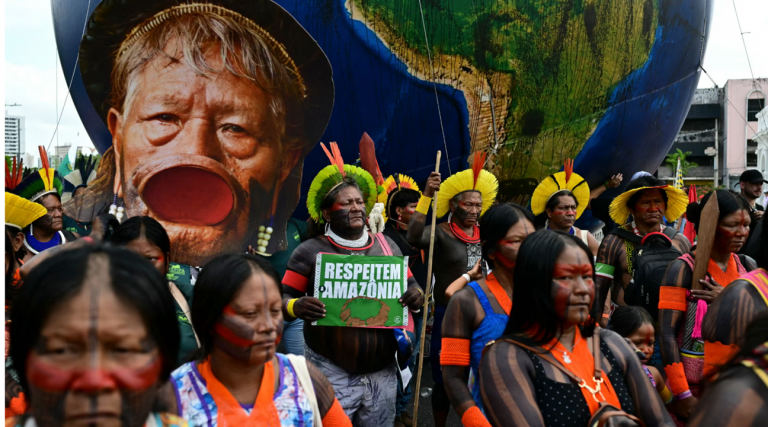
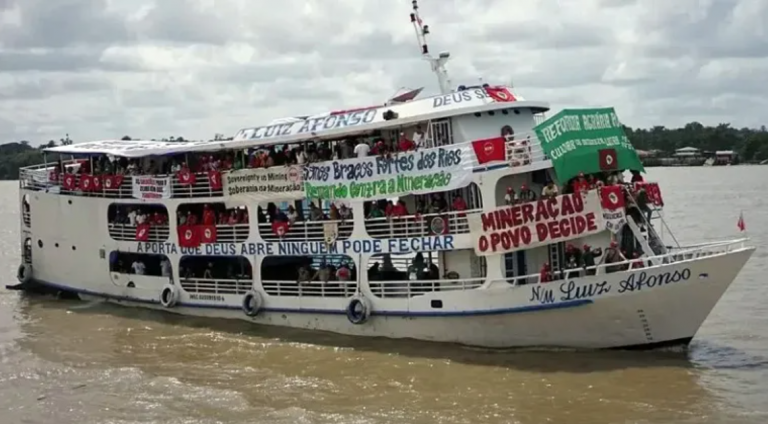
The People’s Summit began on Wednesday, November 12, in Belém, Brazil, as a space for resistance and an alternative proposal to the official discussions of the 30th United Nations Climate Change Conference (COP30). The opening ceremony brought together some 5,000 people aboard 200 boats, which sailed along the Amazon River basin. This initial mobilization represents the arrival of popular movements from 62 countries. The event, which will run until November 16 at the Federal University of Pará (UFPA), Guamá campus, seeks to counter what popular movements describe as “false solutions” to the global climate crisis.

US Oil Executives Flock To COP30

Top American oil and gas producers are using trade groups to gain access to this year’s COP30 climate summit in the absence of an official U.S. delegation, DeSmog can report. ExxonMobil and Chevron — which are among the fossil fuel industry’s biggest greenhouse gas emitters — have sent a combined total of 13 executives to the talks, while both companies have either sponsored events or pavilions at the conference. In addition, Exxon CEO Darren Woods spoke at a number of COP30 side events, including one in Sao Paolo on November 3, where he noted in an interview with Reuters that crude oil and hydrocarbons were “going to play a critical role in everybody’s life for a long time to come”.

Amazonian Indigenous Peoples Protest At COP30

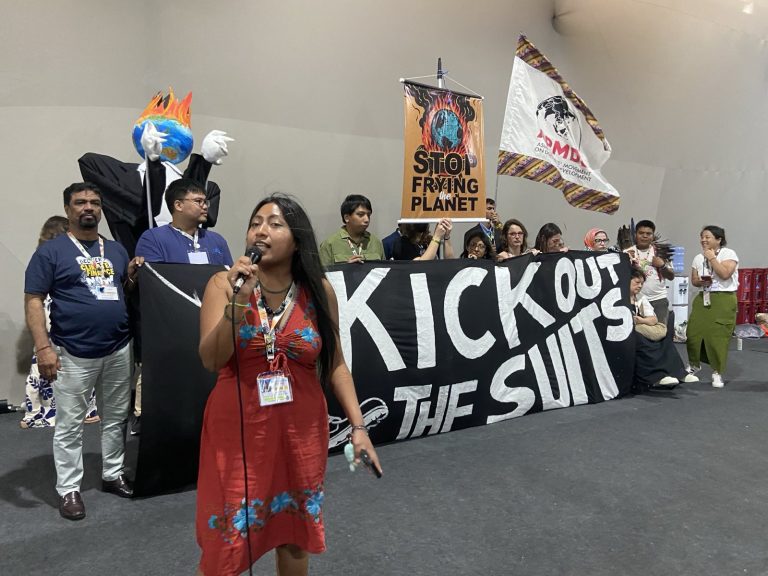
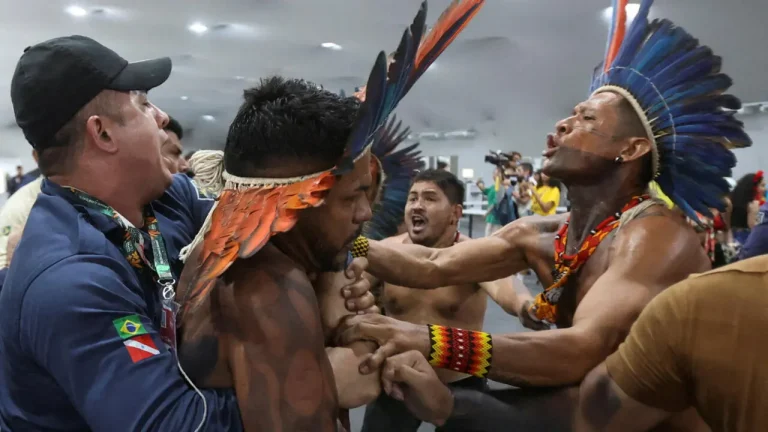
On Tuesday, Brazilian Indigenous leaders and activists clashed with security guards as they tried to enter the site where the United Nations Climate Change Conference (COP30) is being held in Belem. The protesters demanded access to the hall hosting the climate summit and several of them carried banners and flags with demands for land rights, such as “Our land is not for sale.” In response, security forces at the venue attempted to block them, using tables to obstruct their entry. However, the protesters bypassed the security checkpoints and entered the lobby of the UN-run tent where the negotiations take place. At that moment, members of the national delegations were preparing to leave the venue.

Big Food’s Routes To Influence At COP30

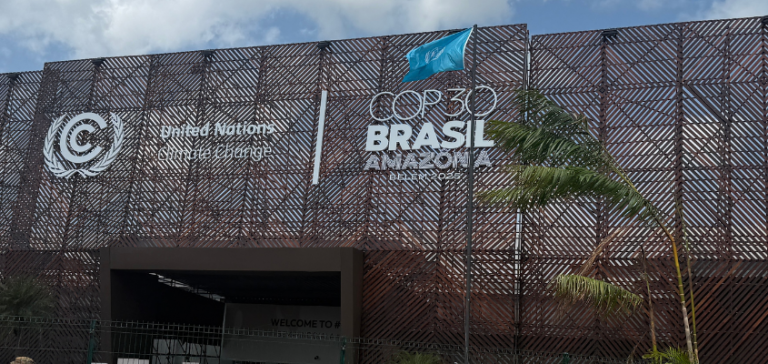
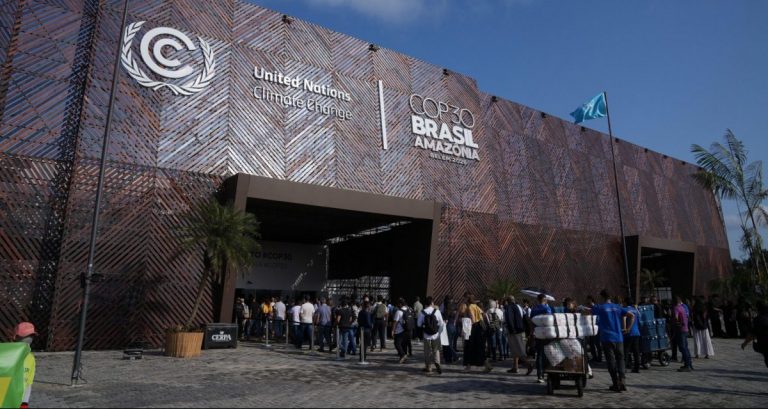
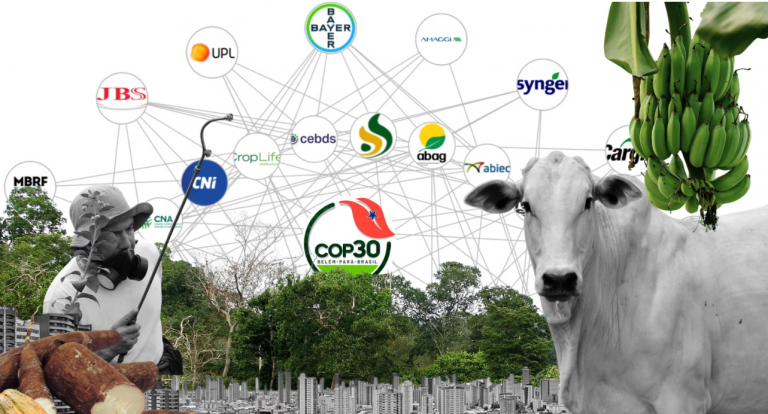
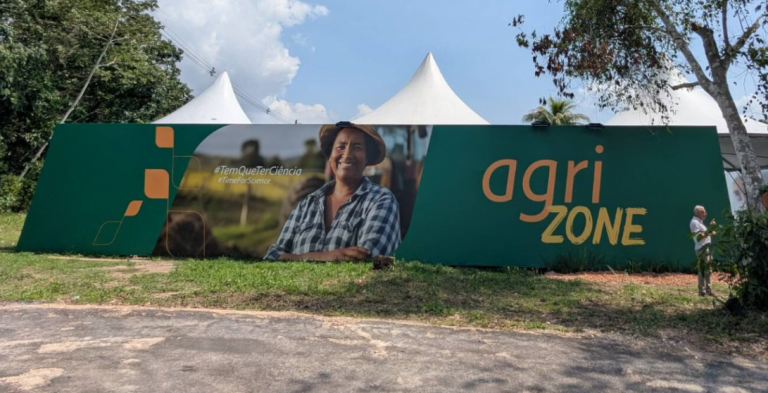
In the city of Belém, at the mouth of the Amazon rainforest, Brazil has kicked off the COP30 climate conference, a summit framed as a pivotal moment to reduce emissions and keep the Paris Agreement alive. More than 50,000 people are expected to attend, from heads of state to civil society groups. But as attention turns to Brazil, some of the highest emitters from the food sector are also moving to shape the agenda — positioning industrial farming not as part of the problem, but as a climate solution. Agriculture’s powerful influence operation comes at a fragile moment.

The Time Is Here To Act On Climate Adaptation

The United Nations Conference of Parties (COP) is holding its annual meeting in Brazil this year for the 30th time. Despite the creation of the Paris Climate Agreement nearly ten years ago, carbon emissions continue to rise, and the world is now experiencing the impacts of the 1.5° Celsius rise in temperature we sought to avoid. The time has come to shift our thinking and actions to what we can do locally to prepare for and protect our communities from the dangers of the climate crisis. Clearing the FOG speaks with Ed Jarvis, the leader of the Climate Majority Project's SAFER (Strategic Adaptation for Emergency Resilience) campaign. Jarvis discusses the campaign's efforts to bring greater awareness to the need for adaptation and shares what people are doing with a focus on climate justice.

COP30 Takes Place In Brazil, Seeking To Prevent ‘Climate Collapse’

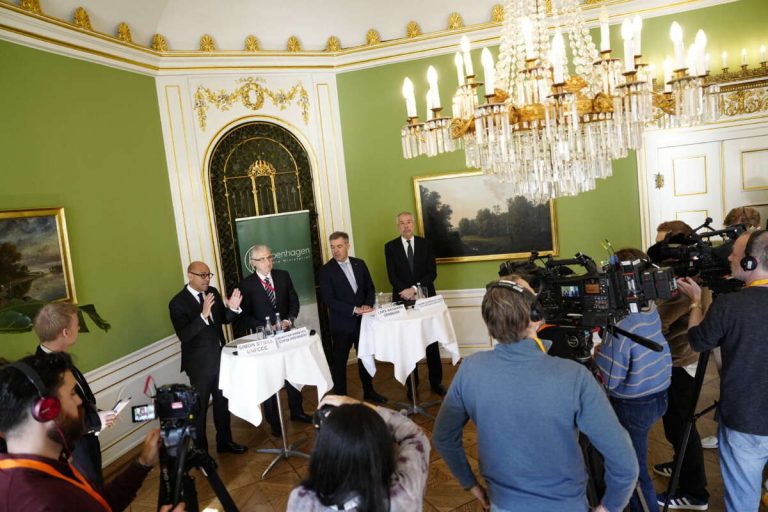
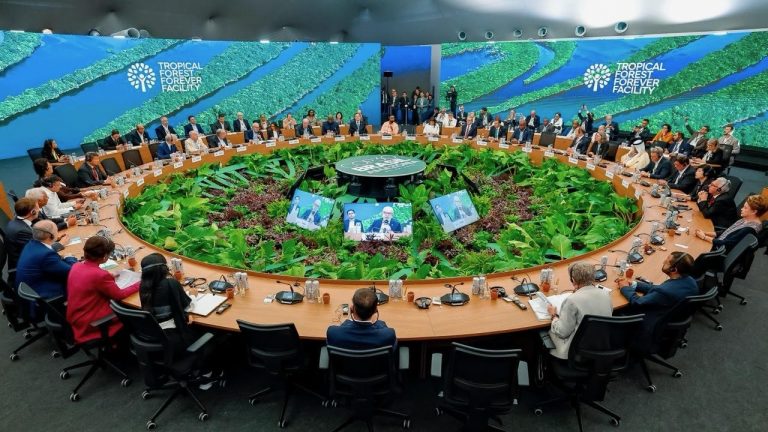
On November 6, COP30 began in Brazil, a United Nations meeting attended by nearly 50 world leaders to address the most pressing issues of climate change. The meeting is being held in Belem, a city located in the Amazon, one of the regions most affected and threatened by climate change. Brazilian head of state Luiz Inácio Lula da Silva is hosting a conference that aims to promote an agenda already agreed upon in the Paris Agreement which, according to the president, has not yet been fulfilled by the nearly 195 signatory countries. To this end, the meeting of world leaders will consist of three working groups (climate and nature; energy transition; and review of the Paris Agreement), in addition to a plenary session.

COP30: Climate Course-Correction Or Another Collision Course?

The 30th Conference of the Parties to the UNFCCC (United Nations Framework Convention on Climate Change) will take place in Belém, a remote, underdeveloped, and poor region of the Brazilian Amazon. Delegates from over 190 countries, NGOs, indigenous representatives, and Brazil’s President Lula, alongside COP President André Corrêa do Lago, will all participate in this year’s high-stakes climate negotiations. Missed Targets And Weak Ambition – It’s Now Or Never With 2024 confirmed as the hottest year ever on record, the U.S. withdrawal from the Paris Agreement, and the massive financial shortfalls left by lacklustre negotiations at COP29, this year’s climate talks are pivotal. A 2024 report by the UN revealed that current policies put the planet on track to reach a catastrophic 3.1°C warming by 2100

UK Newspapers Publish More Ads For Polluting Products Than Climate Coverage

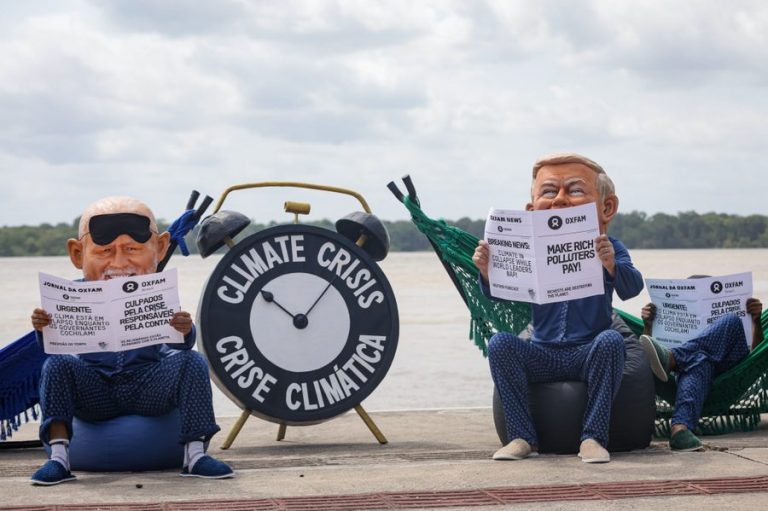
British national newspapers devoted more than triple the space to advertising polluting industries such as oil, airlines, and sports utility vehicles than they did to covering last year’s United Nations climate talks, according to a new study. Total high-carbon advertising — including for fossil fuel companies, cruises, and banks financing oil and gas – amounted to 5,086 column inches on two key dates during 2024’s COP29 climate conference in Baku, Azerbaijan, relative to 1,745 column inches for the negotiations themselves. With the next round of talks, known as COP30, getting underway in Belém, Brazil, newspapers will likely repeat the pattern, warned Andrew Simms, co-director of the New Weather Institute think tank, which conducted the research.

Basis For Climate And Environmental Liberation

In the last five years, certain environmental justice groups and their agents have enjoyed the selective largesse of mainstream environmental groups and governmental agencies at the federal and State level. On the one hand this has increased the ubiquity of environmental justice, at least rhetorically, as well as the operating budgets for select environmental justice organizations. But we must ask ourselves what was/is the cost for certain environmental justice organizations to enjoy being selected and hand picked as the “leading” groups and primary spokespeople for the environmental justice movement? And, equally important, what effects do these “selections” have on the larger environmental justice movement, especially those community-based, grassroots organizations that are accountable to the poorest and most polluted communities in the nation and, in some cases, as the case with Cancer Alley in Louisiana, the entire world?

The Devastation In Melissa’s Wake And The ‘New Normal’

As the extent of the devastation Hurricane Melissa has caused across the Caribbean begins to emerge, at least one thing is clear: this is the new normal. Melissa, as the highest level Category 5 hurricane, was the second-strongest Atlantic storm ever recorded. But, according to experts, it will be something we are likely to see more frequently. The even worse news is that future storms may be even more intense than this one. There is now talk that we now need a new Category 6. Scientists currently classify storms by the five-level Saffir-Simpson scale.

Teachers Unions Leverage Contracts To Fight Climate Change

In Illinois, the Chicago Teachers Union won a contract with the city’s schools to add solar panels on some buildings and clean energy career pathways for students, among other actions. In Minnesota, the Minneapolis Federation of Educators demanded that the district create a task force on environmental issues and provide free metro passes for students. And in California, the Los Angeles teachers union’s demands include electrifying the district’s bus fleet and providing electric vehicle charging stations at all schools. 

What Futures Are Possible?

People have been forecasting the future for as long as they’ve had language. Premodern ideas of what’s to come often featured either a catastrophic end of the world or an eventual paradisiacal condition of peace and plenty. This was true both for many, though not all, Indigenous peoples and for followers of the world’s missionary religions (i.e., Christianity and Islam, and to a lesser degree Buddhism). For some cultures, the arc of time was imagined as a progression from ancient virtue to present corruption and eventual ruin or salvation; for others, time was cyclical, with multiple Golden Ages and periods of decline.

How Exxon Exported Climate Denial To The Global South

In early September, the Danish climate crisis denier Bjørn Lomborg travelled to São Paulo to deliver a stark warning. On the sidelines of a conference called the Forum Caminhos da Liberdade, happening just as Brazil was gearing up to host annual global climate talks (known as “COP30”) in November, Lomborg claimed that if implemented poorly, government efforts to address climate change could “destroy economic growth.” Lomborg had some behind-the-scenes assistance to help his message land, because one of the top 2025 sponsors of the conference (whose speakers in previous years have included Silicon Valley billionaire and Donald Trump ally Peter Thiel), was Atlas Network, a United States-based worldwide coalition of more than 500 free-market think tanks and allied partners.

Climate Justice At The University: Integrating Struggles For Liberation

Universities are not simply places for learning and research but are also centers of power and influence that can shape society. This idea about the power of higher education is cemented over and over again in the panel conversation between Fernando Racimo, Associate Professor of Molecular Ecology and Evolution at the University of Copenhagen and Jennie Stephens, Professor of Climate Change at the National University of Ireland Maynooth. They met at the Center for Applied Ecological Thinking at the University of Copenhagen to discuss the state of university institutions in the context of the urgent climate crisis.

The Future Requires A Politics Of Relationality

At a time when the superstructures of human civilization seem terminally messed up – unable to address climate collapse, authoritarian capitalism, among many other wicked problems – I was thrilled to encounter a book that dares to imagine a fresh and compelling way forward. The book, Relationality: An Emergent Politics of Life Beyond the Human, is a big-hearted and poetic yet rigorous scholarly book. On my latest episode of Frontiers of Commoning (Episode #68), I interviewed the three authors -- noted anthropologist Arturo Escobar and global studies professor Michal Osterweil, both at the University of North Carolina at Chapel Hill, and Kriti Sharma, a professor of critical race science and technology studies at UC Santa Cruz.
assetto corsa mods

Urgent End Of Year Fundraising Campaign

Online donations are back! Keep independent media alive. 

Due to the attacks on our fiscal sponsor, we were unable to raise funds online for nearly two years.  As the bills pile up, your help is needed now to cover the monthly costs of operating Popular Resistance.

Urgent End Of Year Fundraising Campaign

Online donations are back! 

Keep independent media alive. 

Due to the attacks on our fiscal sponsor, we were unable to raise funds online for nearly two years.  As the bills pile up, your help is needed now to cover the monthly costs of operating Popular Resistance.

Sign Up To Our Daily Digest

Independent media outlets are being suppressed and dropped by corporations like Google, Facebook and Twitter. Sign up for our daily email digest before it’s too late so you don’t miss the latest movement news.