Skip to content

Farmers

Trump Trade War Helps Push Farmers Into Record Number Of Bankruptcies

Dairy farmers were counting on China milk buyers before the trade war. “The problem is both nations have stubborn leaders,” an industry analyst said. Hard times for farmers got tougher with President Donald Trump’s trade war. Now Midwestern farmers are filing the highest number of bankruptcies in a decade, according to a Wall Street Journal analysis of federal data. And farmers aren’t hopeful about this year. Twice as many farmers in Illinois, Indiana and Wisconsin declared bankruptcy last year compared to 2008, according to statistics from the 7th Circuit Court of Appeals, the Journal reported. Bankruptcies in states from North Dakota to Arkansas leaped 96 percent, according to figures from the 8th Circuit Court of Appeals.

How Climate Change Forces Central American Farmers To Migrate

CANDELARIA DE LA FRONTERA, El Salvador (IPS) – As he milks his cow, Salvadoran Gilberto Gomez laments that poor harvests, due to excessive rain or drought, practically forced his three children to leave the country and undertake the risky journey, as undocumented migrants, to the United States. Gómez, 67, lives in La Colmena, in the municipality of Candelaria de la Frontera, in the western Salvadoran department of Santa Ana. The small hamlet is located in the so-called Dry Corridor of Central America, a vast area that crosses much of the isthmus, but whose extreme weather especially affects crops in Guatemala, Honduras and El Salvador.

Small Farmers In Mexico Keep Corn’s Genetic Diversity Alive

Like his parents and grandparents before them, Edilberto “Beto” García Cuenca started farming the land when he was just a kid. The descendant of a long lineage of “campesinos”—a Spanish term for family farmer—he still grows maize in the small, five-acre plot his mom left him in their hometown of Santa María Zacatepec in the Mexican state of Puebla. He also plants beans to keep the soil fertile and relies on rain to irrigate his crops. During the rainy season, García Cuenca selects the seeds he stored the previous cycle, plants them and cares for the seedlings. Multiply that process by the millions of other campesinos in Mexico and you get billions of genetically different maize plants...

A Trans-Atlantic Cooperative Of Dairy Farmers

Foremost Farms USA and Arla Foods, a European dairy cooperative, are in advanced discussions about forming a strategic partnership. Representatives recently signed a Memorandum of Understanding formalizing the possibility of future partnership. Henrik Andersen, Arla Foods Ingredients group vice-president, said the two farmer-owned cooperatives share many of the same values, plus their whey-market ambitions are compatible. Arla Foods wants to secure access to whey in the U.S. market, he said.

NAFTA 2.0 Will Help Corporations More Than Farmers

President Trump touts NAFTA 2.0, otherwise known as the United States-Mexico-Canada Agreement, as a boon for farmers.  In theory, opening Canadian markets to more U.S. exports will help farmers by increasing demand and farm income, especially for dairy.  The reality is not so simple: Increasing demand promotes overproduction and lower prices that actually benefit the corporate processors and retailers of agricultural commodities. In comments after USMCA negotiations with Canada, Trump emphasized, “dairy was a deal breaker.”  The president continued, saying, “the deal includes a substantial increase in our farmers’ opportunities to export American wheat, poultry, eggs, and dairy — including milk, butter, cheese, yogurt, and ice cream, to name a few.”

Family Farmers: New Trade Deal Is More Of The Same

National Family Farm Coalition (NFFC) is disappointed that the renegotiation of the trilateral North American trade deal now known as the US-Mexico Canada Agreement (USMCA) has again put the financial interests of multi-national corporations ahead of family farmers, workers, and the environment. Since the inception of the original North American Free Trade Agreement (NAFTA) in 1991, family farmers, consumers, labor unions, indigenous people, women’s groups, environmentalists and human rights activists have pushed back against the treaty, pointing to many ways it pit workers, environmental standards, and human rights in each country against one another in a race to the bottom – and for maximum profit for international corporations. The new USMCA offers more of the same.

Angry French Farmers Sow Chinese-Owned Field In Investor Protest

Mounted on tractors and wielding flares, angry farmers came from all corners of France to say to Chinese investors: get off our land. More than 100 farmers swarmed on a Chinese-owned field in the Indre region of central France on Wednesday, occupying it in protest at what they say is financial speculation. Waving the flag of France's Farmers' Confederation, they filled a seed drill with rye and sprayed grain in a demonstration they said symbolised the need to "take back the land for the farmers". "The land is there to provide for farmers' families and to produce food," said Laurent Pinatel, spokesman for the Farmers' Confederation. "The owners have come here to make a profit, to speculate on agriculture while monopolising the land."

Ugandan Farmers Emerge Victorious After Monthlong Occupation Of UN Office

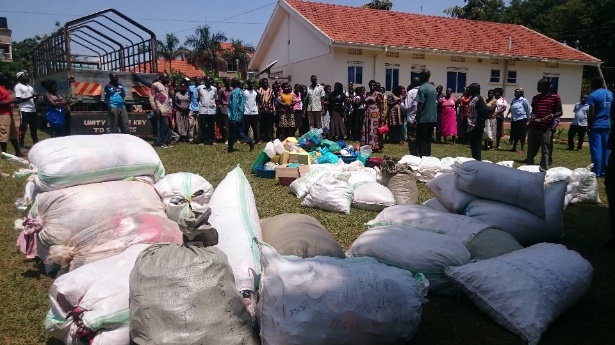
After 37 days of occupying a United Nations office in Gulu, Uganda, 234 farmers, youth, mothers with young babies and elderly men packed their gear into trucks and returned to their homes in Apaa — an area of rich farmland and forest in the north of the country. Far from being a quiet and somber event, their departure was marked by an explosion of song and ululation. It was part collective exhale — following a month of cramped conditions, an overflowing pit latrine and daily hostilities from their reluctant “hosts” — and part cry of triumph and hope. The occupiers from Apaa had uprooted themselves and thrust their community upon the only global stage accessible to them. They strategically chose the only office in the entire country that could be occupied without immediate forceful eviction.

Farmers Are Drawing Groundwater From The Giant Ogallala Aquifer Faster Than Nature Replaces It

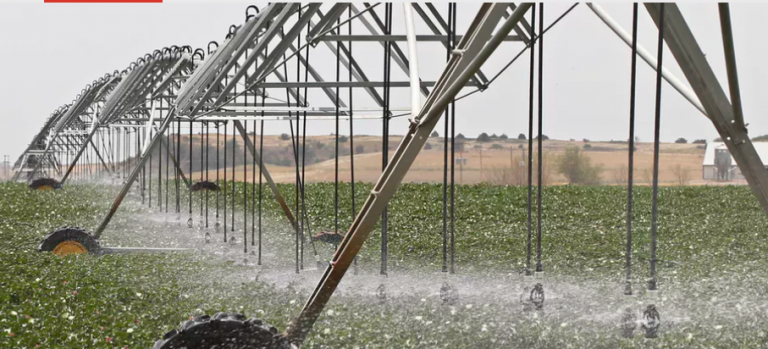
Every summer the U.S. Central Plains go dry, leading farmers to tap into groundwater to irrigate sorghum, soy, cotton, wheat and corn and maintain large herds of cattle and hogs. As the heat rises, anxious irrigators gather to discuss whether and how they should adopt more stringent conservation measures. They know that if they do not conserve, the Ogallala Aquifer, the source of their prosperity, will go dry. The Ogallala, also known as the High Plains Aquifer, is one of the largest underground freshwater sources in the world. It underlies an estimated 174,000 square miles of the Central Plains and holds as much water as Lake Huron. It irrigates portions of eight states, from Wyoming, South Dakota and Nebraska in the north to Colorado, Kansas, Oklahoma, New Mexico and Texas in the south.

America’s Dairy Farmers Are Struggling And Unsupported

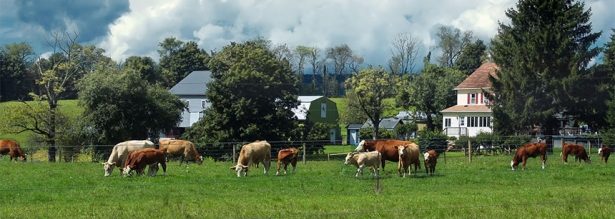
When Lorraine Lewandrowski drives from her Herkimer County dairy farm to her law office each day, she notices the changes happening across rural upstate New York. “When I grew up here, we had 30 or 40 farms in our neighborhood,” she says. “We had a local hardware store, machinery dealers, two dentists, two doctors. We had a vibrant rural town. Now we don’t have that.” Today, she says, roadsides are dotted with “for sale” signs. Farms sit vacant, their owners having relocated to urban areas in search of work. Once-pristine barns have become dilapidated after years of low prices left farmers without money for infrastructure upkeep. The closest city, Utica, is the sixth-most distressed city in the country, with about half of the adults unemployed and more than a quarter of the population living in poverty.

The Empire Strikes Back Leaving Indian Farmers In The Dirt

In India, what we are currently witnessing is a headlong rush to facilitate (foreign) capital and the running down of the existing system of agriculture. While India’s farmers suffer as the sector is deliberately being made financially non-viable for them, we see state-of-the-art airports, IT parks and highways being built to allow the corporate world to spread its tentacles everywhere to the point that every aspect of culture, infrastructure and economic activity is commodified for corporate profit. GDP growth – the holy grail of ‘development’ which stems from an outmoded thinking and has done so much damage to the environment – has been fuelled on the back of cheap food and the subsequent impoverishment of farmers. The gap between their income and the rest of the population, including public sector workers, has widened enormously to the point where rural India consumes less calories than it did 40 years ago. Meanwhile, corporations receive massive handouts and interest-free loans but have failed to spur job creation; yet any proposed financial injections (or loan waivers) for agriculture (which would pale into insignificance compared to corporate subsidies/written off loans) are depicted as a drain on the economy.

France: Farmers Block Refineries To Protest Palm Oil Import

In France, some 200 farmers dumped dirt on the roads leading to the Total refinery in Grandpuits as well as parked about 40 tractors to form blockades. Farmers in France have blocked access to several oil depots and refineries in protest – that is organized to last three days – against the proposed use of imported palm oil at a Total biofuel plant. According to the president of the National Federation of Agricultural Holders’ Unions, Christiane Lambert, 13 sites will be blocked early Monday following five that were blocked on Sunday. The companies, on the other hand, have urged people to not panic-buy gas as it would result in shortages. Some 200 farmers dumped dirt on the roads leading to the Total refinery in Grandpuits Sunday night, as well as parked about 40 tractors, president of the Jeunes Agricultures, Sebastien Guerinot, said.

How India’s Neoliberal Policies Killed 250,000, Birthed Modern Farmers’ Uprising

In March, for weeks, tens of thousands of Indian farmers rallied, under the red flag, meeting in several cities to list their agenda and demands for the government to implement peasant-friendly policies as part of broader agrarian reform. Since 1995, four years after India opened its doors to free markets, according to India's National Crime Records Bureau, NCRB,  nearly 270,000 Indian cotton farmers have killed themselves. The 'Accidental Deaths & Suicides in India,' has placed the death toll for a cumulative 16-year at 256,913 deaths, the worst-ever recorded wave of suicides of this kind in human history. Some of the experts have linked this wave of farmers' suicides to the expensive, out of reach genetically modified seeds, fertilizers, and insecticides. These genetically modified seeds are priced nearly four times higher than the ordinarily available seeds. One of the most popular being Bollgard, developed by Mahyco-Monsanto Biotech.

Nearly 50,000 Farmers March 112 Miles, Indian Government Agrees To Demands

MUMBAI (Reuters) - Tens of thousands of protesting farmers from India’s Maharashtra state marched into the state capital of Mumbai on Monday to demand government support to address hardship in a sector that employs the majority of the country’s workforce. The protesters walked 180 km (112 miles) from the town of Nashik to Mumbai over several days demanding waivers of agricultural loans and the transfer of forest lands to villagers who have been tilling them for decades. “For three generations my family has cultivated crops on a two acre-plot, but we still don’t own it,” said 74 year-old Murabhai Bhavar as she poured water to soothe her aching feet. “The land we till should be registered in our name,”

Movements Of Millions Say No To Gene Drives

The largest rural movements in Brazil, representing well over a million farmers, are protesting a new Brazilian regulation that would allow release of gene drives, the controversial genetic extinction technology, into Brazil’s ecosystems and farms. On February 3rd and 4th, the National Coalition of Farmworkers and Rural, Water and Forest Peoples[1] met near São Paulo, Brazil and sounded the alarm about new Brazilian regulatory changes – a resolution passed on January 15th by Brazil’s National Technical Commission on Biosafety that would allow the release of gene drive organisms into the environment.
assetto corsa mods

Urgent End Of Year Fundraising Campaign

Online donations are back! Keep independent media alive. 

Due to the attacks on our fiscal sponsor, we were unable to raise funds online for nearly two years.  As the bills pile up, your help is needed now to cover the monthly costs of operating Popular Resistance.

Urgent End Of Year Fundraising Campaign

Online donations are back! 

Keep independent media alive. 

Due to the attacks on our fiscal sponsor, we were unable to raise funds online for nearly two years.  As the bills pile up, your help is needed now to cover the monthly costs of operating Popular Resistance.

Sign Up To Our Daily Digest

Independent media outlets are being suppressed and dropped by corporations like Google, Facebook and Twitter. Sign up for our daily email digest before it’s too late so you don’t miss the latest movement news.