Skip to content

Food and Agriculture

#BlackBrunchNYC Disrupts Diners To Protest Police Brutality

In a seemingly new approach to demonstrating, protesters in New York interrupted patrons at various restaurants on Sunday to declare injustice in America and call attention to problematic policing tactics. The event was part of a movement dubbed #BlackBrunch in which protesters purposely selected eateries across the city, or places they referred to as "white spaces," to voice their outrage over police violence against Blacks. On Sunday, about three dozen demonstrators marched into restaurants and briefly interrupted mid-day meals as they read aloud the names of African Americans killed by police, Yahoo reports. “There is a war on Black people in America that cannot be ignored and the Black Brunch tactic is one that is committed to interrupting ‘business as usual’ until the war against us has ended,” reads a statement written by #BlackBrunch organizers.
Sustainable Ways To Feed World Subverted By Corporations

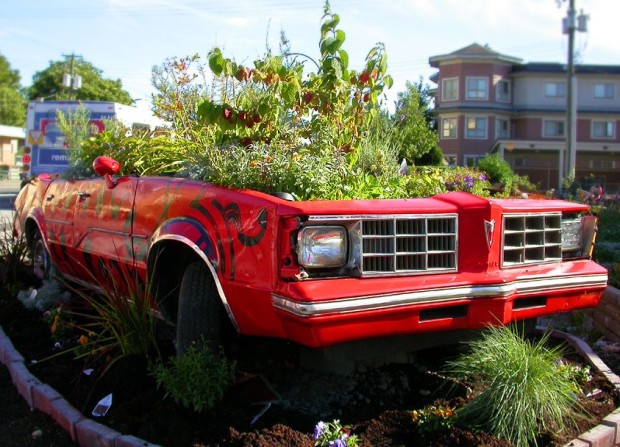
We have just scratched the surface of some of the problems that plague the current way we produce and relate to the food we consume. The picture is bleak, we must admit. But amidst this chaos stands a colorful and dedicated group of indigenous people, family and heirloom farmers, urban guerrilla gardeners, and permaculture enthusiasts, who are dedicated to preserve original seeds and traditional growing practices. Permaculture, in particular, has been gaining momentum in the west. Developed by Bill Mollison and David Holmgren in 1978, permaculture stands for “permanent agriculture”, and it denotes a way of efficiently emulating natural self-sufficient systems in our agricultural designs and practices. In essence, permaculture is a western moniker for the way we have conducted agriculture for millennia prior to the industrial revolution, and the way many indigenous and traditional populations still grow their foods, plus the application of modern scientific understanding of chemistry and biology, as well as modern technology, to maximize efficiency or fully harness the potential of the growing space.

One Million Losing Food Stamps As Poverty Increases

Currently, 46 million people are living in poverty in the United States, 16.4 million children (23% of children) and 20 million are in deep poverty. 100% of Republican senators have agreed to vote to eliminate the food stamp program. Senator David Perdue (R-GA) makes the sadly ironic claim on his campaign website that he was one of the millions of Americans who would support free market solutions to feeding the nation. Doesn't he realize that so-called free market capitalism is actually the cause of the poverty problem? The wealth and income divides are part and parcel of the big finance capitalist economy that sends money from the middle class and poor to the already extreme wealthy. Can anyone really imagine those who seek profit from everything being a solution to poverty? Last January 89 Democrats voted to cut food stamps by $8.7 billion as part of the farm bill which President Obama signed. This was just one of a series of bills cutting the essential poverty program for which Democrats joined with Republicans, in a bi-partisan attack on people in poverty.

Attack Of The Land-grabbers: Land Grabs Beyond Africa

Before going further, it is important to recognize that land grabs are not only happening in Africa and, while there is a “global rush to lock up African farmland” by state-owned companies and private investors, different investors have different motives. One group of investors are Arab investors, who have the appeal “that Islam has made significant inroads in Africa, creating cultural and religious links” in their land grabs. Within this group are Saudi investors, who began a push, thanks to the support of the royal Saudi government and its dictator King Abdullah II in 2008, to “acquire cropland abroad and grow food for export to the homeland.” Some of these land grabs include the acquisition of land in Ethiopia, in 2009, to grow rice and in Sudan to grow wheat, corn, and soybeans for export to Saudi Arabia. For the land grab in Ethiopia, every day a group of 1,000 locals pick, pack, and load “hundreds of tons of fresh production onto waiting trucks.

These Folks Feed Their Family With Garden In Their Swimming Pool

When Dennis and Danielle McClung bought a foreclosed home in Mesa, Ariz., in 2009, their new yard featured a broken, empty swimming pool. Instead of spending a small fortune to repair and fill it, Dennis had a far more prescient idea: He built a plastic cap over it and started growing things inside. Thus, with help from family and friends and a ton of internet research, Garden Pool was born. What was once a yawning cement hole was transformed into an incredibly prolific closed-loop ecosystem, growing everything from broccoli and sweet potatoes to sorghum and wheat, with chickens, tilapia, algae, and duckweed all interacting symbiotically to provide enough food to feed a family of five.

Despite Ban, Monsanto & Bayer GM Crops Contaminate Europe

Europe banned the cultivation of GM rapeseed, but new studies prove that genetically modified Brassica napus L. is growing all over Switzerland. This is likely the first study of its kind to prove that cross-contamination (or possible illegal seed spreading by Biotech and Monsanto) is a bigger problem than anyone may have suspected. The study published in PLoS is titled, “Unexpected Diversity of Feral Genetically Modified Oilseed Rape (Brassica napus L.) Despite a Cultivation and Import Ban in Switzerland.” Of 105 plants sampled, 15 contained the banned GMO rapeseed variety. Though this was considered a ‘small’ contamination rate in the study, there obviously should be no GM plants present at all considering the ban. This is concerning, too, since once GM seeds are introduced into the wild, they can continue to cultivate, interbreeding with non-GM, local plants.

Russian Family Gardens Produce 40% Of Russian Food

Earlier this month, Russian Prime Minister Dmitry Medvedev stated that Russia will not import GMO products because Russia has enough space and resources to produce organic food. This was not a political statement of posturing, given the current cool relations between the U.S. and Russia over the Ukraine. As it turns out, Russia’s food security is light years ahead of the U.S. As you will read below, a significant portion of the Russian population own “dachas,” or seasonal garden homes, where they can grow their own food. At the height of the communist era, it is reported that these dachas produced 90% of the nation’s food. Today, with the land now privatized, they still comprise about 40% of the nation’s food.

This Holiday Season Say NO To GMO Chestnuts

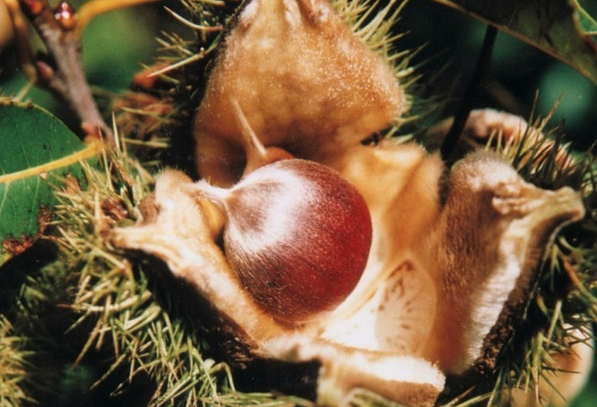
ArborGen’s GE Eucalyptus trees will be an ecological disaster. They are non-native, invasive, water-greedy, suppress the growth of other vegetation, provide no habitat for wildlife, and are explosively flammable. And ArborGen wants to see them in huge plantations along the US Gulf Coast. So if the GE chestnut tree is truly “intended solely for the public good,” why is ArborGen involved? Why are they promoting them? For one reason. The GE American chestnut tree is being used to try to convince the public that GE trees can be beneficial. The hope is that they will help change the extremely powerful public opposition to GE trees and open up markets for new GE tree “products” that could mean big big profits for timber and biomass companies.

Over Half Of Foods Tested In The U.S. Contain Pesticides

“A majority of the foods sampled contained some level of pesticide residue. While the levels found were mostly below ‘tolerance’ levels established by the U.S. Environmental Protection Agency, for many pesticides health impacts in children can occur at such low levels. For example, testing was done for the neurotoxic insecticide chlorpyrifos in 18 different types of food (mainly fruits and vegetables or products). While only a small number of samples contained the chemical, detections were in 12 of the 18 types of food. The chlorpyrifos residues were nearly all below EPA’s tolerance levels; yet it is worth noting that very small amounts of chlorpyrifos are associated with adverse effects. Epidemiological studies on children exposed to the insecticide have indicated associations with lowered IQ and effects on brain development at low doses.

The Pillaging Of Paraguay Photo Essay And Analysis

The major injustices toward the land and the people in Paraguay are large-scale genetically modified (GM) soy production by multinational corporations and deforestation due to unsustainable livestock production. The expansion of soybeans and cattle in Paraguay is based on the theft of peasant and aboriginal communities’ land holdings and ancestral lands. The key common characteristic underlying all large-scale rural production in Paraguay is that it is based on massive illegal land grabbing. Soybeans are produced on the fertile soils of eastern Paraguay, the best soils in the country.

Organic Crops Can Compete With Big Ag

A systematic overview of more than 100 studies comparing organic and conventional farming finds that the crop yields of organic agriculture are higher than previously thought. The study, conducted by UC Berkeley researchers, also found that certain practices could further shrink the productivity gap between organic crops and conventional farming. “In terms of comparing productivity among the two techniques, this paper sets the record straight on the comparison between organic and conventional agriculture,” said the study’s senior author, Claire Kremen, professor of environmental science, policy and management and co-director of the Berkeley Food Institute.

Groups Rally Against Legislation To Keep GMOs Off Labels

Consumers, farmers, states’ rights and consumer rights activists traveled to Washington D.C. today to attend a scheduled hearing and protest on a bill that would preempt states’ rights to pass laws requiring the mandatory labeling of genetically modified organisms (GMOs).” H.R. 4432, dubbed by pro-labeling groups as the DARK (Deny Americans the Right to Know) Act, was introduced in April by Rep. Mike Pompeo (R-Kan.). It was written with help from the biotech and processed food industries to protect corporate profits. Sixty-four countries require corporations to disclose whether or not their products contain GMOs. More than 90 percent of Americans surveyed say they want this right, also.

Victory: Monsanto Stock Downgraded, Worst Growth In 7 Years

Monsanto stock has been downgraded to ‘Neutral’ from ‘Buy’ after an annual seed dealer industry survey showed bleak returns. This may be the most depressing news in seven years for Monsanto, but great news for the seed industry, which has been monopolized by the chemical peddler since the early 1990s. The target price for (MON +0.1%) has been lowered from $140 to $127. Conditions affecting the downgrade include “greater discounting, reduced trait purchases, reduced spending on seeds, and share gains for non-major seeds brands” – with hardly a mention of the grass-roots, and international efforts of people to shine a light on Monsanto’s illegal influence on the world seed market.

Why One Perdue Factory Farmer Speaks Out

Craig Watts went into chicken farming as a contract farmer for one of the biggest chicken companies in the country, Perdue Farms, in order to support his family. But after 22 years, he had reached breaking point. He did something no one has done before. He invited a farm animal welfare organization, Compassion in World Farming, onto his farm to help tell his story. Compassion USA director Leah Garces says, “Craig and I realized that we wanted the same thing. We want to reform the chicken industry, and we have to stand shoulder to shoulder, farmer and animal advocate, to achieve that.” Chickens today are genetic monsters raised in poor conditions.

What Ferguson Can Teach The Food Movement

As a person of mixed heritage I know that racism has tangled roots: white privilege, internalized oppression, fear, guilt, grief. I also know that while it is structural, it is also visceral, bound up in our psyche and our emotions, hard to get at and painful to work through. This is why many people in the food movement choose not to address it. They are afraid that addressing racism is just too hard, too complicated and too messy. They’re afraid that bringing up the issues of oppression and privilege will end up dividing the movement rather than strengthening it. They’re afraid. They are also mistaken. We can’t have a just judicial system, or an impartial law enforcement system, or build a sustainable food system on the foundation of an oppressive social and economic system.
assetto corsa mods

Urgent End Of Year Fundraising Campaign

Online donations are back! Keep independent media alive. 

Due to the attacks on our fiscal sponsor, we were unable to raise funds online for nearly two years.  As the bills pile up, your help is needed now to cover the monthly costs of operating Popular Resistance.

Urgent End Of Year Fundraising Campaign

Online donations are back! 

Keep independent media alive. 

Due to the attacks on our fiscal sponsor, we were unable to raise funds online for nearly two years.  As the bills pile up, your help is needed now to cover the monthly costs of operating Popular Resistance.

Sign Up To Our Daily Digest

Independent media outlets are being suppressed and dropped by corporations like Google, Facebook and Twitter. Sign up for our daily email digest before it’s too late so you don’t miss the latest movement news.