Skip to content

Net Neutrality

Newsletter: The Contagion Of Courage

When our colleagues take brave actions, others are inspired. George Lakey describes how courage develops in movements. He lists some key ingredients to overcome fear: people working in community to empower each other, envisioning a successful action and spreading the contagion of courage. Lakey describes courage as each of us expanding beyond our comfort zones and adds that our training for actions should include opportunities to step outside our comfort zone. He suggests we need to view the rapid heartbeat and adrenalin during an action not as fear, but as excitement. Envisioning the whole story - where the story starts, the action being taken and its successful impact - emboldens us and calms our fears of uncertainty. We learn courage in community because courage is contagious.

GOP, Tech Industry Mostly Out Of Step Over Net Neutrality

The intensifying debate over how to keep the Internet open and ripe for innovation has heightened tensions between Republican congressional leaders and tech entrepreneurs they have been trying to woo. As tech firms and cable companies prepare for a fight that each says will shape the future of the Internet, Silicon Valley executives and activists are growing increasingly irritated by the feeling that the GOP is not on their side. Republican leaders have struggled to explain to their nascent allies in the Bay Area why they are working so hard to undermine a plan endorsed by the Obama administration to keep a level playing field in Internet innovation, enforcing what the administration and its allies call "net neutrality."

Municipal Broadband & The Fight For Local Internet

A large and growing portion of small businesses rely on a high-quality Internet connection for essential operations, but lack of competition and choice among broadband providers has forced many businesses -- and most Americans -- to choose between inferior service or exorbitant prices. Federal Communications Chair Tom Wheeler says the vast majority of the country has only a company providing Internet access above 25 Mbps, what he called “table stakes” for today’s economy. Often responding to local business concerns, many local governments have been investing in fiber optic networks or partnering with independent firms to create real choice among Internet providers.

Why Commissioner Pai Is 100 Percent Wrong On Net Neutrality

In a Tuesday press conference, FCC Commissioner Ajit Pai critiqued the agency's pending Open Internet order, mischaracterizing FCC Chairman Tom Wheeler's plan as a scheme to "regulate the Internet." Last week, Wheeler announced his intention to reclassify broadband access as a "telecommunications service" under Title II of the Communications Act. Using Title II would restore basic protections against blocking and unreasonable discrimination by broadband providers, grounding those protections in the proper part of the law for the first time in more than a decade. Commissioner Pai's nonsense will be cheered by the cable and telecom industries, which make the same unfounded claims. And his fear-mongering may resonate in the echo chamber of misinformation about Title II.

Net Neutrality Activists Attacked At FCC Press Conference

WASHINGTON, DC––Net neutrality activists who support strong free speech protections through Title II reclassification crashed a press conference organized by Republican FCC Commissioner––and former Verizon lawyer––Ajit Pai this morning when they attempted to unfurl a large banner reading “85% of Republican Voters Support Net Neutrality,” a reference to a University of Delaware poll from November, reported in the Washington Post. FCC security violently attacked the demonstrators, knocking them to the ground. As they were dragged from the room, internet activists Dr. Margaret Flowers and Kevin Zeese of the group PopularResistance.org said, “Commissioner Pai, don’t you see Republicans love net neutrality? Stop being a mouthpiece for the Telecoms–your job is to represent the public interest. Title II now!

Cable-Money Recipients: Stop FCC From Protecting Net Neutrality

While we’re all celebrating FCC Chairman Tom Wheeler’sannouncement that he plans to reclassify broadband providers under Title II, some of Congress’ biggest recipients of cable cash are gearing up to get in the way. Reps. Fred Upton (R-Mich.) and Greg Walden (R-Ore.) and Sen. John Thune (R-S.D.) have introduced a bill they claim will prevent abuses online. However, the congressmen have long opposed Net Neutrality — and they have a history of accepting campaign donations from the companies trying to kill the open Internet. Both Upton and Thune have described Net Neutrality regulations as a “solution in search of a problem.”

How The Little Guys Beat The Monopolists

It’s hard to overstate either how important FCC Chairman Tom Wheeler’s statement was last week, or how improbable. The chairman’s proposal, which will be voted on by the full five-member commission on February 26, bans broadband companies from discriminating between different content providers based on who can pay. If the FCC supports it, it protects the Internet from a world in which there are slow lanes for poor content providers and fast lanes for rich ones. At the most basic level, it keeps Comcast and Time Warner from becoming the dictators of what we see, read, and write about. And it’s a political miracle.

Corporate Media Lies For The Telecoms

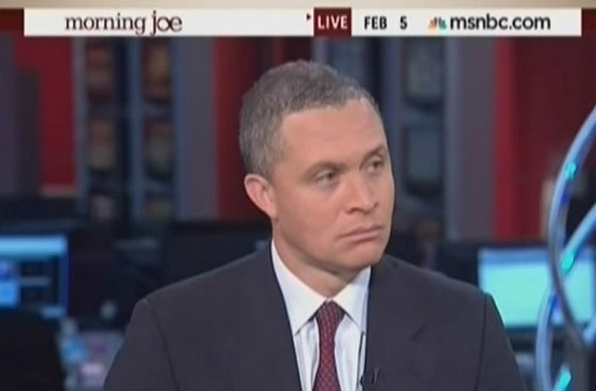
MSNBC's Harold Ford, Jr. used air time to push net neutrality myths without disclosing his relationship to the telecom industry, which has contributed millions of dollars to lobbying against net neutrality regulations. The Federal Communications Commission (FCC) is expected to vote February 26 on a proposal for stronger net neutrality regulations drafted by chairman Tom Wheeler and detailed in a February 4 op-ed on Wired's website. According to The New York Times, Wheeler's proposed net neutrality rules "will give the commission strong legal authority to ensure that no content is blocked and that the internet is not divided into pay-to-play fast lanes for internet and media companies that can afford it and slow lanes for everyone else. Those prohibitions are hallmarks of the net neutrality concept."

Major Historic Victory For Internet Freedom: The Fight Continues

Our ten month campaign to save the Internet (which built on ten years of work) had an against-all-odds victory when the Chairman of the FCC announced that the Internet would be reclassified as a public utility under Title II of the Federal Communications Act. If you remember, this is why we camped outside the FCC last May and continued to protest throughout the year– so that the Internet would be reclassified. This is a crucial step to guarantee net neutrality which means that we all have equal access to content on the Internet and it can’t be turned into a pay-to-play scheme like cable TV. This is a victory of people power over corporate power, indeed over one of the most powerful lobbies in Washington, DC the telecom industry! We have more campaigns to win and must be confident that the people have power and can defeat corporate interests.

FCC Chair Tom Wheeler To Ensure Net Neutrality

After more than a decade of debate and a record-setting proceeding that attracted nearly 4 million public comments, the time to settle the Net Neutrality question has arrived. This week, I will circulate to the members of the Federal Communications Commission (FCC) proposed new rules to preserve the internet as an open platform for innovation and free expression. This proposal is rooted in long-standing regulatory principles, marketplace experience, and public input received over the last several months. Broadband network operators have an understandable motivation to manage their network to maximize their business interests. But their actions may not always be optimal for network users. The Congress gave the FCC broad authority to update its rules to reflect changes in technology and marketplace behavior in a way that protects consumers.

Guardian: How Activists Are Defeating Big Cable

Last May, Zeese was thrown out of an Federal Communications Commission (FCC) meeting, as the regulator looked set to pass new rules that among other things would have allowed cable companies to create and charge extra for “fast lanes” and end net neutrality – the principle that all traffic should be treated equally online. This week, FCC commissioners will start discussing a new set of rules for regulating the web that could ban fast lanes. That ban would be part of a set of rules that, if passed, will regulate the internet in the similar way to utilities like water or electricity – a move net activists have been dreaming of for decades, believing it will allow the regulator to better protect net neutrality. The change in tone has been swift and dramatic and it even caught Zeese by surprise.

Showdown At The FCC: Net Neutral-i-kitty vs. Cable Boss

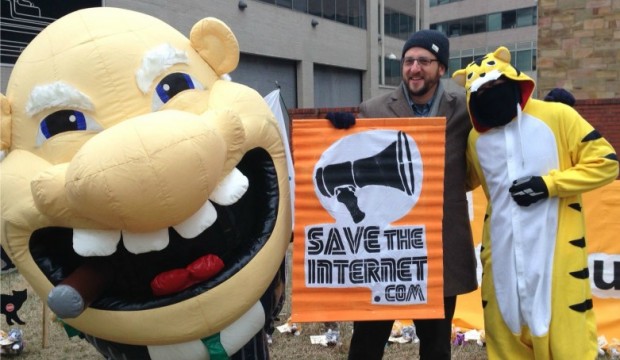
Early Thursday morning, the five FCC commissioners gathered for their first open meeting of 2015. Besides drawing the usual crowd of reporters, the agency was surrounded by a herd of more than 400 cats. Black-cat silhouette cutouts, cat balloons and stuffed cats crowded the lawn. Within the herd were a bunch of plush kitties that generous Free Press donors sponsored for outings like this (thank you!). Free Press staff handed passerby “Reclassify Now” flyers with a statement of purpose from the cats: “We’re here to MEOW for Title II. Please do strong rules against blocking and discrimination, too. Open and free, the way the Internet should be. It’s up to you, Chairman Wheeler and FCC!” In addition to rallying for strong Net Neutrality protections, the cats were in D.C. to witness a historic battle between two contenders who symbolized the fight over the fate of the Internet.

The One Loophole To Rule Them All

At this point, you may be wondering, “Where are we now?” Here’s the status update: We are one month from the Federal Communications Commission issuing a final decision. But it will be a month that matters because it’s not yet clear who will triumph. For the next month, the giant phone and cable companies will be lobbying to put a loophole in the FCC’s rule. Any significant loophole will do. They will ask for many loopholes, but all they need is one. So they can “compromise” by letting go of several outrageous loopholes because with one alone they can create an entirely new business ecosystem of slow and fast lanes that undermines the open Internet. It would be the one loophole they need to rule all the websites and users.

Defending Net Neutrality Is A Fight For Human Rights

FROM its basement beginnings, the internet has spread across the globe. It lets us connect more efficiently than any technology before it, and has become a crucial ingredient of modern life. One of the keys to its success is "net neutrality" – a jargony way of saying that all internet traffic must be treated equally. Neutrality has been a guiding principle of the net since its birth, but next month the US Federal Communications Commission will vote on its future in the US. Internet providers largely want to see it end, allowing them to give preferential treatment to traffic from certain websites, or slow down traffic from competitors. President Obama has advised the FCC to preserve neutrality, and the smart money is on the status quo. But the fact that the vote is happening demonstrates that net neutrality is a public good that needs constant and vigilant defence against private interests.

Activists Start Countdown To Net Neutrality

Web activists are starting to count down to new net neutrality rules. One month before the Federal Communications Commission (FCC) is expected to vote on new rules to treat the Internet like a utility, activists participating in the Battle for the Net campaign have launched an online countdown clock that they are making available for sites across the Web. “We are closer than ever to winning real net neutrality protections that will keep the Web open for generations to come, and the Internet is literally counting down the seconds,” said Evan Greer, campaign director for Fight for the Future, said in a statement.
assetto corsa mods

Urgent End Of Year Fundraising Campaign

Online donations are back! Keep independent media alive. 

Due to the attacks on our fiscal sponsor, we were unable to raise funds online for nearly two years.  As the bills pile up, your help is needed now to cover the monthly costs of operating Popular Resistance.

Urgent End Of Year Fundraising Campaign

Online donations are back! 

Keep independent media alive. 

Due to the attacks on our fiscal sponsor, we were unable to raise funds online for nearly two years.  As the bills pile up, your help is needed now to cover the monthly costs of operating Popular Resistance.

Sign Up To Our Daily Digest

Independent media outlets are being suppressed and dropped by corporations like Google, Facebook and Twitter. Sign up for our daily email digest before it’s too late so you don’t miss the latest movement news.