Skip to content

Baltimore

Next Stop For Oil Bomb Trains: Baltimore?

With millions of gallons of U.S. oil needing to find refineries, Targa Resources, a huge Texas-based pipeline and storage company, is just one of many looking to build out oil storage and shipping facilities. Targa has received preliminary “air pollution” approval from the Maryland Department of the Environment to convert its Curtis Bay facility to an oil storage facility. Targa’s plan is for up to 9 million barrels of oil a year, most likely Bakken fracked oil, to travel by train right through downtown Baltimore, past Camden Yards on to Targa’s tanks in Curtis Bay. The non-profit ForestEthics has created this Oil Train Blast Zoneto help citizens learn if their home or workplace resides in a potential oil kaboom zone.

We Should All Be Inspired By These Baltimore Youth

The youth of South Baltimore have scored another round in their fight to keep a mammoth waste incinerator out of their neighborhood. Baltimore County’s regional cooperative purchasing committee voted to end their contract with the company Energy Answers, which has plans to build a $1 billion solid waste-to-energy facility in the working class neighborhood of Curtis Bay. (Ever watch The Wire? Season Two? That neighborhood.) The youth organizing group Free Your Voice, made up of students who live or attend school close to the proposed incinerator site, has been mobilizing friends, neighbors, teachers, and other school administrators over the past three years toreject the waste-burning facility. As fans of The Wire may remember, Curtis Bay is already overrun with pollution-heavy industrial operations and port activity.

Students Take Over Board Meeting Protest School Closings

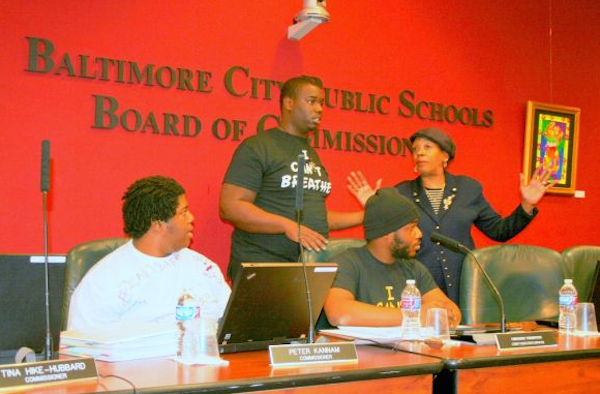
The Baltimore Algebra Project, an organization of youth education activists, seized control of the school board voting session last night and delayed a controversial vote on city school closures. As soon as the closure of Heritage High was announced, seven Algebra Project members staged a “die-in,” lying on the floor chanting, “The school board has failed us,” and “Black lives matter.” When it became clear the Algebra Project had taken over the meeting, the 10-member board left the room. Tre Murphy, one of the protesters, said to the board as they filed out, “Where are you going? You work for us.”

‘One Baltimore’ Rally Unites Groups Against Privatization

But we're here because there is an efficiency study that Veolia is trying to bargain with the city so they can get the contract. And we know what they want to do. They want to outsource. They want to sell out our water department. We have the best water in the entire United States of America. Then, two years from now, what they will do is say that we want to downsize the workers, contract out their jobs. And then what they do is they want to take over the water in the City of Baltimore. We are sick and tired of being sick and tired of our city being sold out, whether to garages, whether it's different jobs in the Transportation Department, whether it's outsourcing our water department jobs. And so it's time for us to stand up now. Today we have some community leaders that are here. But especially the unions are here, because it's about jobs, it's about a living wage. But it's also about not selling out Baltimore. So, again, don't sell out Baltimore.

Housing The Homeless In Baltimore’s Vacants

Housing the homeless of Baltimore in the city’s vacant rowhouses is being floated again by local affordable housing activists whose idea forms the core of an article in the current Atlantic. Their idea is “to create a community land trust – a non-profit that will hold the title to the land in order to make it permanently affordable.” according totoday’s piece by Alana Semuels. “Structures on the land can be bought and sold, but the trust owns the land forever,” she writes about the proposal by Housing Is A Human Right Roundtable, a coalition of labor activists and homeless people affiliated with the United Workers. “A community land trust essentially takes the ‘market’ part out of the housing market, allowing people to buy homes but restricting their resale value in order to make them affordable for the next buyer.”

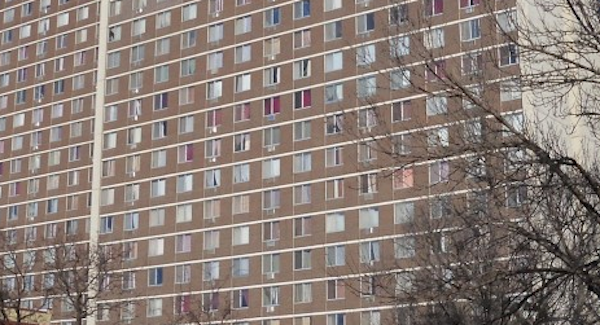
The RAD-ical Shifts To Public Housing

Traditional public housing is out of favor and substantially out of funds. It’s bureaucratic, concentrates the very poor, and is literally crumbling due to a huge backlog of deferred maintenance. Yet despite real catastrophes—such as Chicago’s bleak, crime-ridden Robert Taylor Homes, dynamited over a decade ago—public housing provides low-rent apartments to some 2.2 million people, and much of it is reasonably well run by local authorities. For half a century, presidents, legislators and housing developers have sought alternatives, involving supposedly more efficient private market incentives. However, these alternatives, too, have been far from scandal-free. The Johnson-era Section 236 program (named for part of the housing code) gave private developers tax benefits and direct payments to build low-rent housing, underwritten by subsidized thirty-year mortgages. But then, as the mortgages started being paid off in the 1990s, many developers kicked out poor tenants and converted the buildings to middle-class and even luxury apartments—taking low-rent units that had been built and maintained with taxpayer money and removing them from the pool of affordable housing.

A RAD-ical Housing Experiment

After decades of decay, public housing in the United States could soon be relegated to the dustbin of history, thanks to a new Obama administration initiative called the Rental Assistance Demonstration (RAD) program. A pilot launched last year in response to a $26 billion backlog in needed repairs, RAD will hand over 60,000 units of public housing nationwide to private management by 2015. Though that’s only a fraction of the nearly 1.2 million public housing units that provide a safety net for more than 2 million people, housing advocates worry that RAD’s reforms are a Trojan horse for sweeping privatization of a crucial public asset. In the wake of the Great Depression, a surge of tenant activism helped usher in public housing as a federally funded, locally administered program to address poor living conditions in urban areas. But the program came to be viewed less as a public good and more as housing of last resort, giving rise to a cycle of demonization and neglect, followed by pernicious “reforms.” RAD is the latest in a series of initiatives to address the underfunding of public housing with a familiar free-market solution: handing off state-owned assets to private actors who receive public subsidies in exchange for an increasingly involved role in managing housing for low-income tenants. Though public housing residents have been assured that RAD will fund long-overdue repairs while keeping housing affordable and preserving tenants’ rights, similar promises have been broken by would-be free-market saviors before. Critics say RAD shares key features with past privatization initiatives that have displaced hundreds of thousands of public-housing residents. In the last decade and a half alone, more than 100,000 units of public housing have been lost to demolition or sale.

Baltimore Youth Stop Incinerator Construction

Baltimore air polluter fumbles, and kids score one for their hard-hit community. After close to three years of youth-led organizing against a massive incinerator planned for their South Baltimore Fairfield neighborhood, the young activists got their first taste of victory recently, when the state of Maryland ordered Energy Answers International, the company building the incinerator, to stop construction on the project. Assistant Attorney General Roberta R. James sent a letter to Energy Answers on June 20 alerting the company that it was in violation of the state’s air pollution control laws and regulations. Specifically, the incinerator company failed to purchase offsets for the hundreds of tons of toxic air pollutants the incinerator will emit when it gets up and running, which many in the Fairfield community hope won’t happen. The offsets — a company’s agreement to pay another company to clean up its emissions so that it can keep polluting — are mandatory under Energy Answers’ permit provisions. The company was required to begin buying offsets when it started construction last year.

Baltimore Police Department Struggles With Truth & Justice

Baltimore Police Chief Batts has taken up the task of swaying public opinion of the city’s law enforcement. This past Wednesday on June 25th, Chief Batts along with his top brass participated in a City Hall public hearing on law enforcement practices. This comes after several years of community activism against police brutality, including brutality against Anthony Anderson and Tyrone West. Joining the fight recently has been 36 year old Abdul Salaam. Both the West and Salaam families filed reports with internal affairs which that say they were ignored. Both the Anderson & West incidents had been clouded by conflicting reports by the police and witnesses. The Baltimore Police Department claimed Anthony Anderson died of a drug overdose, while the facts revealed by the medical examiner indicated that it had been a homicide by blunt force. Abdul Salaam had been severely beaten by police upon a routine seatbelt stop last July of 2013. It has been recently reported that both the Salaam and West families have taken their grievances to a civil court because the Baltimore PD have found no wrong doing of officers in either case.

The Latest Battleground In The Dolphin Debate

When John Racanelli arrived as CEO in 2011, the Baltimore’s National Aquarium was at a low point. The deaths of two dolphin calves, one from pneumonia and the other from internal bleeding, had created, in his words, “an incredibly depressed organization." And it brought Racanelli to a controversial revelation, one that the head of a zoo or aquarium has never reportedly, publicly said before: “Having calves in this setting may not be the best possible thing for their well-being and health in the long run.” For decades, bottlenose dolphins have entertained crowds across the country. The National Aquarium’s dolphin shows alone drew more than 1 million visitors a year. But after the calves’ passing, the aquarium shuttered the spectacle. Recent films “Blackfish” and “The Cove” have shifted public attitudes about captive sea mammals, and Racanelli is now making waves in the zoo industry by suggesting they close their dolphin exhibit entirely. “We’re asking some tough questions, we really are,” he said. “…I feel we’ve really only scratched the surface.”

Enthusiasm High For A New Economy For Baltimore

With growing recognition that the economy fails to serve the interests of most people, alternative institutions and processes based on economic democracy are beginning to pop up everywhere. This movement points to what is called by some as “the New Economy.” Throughout the country people are joining a global movement to create structures grounded in democratic control of community wealth – an economy of, by, and for the people. On May 16 and 17, Baltimore took another step in this direction when more than 100 people attended the Economic Democracy Conference. The Baltimore conference followed on the heels of a similar event in Jackson, Mississippi two weeks prior. The Jackson Rising: New Economies Conference brought people together from many communities across the nation interested in putting in establishing cooperatives and other institutions of economic democracy. In June, a national New Economy conference is scheduled in Boston and in July there will be an international conference on the subject in Mexico. People want greater decision making in their workplaces, communities, and lives and that is what economic democracy offers; it builds infrastructure and institutions that facilitate people participating in the shaping of their own futures. The seeds of a democratized economy are firmly planted in the United States. More than 130 million residents are members of some type of cooperative, including credit unions.
assetto corsa mods

Urgent End Of Year Fundraising Campaign

Online donations are back! Keep independent media alive. 

Due to the attacks on our fiscal sponsor, we were unable to raise funds online for nearly two years.  As the bills pile up, your help is needed now to cover the monthly costs of operating Popular Resistance.

Urgent End Of Year Fundraising Campaign

Online donations are back! 

Keep independent media alive. 

Due to the attacks on our fiscal sponsor, we were unable to raise funds online for nearly two years.  As the bills pile up, your help is needed now to cover the monthly costs of operating Popular Resistance.

Sign Up To Our Daily Digest

Independent media outlets are being suppressed and dropped by corporations like Google, Facebook and Twitter. Sign up for our daily email digest before it’s too late so you don’t miss the latest movement news.