Skip to content

Food and Agriculture

Victory Gardens DC Is Growing Food & Community

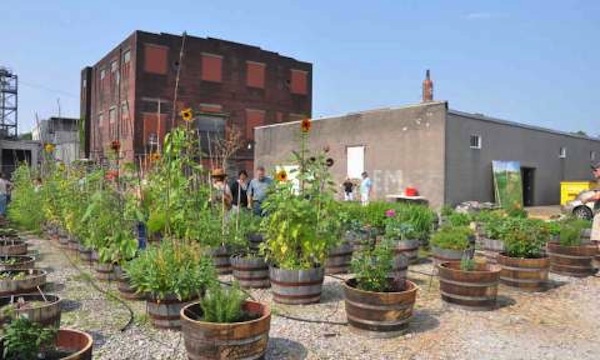
Victory Gardens DC, a new urban farm in Washington, D.C., grew out of one young couple’s desire to serve city residents in a practical way. Alex Shek, an entrepreneur, and his wife Julia, a nurse, decided that the best way to help the people in their Southeast neighborhood is to provide healthy food to those who can’t afford it. With Alex’s business know how, Julia’s knowledge of healthy food and cooking, and the aid of some talented friends, they started an urban farm in their own neighborhood. Neighbors, local businesses, churches and contributors on indigogo.com have provided labor and money, and the couple’s dream is now a reality. Food Tank: What inspired you to start Victory Gardens DC? AS: My wife and I moved to the city from Northern Virginia with the idea of ministry and outreach in our heart, and we wanted to fill a need, a practical need, and how practical is food? The ability to find organic food or good fresh fruits and vegetables at a low cost in the city is really challenging, and I hope we can make an impact through providing food for those that can't afford it.

How to Avoid GMOs: What the USDA Organic Symbol Means

Buying organic remains the best one on the table for the time being for those who wish to stay GMO-free. Many people know that organic is better for the environment and for health to the lack of health and soil-diminishing chemicals, but they don’t quite know what the USDA’s standards entail. The USDA remains an organization that is not completely trustworthy in the eyes of many in the natural health and GMO-free movements due to the presence of big-money co-opting their mission of providing safe, healthy food and transparency from food makers, but the organization does provide oversight in regards to organic standards through tens of thousands of on-site inspections each year. So, how best can you avoid GMOs (other than buying growing your own food through heirloom seeds), and what do organic standards entail? Let’s discuss.

Wave Of GMO Labelling Victories Embolden Movement

The East Coast has been getting most of the attention lately on the state by state effort to label genetically-engineered food. Vermont recently passed a bill and New York State’s bill is now moving. But let’s not forget about the western states, which are also critical to this fight. Right to know advocates in Oregon and Colorado are currently gathering signatures to place measures on the November ballot. Both of these states have a good shot at convincing voters to pass GMO labeling. Just last month, voters in Jackson County, OR, approved a ballot measure (resoundingly, 66 to 34 percent) to not allow the planting of GMO crops. That, combined with three east coast states that have thus far passed GMO labeling bills—Connecticut, Maine and Vermont—is creating a huge headache for the biotech and junk food industries. But it’s still not enough.

How Agribusiness Infiltrated The EPA

Earlier this year, in an exposé in The New Yorker, Rachel Aviv detailed the story of Syngenta, an agribusiness firm that was sued by the community water systems of six states in a class-action lawsuit over the firm’s herbicide atrazine. Atrazine is the second most commonly used herbicide in the US and is used on more than 50% of all corn crops. It is one of Syngenta’s most profitable chemicals with sales at over $300 million a year. Banned in the EU, atrazine remains on the market in the US despite scores of scientific publications demonstrating its role in abnormal sexual development. Almost insoluble in water, atrazine contaminates drinking water supplies at 30 times the concentration demonstrated to cause severe sexual abnormalities in animal models. Recently unsealed court documents from the lawsuit have disclosed how Syngenta launched a multimillion-dollar campaign to disrepute and suppress scientific research, and influence the US Environmental Protection Agency to prevent a ban on atrazine.

Organic Agriculture Attracts A New Generation Of Farmers

By 9 a.m., Jack Motter had been planting peas for hours. He pushed a two-wheeled contraption that deposited a seed every few inches along neat rows at Ellwood Canyon Farms, just outside Santa Barbara. As clouds gathered overhead, he picked up the pace to avoid losing days of work to the fall rain. Timing can mean the difference between profit and loss for the 4-year-old farm. Motter and his business partner, Jeff Kramer, are part of a growing crop of farmers — many of them young — choosing to produce food without pesticides and synthetic fertilizers. As consumers demand more fresh and local food grown with minimal environmental effects, a new generation has taken up organic farming. The two Brawley, Calif., natives, both 30, have learned that small-scale agriculture is neither easy nor lucrative. Their days on the 15-acre farm start at dawn and end with exhaustion.

Boycott Companies That Support GMOs

March Against Monsanto reports that members of the Grocery Manufacturers Association (GMA) are fighting to stop initiatives that require labeling of GMO-containing foods. The GMA does not want people to have the right to know what is in their food. In Washington State alone, the GMA spent more than seven million dollars to defeat the GMO labeling bill in 2013. And now they are preparing to sue the state of Vermont over its labeling law. That's why March Against Monsanto and others are calling for a boycott of these companies until they drop their affiliation with the GMA. Below is a list of the companies and their headquarters. In addition to boycotting their products, if you live close to a headquarter, you might consider organizing an action to tell them to drop their affiliation with the GMA and to side with the people instead. Tell them that the health of the people is more important than their profits.

Pipeline Opponents Warn Of Water Contamination

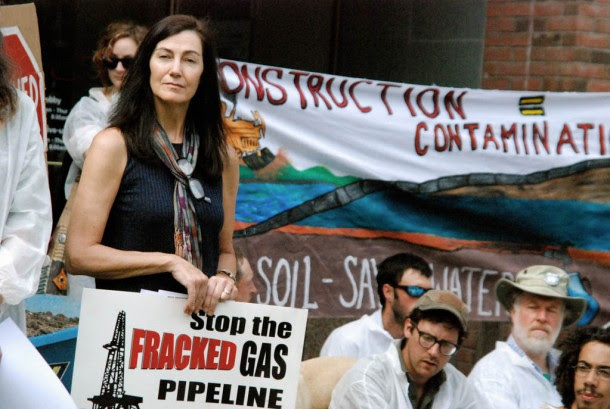
Opponents of a proposed natural gas pipeline extension through Addison County want to see the project put on hold until concerns over water contamination are addressed. The environmental group Rising Tide Vermont rallied outside the Public Service Board offices in Montpelier on Monday to pressure state regulators to delay the construction of the pipeline extension until these concerns are considered. “What we are asking for is the Public Service Board and the Department of Public Service to suspend pipeline construction until there can be adequate soil testing along the proposed route,” said Jonathan Shapiro, an organizer with Rising Tide Vermont.

Here’s The Dirt On Urban Gardens

I spent the last two weeks trying to buy animal shit off Craigslist. Specifically rabbit shit, which in some circles is considered the ne plus ultra of animal waste. This morning, I was finally able to get in touch with a guy out in the San Fernando Valley who raises rabbits (for what, I don’t know) on a diet of organic alfalfa pellets, grain sweetened with molasses, kitchen scraps, and extra helpings of timothy and alfalfa hay. They’re a happy bunch of bunnies, and that goes a long way toward explaining why I would pay $40 of my hard-earned cash for 60 gallons of their manure. Alex, my rabbit connection, has already composted the waste and he's even willing to deliver it to my house, where it will be hauled up into the yard and used to fertilize my beans, peppers, eggplant, and kale and to prep the new garden bed that will soon be home to tomatoes and watermelon. If there’s any left, I’ll mound it around the base of the blackberry vine, rosebushes, and fruit trees—especially the pomegranate I recently transplanted. Doing so, according to a new study, could help make the dirt in my yard far more suitable for growing food than a conventional farm.

Thoughts On Avoiding GMO Contamination

As more and more crops are targeted for GMO adaptation and then commercialized, the decision to not grow a crop represents a loss. It is a loss of choice, leaving fewer and fewer crops from which to choose. In 2013, GMO-soy comprised 93% of the soy U.S. crop. Deciding to grow non-GMO soy in a soybean growing area would be a lost cause. A North Dakota farmer quoted in the Food and Water Watch survey, states The loss of crop options is not a direct cost, but a real one. We cannot, for example, grow organic canola as we are surrounded by hundreds of acres of GM canola - pollinated by insects - no buffer is big enough to contain cross pollination. GMO-wheat has not yet been commercialized, but when it is, another major crop might be off-limits to organic farmers.

Verdict: Kellog’s Cereal Isn’t ‘Natural’

“All Natural” and “100% Natural” will no longer be seen on some of the popular Kellogg’s cereal brands, including Kashi and Bear Naked brands, the company announced after settling a class-action lawsuit for more than $5 million. The largest breakfast cereal manufacturer in the world faced a string of lawsuits in recent years, culminating into a single case in 2011 that cited consumer fraud and deception in labeling of its cereals as “natural” when in fact many contained synthetic and genetically modified ingredients, including pyridoxine hydrochloride, calcium pantothenate or hexane-processed soy oil. According to Reuters, the settlement must be approved by “a federal judge in San Diego overseeing the case before the suit is dismissed.” In a statement released by Kellogg last week, company spokesperson Kris Charles said the brand’s Kashi and Bear Naked lines “provide comprehensive information about our foods to enable people to make well-informed choices.”

Meet Moms Who Crashed McDonald’s Shareholder Meeting

Casey Hinds showed up at her first McDonald's annual shareholder meeting in Illinois Thursday—to crash it. For months, she and five other nutrition-blogger moms prepared to confront McDonald's executives about marketing strategies aimed at children, like the use of cartoons and celebrities. They're part of a nationwide network called #MomsNotLovinIt, organized by the nonprofit Corporate Accountability International (CAI) to curb the marketing of junk food to kids and the rise of diet-related disease. Hinds had never done anything like this, she told YES!, and she was nervous. Outside the meeting, hundreds of protesters had gathered for the second day in a row to demand better pay for low-wage McDonald's workers (138 people were arrested Wednesday for trespassing—and 101 of them were McDonald's workers). When Hinds and the other moms arrived inside the meeting, they found that, rather than being invited to approach the microphone with their concerns, this year they had to submit questions ahead of time to be screened by CEO Don Thompson. Only one of the six moms who prepared statements were invited to speak.

Super Creative Organic Gardens Around The World

Not only are people around the world capable of growing nutrient-dense, nourishing food that will feed their communities, even if they live in an urban setting, but they can also do it with élan. Some of the most creative urban gardening projects around the globe can inspire us to create our own green space in the city, or add luster to a space that’s already underway which just needs a little oomph. Here are some off-the-(biotech)-chain gardens that will get our creative juices flowing so that we can carry the dream of living pesticide and GMO-free, further: Everyone who has kept abreast of national news has heard of the urban blight that has devastated Detroit. This once burgeoning center of the auto-trade in America is now a sprawling concrete wasteland – or is it? Food Field is an urban farm in the middle of central Detroit. It grows heaping amounts of organic produce using permaculture. They even raise chickens and ducks, grow food utilizing aquaculture, raise honey bees, and have their own organic fruit orchard. This all happens on a piece of land that is smaller than that of many McMansions. Even in one of this country’s most economically depressed cities, where unemployment rates are currently swollen to 14-17 percent, people are flourishing growing their own organic food.

Worldwide March Against Monsanto

March Against Monsanto had another big, successful global protest. This compilation by RT provides glimpses of protesters against the world's most hated corporation from around the world. Alexis Baden-Mayer, Political Director at Organic Consumers Association, told RT the claim we need genetically modified food to feed the world “is completely false.” “We actually have enough grassland in the United States to pasture and raise 100 percent grass-fed beef. So no, the feed the world argument is entirely accurate in the slightest,” she said. March Against Monsanto Founder Tami Canal has told The Anti-Media that Saturday’s event will mark the largest event ever carried out by the movement. “The 3rd global March Against Monsanto (MAM) is expected to be the biggest one yet. With 43 countries on 6 continents, MAM has coordinated 366 official events, with countless others not officially registered.” Canal notes how what once started as a California ballot measure requiring the labeling of genetically modified food “has turned into a global movement to educate against all fallacies of Monsanto." “From Agent Orange to Monsanto’s pending patents directly affiliated with weather modification to the gross government corruption, MAM has evolved to expose all the insidious tentacles that Monsanto possesses.”

May 24: Global March Against Monsanto

On May 24, millions of activists from around the world will once again March Against Monsanto, calling for the permanent boycott of Genetically Modified Organisms (GMOs) and other harmful agro-chemicals. Currently, marches will occur on six continents, in 52 countries,with events in over 400 cities. In the US, solidarity marches are slated to occur in 47 states. A comprehensive list of marches can be accessed at www.march-against-monsanto.com. Tami Monroe Canal, founder of March Against Monsanto (MAM), was inspired to start the movement to protect her two daughters. “Monsanto’s predatory business and corporate agricultural practices threatens their generation’s health, fertility and longevity. MAM supports a sustainable food production system. We must act now to stop GMOs and harmful pesticides.”

For COP21 Alternative Villages Springing Up

Alternatiba is mobilising tens of thousands of European citizens on alternatives to climate change, with an upcoming COP21, the international climate summit that will take place in Paris in December 2015. Following Alternatiba in Bayonne, uniting 12 000 people on October 6th 2013, dozens of alternative villages are springing up in Paris, Geneva, Brussels, Bordeaux, Toulouse, Rennes, Strasbourg, etc. Plans are in motion in Spain, South Basque Country, Austria, Romania... and even in Tahiti ! Alternatiba's film is featured on our website www.alternatiba.eu and are now available in English, German, Spanish and French. The call to organise 10, 100, 1000 Alternatibas is now available in 23 European languages. Solutions to climate change exist. Even better : they're building a nicer, friendlier, fairer, more human society.
assetto corsa mods

Urgent End Of Year Fundraising Campaign

Online donations are back! Keep independent media alive. 

Due to the attacks on our fiscal sponsor, we were unable to raise funds online for nearly two years.  As the bills pile up, your help is needed now to cover the monthly costs of operating Popular Resistance.

Urgent End Of Year Fundraising Campaign

Online donations are back! 

Keep independent media alive. 

Due to the attacks on our fiscal sponsor, we were unable to raise funds online for nearly two years.  As the bills pile up, your help is needed now to cover the monthly costs of operating Popular Resistance.

Sign Up To Our Daily Digest

Independent media outlets are being suppressed and dropped by corporations like Google, Facebook and Twitter. Sign up for our daily email digest before it’s too late so you don’t miss the latest movement news.