Skip to content

Food and Agriculture

Activists Set Up ‘Wheel Of Misfortune’ To Oppose ‘Fracking’

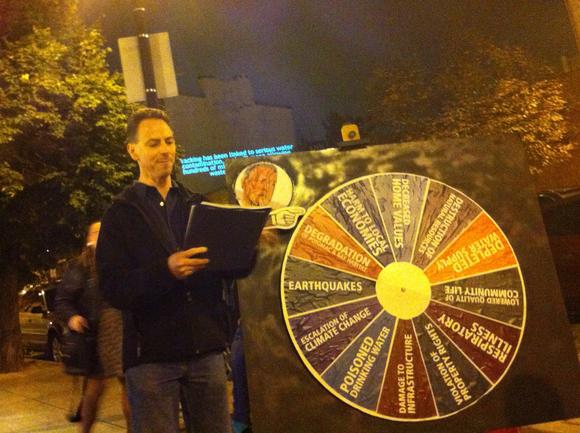
Activists opposed to hydraulic fracturing projected their message on the side of a Fells Point building Saturday night and invited passers-by to play a so-called Wheel of Misfortune to highlight what they say are the risks of the gas drilling technique. The demonstration, which drew about a dozen activists, was one of hundreds across the world this week as part of a "Global Frackdown." The wheel and the light show — visible for blocks — laid out the risks the activists see in the drilling method commonly known as "fracking," including air pollution, water contamination and earthquakes. Julie Gouldener, an organizer with the environmental group Food and Water Watch, said the game-show wheel was designed to represent that fracking, which involves pumping pressurized water and chemicals into underground rock formations to release natural gas, is an "insane gamble."

‘We Say No To Shale Gas’: World Unites Against Fracking

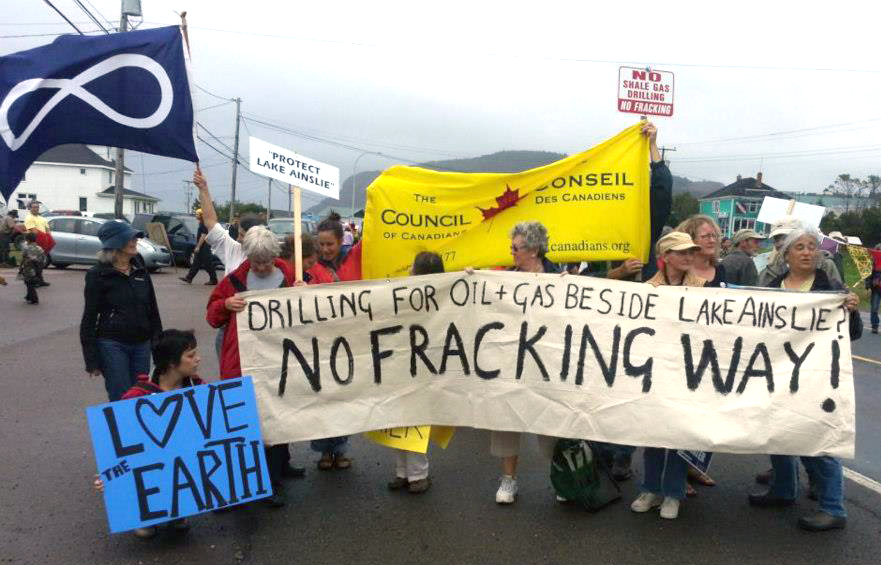
Activists from 26 countries participated in around 250 protests on Saturday to demonstrate against fracking technologies, which they say contaminate groundwater and hasten climate change. Global Frackdown, an annual event that takes place on October 19, targets fracking – a process used to extract hydrocarbons by pumping pressurized chemicals underground. Hundreds of demonstrators took to the streets of cities across the globe. Around 1,000 protesters in Pungesti, Romania protested against US oil giant Chevron’s plan to start drilling outside the village. Although the energy firm received permission from the local authority, concerned locals have come together to take a stand against the potential health and environmental risks posed by hydraulic fracturing in the region. The protesters shouted, "Chevron, go home" and "We say no to shale gas." Chevron suspended work on Thursday in response to three-day protests in the area. Still, activists continue to demonstrate.

Shutdown Solution: Opt Out Of Tyranny

The overwhelming majority falsely believes that we can’t create change, which is why we are in this mess. The mainstream media has propagandized most people into feeling like we can’t do anything to fix the problems we are confronted by. BULLSHIT!! We live in the richest, most technologically advanced society humanity has ever known. We don’t need the plastic puppet politicians anymore. They’re obsolete! It’s time for us to evolve society by starting our own autonomous local communities. Occupy inspired thousands of autonomous camps. What if we reestablished those camps as permanent Sustainable Autonomous Zones? There are already many intentional communities and collectives that are organically growing all over the place. Let’s learn from them. We’ve dedicated our energy to working on a plan to create a decentralized network of Sustainable Autonomous Zones so we can begin creating self-sufficient communities that can model new ways of living that make present ways of living obsolete.

Indigenous Nations At Forefront Of Conflict With Transnational Corporate Power

Idle No More is an indigenous-led movement, but it is not a movement exclusive to indigenous people. As Clayton Thomas-Muller, an organizer with Defenders of the Land and Idle No More, states, "We understand that the rise of the native rights-based strategic framework as an effective legal strategy supported by a social movement strategic framework is the last best effort not just for Indigenous People but for all Canadians and Americans to protect the commons ... from the for-profit agenda of the neoliberal free market strategists that have taken over our governments ... and indigenous peoples have been thrust into the forefront of global social movements not just because of our connection to the sacredness of Mother Earth and our traditional ecological knowledge and understanding of how to take care of the Earth as part of that sacred circle of life but also because our ancestors ... made sure we had the legal instruments to be able to confront the enemies of today and that is what Idle No More is doing in the US and Canada and across the world where Indigenous People continue to live under occupation and oppression."

Junk Food Lobbyists Sued For Money Laundering

In the final weeks leading up to Election Day, the debate over measure I-522 in Washington State is getting even uglier. As I recently explained, the Grocery Manufacturer Association, the nation's largest trade group for the processed food industry, has been flexing its muscle to oppose the labeling of genetically-engineered food, both at the federal and state levels. Now, a lawsuit brought by a non-profit called "Moms for Labeling" alleges that GMA crossed the line by not properly disclosing who is behind the whopping $7 million-plus the trade group has donated to the No on 522 campaign so far. The main goal of a lobbying organization like GMA is to pool the massive resources of its members, which include heavy hitters such as Coca-Cola, PepsiCo, and General Mills; each has a huge stake in this fight.

Blockade Against Monsanto In Malvinas, Argentina

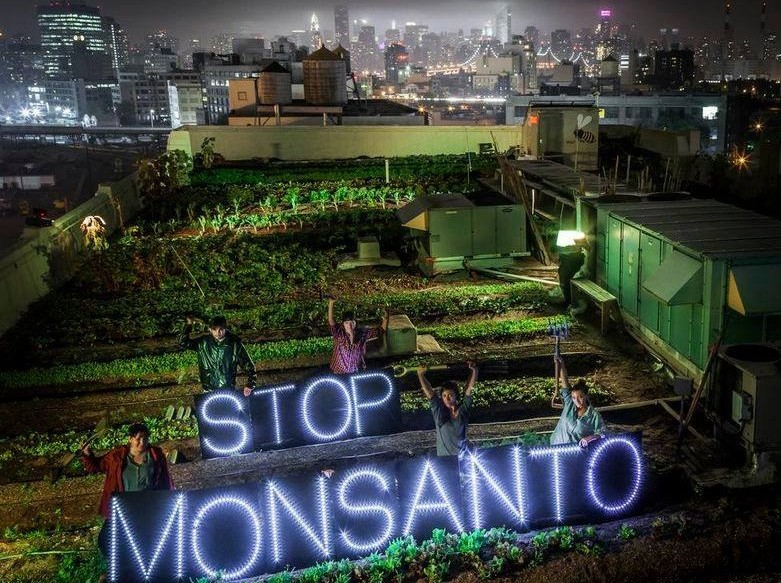
Today is day 28th of the blockade against Monsanto in Malvinas, Argentina and around 50 protestors camping there have no intentions of going home any time soon. Citizens are making themselves at home near the main entrance of the new Monsanto plant currently under construction. They are camping out indefinitely to protest the new GMO seed processing plant which is scheduled to open for business in 2014. Revolution News spoke with activist Celina Molina from Asamblea Malvinas Lucha por Vida who said simply, “We do not want Monsanto to install the 2nd largest GMO seed processing plant of Latin America in our city.”

Rob Hopkins Of Transition Towns Making The New Economy Happen

In late 2006, Hopkins, who taught permaculture, came up with the seed of an idea that has grown into something wild and beautiful: the Transition Network. It started as one Transition Town in Totnes, England and the concept has replicated across 44 countries and thousands of towns and neighborhoods. The initial idea is simple: “To support community-led responses to peak oil and climate change, building resilience and happiness.” The organization now helps communities connect with each other, learn how to reduce CO2 emissions and decarbonize, and implement plans for a whole new kind of economic development. That’s where the idea of resilience comes in. According to the Transition Network: ‘Resilience’ has been defined as “the capacity of a system to absorb disturbance and reorganize while undergoing change, so as to still retain essentially the same function, structure, identity and feedbacks.”

Global Frackdown 2 Calls For Worldwide Ban On Fracturing

According to Global Frackdown, the anti-fracking movement has grown exponentially since the event last year, which included 200 community actions in more than 20 countries. Accomplishments include: Passing more than 336 measures against fracking, wastewater injection and frac-sand mining in communities across the U.S. Passing a moratorium on fracking in the Delaware River Basin Commission Banning fracking in Longmont, CO Passing an indefinite moratorium on fracking in Vermont Upholding bans on fracking in Bulgaria and France, despite intensive pressure from industry Pushing for moratoria in multiple regions in Europe Obtaining local referenda on fracking in Romania, which rejected fracking by more than 90 percent

One Man’s Clever Idea To Fight Frackers And Save His Organic Farm

With THE DR. LUCINDA HART-GONZÁLEZ CONSERVATION EASEMENT, Cleghorn sees himself as living the change the world needs and setting an example of working in partnership with Nature. That could change the world, he hopes, as the Rights of Nature are asserted, fully recognized, and protected under the law. He hopes that this easement will inspire other individuals to also take a stand for Nature and the future of the planet. “This easement is not only about about preserving land for organic agriculture; it also speaks to a paradigm shift that is needed in our thinking so that we recognize that we are part of nature, not lords over it. Our long history is catching up with us. We’re either going to turn around our thinking and behavior, or we are going to leave a wasteland for future generations,” said Cleghorn. Cleghorn accepts that the easement could devalue his property because it restricts the use of the land, but he believes that defending Nature’s rights is more important. Since it is attached to the deed, even when the deed changes hands, the new owners will have to comply with its terms.

This Week In Pictures II

This week in pictures provides a snapshot of resistance events that are taking place all over the world. Most of these photos were found on twitter and the events that are photographed were not covered on Popular Resistance. This week you will find people protesting the police shooting death of Javier Arrazola in Los Angeles, an immigrant's rights rally and protesters blocking a deportation bus, the Presidents of China and Indonesia singing happy birthday to President Putin, actions against Monsanto, actions in Cambodia for World Habitat Day, Palestinian musicians who challenged Israeli occupation, refugee actions and more.

One Man’s Clever Idea To Fight Frackers, Save Organic Farm

When J. Stephen Cleghorn realized that Paradise Gardens and Farm, his certified-organic farm in Pennsylvania that sits above the Marcellus Shale formation, was at risk of being “fracked” for shale gas extraction, he knew he had to act. But he did more than just act against fracking when he became the first private property owner in the United States to use a deed easement recognizing the Rights of Nature to ban all activities that would do systemic harm to the ecosystem both above and deep below the surface of his farm. “We wanted to preserve organic agriculture on these 50 acres to be sure, but also wanted to employ this recognition of Rights of Nature to deter any activity that would threaten those rights at the surface in the deep biosphere below this farm,” said Cleghorn. Mineral “rights” enable fracking corporations to drill on and under your property.

VIDEO: Millions WorldWide March Against Monsanto

Millions March Worldwide Against Monsanto: Resistance Report O10: Saturday October 12- People in over 400 cities and 57 countries march against Monsanto. The worldwide action comes days ahead of Monsanto receiving the Nobel Prize for Agriculture- the prestigious World Prize of Food for creating GMO’s. Also in this episode of the Resistance Report. Is the Department of Homeland Security Preparing for Another Wall Street Collapse? (5:37) The Plunder of Africa (9:22 ) Veterans Arrested at Their Own Memorial (16:51 ) It’s the Drones, Stupid(19:21 )

Photo Gallery: March Against Monsanto, October 12, 2013

March Against Monsanto events began in New Zealand and revolve around the world for the second March Against Monsanto. This cause has truly united the world! Over 400 cities in 57 countries will take place as we, the citizens of the world, say NO to poison! Three million people will stand up for the food supply, the environment, and our planet's sustainability. This will go down in history books and we would like to thank YOU for supporting a cause that is very much one of the most important of our lifetimes. We would like to express our deep gratitude for all at the national level. MAM has an awesome team that has spent countless hours working hard to make these events an international victory!! We would also like to give a very special thank you to all of our local organizers, whose hard work and selfless dedication has been instrumental in the global success of MAM.

14 Reasons To Be Hopeful About The Future Of Food

When it comes to the future of the food system, it’s hard not to be discouraged. Nearly one billion people are hungry, and another 1.5 billion are obese or overweight. All over the world, people waste 1.3 billion tons of food each year. And according to the International Panel on Climate Change, humans are to blame for an increasingly hot, dry and natural disaster-prone planet. But Food Tank has compiled a list of 14 reasons to be hopeful about the future of the food system. Share these with your networks to spread the message that the food system is changing for the better. 1. The next generation is learning more about where their food comes from than their parents did. In the U.S., initiatives like The Kitchen Community, The Edible Schoolyard Project, The Sylvia Center and The FARM Institute are getting kids involved in learning about food from farm to fork. . . .

Occupy Monsanto Protest Tossed Real Money Around Congress

Some 2,000 dollar bills fluttered from the fifth-floor balcony of the Hart Senate Office Building on Thursday, falling upon activists who shouted "Monsanto Money!," while tossing piles of cash in the air and making snow angels in pools of the bills. "The government is shut down, but you still have Monsanto lobbyists engaging with congressmembers," said activist Ariel Vegosen of Occupy Monsanto, a group that regularly stages demonstrations against the controversial agriculture and biotech company. "We're here today to say that's not OK. Money shouldn't dictate how Congress makes decisions." Capitol police arrested three of the 10 activists, who wore business clothes and wigs to pose as lobbyists from the fictional "Biotechnology Industry Awards Committee." Adam Eidinger, one of those arrested, said that the tossed money would be collected by the others and used to pay bail if necessary.
assetto corsa mods

Urgent End Of Year Fundraising Campaign

Online donations are back! Keep independent media alive. 

Due to the attacks on our fiscal sponsor, we were unable to raise funds online for nearly two years.  As the bills pile up, your help is needed now to cover the monthly costs of operating Popular Resistance.

Urgent End Of Year Fundraising Campaign

Online donations are back! 

Keep independent media alive. 

Due to the attacks on our fiscal sponsor, we were unable to raise funds online for nearly two years.  As the bills pile up, your help is needed now to cover the monthly costs of operating Popular Resistance.

Sign Up To Our Daily Digest

Independent media outlets are being suppressed and dropped by corporations like Google, Facebook and Twitter. Sign up for our daily email digest before it’s too late so you don’t miss the latest movement news.