Skip to content

Inequality

Return Of World Bank And People’s Resistance

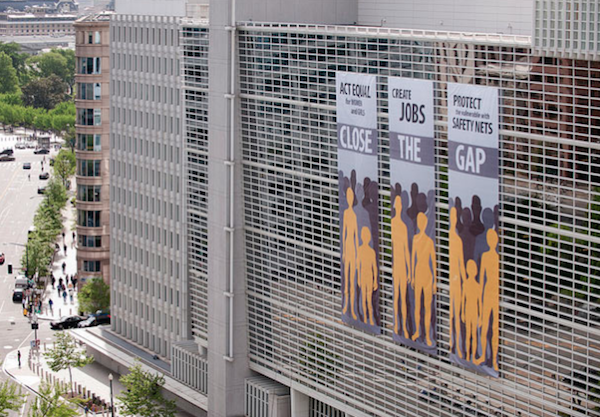
If one was to do some superficial digging on the World Bank, you may get the impression that the Bank is a pure "development" organization, working exclusively in the interest of the public to reduce poverty and inequality. Indeed, the Bank's tagline is, "A world without poverty." But dig just a little deeper and the contours of a deep and extreme ideology become apparent. The World Bank reveals itself not as an altruistic benefactor of the world's poor so much as a link in the chain between Wall Street and the global south - a link the primary purpose of which is to facilitate profit for elite interests, through a long established pattern of wealth extraction. The World Bank is very well funded and vastly powerful. With money it makes trading on Wall Street and through donations from rich country governments, it distributes about $30 billion each year, mostly in loans, to less rich countries, ostensibly to promote economic development. But it has a pretty checkered history

The Roots Of PopularResistance.org Began At Occupation

Today is the anniversary of the Occupation of Freedom Plaza in Washington, DC. The roots of the Popular Resistance project come from that occupation and was developed with the advice of many people involved in that effort, as well as allied campaigns around the country. We began the occupation on this date in order to link the Afghanistan War with the austerity budget that was announced that week. The reality of a two-party plutocracy that linked the Wall Street and Empire economy. While we began organizing long before the Occupation of Wall Street began by the time we began there were hundreds of occupy encampments around the country. OWS began on September 17th and sparked a national revolt that continues to have a political and cultural impact today.

Why An Unequal Planet Can Never Be Green

Activists are linking the increasing degradation of our global environment and the increasing concentration of our global wealth. “These summits have failed for the same reason that the banks have failed,” Monbiot explains. “Political systems that were supposed to represent everyone now return governments of millionaires, financed by and acting on behalf of billionaires.” Expecting these governments to protect the biosphere, Monbiot adds, makes no more sense than “expecting a lion to live on gazpacho.” Why should that be the case? Over recent decades, analysts and activists have made all sorts of links between the increasing degradation of our global environment and the increasing concentration of our global wealth.

Confronting Not Only Climate Collapse But Energy Poverty

A significant part of their analysis is not only about confronting climate change but also confronting energy poverty where much of the world is unable to use enough energy to have a decent and healthy life. Most of these people are living in the developing world or global South. Another group of people, mostly in the global North, consume more than an equitable share of energy. In order to address energy poverty in the global South, as well as under-served people in the global North requires most countries in the global North, especially the United States, to reduce energy consumption, but the overall delivery to the global population needs to increase. As a starting point for their analysis they calculate that the rough minimum to achieve world standard life expectancy is 3.5 kilowatt/person, so for 7 billion this is equivalent to 25 trillion watts, with present consumption being 18 trillion watts. See their report "A Solar Transition Is Possible."

America’s Growing Food Inequality Problem

Income inequality isn't the only gap the U.S. needs to mind these days; the country is amassing a sad and expensive discrepancy between what its poor and rich eat. America's wealthiest people are eating better, while its poorest are eating worse, concludes a new study published this week in The Journal of the American Medical Association Internal Medicine, which measured the quality of diets among American adults between 1999 and 2010. "Socioeconomic status was associated strongly with dietary quality, and the gaps in dietary quality between higher and lower SES [socioeconomic status] widened over time." the study said. On the one hand, the analysis found that the American diet, on the whole, improved during the observed period. "Our study suggests that the overall dietary quality of the U.S. population steadily improved from 1999 through 2010," the study said, suggesting that Americans are likely responding to recent nutrition education efforts. That's consistent with a number of macroeconomic food trends, including America's shift away from soda.

When We Stand Together, Working People Can Win

One hundred and twenty years ago, during another time of severe economic depression and social unrest in our country, President Grover Cleveland established Labor Day as a national holiday. It was not so much to honor as it was to appease organized labor. President Cleveland’s decision came days after he ordered federal troops to crush workers at the Pullman Palace Car Company in Chicago who were striking for better wages and workplace conditions. Fast forward to 2014 and we see our country is still grappling with economic and social unrest as income inequality grows and the rights of workers to stick together for better workplace conditions continues to be challenged. I have lived in the Bellingham area since 1972 and have worked at Cost Cutter in Blaine for The Markets for 27 years. As a union member I have joined together with other grocery workers all across Puget Sound to protect our wages, benefits, and working conditions. And the community has stood right there with us. Despite efforts here in Washington by the big national grocery chains to cut pay and benefits and weaken our union, we have grown stronger. Not all workers are so fortunate and the cards are sometimes stacked against us. Too often, workers are harassed, intimidated and sometimes fired for sticking together to bargain for better wages and benefits. We have seen that locally with some of the workers at Walmart who have bravely stood up to this company and spoken out against their attempt to silence workers trying to act together to improve health and safety and improve their lives at work.

First Time Protest At Bankers Meeting In Jackson Hole, WY

This year’s Jackson Hole hobnob, once again hosted by the Federal Reserve Bank of Kansas City, last week attracted the usual assortment of central bankers, finance ministers, and influential business journalists. But this year’s gathering also attracted something else: protesters. For the first time ever, activists converged on Jackson Hole — to let the Fed’s central bankers know, as protest organizers put it, that “it’s not just the rich who are watching them.” Over 70 groups and unions backed the protest and signed onto an open letter that calls on America’s central bankers to start nurturing an economy that works for workers. At one point, early on in the Jackson Hole gathering, protesters actually had a brief exchange with Federal Reserve Board chair Janet Yellin. “We understand the issues you’re talking about,” Yellin told them, “and we’re doing everything we can.”

Low-Paid Jobs Now Pay Even Worse Than Before The Recovery Began

Those who work in jobs that pay poorly are now making even less than they were when the recovery began, according to a new analysis from the National Employment Law Project (NELP). As the report notes, since the recovery started in 2009, “Lower- and mid-wage occupations experienced greater declines in their real wages than did higher-wage occupations.” Jobs that pay in the top two tiers saw a decline in wages between 2.1 and 2.5 percent. But those in the bottom three groups in terms of pay saw wages decline between 3.6 and 4.6 percent. Some of the low-wage jobs that employ the most people have suffered even more. The food service industry has seen big drops: an 8.3 percent decline for restaurant cooks, 6.3 percent for food preparation workers, and 3.5 percent for servers. Maids and housekeepers have seen wages decline by 5.8 percent, as have home health aides, while personal care aides have seen a 6.3 percent decline. And retail workers have had wages go down by 4.2 percent. Overall, across all jobs, median hourly wages have declined 3.4 percent between 2009 and 2013.

The Wall Street Journal: The Funny Papers Of Modern Journalism

Funny, in a sad sort of way. The Wall Street Journal (WSJ) gets respect from the mainstream because it speaks for the money interests. To many of those outside its golden circle, the commentary of its writers is generally suspect, occasionally frightening, and often unintentionally humorous. Delusion: Middle-class Americans have more buying power than ever before. WSJ compares the present day to the 1950s, ignoring changes in education costs, health care expenses, debt repayment and financial fees. The Journal built on the delusion by printing the insensitive headline What Recession? and by counseling its readers, Don't be alarmedby high rates of "economic insecurity." The Journal's "prosperity for all" fantasy includes their assurance that cutbacks in food stamps don't hurt children, even though in real life almost half of food stamp recipients are children. Denial: We shouldn’t be building windmills and all that rubbish. That comes from WSJ boss Rupert Murdoch, who continued as if only rich people matter: "The Maldives might disappear...we just have to stop building vast houses on seashores."

Sharing Commonwealth Equitably Now Essential

Steven Rosenfeld: Your book starts with a very sober assessment of the American middle-class. It’s shrinking. It’s disappearing in our lifetime. And the reason is that most work-related income is not enough. It’s insufficient and that’s getting worse. Tell me about that. Peter Barnes: One can throw out all the numbers, but rather than do that, just think back. Some of us, like myself, are old enough to remember when there were lots of good-paying steady jobs, both in the private sector and public sector. They had benefits, covered health insurance, and provided pensions. That was what the middle-class was built on when I was growing up. Now, for a variety of reasons, including globalization, and automation, and the decline of labor unions, that is no longer the case. And most of the younger people who are entering the labor market today don’t get jobs like that. It’s kind of a “you’re on your own economy.” Everybody temps. They have more than one job. They’re always marketing themselves on LinkedIn or something like that to get the next job. They don’t get health coverage. They have to pay for their own pensions and so forth. On top of which, education costs are way up. Students have debts they have to pay. All these things are different and they are not changing. They are going down, not up, as far as the middle-class goes.

Ebola Driven By Corporate Agenda

It's been nearly 40 years since the discovery of Ebola, yet we're dealing with its deadliest outbreak in history and one that is four times larger the first. Back then, in 1976, the scientific community knew nothing about the hemorrhagic fever. Blood containing the mystery virus was innocently sent in a blue thermos to Belgium, where Flemish scientists figured out they were unwittingly handling a violently lethal pathogen, and named it after a river in what was then Zaire. Since then, we've learned a lot about Ebola: that it's spread through contact with the bodily fluids of an infected person, that we can stop it by using simple precautionary measures and basic hygiene practices. But every once in a while, these nightmarish outbreaks pop up and capture the international imagination. Worries about global spread are worsened by the fact that Ebola has no vaccine and no cure. Here's what's surprising and interesting about this state of affairs: it is not caused by a lack of human ingenuity or scientific capacity to come up with Ebola remedies. It's because this is an African disease, and our global innovation system largely ignores the health problems of the poor.

Will Banks Gain Will Workers Lose In Detroit Bankruptcy?

Despite celebrations in the skyscrapers of Wall Street and the U.S. regarding Detroit bankruptcy active and retired employee votes announced July 21, allegedly in favor of huge pension and health care cuts, the sordid story is not over yet.Detroit remains far from a resolution of its state-imposed bankruptcy. Major banks and bondholders have rejected the plan, insisting that they be PAID IN FULL. According to figures released by Kurtzman Carson Consultants (KCC) of El Segundo, CA, Detroit police and fire workers and retirees voted to approve the 4th Amended Plan of Adjustment (POA) by 82 percent, general workers and retirees by 73 percent, and holders of Other Post Employment Benefits (OPEB) by 88 percent. (See chart above.) Meanwhile, Emergency Manager Kevyn Orr, claiming to represent the City of Detroit, filed a FIFTH AMENDED PLAN OF ADJUSTMENT July 25 subsequent to the vote, with no plans for a re-vote. (See link below story.)

The Typical Household, Now Worth A Third Less

Economic inequality in the United States has been receiving a lot of attention. But it’s not merely an issue of the rich getting richer. The typical American household has been getting poorer, too. The inflation-adjusted net worth for the typical household was $87,992 in 2003. Ten years later, it was only $56,335, or a 36 percent decline, according to a study financed by the Russell Sage Foundation. Those are the figures for a household at the median point in the wealth distribution — the level at which there are an equal number of households whose worth is higher and lower. But during the same period, the net worth of wealthy households increased substantially. The Russell Sage study also examined net worth at the 95th percentile. (For households at that level, 95 percent of the population had less wealth.) It found that for this well-do-do slice of the population, household net worth increased 14 percent over the same 10 years. Other research, by economists like Edward Wolff at New York University, has shown even greater gains in wealth for the richest 1 percent of households. For households at the median level of net worth, much of the damage has occurred since the start of the last recession in 2007. Until then, net worth had been rising for the typical household, although at a slower pace than for households in higher wealth brackets.

The Collapse Of Black Wealth

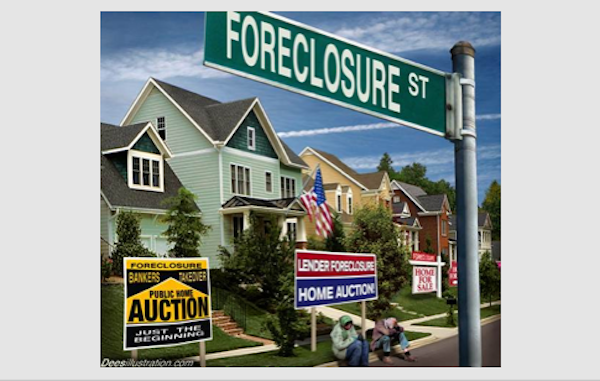
How the recession turned owners into renters and obliterated black American wealth. In 2005, three years before the Great Recession, the median black household had a net worth of $12,124. Yes, this was far behind the median white household—which had a net worth of $134,992—but it was a huge improvement from previous decades, in which housing discrimination made wealth accumulation difficult (if not impossible) for the large majority of African-American families. By the official end of the recession in 2009, median household net worth for blacks had fallen to $5,677—a generation’s worth of hard work and progress wiped out. (The number for whites, by comparison, was $113,149.) Overall, from 2007 to 2010, wealth for blacks declined by an average of 31 percent, home equity by an average of 28 percent, and retirement savings by an average of 35 percent. By contrast, whites lost 11 percent in wealth, lost 24 percent in home equity, and gained 9 percent in retirement savings. According to a 2013 report by researchers at Brandeis University, “half the collective wealth of African-American families was stripped away during the Great Recession.” It was a startling retrenchment, creating the largest wealth, income, and employment gaps since the 1990s. And, if a new study from researchers at Cornell University and Rice University is any indication, these gaps are deep, persistent, and difficult to eradicate.

NYC Approves Building With Separate Entrance For Poor People

It would be difficult to come with a more on-the-nose metaphor for New York City's income inequality problem than the new high-rise apartment building coming to 40 Riverside Boulevard, which will feature separate doors for regular, wealthy humans and whatever you call the scum that rents affordable housing. The city's Department of Housing Preservation and Development approved Extell's Inclusionary Housing Program application for the 33-story tower this week, the New York Post reports. The status grants Extell the aforementioned tax breaks and the right to construct a larger building than would ordinarily be allowed. According to the Daily Mail, affordable housing tenants will enter through a door situated on a "back alley."
assetto corsa mods

Urgent End Of Year Fundraising Campaign

Online donations are back! Keep independent media alive. 

Due to the attacks on our fiscal sponsor, we were unable to raise funds online for nearly two years.  As the bills pile up, your help is needed now to cover the monthly costs of operating Popular Resistance.

Urgent End Of Year Fundraising Campaign

Online donations are back! 

Keep independent media alive. 

Due to the attacks on our fiscal sponsor, we were unable to raise funds online for nearly two years.  As the bills pile up, your help is needed now to cover the monthly costs of operating Popular Resistance.

Sign Up To Our Daily Digest

Independent media outlets are being suppressed and dropped by corporations like Google, Facebook and Twitter. Sign up for our daily email digest before it’s too late so you don’t miss the latest movement news.