Skip to content

Labor Movement

Bringing Labor Stories To Conservative Communities

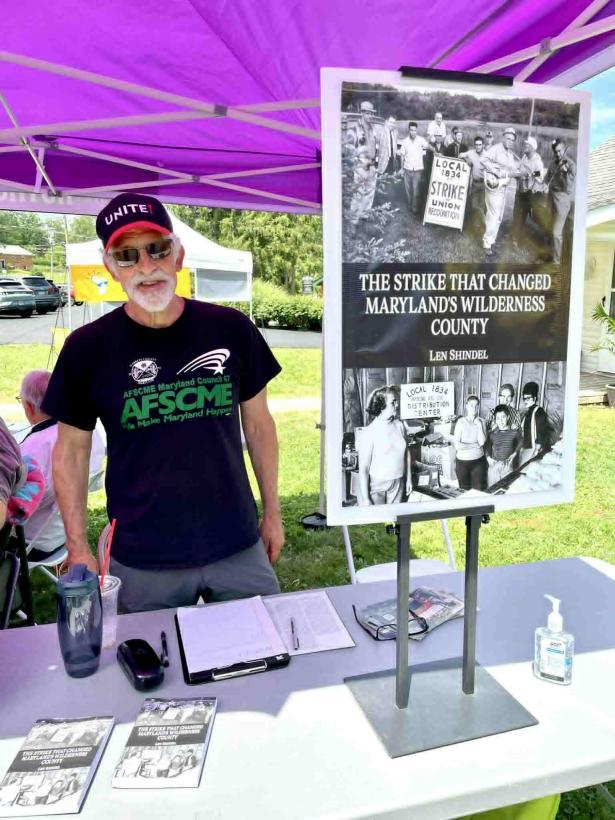
We often hear that working class folks in conservative communities are hopelessly drawn to the dominant storylines of the wealthy and powerful. That they don’t want to know about labor or “people’s” history. Well, Len Shindel has proven the naysayers wrong, big time. He has taken his shoe-leather history of a 1970, 8-month-long strike of public sector workers to the people of Western Maryland, and they have embraced him and his book with open arms. Here’s how he did it. Moving to Garrett County, Md. after retiring from his union job, Len decided, upon the advice of a friend, to investigate an 8-month long strike by the county’s road workers that was the longest public worker strike in U.S. history.


The Growing Fight For Green Economic Populism

From battling extreme heat on the job to flooding at home, the working class is on the frontlines of extreme weather this summer, fueled by an escalating climate crisis. This crisis is also making life more expensive, from higher utility bills in poorly insulated rental units to medical bills resulting from treatment after days spent in the dangerous heat.  But at a time when the federal government is dismantling the social safety net and climate investments, working class movements are not sitting back and waiting for their bosses, landlords or politicians to act. Instead, labor and tenant unions are taking matters into their own hands, creating a blueprint for how to organize around both the climate and cost of living crises at the same time. 

Help Union Members Know Their Contract

Union contracts can be dense, legalistic, and shaped by unwritten past practices. Sometimes they’re not even in the first language of most employees. Yet if union members don’t know what their contract says, employers can rob workers of rights that the union won at the bargaining table. Here’s one way to ensure that workers really know what’s in their contract: Write a short, clear summary of the contract’s highlights—call it “Know Your Contract”—and use it to engage your co-workers. To generate a list of topics for your “Know Your Contract” quick reference guide, you might hold a short discussion at your next executive board or steward’s meeting. Ask participants: “What grievances keep popping up? What do we wish every member knew?” You’ll quickly generate a list of the issues most affecting people on the job right now.

Department Of Labor Proposes Rollback Of Workplace Safety And Wage Protection Regulations

This month, the US Department of Labor, led by Trump-appointed Secretary Lori Chavez-DeRemer, announced a proposal to repeal 63 workplace safety rules in what the Department called “aggressive deregulatory efforts” in order to “put the American worker first.” The regulations that the DOL has dubbed “obsolete” include eliminating minimum wage and overtime protections for millions of home health care workers, rolling back protections for farm workers, rescinding a requirement for employers to provide adequate lighting at construction sites, weaken safety standards in the mining industry, and limit the authority of OSHA to protect workers in what the DOL dubs “inherently risky professional activities” such as entertainment or journalism.

The Anti-Labor Forces Pushing The Abundance Movement

The post-Reconstruction United States has never seen durable progressive change without the labor movement’s involvement. The postwar economy’s rapid, widely distributed gains in material conditions for everyday Americans may be the banner accomplishment, but the movement’s contributions to progress go far further. Working women organized through the labor movement became significant drivers of the suffrage movement. Unions played an essential role in the Civil Rights movement, including the steelworkers and UAW providing crucial support for the March on Washington.

Fight ICE; Build The Union

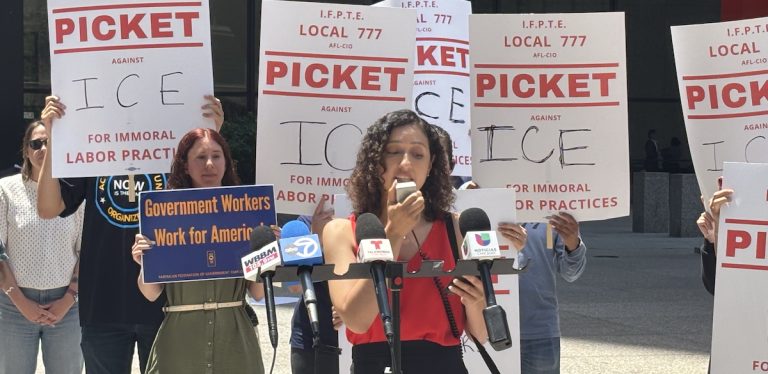
It was the morning of June 9, and Genie Kastrup, president of Service Employees Local 1, stood in front of Chicago’s Daley Plaza and bellowed into a microphone. “What is happening right now is about silencing voices,” she said, flanked by members of her union holding signs that read “Free David Huerta.” “It's about dividing working people,” she continued. “It's about dividing our communities against the have and have nots. It is abusing power.” The demonstration was one of 37 taking place that day across the country to protest the June 6 Immigration and Customs Enforcement (ICE) assault and detention of Huerta, the president of SEIU California and SEIU-United Service Workers West.

Labor Coalition Puts Bargaining Ban On Hold With Historic Referendum

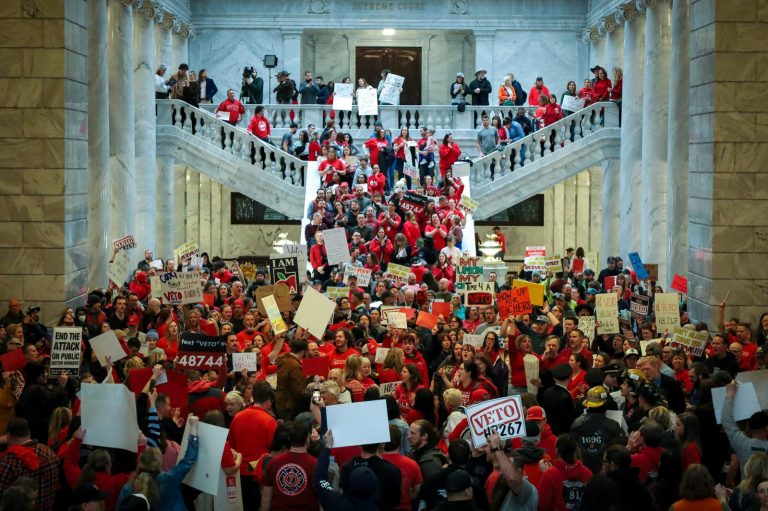
Salt Lake City — On a cloudy mid-April day, a large white box truck pulled up outside the Salt Lake County clerk’s office. Inside was a pallet of bankers boxes, each filled to the brim with paper packets. Since 6 a.m., at clerks’ offices across Utah, teachers, firefighters and other public sector union workers had been lugging in cartloads of referendum petition signatures. After Scot Baskett, a Salt Lake City firefighter, helped deliver a final load, he and his fellow organizers gathered to sing ​“Solidarity Forever.” Some raised signs that read ​“Protect Utah Workers,” the name of their 20-union coalition. Others raised their fists.

Workers’ Rights Are Under Attack, Here’s How We Fight Back

July 5 marked the 90th anniversary of the Wagner Act, also known as the National Labor Relations Act, which created the National Labor Relations Board and created mechanisms for workers to expand their rights and protections. Clearing the FOG speaks with longtime labor activist Steve Early about how worker militancy led to the Wagner Act, which was successful in increasing the percentage of unionized workers. Early explains how attacks on workers have weakened the Wagner Act, leading to a sharp decline in unionization. He states that now, "corporate America is moving in for the kill." Early provides insight into ways workers can fight back in the current system.

Muslim American Workers Advancing The Labor Movement

Islam is one of the fastest-growing religions in the U.S., with an estimated 8 million Muslim-Americans projected by 2050. Muslims have long been part of American history, especially within African American communities. Today, Muslim Americans are racially, ethnically, and nationally diverse—and face significant economic hardship and workplace discrimination. According to the Pew Research Center, they are three times more likely to be unemployed and more likely to earn under $30,000 annually than the general population. Despite these challenges, Muslim Americans are politically engaged and active in community issues.

The National Labor Relations Act Is 90, Under Siege, And Showing Its Age

Ninety years ago this summer, Congress passed legislation hailed at the time and for many years after as “labor’s Magna Carta” The Wagner Act—or, more formally, the National Labor Relations Act—was the product of Depression-era concern about the social and economic effects of industrial unrest manifest in city wide general strikes, factory take-overs, and many violent confrontations between workers trying to form unions and the police or private security forces defending the interests of anti-union employers. The architects of the Wagner Act were New Deal Democrats. They knew that a new national labor policy was needed to promote collective bargaining as a peaceful alternative to such unregulated labor-management conflict.

Colombian Workers Win Long-Awaited Labor Reform

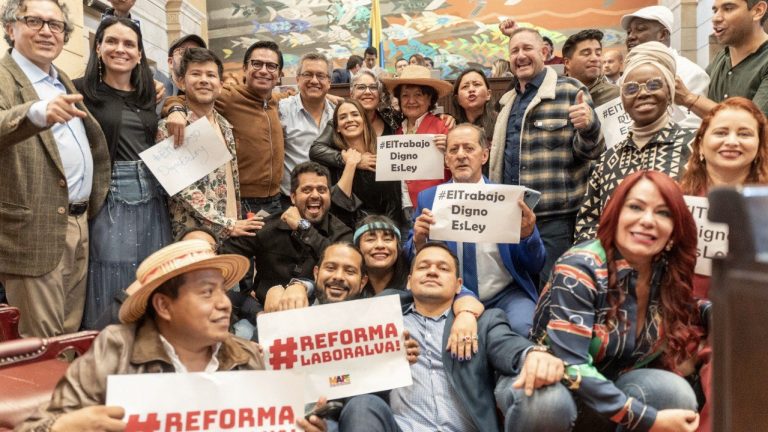
After several months of intense debate, the government of Colombian President Gustavo Petro, achieved a new political victory and a key campaign promise when the legislature approved his long-awaited labor reform bill. Petro had tried on multiple occasions to have the reform passed, but the opposition managed to stop it every time. Undeterred, the president announced a popular referendum so that Colombians could decide on the proposed articles. The call for a popular referendum, which was accompanied by large mobilizations nationwide, turned out to be very controversial.

Fighting Mid-Contract Changes Can Build The Union

Often our best opportunity to strengthen the union—to build activism, solidarity, and leadership—comes during contract negotiations. Under most U.S. union contracts, this is the only time we are legally free to use our greatest power, the strike. But during the years between negotiations, it’s easy to revert to a sleepy “business union” model. We may reinforce passivity or dependence among the members we “serve” by handling their day-to-day problems “for” them instead of mobilizing their power and true ownership of the local. How can we mobilize members during the long periods between contracts?

Trump Has Put A Target On SEIU; The Labor Movement Is Fighting Back

As federal agents strapped on their tactical gear and picked up rifles to sweep workplaces, parking lots and streets in Los Angeles, workers and residents mounted what is shaping up into the boldest organized defiance to the Trump administration yet. And when a state labor leader observing the raids got swept up in the brutal immigration crackdown, it sparked nationwide action by labor unions against federal raids, detentions and deportations. When agents showed up at downtown garment factories on Friday and a Home Depot parking lot in the working-class suburb of Paramount on Saturday, everyday people’s anger at the Trump administration’s agents of repression boiled over into confrontation.

The Art Of Organizing

Organizing isn’t just a science, it’s also an art. Normally the latter is passed on through phone calls, debriefs, meetings, and late-night shit talk. This is an attempt to share with the next generation of union organizers some of those lessons learned along the way, some in victory, some in defeat. None of this is new. None of this is mine. I certainly don’t have the answers, I just know it’s something that I’ve given my life to over the past quarter of a century. The art requires staying close to the ground where people are—and that’s messy. It requires us to relate to others, take chances, innovate, all while asking the hard questions of others and ourselves. All of it is simple. None of it is easy.

Global Rights Index 2025 Reveals Worsening Crisis For Workers

This is the 12th edition of the ITUC Global Rights Index, the only comprehensive, worldwide annual study of the violation of workers’ rights – freedoms that form the basis of the democratic rule of law and fair working conditions for all. This year’s Index reveals a stark and worsening global crisis for workers and unions. In 2025, average country ratings deteriorated in three out of five global regions, with Europe and the Americas recording their worst scores since the Index’s inception in 2014. Alarmingly, only seven out of 151 countries surveyed received the top-tier rating. The data shows a sharp escalation in violations of fundamental rights, including access to justice, the right to free speech and assembly, and the right to collective bargaining. 
assetto corsa mods

Urgent End Of Year Fundraising Campaign

Online donations are back! Keep independent media alive. 

Due to the attacks on our fiscal sponsor, we were unable to raise funds online for nearly two years.  As the bills pile up, your help is needed now to cover the monthly costs of operating Popular Resistance.

Urgent End Of Year Fundraising Campaign

Online donations are back! 

Keep independent media alive. 

Due to the attacks on our fiscal sponsor, we were unable to raise funds online for nearly two years.  As the bills pile up, your help is needed now to cover the monthly costs of operating Popular Resistance.

Sign Up To Our Daily Digest

Independent media outlets are being suppressed and dropped by corporations like Google, Facebook and Twitter. Sign up for our daily email digest before it’s too late so you don’t miss the latest movement news.