Skip to content

Oil

Africa – Where The Next US Oil Wars Will Be

The Pentagon does not admit that a ring of permanent US military bases is operating or under construction throughout Africa.  But nobody doubts the American military buildup on the African continent is well underway.  From oil rich northern Angola up to Nigeria, from the Gulf of Guinea to Morocco and Algeria, from the Horn of Africa down to Kenya and Uganda, and over the pipeline routes from Chad to Cameroon in the west, and from Sudan to the Red Sea in the east, US admirals and generals have been landing and taking off, meeting with local officials.  They've conducted feasibility studies, concluded secret agreements, and spent billions from their secret budgets. Their new bases are not bases at all, according to US military officials.  They are instead "forward staging depots", and "seaborne truck stops" for the equipment which American land forces need to operate on the African continent. 

Largest Oil-by-Rail Terminal In U.S. Defeated By Tribal And Environmental Coalition

Olympia, WA – On November 28th, the Washington State Energy Facility Site Evaluation Council dealt a major blow to a proposed massive oil-by-rail terminal along the Columbia river along the Washington and Oregon borders. The council voted unanimously to “recommended disapproval of Vancouver Energy application’s to build a crude-by-rail oil terminal at the Port of Vancouver.” The council stated that, “developers had not met their burden to show that the proposed port of Vancouver site was acceptable.” High among concerns were derailments and explosions. In 2016, an oil train derailed along the Columbia river Gorge that promoted the evacuation in the town of Mosier Oregon. The company, Vancouver Energy, has been seeking approval to build the nation’s largest oil-by-rail terminal at the Port of Vancouver.

Oil Giants See Future In Offshore Wind Power.

Transporting an offshore wind array from the factory floor to the ocean floor is no easy feat. Giant, specialized marine vessels must carry the blades and turbines—which sit atop rigs hundreds of feet tall—out miles from shore. Steel or concrete foundations are built to hold them in place, and underwater cables are laid on the seabed to transfer the power to land. One other industry has spent decades constructing and maintaining such massive energy infrastructure that can survive the storms of the open ocean: oil and gas. Now, with global demand for wind power growing, major oil and gas companies like Shell and Statoil are diversifying their portfolios by developing offshore wind, and the companies that provide services to offshore fossil fuel platforms are seeing a new market rising in their wake.

New York City Sues Oil Companies Over Climate Change

New York City is suing five of the largest oil companies over the billions of dollars it spends protecting the city from the effects of climate change, and it plans to divest its pension funds' $5 billion in assets involving fossil fuel producers, Mayor Bill de Blasio announced Wednesday. As head of the nation's largest city, de Blasio is throwing significant weight behind a movement by local governments to directly target fossil fuel companies for the role their products play in fueling global warming. "They are the first ones responsible for this crisis, and they should not get away with it anymore," de Blasio said at a news conference held in a building that flooded when Hurricane Sandy hit the city in 2012. "It's time for them to start paying for the damage they've done."

Water Is Life

THE SKIFFS ARRIVED a few hours after sundown on September 18, a dark and moonless night in the Peruvian Amazon. They landed at several points along the broad Corrientes River, which flows south over the country’s densely forested border with Ecuador. Hundreds of indigenous Achuar men, women, and children, many carrying ceremonial spears, organized into units by clan and village. They then followed their apus, or chiefs, toward seven targets: the area’s lone paved road, a power plant, and five facilities for the pumping and processing of petroleum. The sites were occupied, their night staff escorted peacefully outside. By morning, the Achuar of the Corrientes controlled the local infrastructure of Lot 192, the country’s largest and most notorious oil block.

US Bank Declares End To Oil And Gas Pipeline Loans

For months, the bank had been under fire for financing the Dakota Access pipeline by providing over a quarter billion dollars worth of funding to its builder, Energy Transfer Partners (ETP). Environmentalists famously dropped a banner calling on U.S. Bank to divest from DAPL at the New Years 2017 Minnesota Vikings and Chicago Bears football game. The language of the bank's new policy seemed blunt. “The company does not provide project financing for the construction of oil or natural gas pipelines,” U.S. Bancorp, parent company of U.S. Bank, wrote in its April 2017 Environmental Responsibility Policy. Divestment advocates cheered. “We applaud this progressive decision from U.S. Bank,” an Honor the Earth representative said in a statement, as the bank's new policy made headlines.

VA State Water Control Board Delays Atlantic Coast Pipeline

“After a complete failure last week in approving the Mountain Valley Pipeline’s certificate, Virginia’s State Water Control Board (SWCB) has delayed certification of the permit for the Atlantic Coast Pipeline until studies of sedimentation, karst, and erosion issues are completed. This rightly acknowledges the danger to Virginia’s water the project poses, but fails to clearly address those threats. While this is most definitely not what Dominion wanted and gives opponents of the pipeline more time to push for rejection, the SWCB should have rejected the certificate outright. “The Atlantic Coast Pipeline has seen massive opposition along its entire route. As was seen at the hearing today, those opponents are not going to rest easy until these pipelines are rejected outright.

Coastal Town Banned Tar Sands And Sparked War With Oil Industry

By Sabrina Shankman for Inside Climate Change - Hundreds of miles from the nearest oil field or fracking well, the answer to this question is playing out here, as a longrunning David-and-Goliath battle over plans to pipe tar sands oil from Canada to Maine for export nears a pivotal moment. On one side is South Portland, a picturesque waterfront city of 25,000, which approved an ordinance in 2014 to outlaw heavy crude exports from its harbor in an overwhelming City Council vote. On the other is the Portland Pipe Line Corporation, the company behind the project, and its allies, including the American Petroleum Institute, whose members include most major oil and gas companies. API spent hundreds of thousands of dollars to defeat a ballot measure in 2013 that would have blocked the project. The City Council approved the ordinance a year later. The Portland Pipe Line Corporation is now suing the city, with support from API and the U.S. Chamber of Commerce, arguing the ban was unconstitutional. A federal judge is expected to rule in the coming weeks. A decision in favor of the company could effectively open a gateway for the flow of carbon-heavy tar sands oil to one of the East Coast's largest oil ports. For other cities seeking to restrict oil and gas activities, South Portland's four-year fight to fend off the oil industry offers perhaps a cautionary tale.

Deadly Lac-Mégantic Oil Train Disaster Was Avoidable Corporate Crime

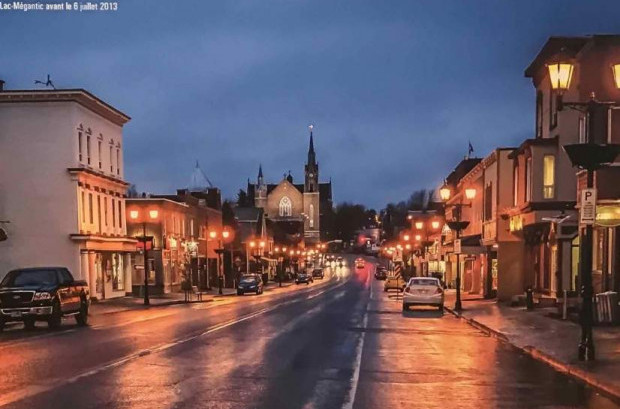
By Justin Mikulka for Desmog - Damning new testimony from an engineer of the locomotive involved in the deadly 2013 oil train disaster in Lac-Mégantic, Canada, reveals several ways corporate cost-cutting directly led to the accident, which claimed 47 lives. We already knew for certain that a fire on the locomotive, which had been left parked and running for the night, per standard practice, was the direct cause of the disaster. That blaze resulted in the local fire department, directed by a rail company employee, to turn off the power to the locomotive. However, that action also shut off power to the air brakes, which eventually failed and caused the train to roll down the tracks into downtown Lac-Mégantic, where it exploded and leveled the area. However, in newly released testimony reported by CBCNews, we learn about a troubling exchange between train engineer François Daigle, who had driven the oil train two days before its fiery derailment, and his supervisor: Daigle said on that trip he noticed the locomotive kept losing speed and produced black smoke. Daigle told the court he reported the problems to his supervisor, Jean Demaître, and sent a fax to the repair shop in Maine at the end of his shift. Daigle said he asked Demaître to change the lead locomotive because of the repair issues.

New Tar Sands Oil Pipeline Isn’t Worth The Risks, Minnesota Officials Say

By Phil Mckenna for Inside Climate News - The Minnesota Department of Commerce recommended this week that a major tar sands oil pipeline should not be expanded and that the old, existing line should be shut down. Its reason: the state's refineries don't need additional crude oil, so there's no point in taking on extra risks. The recommendation is the latest sign of opposition to fossil fuel pipelines at the state level, just as the federal government is strongly supporting them. The Minnesota Department of Commerce's report, submitted to state regulators who will eventually decide whether or not to approve the pipeline, cites a consulting firm that determined Minnesota's refineries are already running at peak capacity and that there's no sign of a long-term increase in local demand for fuel. The analysis concludes that the proposed Enbridge Line 3 pipeline project, from Hardisty, in Alberta, Canada, to Superior, Wisconsin, isn't worth the risks. "In light of the serious risks and effects on the natural and socioeconomic environments of the existing Line 3 and the limited benefit that the existing Line 3 provides to Minnesota refineries, it is reasonable to conclude that Minnesota would be better off if Enbridge proposed to cease operations of the existing Line 3, without any new pipeline being built," the department states. Environmental advocates said that the line might still be approved, despite the report's conclusions.

China Readies Yuan-Priced Crude Oil Benchmark Backed By Gold

By Tsvetana Paraskova for Oil Price - The world’s top oil importer, China, is preparing to launch a crude oil futures contract denominated in Chinese yuan and convertible into gold, potentially creating the most important Asian oil benchmark and allowing oil exporters to bypass U.S.-dollar denominated benchmarks by trading in yuan, Nikkei Asian Review reports. The crude oil futures will be the first commodity contract in China open to foreign investment funds, trading houses, and oil firms. The circumvention of U.S. dollar trade could allow oil exporters such as Russia and Iran, for example, to bypass U.S. sanctions by trading in yuan, according to Nikkei Asian Review. To make the yuan-denominated contract more attractive, China plans the yuan to be fully convertible in gold on the Shanghai and Hong Kong exchanges. Last month, the Shanghai Futures Exchange and its subsidiary Shanghai International Energy Exchange, INE, successfully completed four tests in production environment for the crude oil futures, and the exchange continues with preparatory works for the listing of crude oil futures, aiming for the launch by the end of this year. ? “The rules of the global oil game may begin to change enormously,” Luke Gromen, founder of U.S.-based macroeconomic research company FFTT, told Nikkei Asia Review.

Superfund Sites And Oil Refineries Already Poisoning Storm-Wracked Houston

By Whitney Webb for Mint Press News - Houston is still struggling to cope with the impact of Hurricane Harvey, as many parts of the city are still under water. But the worst damage done by the storm may be yet to come, as receding floodwaters have revealed widespread chemical contamination stemming from the city’s petrochemical plants. As the “apocalyptic” floodwaters in Houston and other parts of east Texas have been rising thanks to Hurricane Harvey, media attention has been largely focused on the immediate human impact, such as displacement and property damage. However, with much of Houston underwater, the environmental impact – and its short- and long-term effects on public health – deserve substantial attention as well. Houston is home to several toxic Superfund sites, as well as numerous petrochemical and oil refining facilities, many of which were found to be leaking during the storm. Though water levels are starting to decline, concern is growing that a new, more persistent crisis may be beginning for Houston residents. Texas is home to numerous Superfund sites, areas identified by the Environmental Protection Agency as containing highly hazardous waste. Such sites are usually targeted for cleanup efforts.

Big Oil’s Bi-Partisan Helpers: A Refiner’s Fire 5 Years Later

By Steve Early for Counter Punch - Five years ago, my wife and I moved to Richmond, CA and soon learned about the local emergency response protocol known as “shelter in place.” When large fires break out in Bay Area refineries, like the century old Chevron facility near our house, first a siren sounds. Then public officials direct everyone nearby to take cover inside. Doors must be closed, windows taped shut, if possible, and air conditioning turned off. August 6th is the fifth anniversary of such self-help efforts in Richmond. On that day in 2012, we looked up and saw an eruption worthy of Mount Vesuvius. Due to pipe corrosion and lax maintenance practices, a Chevron processing unit sprang a leak. The escaping petroleum vapor reached an ignition source. This led to a raging fire that Contra Costa County (home to four refineries) classified as a “Level 3 incident,” posing the highest level of danger. Nineteen oil workers narrowly escaped death at the scene of the accident. It sent a towering plume of toxic smoke over much of the East Bay and fifteen thousand refinery neighbors in search of medical attention for respiratory complaints, While local property values took a hit, Chevron stayed on track to make $25 billion in profits that year.

Water And Oil, Death And Life In Louisiana

By Nora Belblidia for Uneven Earth - Six months ago, a routine public hearing was scheduled in a nondescript gray government building in downtown Baton Rouge, Louisiana. “Normally these hearings go over really quietly,” said Scott Eustis, the Wetlands Specialist for Gulf Restoration Network (GRN). “Usually it’s me, my associates, and like ten people.” Instead, over 400 people showed up to the Baton Rouge hearing, and stayed for nearly six hours. The debate centered on the Bayou Bridge Pipeline, a proposed route that would run 163 miles from Lake Charles to St. James, forming the “tail” of the Dakota Access Pipeline (DAPL), and effectively connecting oil fracked in North Dakota to Louisiana refineries. If built, Bayou Bridge would cross 11 parishes, 600 acres of wetlands, 700 bodies of water, and the state-designated Coastal Zone Boundary. Energy Transfer Partners (ETP) is behind both the Bayou Bridge project and the more infamous DAPL, but the parallels run deeper than a mutual stakeholder. Just like in DAPL, those who resist the project are drawing connections between past wrongdoings, conditions today, and a future climate. Residents cite safety concerns, environmental racism, pollution, and threats to the region’s wetlands and seafood industries as reasons to oppose its construction.

Gas-Powered Cars Will Vanish In 8 Years, Big Oil Will Collapse: Stanford Study

By Staff of Anti-Media - The reason for this, as he explains in thorough detail, is that the market for self-driving electric vehicles (EVs) is simply growing too fast. “What the cost curve says is that by 2025 all new vehicles will be electric, all new buses, all new cars, all new tractors, all new vans, anything that moves on wheels will be electric, globally,” Professor Seba writes in his report. It’s a matter of economics and innovation, Seba says. EVs are cheaper and easier to manufacture, their few moving parts require almost zero maintenance, and they can actually outperform their fossil fuel guzzling counterparts. “The electric drive-train is so much more powerful,” writes Seba. “The gasoline and diesel cars cannot possibly compete.” The professor says the only thing currently stopping this grand shift to electric is consumer price. Seba says the “tipping point” will come in the next few years when the cost of an EV will be down to around $30,000. But by 2022, when low-end models are $20,000, the changing tide will be unstoppable. In the near future, only nostalgics like car collectors will have a use for the old models, Seba predicts.
assetto corsa mods

Urgent End Of Year Fundraising Campaign

Online donations are back! Keep independent media alive. 

Due to the attacks on our fiscal sponsor, we were unable to raise funds online for nearly two years.  As the bills pile up, your help is needed now to cover the monthly costs of operating Popular Resistance.

Urgent End Of Year Fundraising Campaign

Online donations are back! 

Keep independent media alive. 

Due to the attacks on our fiscal sponsor, we were unable to raise funds online for nearly two years.  As the bills pile up, your help is needed now to cover the monthly costs of operating Popular Resistance.

Sign Up To Our Daily Digest

Independent media outlets are being suppressed and dropped by corporations like Google, Facebook and Twitter. Sign up for our daily email digest before it’s too late so you don’t miss the latest movement news.