Skip to content

Pakistan

We Will March, Even If We Have To Wade Through The Pakistani Floodwaters

Calamities are familiar to the people of Pakistan who have struggled through several catastrophic earthquakes, including those in 2005, 2013, and 2015 (to name the most damaging), as well as the horrendous floods of 2010. However, nothing could prepare the fifth most populated country in the world for this summer’s devastating events, which began with high temperatures and political chaos followed by unimaginable flooding. Cascading frustration with the Pakistani state defines the public mood. Taimur Rahman, the general secretary of the Mazdoor Kisan Party (‘Workers and Peasants Party’), told Peoples Dispatch that after the 2010 floods, there was ‘enormous outrage about the fact that the government had not done anything to ensure that… when there is an overflow of water, it can be controlled’.

Pakistan’s Floods Show The Climate Crisis Is Also A Debt Crisis

The flood in Pakistan is a humanitarian crisis of epic proportions. Entire towns, vital infrastructure, homes, farmlands, and crops are being washed away.  With a third of the land under water, 33 million people affected, and the death toll over a thousand and rising, the human and economic cost is set to be astronomical. It is estimated that the extensive damage to the country will cost at least $10 billion. The country faces both the immediate challenges of immense displacement, homelessness, hunger, and the spread of water-borne diseases as well as the longer-term costs of rebuilding and reconstruction. Pakistan faces a deepening debt crisis to pay the costs of a climate catastrophe it did not cause.

Climate Change Causes Torrential Flooding In Pakistan

Devastating floods are occurring across Pakistan due to monsoon rains. Since June, more than 1,000 people have been killed by floods, with thousands more being displaced and having to go without food. Capitalism makes these disasters the new normal, with workers, particularly those of the Global South, bearing the brunt. Just this weekend, tens of thousands of people have had to flee their homes in Northern Pakistan due to floods. There are many more that still need to be rescued. More than 33 million people have been affected over the past few weeks, millions of homes have been destroyed, and infrastructure such as roads and bridges have been damaged or destroyed along with millions of acres of farmland. This is not merely just one or a few bad storms.

One Out Of Seven Persons Affected By Floods; Pakistan Declares Emergency

30 to 33 million persons are reported to be seriously affected by floods in Pakistan, a country with a population of 220 million. Due to this a national emergency has been declared in Pakistan. The previous worst floods in Pakistan were recorded in 2010 when nearly 20 million people were affected, causing damages estimated at $10 billion. This was followed by a very serious flood situation next year in Sindh. What is more, there was some serious flood event or the other for the next five years. This year Sindh and Balochistan are reported to be the worst affected, although serious harm has been reported from elsewhere too. From mid-June to the last week of August, nearly 1000 persons have perished in floods and a higher number have faced injuries.

Pakistan: Coup Regime Hits PM Imran Khan With ‘Terrorism’ Charges

Pakistan’s elected Prime Minister Imran Khan was overthrown in a US-backed regime-change operation due to his independent foreign policy. Now the coup regime has charged him with “terrorism.” Pakistani scholar Junaid S. Ahmad discusses the desperate attempt to crush the mass movement and protests that Khan has led.

How To Manipulate Readers With ‘Expert’ Slanted Reporting

Imran Khan, a former cricket star who went into politics and became Prime Minister of Pakistan, had been ousted by bribing and threatening politicians of his coalition to turn against him. Khan had developed good relations with China and Russia and was against allowing the U.S. military to use Pakistan as a base for attacks in Afghanistan. The new Pakistani government under Shehbaz Sharif has turned out to follow opposite policies. But it is increasingly unpopular. Imran Khan has used his popularity to raise a public ruckus against the ruling elite and the military and judicial forces behind it. He and his PTI party have good chances to win in the next election. U.S. media reporting about Khan is thus conflicted.

Victory For Powerloom Workers In Pakistan

For two weeks, several thousand workers and their families participated in a sit-in protest on Jhang road, blocking the route to Faisalabad International Airport, demanding an increase in wages. The workers claimed that the Labor Department in Punjab had failed to implement the new minimum wages set by the provincial government. After several rounds of negotiations and backtracking by the district administration and the powerloom owners, an agreement was reached  between them and the leaders of the Labour Qaumi Movement (LQM), the umbrella body of powerloom workers in Faisalabad. Most of the demands of the nearly 300,000 workers have been met. Some of them include a 15% increase in workers’ wages and assurances of social security, as well as steps to improve the working environment.

Imran Khan Rewrites Pakistan’s Political History

It is an unsavory proposition always, be it in India or Pakistan, when political power is usurped by fly-by-night operators who engineer defections from a ruling party, and an established government gets overthrown despite its mandate to govern. In India — so far, at least — such shenanigans leading to regime change at the federal or state level have not been manipulated by foreign powers — except, perhaps, in the ouster of the first  communist government in the southern state of Kerala, way back in 1959. In South Asian politics, Nepal, Afghanistan, Sri Lanka and Maldives have been chronic cases where foreign interference in their domestic politics has become endemic. But they are either small countries or weak states, vulnerable to external pressure.

To Save The Planet, We Must End Instruments Of Corporate Power

On April 10, Pakistan's Prime Minister Imran Khan was ousted in what is believed to be a US-backed soft coup. One of the likely reasons for the coup is that Khan was taking action to end excessive corporate power bestowed by bilateral trade agreements. Clearing the FOG speaks with Manuel Perez Rocha of the Institute for Policy Studies about Khan and how trade agreements function to force countries into allowing corporations to exploit their workers and devastate their environment. Perez Rocha explains why ending corporate abuse is essential to addressing the climate crisis and how trade could be structured to uphold human rights and protection of the planet. He also speaks about the risks of extraction for minerals that are required for a green economy. 

How Much Involvement Did The US Have In Pakistan’s Coup?

Islamabad, Pakistan – Following weeks of high drama and controversy that have racked the nation, Imran Khan has been removed from office. The Pakistani prime minister suffered a vote of no confidence and a loss in the supreme court, ending his rule after less than four years. Coalition partners abandoned him, leaving his Pakistan Tehreek-e-Insaf (PTI) party in the minority. The cricket-star-turned-political-leader had been warning for some weeks that a foreign power – assumed to be the United States – was seeking to overthrow him because of his independent foreign policy, which saw Pakistan grow closer to Russia and China. Then, in a long public address on April 8, he directly named Washington as a prime instigator in the regime-change conspiracy, accusing the U.S. of bribing his political allies with tens of millions of dollars to desert his coalition.

Was Imran Khan Trying To Address Plunder Of Poor Countries By Wealthy?

Manuel Pérez-Rocha at Inequality.org just wrote a piece "Ousted Pakistani Leader Was Challenging Investment Treaties That Give Corporations Excessive Power: Mexico and many other countries are facing anti-democratic corporate lawsuits like the case that pushed Khan to withdraw from international investment agreements." He notes: The parliament of Pakistan recently ousted Prime Minister Imran Khan in a no-confidence vote. The reasons for the former cricket star’s political downfall are not entirely clear. His economic policies were a mixed bag at best, but he deserves credit for one thing: he’d taken a bold stand against international investment agreements that give transnational corporations excessive power over national governments. This piece led noted author and activist Maude Barlow to tweet: "Wonder if this is why he was thrown over…"

Pakistan’s Pivot To Russia And Ouster Of Imran Khan

Days before Imran Khan’s ouster on April 10 as prime minister in a no-trust motion in the parliament orchestrated by foreign powers, two impersonators were arrested in Washington for posing as US federal security officials and cultivating access to the Secret Service, which protects President Joe Biden, one of whom claimed ties to Pakistani intelligence. Justice department assistant attorney Joshua Rothstein asked a judge not to release Arian Taherzadeh and Haider Ali, the men arrested on April 6 for posing as Department of Homeland Security investigators for two years before the arrest, the Guardian reported on April 8. The men also stand accused of providing lucrative favors to members of the Secret Service, including one agent on the security detail of the first lady, Jill Biden. Prosecutors said in court filings they seized a cache of weapons from multiple DC apartments tied to the defendants.

US-Backed Coup In Pakistan Overthrows PM Imran Khan

In this episode of the Multipolarista podcast, Benjamin Norton is joined by Pakistani scholar Junaid S. Ahmad to discuss how Pakistan’s elected Prime Minister Imran Khan was overthrown in a US-backed coup aimed at reversing his independent foreign policy – like his close alliance with China, improved relations with Russia and Iran, and staunch support for Palestine.

Tens Of Thousands Hit Pakistani Streets To Protest Imran Khan’s Ouster

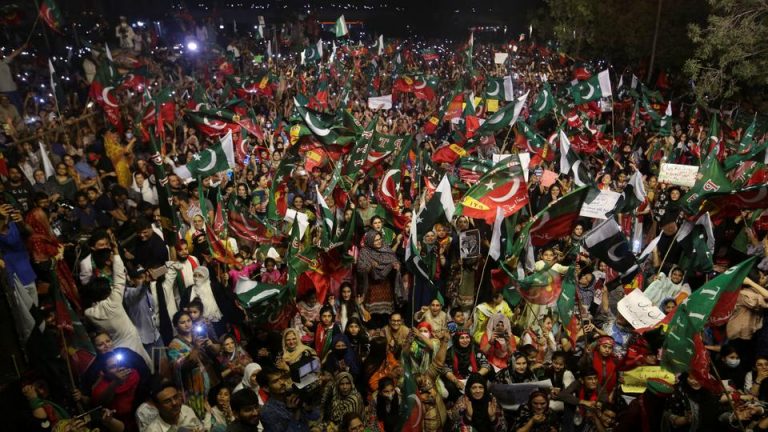
Tens of thousands of protesters have rallied across Pakistan while protests also took place in several countries in support of Imran Khan who was ousted in a parliamentary no-trust vote as prime minister even as the political opposition in South Asian country prepared to install Khan's replacement.

Regime Change In Pakistan

On April 10, in Islamabad, Pakistan the Supreme Court upheld a vote of no confidence to remove Imran Khan of the Tehreek-e-Insaf (PTI) from power. The opposition parties, including the Pakistan Muslim League Nawaz (PMLN) and the Pakistan People’s Party (PPP) voted in favor of no confidence. 174 votes were in favor for no confidence, two more than 172 vote mark that needed for this to be passed.
assetto corsa mods

Urgent End Of Year Fundraising Campaign

Online donations are back! Keep independent media alive. 

Due to the attacks on our fiscal sponsor, we were unable to raise funds online for nearly two years.  As the bills pile up, your help is needed now to cover the monthly costs of operating Popular Resistance.

Urgent End Of Year Fundraising Campaign

Online donations are back! 

Keep independent media alive. 

Due to the attacks on our fiscal sponsor, we were unable to raise funds online for nearly two years.  As the bills pile up, your help is needed now to cover the monthly costs of operating Popular Resistance.

Sign Up To Our Daily Digest

Independent media outlets are being suppressed and dropped by corporations like Google, Facebook and Twitter. Sign up for our daily email digest before it’s too late so you don’t miss the latest movement news.