Skip to content

Black Liberation

17th Annual Black People’s March On The White House

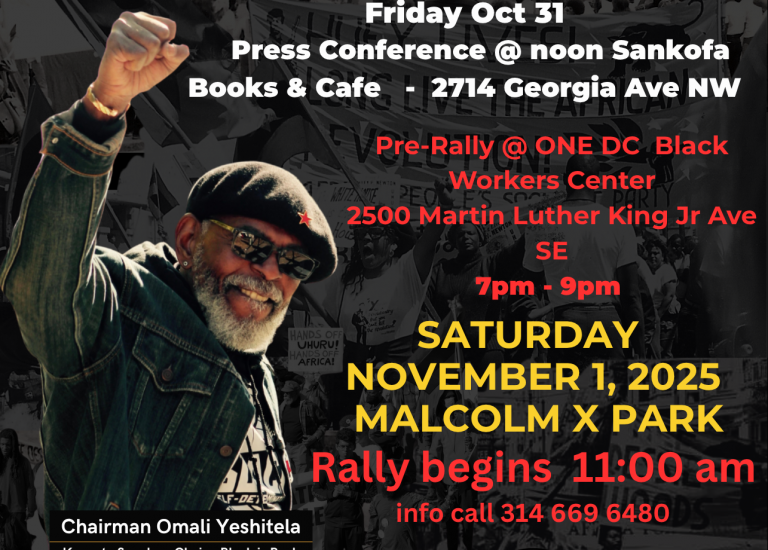
On November 1- 2 the Black is Back Coalition for Social Justice, Peace and Reparations will hold its 17th Annual Black People’s March on the White House in Washington, D.C.  This year’s Black People’s March on the White House comes at a critical time when the world is watching the U.S. descend into a deepening crisis, with the breakdown of its foundational institutions and principles of free speech, religion, assembly and association.  In a September 25, 2025 presentation to hundreds of generals and admirals of the U.S. military, the US president called on the military to make the war “at home,” in the US and to begin initiating war games, deploying national guard troops to the cities where Africans have a heavy presence. This is a clear violation of the Posse Comitatus Act of 1878, which prohibits the use of federal troops in police actions within the U.S.
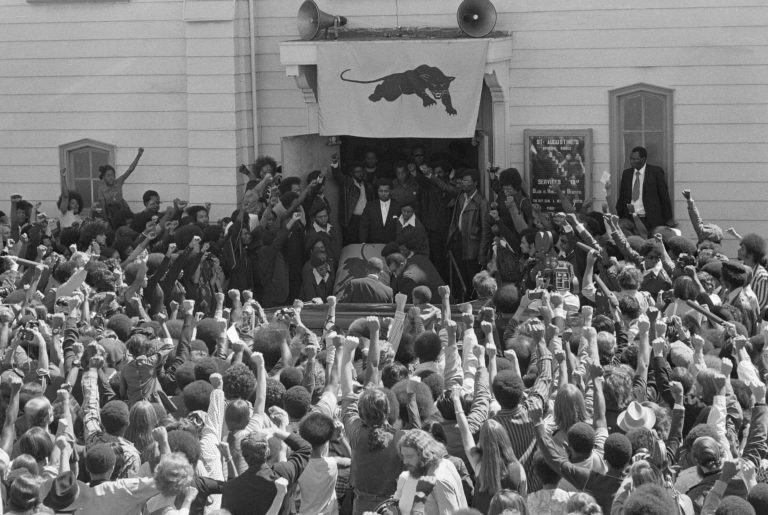
In Honor And Memory Of Assata Shakur

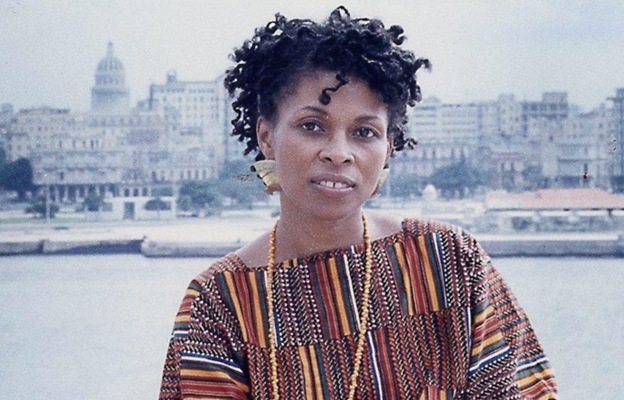
On September 25, 2025, the revolutionary Assata Shakur transitioned, leaving behind a legacy of uncompromising resistance and a blueprint for internationalist solidarity. As an anti-imperialist organization rooted in the long thread of the Black Radical Peace Tradition, we honor her with a renewed commitment to the liberation struggle to which she dedicated her life. Sister Assata understood that we are a people at war, and the struggle against this war is not one-dimensional. It is a fight for human dignity, community survival, popular power, self-determination, and complete liberation. The targeting, imprisonment, and torture she endured were the state’s counterinsurgent tactics to squash a movement by capturing its warriors—those who have the radical idea that African/Black people have the right to defend themselves and to be free.

Black August: We Turn Destructive Spaces Into Laboratories For Liberation

The concrete tomb they built to bury our revolution has become the very ground from which it grows. From behind these concrete walls and steel bars, where time moves differently and hope becomes a revolutionary act, I write to you about Black August — a month that prison administrators would rather see forgotten, but which burns eternal in the hearts of those who understand that freedom is not a privilege to be granted, but a right to be seized. To understand why this resistance continues, we must first understand its origins. Black August, observed each August since 1979, commemorates the deaths of Black liberation fighters who died in prison. Particularly, Black August pays homage to Jonathan Jackson, who was killed on August 7, 1970, while attempting to liberate his brother George Jackson and other prisoners.

Frantz Fanon’s Daughter: ‘Defeatism Has No Place’ In Liberation Struggles

Public gatherings this week in Jackson, Mississippi and New Orleans, Louisiana — featuring an especially distinctive guest — will honor the legacy of revolutionary psychiatrist Frantz Fanon (1925-1961). The Black Alliance for Peace, an African internationalist organization committed to peace and opposition to war and imperialism, and Cooperation Jackson, which is building a solidarity economy anchored by worker-owned co-ops in West Jackson, are co-hosting several Black August events with Fanon’s eldest daughter. Mireille Fanon Mendès-France is a jurist, an educator, and an anti-racism expert who passionately shares her father’s commitment to rebellion against colonialism in its many forms.

To Fight For Full Liberation, We Need To Recognize That We’re Not Free

Amid the chaos of mass protest of Trump administration policies, such as the systematic targeting of immigrant communities, the drive towards potential catastrophic war with Iran, and attacks on free speech, this year marks the 160th anniversary of Juneteenth, a holiday celebrated by Black communities that marks the end of slavery in the US. To mark this day, Peoples Dispatch spoke to Rachel Domond, a young Black organizer and visual artist, who for years has organized Black communities and is a part of the movement for socialism, as a member of the Party for Socialism and Liberation.

The Fall Of 2020: How Liberals Ceded Solidarity

Last Sunday marked five years since the world witnessed the public lynching of George Floyd at the hands, or as it was, the knee of the State. The aftermath of the livestreamed white “supremacy” webinar on the denial of the human rights of Black/Afro-resident people in the United States was the proliferation of incendiary uprisings nationwide that saw the incineration of buildings that housed businesses and even police precincts. - The nation was jolted awake after months of being moribund due to State-sanctioned covid quarantines and isolation. The streets were transformed from apparition avenues to lively lanes of social activity as people of all races, ethnicities, and genders coalesced to demand “justice” for Floyd and Brianna Taylor, both executed by the State, and Ahmad Aubrey who was shot to death by a civilian lynch mob.

Ready For The Revolution But Unable To See It

The snowflakes that began to pelt Chicago on an early January weekend in 1979 were bigger and wetter than anyone could remember, eventually burying the city under two feet of snow, shutting down O’Hare International Airport for only the second time ever, and producing snowdrifts that resembled a lumpen Sahara of marshmallow-white sand, swallowing cars, collapsing roofs, and disabling “L” trains. The transit cars that remained operational, however, were just as problematic, skipping stops in the city’s African American neighborhoods and whizzing off to the lily-white northwestern suburbs, stranding Black commuters and reducing public transportation to a taxpayer-funded private shuttle service for whites.

The Second National Black Radical Organizing Conference

In March 1972, on the heels of the Black Freedom Movement, nearly ten thousand Black people, including organizers, activists, politicians, and artists, convened in Gary, Indiana, for the National Black Political Convention (NBPC). Similar to today, they faced the failure of the two-party duopoly, rising inflation, growing economic crisis, an unpopular imperialist war, counterattacks on our movements, and a pressing need for political clarity. Among the NBPC's goals was to build an independent Black Agenda. While they achieved this goal by producing a National Black Agenda, class and ideological factions ultimately weakened the ability to organize around it.

These Black Bookstores Are Committed To The Fight For Freedom

Blooming from the tumult of the Civil Rights era, Black bookstores emerged during the Black Arts Movement as cultural hubs where some of the first seeds of slam poetry, spoken word and hip-hop were planted. In 1968, FBI director J. Edgar Hoover hoped to curb ​“the establishment of Black extremist bookstores which represent propaganda outlets for revolutionary and hate publications,” ordering his agents to pursue a targeted, nationwide surveillance. Today, a new generation of Black bookstores is blossoming amid the upheaval of the Movement for Black Lives.

Shirley DuBois And Scholars Of Color Resistance Efforts Parallel 2025 Visa Struggles

March 27, 2025, marked 48 years since the death of Shirley Graham DuBois, the prominent African American writer, scholar, and social activist. She was the widow of the prolific academic W.E.B. Du Bois. As her legacy as an advocate for racial equality, Pan-Africanism, and social justice continues, it’s important to reflect on her substantial role in the shaping of the political landscape, particularly her resisting the United States Justice Department, who on May 5, 1970 denied her entry into the country citing the McCarran-Walter Act.

Black Prisoners Organize For Dignity In Angola

This Black History Month, Peoples Dispatch is exploring the history of the notorious Louisiana State Penitentiary, the site of centuries of Black struggle—first against slavery, then convict leasing, and now the US prison system, which some label as slavery in the modern day. At the helm of the US’s notorious system of mass incarceration sits Louisiana State Penitentiary. Apart from being the largest maximum-security prison in the United States, this prison, nicknamed “Angola” after the former plantation site that it sits on, is an example of the conditions of modern-day slavery that the US prison system inflicts upon its disproportionately Black incarcerated population.

Malcolm X, Black Nationalism And The Cold War

During his stay in prison in the state of Massachusetts between 1946-1952, Malcolm X began to reflect seriously on his life’s mission. He would join the Nation of Islam (NOI) after being urged to do so by four siblings, a fact documented in a series of letters archived in his Federal Bureau of Investigation (FBI) files which contained tens of thousands of pages. In extensive letters written to his brothers he strongly stated that his future career would be preaching the religious beliefs enunciated by Elijah Muhammad and the Nation of Islam.

The Black South’s Revolutionary Anti-Fascist Tradition

The Black South has a rich history of antifascist organizing and militant strategy through direct struggle and conflict with fascistic forces. If we are going to study and promote an organizing lineage, it is this one that we should look to. What would it look like for our movement's rallying cry to evolve from "My ancestors died for the right to vote" to "My ancestors died fighting fascism"? This move does not intend to erase nor obscure historic political struggles of The South that center voting; such a reduction is counter-insurgency.

Demanding More In The Struggle For Collective Liberation

This is the second and final part of of a two-part interview series coming from a conversation that I had with Nick in April as part of my recently completed masters thesis (see Part I here ). Because the conversation was so insightful and I couldn’t include most of it in the thesis itself, I’ve decided to publish a slightly-edited version of our conversation, in two parts. In this second part, Nick and I discuss local organizing strategy, international solidarity through Pan-Africanist principles, and the applicability of a People(s)-Centered Human Rights framework to municipal work — all with an eye toward what Black/African Liberation looks like materially, locally.

Uhuru 3 File For Judgment Of Acquittal In Free Speech Case

On Thursday, October 10, Attorney Leonard Goodman filed a post-trial motion on behalf of the Uhuru 3 – Omali Yeshitela, Penny Hess and Jesse Nevel – asking Judge William Jung for a “judgment of acquittal on the conspiracy charge” or a new trial on that charge. In September’s contradictory verdict, the Uhuru 3 were found not guilty of acting as unregistered agents of the Russian government but were unjustly convicted of “conspiracy” to act as unregistered agents of the Russian government. Omali Yeshitela, Penny Hess and Jesse Nevel declared victory in defeating the government’s claim that their lifelong advocacy for Black reparations, justice and peace was conducted under the direction and control of a foreign government.
assetto corsa mods

Urgent End Of Year Fundraising Campaign

Online donations are back! Keep independent media alive. 

Due to the attacks on our fiscal sponsor, we were unable to raise funds online for nearly two years.  As the bills pile up, your help is needed now to cover the monthly costs of operating Popular Resistance.

Urgent End Of Year Fundraising Campaign

Online donations are back! 

Keep independent media alive. 

Due to the attacks on our fiscal sponsor, we were unable to raise funds online for nearly two years.  As the bills pile up, your help is needed now to cover the monthly costs of operating Popular Resistance.

Sign Up To Our Daily Digest

Independent media outlets are being suppressed and dropped by corporations like Google, Facebook and Twitter. Sign up for our daily email digest before it’s too late so you don’t miss the latest movement news.