Skip to content

Cooperatives

Cooperatives For Economic Justice In Black America

The Freedom Quilting Bee was established in 1967 in Alabama. It is a handicraft cooperative founded by Black women in sharecropping families who needed to supplement their meager incomes, creating and selling exquisite quilts. In 1968, the cooperative bought 23 acres of land on which to build their sewing factory. They provided day care and after-school services for members’ children.

The Push To Create Co-ops Is Energizing A New Generation Of Socialists

On the other hand, socialism was the name adopted by Western European — and especially Scandinavian — “welfare-state” governments, which aimed to regulate markets comprised still mostly of private capitalist firms. This led many people to associate socialism with robust public spending and government intervention in the marketplace.

The Flexibility Of The Worker Co-op Model

Worker co-operatives are businesses that are owned by the employees. Workers pool their skills and resources to create a business in which they are both the owners and the employees. From the outside, worker co-ops look like any other business however on the inside they differ substantially. While profit is absolutely a goal, their bottom lines are measured in more than just financial terms. “It is not enough for a worker co-op to just make a profit.”

Community Newspaper Becomes Reader-Owned Cooperative

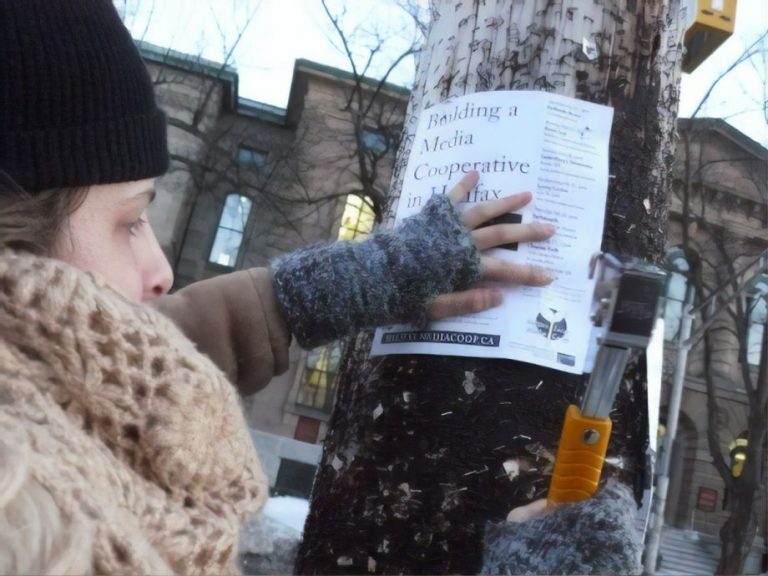
In Akron, Ohio, an unlikely publication is taking a bold step toward sustainability — not through traditional financial avenues, but by offering ownership of the paper to the community. The Devil Strip, an alternative weekly outlet that covers culture, music and art for the nearly 200,000 residents of the city, has launched a campaign with NewsMatch — a national matching-gift campaign for newsrooms — to become a fully reader-owned media cooperative.

Co-ops: By The Community, For The Community

At home, her family in Barnes County, N.D., often relied on a cell phone hotspot. However, their ability to access information was frequently constrained by their phone plan’s data limits. Tina routinely had to drive to the next town to access the internet, or she had to rely upon whatever books happened to be available for the four children that she home schools. This travel took a toll on her family, and Tina worried that her autistic son was not getting the quality of the education he needs. Fortunately, these challenges have since come to an end.

Against The Ecosystem

What is it? Why, “the cooperative ecosystem,” of course! And more specifically, the “worker cooperative ecosystem.” It’s a lovely phrase, isn’t it? Evoking scenes of natural beauty and symbiosis between different species of plants and animals, it seems a natural metaphor for the web of co-ops, federations, technical assistance providers, local governments, and non-profits that many of us see as not only necessary for the continued growth of our movement, but an already existing reality that we should seek to strengthen and support.

Union Cab Of Madison 40 Years On

I joined Union Cab when I was 24 and left when I was 50. Including two leaves of absence, I spent 25 years, 11 months, and 13 days as a voting member of Union Cab. I still own non-voting stock worth $25 and have over $9,000 in retained equity. I spent the majority of my adult life as a worker-owner of Union Cab of Madison. It really was the best of times and the worst of times. I started my career at Union Cab of Madison Cooperative on November 7, 1988. I had graduated from the UW-Madison in the spring and was ready to move on.

Developing Cooperatives Is Important Social Change Work

When my colleagues, the editors of this publication, asked me to write a brief piece explaining why I got into cooperative development, I responded that this posed a perhaps insurmountable difficulty: briefly explaining how I arrived at the life-changing conclusion that (trumpets, please) There Is No More Important Social Change Work You Can Do Than Cooperative Development. I mentioned that I'd been thinking of writing an essay arguing that— while chaining oneself to a tree might be sexier; while blockading WTO meetings might seem more “front-line”...

How Domestic Workers Built America’s First Co-Op Franchise

The United States currently has an infinitesimally small sector of worker-owned cooperative businesses, accounting for only 6,800 workers out of a labor force of over 160 million. Although US data on worker-owned co-ops is scarce, evidence from other countries indicates that worker-owned co-ops are more resilient than other businesses and lead to far smaller wage disparities in the same organization. Recently, an organization in New York, working with domestic workers who face poor working conditions...

From Co-ops To Direct Public Offerings, Local News Outlets Get Creative To Stay Afloat

The journalism landscape has transformed dramatically since the turn of the millennium when more than 400,000 people were employed at newspapers in the US. By September 2016, less than half that number remained employed, and over the first five months of this year, some 3,000 news workers lost their jobs, too. Roughly 1,800 newspapers shut their doors between 2004 and 2018, according to a University of North Carolina study. The impact on local journalism, which has seen tech giants gobble up 77 percent of local digital advertising, can’t be overstated.

Co-Operative Farms: Past, Present, And Future

Agriculture’s not an easy industry to break into. Start-up costs can be insurmountable; the cost of land alone puts farming out of reach for those who aren’t already in the sector. Most people who farm can do so because they inherited land or had the support of family to purchase it. The co-op model, though, has been providing ways to make farming accessible for generations. Chris Bodnar is a farmer and the owner, with his wife Paige, of Close to Home Organics in southern British Columbia.

The Federation Of Southern Cooperatives: Economic Justice Through Cooperative Development

How many co-ops can claim they were founded directly out of the Civil Rights movement? Or that they prevented a crisis predicted by government statisticians? The Federation of Southern Cooperatives has demonstrated that level of leadership throughout its 52-year history, and Shared Capital is proud to support their operating model through our work together. The Federation is a cooperative association of black farmers, landowners and cooperatives all around the South, with a focus on cooperative economic development, land retention, and advocacy.

Lessons From 10 Years Of Building The Cooperative Movement

When TESA first launched roughly ten years ago, it was hard to see a week into the future, let alone a decade. It’s incredible to reflect on so many years spent working with so many people on cultivating the cooperative movement. In this time, we have been committed to building a more just and democratic economy, on both the local and national levels, with a powerful collection of partners. We take significant pride in the programs, tools, and games we have developed for the co-op movement, as well as the fact that we have been involved in dozens of programs and projects across the US to support worker-ownership and the creation of a new economy.

Public And Cooperative Sector Contribution To Innovation

There is a widespread belief that the driving force of innovation is competition between companies. The government is viewed as an obstacle holding back the full potential of entrepreneurs with outdated regulation. However, practically all tech start-ups that are poster-boys for innovation are built on two profound inventions, both of which are born out of publicly funded research: the digital computer and the internet. These inventions were not born from profit driven competition, but instead cooperation between scientists.

Cooperatives And Peace: A Report On Cooperatives’ Contributions To Peacebuilding And Conflict Resolution

Presenting practical examples, the report looks at cooperatives contributing to the empowerment of minority groups affected by conflict, providing decent work and sustainable development in fragile contexts, as well as supporting mitigation of conflict through partnerships with other actors and the provision of humanitarian support. The report demonstrates that cooperatives can play an important role in peacebuilding worldwide, while also contributing to the UN Sustainable Development Goals (SDGs).
assetto corsa mods

Urgent End Of Year Fundraising Campaign

Online donations are back! Keep independent media alive. 

Due to the attacks on our fiscal sponsor, we were unable to raise funds online for nearly two years.  As the bills pile up, your help is needed now to cover the monthly costs of operating Popular Resistance.

Urgent End Of Year Fundraising Campaign

Online donations are back! 

Keep independent media alive. 

Due to the attacks on our fiscal sponsor, we were unable to raise funds online for nearly two years.  As the bills pile up, your help is needed now to cover the monthly costs of operating Popular Resistance.

Sign Up To Our Daily Digest

Independent media outlets are being suppressed and dropped by corporations like Google, Facebook and Twitter. Sign up for our daily email digest before it’s too late so you don’t miss the latest movement news.