Skip to content

Cooperatives

Why The U.S. Needs More Worker-Owned Companies

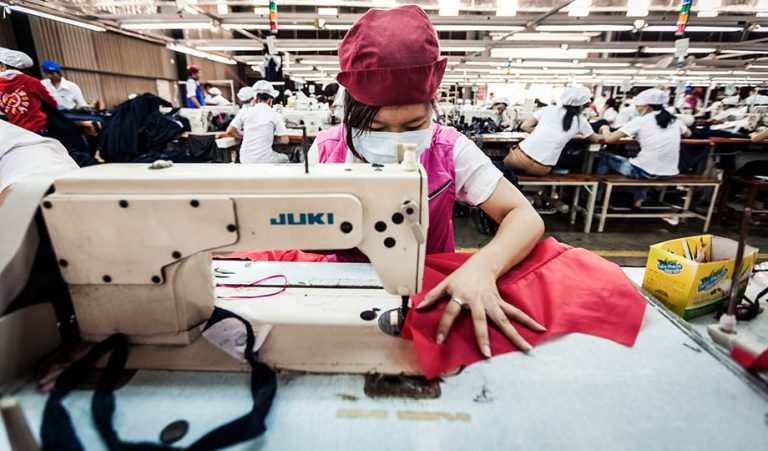
The gap in wealth in the United States between the ultrawealthy and everyone else has reached its widest point in decades. One way to narrow the divide is through the use of worker buyouts, in which ownership of a company transfers from a single person or a small number of people to the workers of the company. Currently, about 10% of Americans hold equity stakes in their workplaces. By providing more workers and employees with opportunities to buy shares, companies can help workers and communities raise their standard of living and simultaneously feel more invested — literally — in the success of the enterprise. In that way, worker buyouts also increase firms’ competitiveness: Research suggests that employee-owned companies are more durable and resilient during economic downturns.

Racial Justice And Cooperatives: Q&A With United States Federation Of Worker Cooperatives Director Esteban Kelly

The worker cooperative movement seems to be gaining more prominence in the U.S., especially locally. "Altogether worker cooperatives represent a small part of the national economy. However, there may be a greater impact at the local level in areas where they are more concentrated," a report by the Democracy at Work Institute, a worker cooperative advocacy group, noted. An important sign that the movement is growing and strengthening came at the turn of this century, when the United States Federation of Worker Cooperatives (USFWC) was formed with the mission of connecting and strengthening the burgeoning cooperative sector. To date, USFWC represents around 200 cooperatives and around 6,000 cooperative members across the country, and proceeds with the ultimate aim of advancing economic justice rooted in community-based, shared ownership.

Unions In The 21st Century: Adapt To Survive, Co-Opt To Grow

It has always surprised me how rarely trade unions are raised in the conversation on forced labour. Their fundamental purpose is to secure better conditions for workers, in part by using collective action to identify and rectify the structural and systemic problems occurring within their sectors. As such, they should be central and essential actors within any serious effort to root out forced labour in the global economy today. Yet trade union voices have been almost entirely shut out of the conversation. Governments, business and many NGOs have instead chosen to rely upon voluntary corporate disclosure, supplier auditing, and awareness raising campaigns to catch ‘bad apples’ and alter corporate and supplier behaviour for the better.

Does Size Matter?

Today the think tank the New Economics Foundation (NEF) launches a new report on doubling the size of the co-operative sector, titled ‘Co-operatives Unleashed‘. As we announced back in April, the Co-operative Party commissioned this independent piece of work from the NEF because we want to see a step-change in the co-operative sector. While consumer and employee owned businesses here in the UK are still seen as a little unusual, edgy or even ‘alternative’, in countries like France, New Zealand and the Netherlands, co-operative businesses make up a significant percentage of the economy, and are considered part of the mainstream business landscape. So today’s report, containing practical steps policymakers can take to double the size of the co-operative sector, is undoubtedly great news for UK co-operatives, and for our co-operative movement.

From Co-op To Co-op

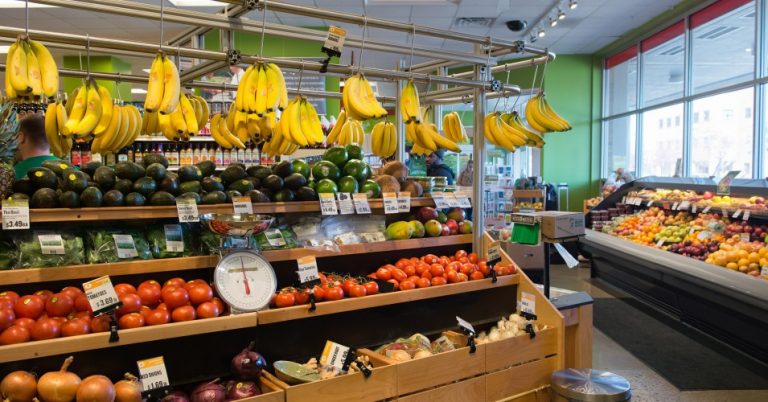
From Brooklyn to Brattleboro, I just drove four and a half hours to go from co-op to co-op. In Brooklyn, it’s the Park Slope Food Co-op—one of the nation’s, and the world’s, largest. A history-making experiment in pooling resources and worker hours to access high quality food at affordable prices. Now the place has more workers than it can use and produces more revenue per square foot than the fancy grocery store Whole Foods. That’s not my research; it was conducted by Forbes. Here in Vermont, the Putney Food Co-op is another bustling place where members work their shifts, purchase in bulk, and enjoy low member prices, making decisions together. Even non-members can enjoy extraordinarily low prices on local blueberries, bulk teas, and just about everything and anything made out of maple syrup.

Resisting War Through Education And Local Cooperatives

War profiteers deliver hellish realities and futile prospects, but the Afghan Peace Volunteers have not given up on bettering their country. In recent visits to Kabul, we’ve listened as they consider the longer-term question of how peace can come to an economically devastated country where employment by various warlords, including the U.S. and Afghan militaries, is many families’ only way to put bread on the table. Hakim, who mentors the APVs, assures us that a lasting peace must involve the creation of jobs and incomes with a hope of sustaining community.

Community Land Cooperatives Should Oversee Neighborhood Economic Development

This nonprofit is organizing a real estate investment cooperative for the Mid-Atlantic region of the United States, with the exclusive purpose of incubating, funding, and assisting “community land cooperatives.” Ecovillagers Alliance is a nonprofit initiative of educators, organizers, systems engineers, and storytellers. We came together from a crazy quilt of past attempts to establish community control of land and buildings by different models—co-ops, land trusts, co-housing, communes—none of which quite addressed the inhumane realities of modern urban real estate. So we went back to the drawing board to ask: what instrument of neighborhood real estate stewardship would be democratic, just, and sustainable? Now we are organizing a real estate investment cooperative for the Mid-Atlantic region of the United States...

Food, Coops, Capitalism

Last week, I travelled to Portland, Oregon to give a keynote presentation to the Consumer Coop Management Association—CCMA. My first experience with cooperatives had been in 1983 when I worked as a manager for the Stockton Farmers’ Market Coop. Long before the rise of the food movement, we used to sell fresh produce to the Berkeley Coop’s supermarkets. This allowed a small group of struggling farmers to sell a lot of good food to a big group of affluent consumers. But that was long ago. I needed to study up to face 500 experts in coop management. When I did background research, I was struck by the obvious: Capitalism and food coops emerged together. The first known food cooperative, the Rochdale Society of Equitable Pioneers, was formed in 1844 by a small group of craftspeople who had been de-skilled by England’s great textile factories in the thick of the Industrial Revolution.

Food Co-ops Make A Difference

Food co-ops were formed by people in your community who wanted access to healthy, delicious food with reduced environmental impact and less waste, and co-ops remain community-owned and operated to this day. You help co-ops continue this proud tradition every time you choose to shop at one, invest in ownership or tell a friend about your local food co-op. You are the co-op difference. Thanks to co-op shopper support, local farmers and producers continue to have a market for their delicious food, organic agriculture continues to grow, local food pantries and nonprofit organizations have a strong partner and together we are making progress towards a fairer food system. People like you make it happen. When you shop at the co-op, your money makes a bigger impact in your local community than at a typical grocery store.

Cooperatives Lauded As ‘Trailblazers’ In Community Solar

Looking for community solar? Your best bet is in electric cooperative territory. “In terms of the number of community solar programs, cooperative utilities have been trailblazers,” states a new report from the Smart Electric Power Alliance (SEPA). The report finds 160 co-ops have a program, though NRECA puts the number at nearly 200. “This far exceeds the total in investor-owned utilities (31 programs) and public power utilities (37 programs) combined,” SEPA noted. Wright-Hennepin Cooperative Electric Association in Rockford, Minnesota, is among the co-ops offering community solar, and CEO Tim Sullivan said it’s a big hit. “We have almost 400 kilowatts of community solar in four different arrays and our members love it.

Cooperatives And The Future Of Work

‘A lot of resources are going to be spent in our city. Therefore the questions is: who is going to get them? Who is going to benefit?’ says Kali Akuno, of Cooperation Jackson. The question of the future of work is above all a question of power and ownership. It is a question the cooperative movement seeks practical answers for, every day, in neighbourhoods, cities and regions. An international survey among 10,000 members of the general population by the consulting firm PwC found that 53% believe technological innovations will be the most transformative factor in shaping the future world of work – more than resource scarcity and climate change, shifts in global economic power, migrations and urbanisation. This is also the dominant narrative in the mainstream media. Yet, co-operators understand that technology follows social and economic power, not the other way round.

Cooperative Banking For Black Lives

MINNEAPOLIS—On an unseasonably warm Friday in late January, African-American business owners, activists, advocates, musicians, politicians and artists toasted with a “come-up” cocktail: a healthy mix of Goldschläger, vodka and sparkling cider over ice. A “come-up” signifies making it to the next level—and assembled community members used the moment to reflect on recent progress and envision the years to come. The party, hosted by the Association for Black Economic Power (ABEP) at its new office in North Minneapolis, celebrated the growing local movement to empower the black community to invest in its own neighborhoods and divest from systemic harms (such as institutions that extract local resources and wealth). And there was much to celebrate: For one, the 2017 city council victories of event speakers Andrea Jenkins (the first African-American, openly trans woman to be elected to public office) and Jeremiah Ellison (son of Minnesota Congressman Keith Ellison).

Worker Cooperatives Offer Real Alternatives To Trump’s Retrograde Economic Vision

Announcing his presidency in 2016, Donald Trump promised the nation that he’d become “the greatest job president God ever created.” His plan to accomplish this rested on a retrograde economic vision that would “make America great again,” by restoring waning coal and manufacturing jobs, as well as putting an end to the alleged assault on American work by foreign immigrants and global competition. A year later, his attempts to realize this vision have largely consisted of backwards motion. In October, he rolled back the Clean Power Plan, arguing that carbon emissions regulations, rather than the widespread shift away from fossil fuels, were responsible for the decline of U.S. coal. While the striking of these environmental protections leaves the door open for corporations to exacerbate climate change, it has done little to uplift the so-called “Rust Belt,” where he garnered so much support.

The Cooperative Hostile Takeover

The routes through which workers typically gain ownership and control of their businesses are tightly constrained because they either require the consent of the owners or require the workers to start their own business. This paper proposes ways in which worker ownership and workplace democracy can be achieved on a broader scale through the restructuring of existing companies without the owners’ consent. This could drastically expand the scenarios in which employees of a business can achieve ownership and control and increase the formation of worker cooperatives. There are several ways workers can acquire an ownership stake in their business, short of a full conversions to a worker cooperative. Shares of the business can be purchased by the employees directly, though this is limited to a small segment of the workforce with investable assets.

Preparing For The Storm With A New Economy

Just as we must end the extraction of fossil fuels and minerals from the Earth to lessen the impacts of climate change and stop the poisoning of our communities, we must also end the extraction of wealth from our communities. A democratized economy, described in greater depth on It’s Our Economy, gives more control over and benefit from the economy to people and reduces the wealth divide. This week, we highlight work that is being done in the United States and other countries to transform economic institutions so they serve people and protect the planet.
assetto corsa mods

Urgent End Of Year Fundraising Campaign

Online donations are back! Keep independent media alive. 

Due to the attacks on our fiscal sponsor, we were unable to raise funds online for nearly two years.  As the bills pile up, your help is needed now to cover the monthly costs of operating Popular Resistance.

Urgent End Of Year Fundraising Campaign

Online donations are back! 

Keep independent media alive. 

Due to the attacks on our fiscal sponsor, we were unable to raise funds online for nearly two years.  As the bills pile up, your help is needed now to cover the monthly costs of operating Popular Resistance.

Sign Up To Our Daily Digest

Independent media outlets are being suppressed and dropped by corporations like Google, Facebook and Twitter. Sign up for our daily email digest before it’s too late so you don’t miss the latest movement news.