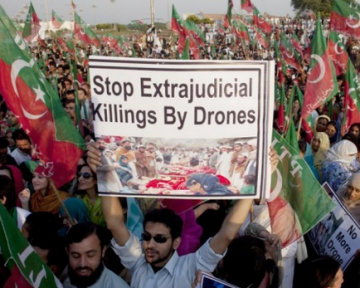
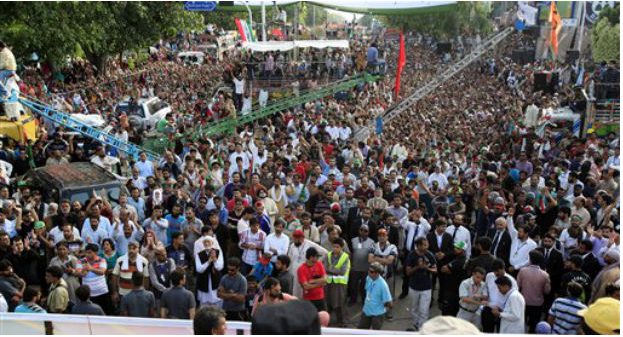
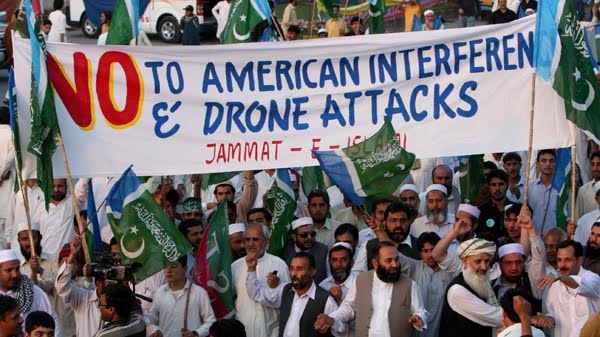
For the past three weeks, Pakistan has been bending under the weight of its own Egypt-like crisis, with protesters camped out on the parliament’s doorstep demanding the resignation of Prime Minister Nawaz Sharif, the dissolution of the government’s assemblies, and new elections for the sake of a Naya (New) Pakistan.
However, the similarities to Egypt don’t come from the 2011 revolution that saw Hosni Mubarak stripped of power, but from events in 2013, when the democratically elected government of Mohammed Morsi was deposed to make way for new elections that would be more favorable to the army’s interests.
The scenario is all too familiar for Pakistan, which has suffered three successful coup d’etats and spent 33 of its 57 years of independence under military rule. And, as in Egypt, the danger came from the country’s military interests being threatened by a democratically elected civilian ruler that took one step too far.
It would be a shame if another coup were to take place — despite the ruling government’s ineptitudes, of which there are many — because last year’s elections were the first in Pakistan’s history in which one civilian government successfully transitioned to another without military intervention.
Background
The threat to Pakistan’s current parliament, and particularly the ruling party, Pakistan Muslim League-Nawaz (PML-N), emerged on June 27 at a rally in Bahawalpur when Imran Khan, chairman of Pakistan’s Tehrik-e-Insaf party (also known as the Movement for Justice or PTI), warned the government that it had one month to comply withits demands for electoral reforms and investigations into constituencies where alleged vote-rigging had taken place or 1 million people would march toward Islamabad on Aug. 14, Pakistan’s Independence Day.