Skip to content

Public ownership

A Handbook For Public Power Campaigns

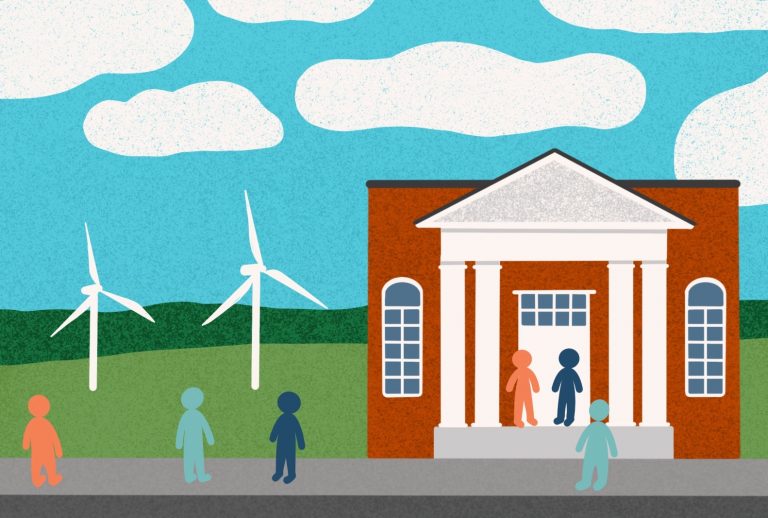
The Public Power Handbook is a guide for communities exploring models of publicly owned power, such as a municipal electric utility, as a path toward local control, clean and affordable energy investment, and democratic accountability. The handbook provides step-by-step guidance for advocates and community members on how to municipalize (or take over) a private utility, from building a winning coalition to anticipating and countering utility pushback. The handbook also outlines alternatives to full municipalization that still further the goals of local energy control and utility accountability.
Universal Health Coverage At A Crossroads

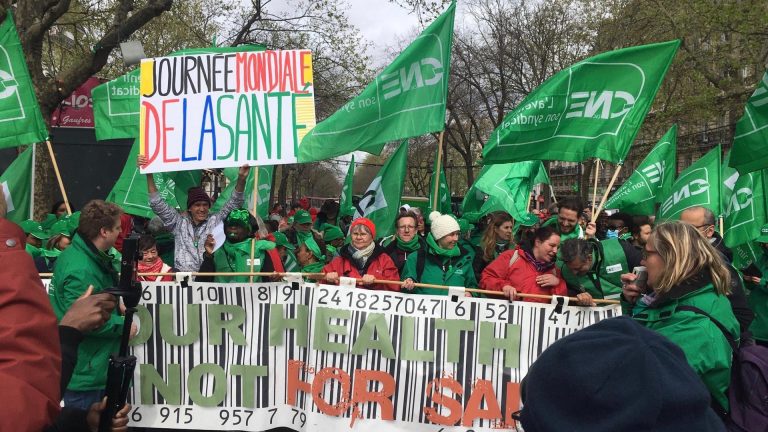
Universal Health Coverage (UHC) continues to dominate the global health agenda. At this year’s World Health Assembly (WHA78), UHC was again hailed as the cornerstone of resilient health systems. However, while governments reaffirmed their commitments, millions of people continue to face catastrophic health costs, essential services remain out of reach, and primary healthcare systems are stretched beyond breaking. The world is not on track to achieve UHC – and it is not because of a lack of guidance. It’s because of the wrong strategy.

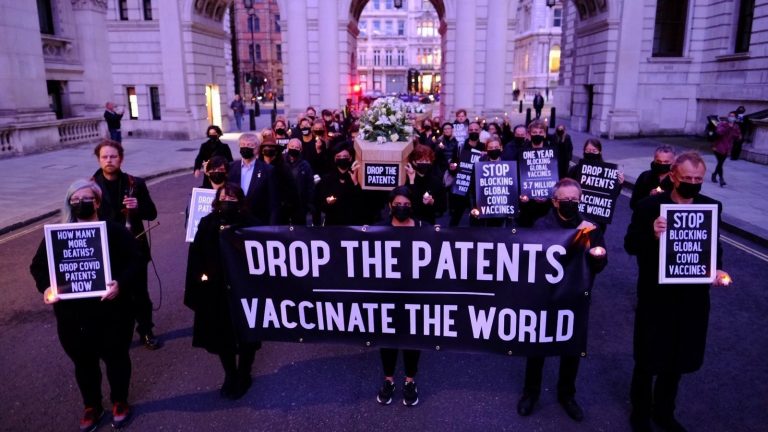
Reclaiming Drug Discovery: Why We Need Public Pharma

Big pharma loves to present itself as the driving force of medical breakthroughs – an industry tirelessly pushing the boundaries of science to deliver life-saving treatments. Yet, behind the grand narratives of “innovation”, the truth is far more calculated. Rather than committing to the expensive, high-risk process of true scientific discovery, pharmaceutical giants like Sanofi, Johnson & Johnson (J&J), Roche, Pfizer, Bristol-Myers Squibb (BMS), Merck, and AstraZeneca have refined a more strategic and profitable approach: let others take risks, then swoop in to take the rewards.

Why Public Funds Should Be Deposited In Publicly-Owned Banks

A thriving economy requires that credit flow freely for productive use. But today, a handful of giant banks diverts that flow into an exponentially-growing self-feeding pool of digital profits for themselves. Rather than allowing the free exchange of labor and materials for production, our system of banking and credit has acted as a tourniquet on production and a drain on resources. Yet we cannot do without the functions banks perform; and one of these is the creation of “money” as dollar-denominated bank credit when they make loans. This advance of credit has taken the form of “fractional reserve” lending, which has been heavily criticized.

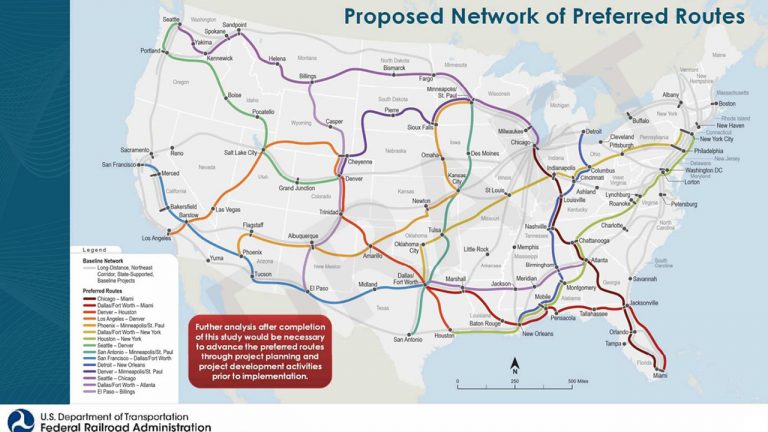
‘Fund The 15!’ Building Out A True National Railroad Network

The American passenger rail renaissance is well-under way! Sold out trains, highly successful new services, and (justifiable) frustration about high ticket prices because of it: This is only the beginning. FY2024 was Amtrak’s most successful year in history with record ridership and record revenue. Americans, loudly and clearly, want more passenger rail travel options. Our limited existing services are already oversubscribed. Now is the time we need to work to meet the moment and bring passenger trains to more people in more places as part of a truly interconnected transportation network. They are truly engines of economic growth.

Kerala’s Healthcare Revolution: A Triumph Over Corporate Greed

The New Indian Express reported on February 10, 2025, that Kerala has seen the closure of 99 private hospitals since 2011, citing the data from the Kerala Private Hospital Association (KPHA). The association believes this number is a conservative estimate, with the actual figure likely much higher. Hussain Koya Thangal, President of the Kerala Private Hospital Association (KPHA), emphasized that while the cost of treatment has remained relatively stable, the financial burden of maintaining infrastructure and running hospitals has increased significantly.

A Public Model For Home Insurance

With every extreme weather event, housing is damaged and belongings are lost. Insurance is supposed to be the safety net that helps people to recover and restart their lives. But as major disasters like hurricanes, wildfires, and hailstorms increase in frequency and severity thanks to climate change, more insurance companies are cutting back on policies, jacking up premium rates, or refusing to cover whole areas of the country. This change is leaving people who live in affected homes—including everything from single-family houses to multifamily rental buildings—facing financial hardship and even homelessness, among other ruinous consequences.

Should Cities Open Their Own Grocery Stores?

By now, most people are familiar with the concept of food deserts — areas where residents lack ready access to fresh foods. Should local governments step in to operate grocery stores in neighborhoods that don’t have them? Aside from ideological questions over whether governments should get involved with operating retail establishments, there are a number of practical hurdles that are difficult to overcome. Zohran Mamdani, a member of the state Assembly who is running for mayor of New York, calls for a network of city-owned grocery stores.

Campaign For Public Rail: Private Rail Companies Put Profits Over Safety

Private railroad corporations are failing their workers, their clients and the public in general. Their drive for profits means fewer workers, longer hours and neglecting basic safety protocols, unpredictable schedules for freight customers, which is devastating for farmers, and delays for passengers as well as deterioration of railway infrastructure. Clearing the FOG speaks with Maddock Thomas, the author of a new white paper, "Putting America Back on Track: The Case for a 21st Century Public Rail System," who explains the problems with the current system and how a public, electrified rail system would cost less, have a lower carbon footprint, and benefit workers and customers. Thomas is part of a new campaign, Public Rail Now.

Putting America Back On Track: A 21st Century Public Rail System

As America grapples with the everlasting impacts of the derailment in East Palestine, OH., Public Rail Now and Railroad Workers United released their latest report entitled  "Putting America Back on Track: The Case for a 21st Century Public Rail System." Authored by Maddock Thomas, a Stone Fellow from Brown University and recipient of the North American Rail Shippers Association scholarship, this report presents a compelling argument for transitioning the United States' rail system to public ownership. Drawing on historical precedent and rigorous analysis, it makes a compelling case for overseeing our rail infrastructure in the same manner as our interstate highways, inland waterways, and airports.

Public Pharma For Europe, A Game-Changer For Access To Medicines

“It’s time to step up, promote health justice, and meet the real needs of people,” says Alan Silva from the European chapter of the People’s Health Movement (PHM), addressing the need for revolutionizing pharma policies in Europe. A long-time advocate for access to medicines, Silva understands how important it is for Europe to change the way it thinks about research and development, but also production and distribution of health technologies. If the region were able to de-link itself from the interests of transnational pharmaceutical companies, it would be a true game changer, he says. “We need public pharma in Europe so we can stop relying on health solutions driven by profit,” he says.

Public Ownership Of Rail Is On The Agenda

Nearly one year ago, on the night of February 3, 2023, a Norfolk Southern freight train carrying hazardous materials derailed in East Palestine, Ohio. Videos of the smoke and fire released by the nearly two-mile-long train went viral, and residents in the community reported severe health effects. The rail disaster triggered an outcry: Why did this happen, and what can any of us do about it? Soon, there were articles detailing the alarming state into which the country’s railroads have fallen: accidents are up, and oversight is hard to come by. Plus, there is a severe squeeze on rail workers, many of whom lack sick days of any kind and are effectively always on call.

Nationalize Greyhound

When I was growing up, I could walk from my parents’ place to the Greyhound station in East Lansing, Michigan. There was another one ten minutes’ drive from there in downtown Lansing. At either station, I could buy an inexpensive ticket on the spot and wait inside until my bus came to take me to, for example, visit my sister in Oberlin, Ohio. Neither East Lansing nor Oberlin are anything you could possibly call a “hub,” but it didn’t matter. The Greyhound went everywhere. That’s becoming less and less true. As of the last time I was in Michigan before my parents moved, the East Lansing station was long gone. The Lansing one was still there — at least for the moment.

Nationalization Is A Great American Tradition

This country has a long history of nationalization. During World War I and II, the federal government took control of radio, railroads, coal mines and more. In 1984, the government took 80% ownership in the failing Continental Illinois bank, which remained nationalized until 1991. The Bush administration took similar action to bail out banks in 2008. Many of these nationalization efforts were temporary, and companies that tolerated government control during crisis eventually wanted the reins back. But there are (inevitably) new crises to come, and some nationalizations — such as the largely voluntary transfer of private passenger rail to Amtrak in the 1970s — have had staying power.

Driving Economic Justice: The Public Option

Taxi workers in the late 1960s and through the 1970s struggled against the transformation of their industry from regulated and unionized jobs to deregulated independent contracting work. This meant the loss of collective bargaining rights for taxi workers and a sharp rise in precarious working conditions as employers were able to shift business risk onto workers, cut expenses on benefits, and increase profits in-turn. In a spirited response, taxi workers self-organized and sustained union-like alt labor groups, for example the New York Taxi Workers Alliance in New York and United Taxicab Workers  in San Francisco, that fought for better working conditions for taxi workers through municipal and city regulations.
assetto corsa mods

Urgent End Of Year Fundraising Campaign

Online donations are back! Keep independent media alive. 

Due to the attacks on our fiscal sponsor, we were unable to raise funds online for nearly two years.  As the bills pile up, your help is needed now to cover the monthly costs of operating Popular Resistance.

Urgent End Of Year Fundraising Campaign

Online donations are back! 

Keep independent media alive. 

Due to the attacks on our fiscal sponsor, we were unable to raise funds online for nearly two years.  As the bills pile up, your help is needed now to cover the monthly costs of operating Popular Resistance.

Sign Up To Our Daily Digest

Independent media outlets are being suppressed and dropped by corporations like Google, Facebook and Twitter. Sign up for our daily email digest before it’s too late so you don’t miss the latest movement news.