Skip to content

Water

The UN Just Declared The Human Right To A Healthy, Sustainable Environment

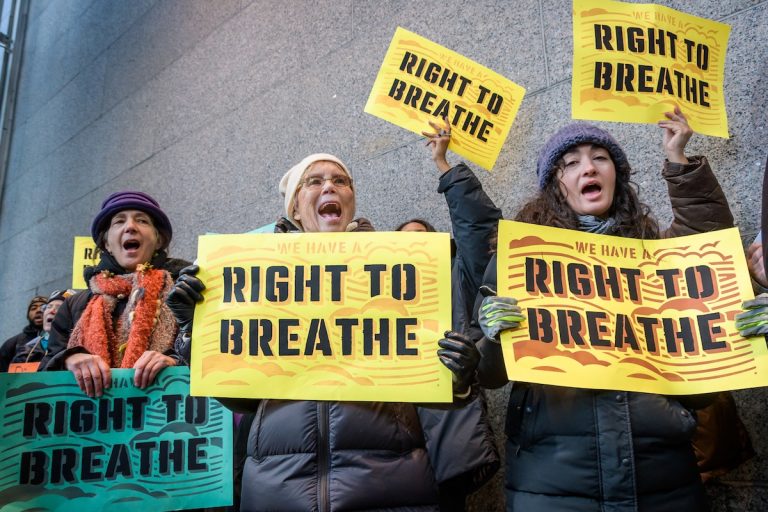
Climate change is already affecting much of the world’s population, with startlingly high temperatures from the Arctic to Australia. Air pollution from wildfires, vehicles and industries threatens human health. Bees and pollinators are dying in unprecedented numbers that may force changes in crop production and food availability. What do these have in common? They represent the new frontier in human rights. The United Nations General Assembly voted overwhelmingly on July 28, 2022, to declare the ability to live in “a clean, healthy and sustainable environment” a universal human right. It also called on countries, companies and international organizations to scale up efforts to turn that into reality. The declaration is not legally binding – countries can vote to support a declaration of rights while not actually supporting those rights in practice.

India: Despite Funding, Why Is Adequate, Clean Water Elusive?

Scorching heat has again been accompanied this year by reports of acute drinking water shortages in many villages. The situation was supposed to be different this time because of an unprecedentedly high increase in the budget for drinking water supply in villages announced about 15 months back, but clearly the actual improvement has fallen far short of the high expectations raised at that time. The budget estimate in the 2021-22 budget for Jal Jivan Mission, the main program for rural drinking water supply, was increased to an unprecedented extent to Rs. 50,011 crore, while in 2022-23 budget this was again creased to Rs. 60,000 crore. However, only 26% of the previous year’s allocated amount was utilized till January 2022, as pointed out by the Standing Committee on Water Resources (2021-22), 14th Report, Department of Drinking Water and Sanitation.

In The Centre Of Global Warming

May 15 this year came as a timely warning that India is in the center of the global warming crisis. On this day the maximum temperature crossed the 47 degrees Celsius limit in about 20 cities, mostly in northwest and central parts of the country. These cities also figured in the table of the hottest cities at world level on this day. Most of these cities and the surrounding countryside have been figuring prominently also in the longer heat waves which have been experienced since early April. Six of these cities are located in the Thar desert or the area close to it. These include Jaisalmer, Phalodi, Pilani, Churu, Bikaner and Ganganagar. Four other cities are concentrated in a region of 13 districts known as Bundelkhand in Central India which saw temperature reaching 49 degrees C in Banda.

Welcome To Selsey, A Community That Welcomed Back The Marsh

On May 10, a four-bedroom house perched on the beach of a North Carolina barrier island in the town of Rodanthe collapsed into the ocean. It was not the victim of a violent hurricane strike or storm surge. Rather, a low-pressure system coupled with a high tide drew ocean waves onto the shoreline, leaving heaps of sand on the prophetically named Ocean Drive. Then—in that viral video moment—the water gently pulled the house loose and set it to bob upon the sea. It was not the first house—this year! that day!—nor will it be the last. This is reality in the 21st century. By 2100, high tides will likely inundate land that’s home to between 190 and 630 million people worldwide. The range depends on whether humanity slashes carbon emissions by midcentury or, instead, continues to fail.

More Than 75% Of The World Could Face Drought By 2050, UN Report Warns

The climate crisis is making droughts more frequent and longer-lasting, a new UN report has announced. The report, Drought in Numbers, 2022, was released Wednesday in honor of Drought Day at the UN Convention to Combat Desertification (UNCCD)’s 15th Conference of Parties (COP15) taking place in Abijan, Côte d’Ivoire from May 9 to 20. “The facts and figures of this publication all point in the same direction: an upward trajectory in the duration of droughts and the severity of impacts, not only affecting human societies but also the ecological systems upon which the survival of all life depends, including that of our own species.” UNCCD Executive Secretary Ibrahim Thiaw said in a press release.

Enduring Lessons From The Pittsburgh And Flint Water Crises

Eight years ago, the water crisis in Flint, Michigan began, the effects of which linger today. The nation was shocked to see a city fail so spectacularly to meet its most basic responsibility to provide safe water to its citizens. Unfortunately, Flint is not alone. According to a 2020 Natural Resources Defense Council analysis of Environmental Protection Agency data, nearly 30 million people in the U.S. drink from unsafe water systems. The rate is significantly elevated in communities of color. The Pittsburgh, Pennsylvania water system was one of them. As in Flint and other cities, structural racism, chronic disinvestment, and economic austerity meant that Pittsburgh’s communities of color were most impacted by the failing water systems. Entering the 2000s, Pittsburgh’s water infrastructure was in dire need of repair and modernization.

$50 Million In Public Money Wasted On Private-Equity Potash Venture

When Governor Whitmer signed the bipartisan Building Michigan Together Plan, she chose to allow a $50 million subsidy to Michigan Potash Company to remain in the bill. MCWC and other concerned groups and citizens learned about this gift to a poorly conceived start-up project only days before the bill came out of the legislature for signature. We have been investigating and opposing this unnecessary and potentially destructive scheme for the last 6 years. Clearly neither the legislature nor the Governor took the time to investigate this venture before slipping it into the otherwise decent infrastructure bill. The people of Michigan deserve a better deal.

$1.1 Billion And Counting For Navy’s Obstinance In Shutting Down Fuel Tanks

Total Congressional funding for all aspects of the Navy’s Red Hill water contamination debacle is now over $1.1 billion according to Hawai’i Congressional representative Ed Case and billions more are needed to complete clean-up, defueling and closing of the massive leaking Red Hill jet fuel storage facility.  In a news release on March 9, 2022, Rep. Case said, “These funds ($700 million)  are in addition to the $403 million in emergency funding we obtained in another bill we passed just weeks ago, bringing Congress’ total funding for all aspects of Red Hill in the current fiscal year alone to over $1.1 billion.  But billions more will be required to complete all aspects of the cleanup, stabilization, defueling and closing of Red Hill and the relocation of its fuel and build fuel storage capacity elsewhere.”

Court Allows Nestle/Blue Triton To Dodge Justice

Ever since Nestle applied for the permit to increase pumping at the White Pine Springs well (PW 101)in Evart for its bottling operation in Stanwood in 2016, Michigan Citizens for Water Conservation has been contesting this outrageous water grab. We have argued in public forums, educated across the state about the injustices this grab represents to the people and ecosystems of Michigan, and worked with organizations and citizens who submitted thousands of comments opposing the more than 200,000 gallons a day increase. Failure of the Michigan Department of Environment, Great Lakes and Energy (EGLE) to deny this increase has left two former trout streams badly damaged. We have had a few victories along the way, but without strict enforcement by EGLE, the damage will continue.

Water For All

By some estimates, more than two million people in the United States do not have running water and sanitation in their homes. Water utilities shut off water access to about one out of every twenty people, or close to fifteen million people, every year for nonpayment. Unsurprisingly, this affects racial minorities more than others. This barbaric practice has likely killed tens of thousands of people during the COVID-19 pandemic. Given how wealthy the United States is, it doesn’t have to be this way. And throughout the pandemic, we’ve caught some brief glimpses of alternatives. Though the federal government declined to pass a national moratorium on water shutoffs, some states and cities passed laws to prevent utilities from shutting off water to people during the pandemic.

Imminent Peril Of Drinking Water Contamination By US Navy Fuel Tanks

In a strongly worded proposed decision and order, on December 27, 2021, David Day, the Hawai’i State Department of Health Red Hill case Hearing Officer and Deputy Attorney General announced in a 33-page proposed decision and order that the “imminent peril” caused to the drinking water by the U.S. Navy’s leaking jet fuel tanks in the island of O’ahu outweighs the military’s claims that the tanks are key to “national security.” On November 28, approximately 19,000 gallons of jet fuel and water leaked from the massive 20 underground fuel storage tanks at Red Hill and contaminated two wells providing  drinking water for over 93,000 persons on the U.S. Navy’s water system. Each of the fuel tanks holds 12.5 million gallons of jet fuel and the tank complex sits only 100 feet above Honolulu’s main aquifer.

Flushing Of Dangerous Petroleum Contaminated Water From Military Housing

Hawai'i - On Friday, December 24, I went to Aliamanu Military Reservation at Red Hill housing area which is located above the entryway into the main tunnel that leads into the  U.S. Navy’s deep, massive, leaking 80-year-old Red Hill underground jet fuel storage tanks complex.  These tanks are only 100 feet above the main aquifer of drinking water for 400,000, half the population of the island of O'ahu, Hawai'i. A recent leak of at least 19,000 gallons of jet fuel and water leaked from a fire suppressant pipe into two Navy operated wells that supply drinking water to over 93,000 residents in the Pearl Harbor-Hickam Air Force Base area. Built during World War II, the tank complex has 20 huge tanks, each measuring 100 feet in diameter and 250 feet high — the height of a 20-story building, or Aloha Tower, a famous landmark for tourist ships in Honolulu harbor.

The Climate Response Cliff

Climate change is only one symptom of a broader ecological crisis; the rapid loss of wild life is equally critical. Most species other than humans and our livestock, (and pets and pests) have had horrifying drops in population within the last 70 years or so, even if they are not yet threatened with extinction. We and our livestock are now 96% of the mass of land vertebrates, leaving all wild creatures together to comprise a mere 4%. At this rate within another generation there may be virtually nothing left but us and our coterie—and we would not survive that, as we depend on a network of life more complex than we can imagine. We’re also seeing the oceans acidifying, filling with plastic and toxins, and warming; topsoil depleted, rivers and aquifers running dry; and the proliferation of nuclear weapons and power plants leaving sites potentially dangerous for thousands or even millions of years.

Tribal Communities Organize To Stop Sites Reservoir

Tribal activists, drinking water advocates, and commercial and subsistence fishers are asking the public to stand with them in the fight for both the Trinity and Sacramento River salmon by supporting a California state process to restore flows in California’s largest rivers, and by fighting a proposal for a twenty square mile reservoir, the Sites Reservoir. They are asking the public to attend an online Virtual Rally and Public Testimony Training on December 6, a state hearing on the Sacramento, San Joaquin and Bay Delta flows on the December 8 at 9 a.m. and Sites Reservoir related public hearings on December 15 at 6 p.m. and on December 16 at 9 a.m., and the California Water Commission meeting on public funding for Sites Reservoir on December 15 at 9 a.m..

Solidarity Action Rebukes Navy Over Toxic Water Pollution

Activists with CodePink, in solidarity with Hawaii-based water protectors, on Friday projected images on a submarine tower outside the Navy museum in Washington, D.C., calling for a shutdown of a military fuel storage facility associated with contamination of Oahu drinking water. Messages displayed on the USS Balao Conning Tower included "Shut down Red Hill tanks," "Demilitarize Hawaii," and "Navy is poison." In a Saturday statement, CodePink said that the "Navy's failure to protect its sailors, their families, and the broader community is further justification of the need to demilitarize and decolonize Hawai'i and serves as a testament to the military's prioritization of 'business as usual' over the health and wellbeing of the people."
assetto corsa mods

Urgent End Of Year Fundraising Campaign

Online donations are back! Keep independent media alive. 

Due to the attacks on our fiscal sponsor, we were unable to raise funds online for nearly two years.  As the bills pile up, your help is needed now to cover the monthly costs of operating Popular Resistance.

Urgent End Of Year Fundraising Campaign

Online donations are back! 

Keep independent media alive. 

Due to the attacks on our fiscal sponsor, we were unable to raise funds online for nearly two years.  As the bills pile up, your help is needed now to cover the monthly costs of operating Popular Resistance.

Sign Up To Our Daily Digest

Independent media outlets are being suppressed and dropped by corporations like Google, Facebook and Twitter. Sign up for our daily email digest before it’s too late so you don’t miss the latest movement news.