Skip to content

Brazil

Global Peasant Movement Exemplifies Power Of Organized Humanity

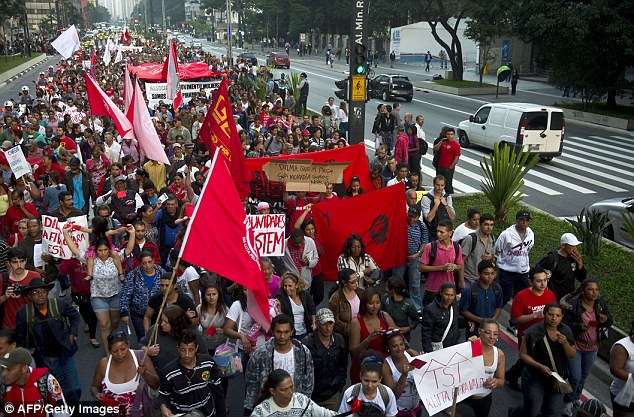
Sadly, yet not unlike the inception of many commemorative days, the events that inspired the first International Day of Peasant Struggle were soaked with blood. It was April 17, 1996, a calm day in the northern Brazilian municipality of Eldorado dos Carajás, where the country’s most renowned social movement, the Landless Worker’s Movement (MST) had organized a demonstration against the federal appropriation of a vacant ranch where nearly 3,000 rural working families were living and cultivating the land. The protest turned violent when the secretary of public security ordered police to clear the roadway – “at any cost”. The operation was costly indeed: nineteen people lost their lives in that event that would come to be known as the Eldorado dos Carajás massacre. Word of the massacre ricocheted throughout the world, particularly north to Mexico where the international peasant movement known as Via Campesina was gathered for its second conference in Tlaxcala. Via Campesina was only three years in the making at the time, but had already achieved much. The movement boasts a unique global base of farmers, fishers, and pastoralists, connecting labor movements, women’s organizations, and a host of underrepresented and mostly rural members.

Managing Disorder: Towards A Global State Of Control?

It’s not just right-wing or military regimes that are leading the assault on hard-fought popular freedoms. In Brazil, the ruling Workers’ Party announced this week that it would send the army into Rio’s favelas to pacify the slums ahead of the World Cup. Ostensibly targeted at violent drug gangs, this pacification scheme has led to a situation in which hundreds of slum dwellers are killed by state troops every year. Under President Rousseff — a former Marxist guerrilla who was tortured and imprisoned by the military dictatorship — state brutality against the “unruly” poor and excluded remains the order of the day. Just last week, Brazilian military police were caught on camera after shooting and killing a 38-year-old mother of four and dragging her lifeless body 200 meters down the street in their police van. It is no coincidence that the intensification of long-standing patterns of state repression appears to be particularly acute in the countries that experienced large-scale street protest in the past three years.

Photos: Brazil Protests Against the World Cup Continue

In Sao Paulo, on March 13th, around 3000 protestors marched against the world cup. They were matched in numbers by riot police, however, who followed them closely throughout the demonstration. Activists specified through social media that the focus of the protest was on bill 728. This anti-protest bill is just one tactic the Brazilian state has employed against world cup protestors. It would allow for the criminalization of blac bloc and mask wearing, and effectively labels protests as “terrorism.”

Brazil Pushes Anti-terrorism Policy to Stifle Protests Ahead of World Cup

Brazil’s government and lawmakers are lashing out against their people in renewed tensions following the popular uprising in 2013 against corruption, poor public services, rising crime rates and huge expenses for the upcoming World Cup, scheduled to begin in June. The government’s current weapon of choice is propaganda – portraying legitimate protest as vandalism – and new legislation has been introduced that could potentially turn social movements into acts of terrorism.

Free Pass Protest Gives Commuters Free Transit

After street protests, station invasions and turnstile vandalism, Rio de Janeiro’s free public transport movement finally got what it wanted for a few hours on Thursday night with a takeover of the city’s main train and bus hub. Thousands of commuters were shepherded through demolished ticket gates at the Central do Brasil station amid a violent confrontation over proposed fare rises that resulted in fires, arrests and disruption of transport networks. The station in downtown Rio echoed with police percussion grenades and the protesters’ celebratory samba drumming as they seized control of the main bank of ticket machines. Close to a thousand people joined the passe livre (free pass) march, sparked by the announcement by the city mayor, Eduardo Paes, that bus fires will rise from 2.75 reais to 3 reais (£0.75/US$1.25) on Saturday.

Greenwald On Snowden Asylum In Brazil, First Look Media

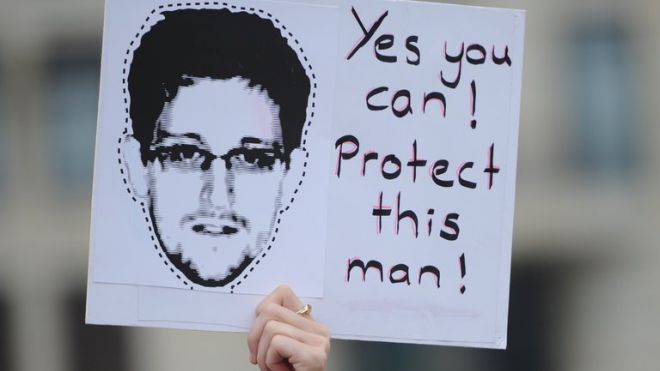
Journalist Glenn Greenwald believes the Brazilian government should offer asylum to Edward Snowden, the ex-CIA analyst currently taking refuge in Russia. In an interview with the Brasil Post, the American reporter discussed what the future should hold for Snowden, his main source of information. Snowden leaked documents revealing the espionage programs of the United States’ National Security Agency (NSA), which led to a worldwide backlash over invasions of privacy. Greenwald also praised the way the Brazilian government has dealt with the U.S. following allegations of espionage. "Brazil is doing the right thing insisting on wanting to know what the U.S. has done against the government and businesses here," he said.

Brazil: Thousands Protest World Cup, Clash With Police

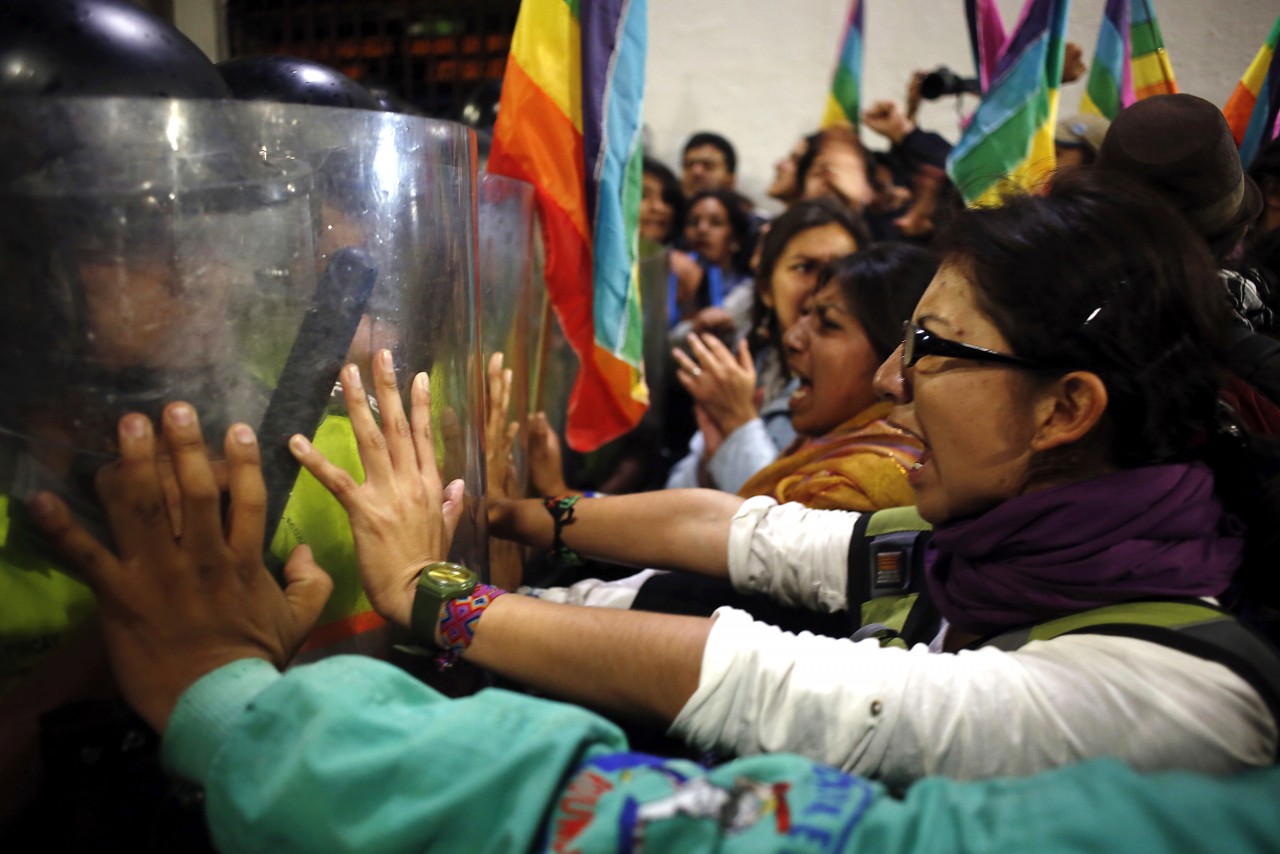
Waving flags, carrying banners and chanting "there will be no Cup", the demonstrators took to the streets in what the Anonymous Rio protest group billed as the first act in its "Operation Stop the World Cup" campaign. The event was largely peaceful but police later clashed with some protesters. The demonstrators gathered in front of the Sao Paulo Art Museum for about an hour before heading out to another part of the city chanting slogans against the tournament. As they approached the downtown area, some "Black Block" anarchist demonstrators attacked an empty police car and tried to overturn it, while others torched a small car and smashed the windows of banks, as they have in previous protests since last year.

Amazon Women: On the Front Lines of Grassroots Climate Leadership

Women have organized and battled for centuries to win basic rights, to be treated with respect and equality. Meanwhile, patriarchal institutions driven by the thirst for power, accumulation, and economic growth have fought hard to maintain their seat at the top of the social and political hierarchy. Indeed, our current political and economic institutions are overwhelmingly led by men. Women are also uniquely capable of shifting the way the world operates in fundamental ways. Indeed, women activists and leaders have been at the core of the environmental movement since it's inception. From Rachel Carson to Vandana Shiva, from suffrage to climate talks, women have pushed the boundaries of what is possible, and what is just, in our society. Cindy Rosenthal, in her book When Women Lead, suggests that women use strategies that have an "integrative style: sharing power and empowering others, being noncompetitive and inclusive, seeking consensus and mutuality in relationships, and inviting participation rather than imposing dominance." Women in positions of leadership have also been shown to be more concerned with environmental risk, and less willing to impose those risks on others.

5 Overlooked Activist Victories In 2013

In February, Filipino President Benigno Aquino III — whose father was assassinated by the former dictator Ferdinand Marcos in 1983 — signed a law that will take more than $220 million from Marcos-controlled Swiss bank accounts to compensate people who were tortured, raped and jailed under the U.S.-backed dictatorship. Although the sum represents only a tiny fraction of the billions believed to have been stolen and then hidden by Marcos in international banks, Waging Nonviolence columnist Ken Butigan described the law as “a significant step toward healing and restorative justice,” as well as “a reminder that nonviolent action doesn’t end when the last demonstrator goes home. ”

Brazil Will Not Grant Snowden Asylum: Report

Brazil has no plans to grant asylum to Edward Snowden even after the former U.S. National Security Agency contractor offered on Tuesday to help investigate revelations of spying on Brazilians and their president, a local newspaper reported. The Folha de S.Paulo newspaper, citing unnamed government officials, said the Brazilian government has no interest in investigating the mass Internet surveillance programs Snowden revealed in June and does not intend to give him asylum. In an "Open Letter to the Brazilian People" published by Folha and social media, Snowden offered to help a congressional probe into NSA spying on the country, including the personal communications of President Dilma Rousseff. "I have expressed my willingness to assist wherever appropriate and lawful, but unfortunately the United States government has worked very hard to limit my ability to do so," the letter said. Snowden is living in Russia under temporary asylum that is due to expire in August. He had previously asked for asylum in Brazil, among other countries, but Brasilia did not answer his request. While Snowden stopped short of asking for asylum again in the letter, he suggested that any collaboration with Brazilian authorities would depend them granting him asylum.

An Open Letter To The People of Brazil

Six months ago, I stepped out from the shadows of the United States Government's National Security Agency to stand in front of a journalist's camera. I shared with the world evidence proving some governments are building a world-wide surveillance system to secretly track how we live, who we talk to, and what we say. I went in front of that camera with open eyes, knowing that the decision would cost me family and my home, and would risk my life. I was motivated by a belief that the citizens of the world deserve to understand the system in which they live. My greatest fear was that no one would listen to my warning. Never have I been so glad to have been so wrong. The reaction in certain countries has been particularly inspiring to me, and Brazil is certainly one of those. At the NSA, I witnessed with growing alarm the surveillance of whole populations without any suspicion of wrongdoing, and it threatens to become the greatest human rights challenge of our time. The NSA and other spying agencies tell us that for our own "safety"-for Dilma's "safety," for Petrobras' "safety"-they have revoked our right to privacy and broken into our lives. And they did it without asking the public in any country, even their own.

Autonomy In Brazil: Towards A New Political Culture

When a new political culture emerges it needs to differentiate itself from the hegemonic culture that went before it. In this case, it seems clear that the modes of struggle and organization created towards the end of the dictatorship with the formation of the CUT trade union and the Worker’s Party no longer correspond to the needs of current anti-systemic struggles. We recall that the riots of 2003 and 2004, and the foundation of the MPL in 2005, flatly rejected the traditional bureaucratic culture and instead emphasized horizontalism, which is to say, collective leadership, consensus to avoid the consolidation of majorities, and autonomy from state and party. Until now, the social organizations shaped by this political culture have maintained their distance from the mainstream sector of the labor movement but collaborate with the more militant trade union factions, as well as other social organizations with different organizational patterns and praxis. Many of the new urban groups have found inspiration in Brazil’s principle organization of resistance, the Landless Workers’ Movement (MST, known as Sem Terra), respecting their deep experience and adapting some of the MST’s forms of struggle to the urban environment. The main difference between these two political cultures is found in their form of organizing, the MST’s top-down structure contrasting with the urban movement’s horizontalism.

Autonomy In Brazil: Below And Behind The June Uprising

The huge mobilizations in June 2013 in 353 cities and towns in Brazil came as much a surprise to the political system as to analysts and social bodies. Nobody expected so many demonstrations, so numerous, in so many cities and for so long. As happens in these cases, media analyses were quick off the mark. Initially they focused on the immediate problems highlighted by the actions: urban transport, rising fare prices and the poor quality of service for commuters. Slowly the analyses and perspectives expanded to include the day-to-day dissatisfaction felt by a large part of the population. While there was widespread acknowledgement that basic family income had risen during the last decade of economic growth, social commentators began to focus on economic inclusion through consumption as the root of the dissatisfaction, alongside the persistence of social inequality. In this analysis, I would like to address the new forms of protest, organization, and mobilization from a social movement perspective. These new forms emerged within small activist groups composed mainly of young people that began organizing in 2003, the year Luiz Inacio Lula da Silva took power. Unlike political parties, trade unions and other traditional organizations formed in the early eighties, the new social movements are key to the June mobilizations because of their ability to organize beyond their local scene, to involve the broadest sectors of society in the struggle and to employ forms of action and organization that sets them apart from the groups that went before them.

Don’t Move, Occupy! Social Movement Vs Social Arrest

Regardless of their final present political fate, the global uprisings since 2011 have already established mass continuous occupation of public space as the dominant form of political struggle in the early 21st century: the coming together of people who have both withdrawn their consent to be governed by the existing order and, equally importantly, discovered the responsibility, dignity, difficulty, and — above all — joy of instituting a society outside of it. In so doing, they have challenged the periodization that separated a mass political uprising from the democracy that may follow it. The common feature of all these occupations was the creation of democratic forms within the space and time of the uprising itself. This was made possible not through a politics predicated on movement, but rather one of arrest, of occupation, in order to create sites for the collective restructuring of social relations and space.

US Spying On Foreign Governments Creates Major Blowback

Now that the extent of US spying on foreign leaders, including US allies, is known it is creating major blowback against the United States. No doubt anger at the United States for its aggressive leadership of the largest empire in world history which has military, economic and political implications has been building up for a long time. Countries have been pulled into wars based on lies, forced to participate in torture and rendition, drawn into negotiations on trade agreements that undermine their national policies in favor of profits for US transnational corporations among many examples of abuse of power. The spying on foreign leaders is an issue in its own right, but in fact the issues are much broader.
assetto corsa mods

Urgent End Of Year Fundraising Campaign

Online donations are back! Keep independent media alive. 

Due to the attacks on our fiscal sponsor, we were unable to raise funds online for nearly two years.  As the bills pile up, your help is needed now to cover the monthly costs of operating Popular Resistance.

Urgent End Of Year Fundraising Campaign

Online donations are back! 

Keep independent media alive. 

Due to the attacks on our fiscal sponsor, we were unable to raise funds online for nearly two years.  As the bills pile up, your help is needed now to cover the monthly costs of operating Popular Resistance.

Sign Up To Our Daily Digest

Independent media outlets are being suppressed and dropped by corporations like Google, Facebook and Twitter. Sign up for our daily email digest before it’s too late so you don’t miss the latest movement news.