Skip to content

Class Struggle

Impasse In Bolivia

Many of my friends and colleagues who live in La Paz are in hiding. Some have received death threats, while others are afraid to communicate via WhatsApp. One is in exile after vandals burned her house down. Because of shortages, the price of eggs has risen from less than one boliviano (11 pence) to 2.50, chicken has gone up from 15 to 35 bolivianos a kilo, beef from 30-40 to 90-120 bolivianos. Queues to buy chicken are interminable, and uncollected garbage piles up. Protesters have cut the capital off from its supply lines, and fuel is running out.
Latin American Protesters Are Demanding New Economic Models

“It’s not 30 pesos: it’s 30 years.” This slogan, one of the most frequently used in the mass protests in Chile, explains in seven words what has triggered the biggest mass demonstrations in living memory in this Andean country since the dictatorship of Augusto Pinochet. It was not the increase of 30 Chilean pesos (41 cents) in the subway fare but the accumulation of decades of neoliberal policies, which have turned the Chile of today into one of the most inegalitarian countries in Latin America.

Why Striking Teachers Across America Are Fighting for Much More Than Their Paychecks

While national news outlets hail the conclusion of a historic teacher strike in Chicago, another important story often overlooked by national reporters is the ongoing struggle to defend public education in the months that follow successful strikes. In Oakland, California, where teachers won important concessions from the district as a result of their strike earlier this year, the community is nevertheless still seeing their students’ education undermined by lack of resources and disrupted by school closures and further privatization from charter schools.

McDonalds’ Workers Strike Is About Workplace Democracy

On Tuesday, over 1,000 people gathered for a strike action at a McDonald's location on Detroit’s East Side. The workers, who were fighting for basic workplace dignity, a fair wage and a union, showed that they’re ready to raise hell in the face of injustice by standing together. That’s how Patricia Moseley, who has worked for McDonald’s for 34 years, describes her experience of solidarity during the strike. “We always get each other’s backs,” Moseley says. “When I see people out here, doing the same thing I'm doing, it makes me feel like ‘Hey, everybody can do this.’ Come and join us. You ain't gotta be scared.”

Class War Violence: Centralia 1919

The Centralia American Legion and the leading businessmen of that city had more than a parade in mind when they gathered on November 11, 1919, to celebrate Armistice Day. Apparently believing that the spectacle of political violence would enhance the patriotic experience, they concocted a plan to raid the Centralia IWW Hall. IWW halls were of great practical and symbolic importance to workers. As Wobbly activist and historian Ralph Chaplin explains, the halls were loved by workers, but despised by employers.

Struggles For Another Chile, Another Wallmapu

On October 6th, the Chilean government, led by President Sebastián Piñera, increased public transit fares by four per cent in Santiago. Student led protests began immediately and continued as more people joined and supported the mobilizations and the government refused to revert the increase. By October 15th, authorities decided to close some key metro stations in order to avoid massive fare evasions, but students and other protesters brought the bars down and entered the stations by force. Older people encouraged the students to continue protesting. 

Social And Economic Woes Weigh Heavily On Algeria’s Future

The last eight months have seen the rise of a protest movement without precedent in the history of Algeria. Millions of citizens have taken to the streets, since February 2019, in wilayas (provinces) across the country. Every Friday, week after week, Algerians come out to express their discontent. Friday 1 November was the 37th week, and the mobilisation was stepped up. The resignation, on 2 April 2019, of the former president, Abdelaziz Bouteflika, who had triggered the protest movement (the hirak, in Arabic) with his decision to stand for a 5th term, was not enough to resolve the deep-rooted social discontent.

For The Gilets Jaunes, There Won’t Be An “After”

November 2019 has arrived, bringing in its wake the one year anniversary of the Gilets Jaunes. Those who talked about running out of steam in January, then this spring, then again this summer, still don’t get it: the essence of the movement, encoded in its DNA, is that it can’t end. Each social movement has its own temporality, its own specificity, its own way of ending. A few months after a huge strike, mass protests or popular uprisings, the media and political experts wrap up the sequence in newspaper and file it away in the archives of History.

America’s Streets And Squares Are Waiting: Massive Rallies Work!

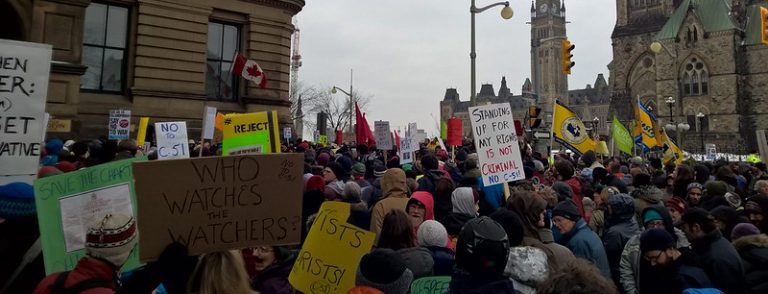
Around the world people are marching, rallying, and demonstrating in huge numbers. Some of these countries are ruled by dictators or plutocratic regimes, others are considered democracies. Despite the peril of protest, people are seeking justice, freedom, and decent livelihoods. Many boast about the United States being the oldest democracy in the world. While there are some street protests in the US, they are sadly too few and far between. Rallies calling attention to climate disruption have received less public support and media attention than they deserve.

Algerian ‘Hirak’ Is Neither A Revolution Nor A Social Movement

Debates about the ongoing Algerian movement called "Hirak" are still highly contested and unclear among political commentators. Political scientists find it difficult to identify, with clearly defined borders, the differences between social movements and revolution. Therefore, the aims and consequences have been the main indicators emphasizing the differences between the two concepts. About a decade ago, Arab Spring was categorized as either a revolutionary movement or, more narrowly, as different social movements.

The IMF And Class Power In Argentina

In the past few weeks in Argentine politics: the administration of Mauricio Macri, the neoliberal handmaiden of global banking elites, was upended in national elections, as the Peronist Alberto Fernandez was swept into office by eight percentage points in what Bloomberg euphemistically called a choice of “left-wing populism” over “pro-market policies.” They’d have done more honestly with Harvey’s description or the “naked calculus of greed” phrase with which scarf-wrapped soothsayer Cornell West once described austerity measures in America.

Brazilians March Against Bolsonaro And His Ties To Murder Of Activist

Brazilians marched in dozens of cities across the country against the far-right government of president Jair Bolsonaro.  The marches come amid extremely concerning revelations, which allegedly tie Bolsonaro to the murder of Marielle Franco last year. Franco was a black LGBT council woman from the favelas of Rio de Janeiro. She was killed in March 2018 by hitmen. Her death sparked global outrage. 

Coca-Cola Workers Fighting For Their Rights In Haiti, Indonesia, Ireland, And The USA Still Need Your Support

Coca-Cola continues to violate the fundamental rights of workers in Haiti, Indonesia, Ireland and the USA. CLICK HERE to learn more and to send a message to Coca-Cola's CEO and Chairman James Quincey. In Haiti Coke's bottler La Brasserie de la Couronne continues to systematically deny workers their right to form and be represented by a union, SYTBRACOUR (read more here). Haiti is a dangerous place to live and to work. Companies should, at a minimum, be alert to this situation and exercise maximum due diligence. In July 2019, a Coca-Cola truck driver was shot in his vehicle while at work.

Beirut Is Burning: Rebellion Against The Elites Has Commenced

Tires are burning, smoke is rising towards the sky. It is October, the 18th day of the month, the capital city of Lebanon, in the past known as the “Paris of the East”, is covered in smoke. For years I was warning that the country governed by corrupt, indifferent elites, could not hold together, indefinitely. For all those five years when I was calling Beirut home, things were going down the drain. Nothing was improving: almost no public transportation, electricity shortages, contaminated and erratic water supply.

UPSers Elect Vote No Activists To Lead Philadelphia Local 623

Teamsters in Philadelphia Local 623 have overwhelmingly elected Richard Hooker and the #623LivesMatter slate. In a four-way race, Hooker beat the incumbent 547-346. That's a 61% to 39% margin. “Today, the members won an election. Tomorrow, we start building a stronger, better union together,” Hooker said.  Local 623 has 4,000 members. The overwhelming majority work at UPS. Hooker didn’t start getting active at election time. He’s been organizing non-stop for years.
assetto corsa mods

Urgent End Of Year Fundraising Campaign

Online donations are back! Keep independent media alive. 

Due to the attacks on our fiscal sponsor, we were unable to raise funds online for nearly two years.  As the bills pile up, your help is needed now to cover the monthly costs of operating Popular Resistance.

Urgent End Of Year Fundraising Campaign

Online donations are back! 

Keep independent media alive. 

Due to the attacks on our fiscal sponsor, we were unable to raise funds online for nearly two years.  As the bills pile up, your help is needed now to cover the monthly costs of operating Popular Resistance.

Sign Up To Our Daily Digest

Independent media outlets are being suppressed and dropped by corporations like Google, Facebook and Twitter. Sign up for our daily email digest before it’s too late so you don’t miss the latest movement news.