Skip to content

Food and Agriculture

‘Natural’ Settlements Good For Consumers—But Ridding The Food Supply Of Pesticides Would Be Better

According to the joint statement we issued with our co-plaintiffs, Beyond Pesticides and Moms Across America: At a time specified by the agreement, packaging for General Mills Nature Valley Granola bars will no longer bear the term “100% Natural Whole Grain Oats.” Agreements like the one with General Mills are just the first step. We still have to push for a long-term solution to the problem of using the word "natural" in ways that mislead consumers. More important, we need to push for a food system free of unnatural ingredients, including pesticides. A new report this week highlights, yet again, the widespread contamination of our food with this glyphosate, the active ingredient in Monsanto's Roundup weedkiller. The recent verdict in the Dewayne Johnson v. Monsanto Co. also shines a spotlight on glyphosate—its potential to cause cancer and the potential legal ramifications for food companies whose products are contaminated with it.

Soon You Cant’t Use Food Stamps At Farmers Markets — But That’s Not Half Of It

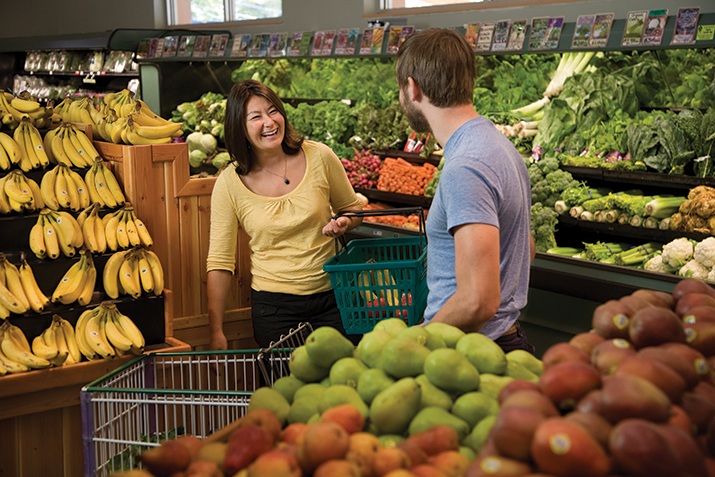
This week, I thought I would write about food stamps and farmers markets. People on food stamps, officially known as the Supplemental Nutrition Assistance Program (SNAP), receive their benefits on a card that can be read like a credit card. Crucial to allowing recipients to use food stamps at farmers markets are card readers. The U.S. Department of Agriculture just canceled its contract with the company that makes the card readers. As a result, food stamp recipients will likely lose the ability to use food stamps at farmers markets. I was all set to write about this terrible mix-up. But then I realized it’s not the part I really care about. Of course, food stamp recipients should be able to shop at farmers markets. But it’s a tiny part of a much bigger issue. The diets of food stamp recipients lie at the intersection of two issues: our food system and economic inequality.

We Subsidize The Wrong Kind Of Agriculture

Summer: the season of barbecues, baseball games, and backyard fun. It’s also the time of year when the American farming industry comes into full swing producing the crops we hold near and dear. The pastoral ideal of golden fields of corn and wheat is what comes to mind for most people, and they’d be on the right track. Corn, soybeans, and wheat are the three biggest crops grown in this country, and — along with cows, pigs, and chicken — make up the bulk of our farming output. There’s a reason for this: The federal government heavily subsidizes those products. In fact, the bulk of U.S. farming subsidies go to only 4 percent of farms — overwhelmingly large and corporate operations — that grow these few crops. For the most part, that corn, soy, and wheat doesn’t even go to feed our populace. More of it goes into the production of ethanol...

Food, Coops, Capitalism

Last week, I travelled to Portland, Oregon to give a keynote presentation to the Consumer Coop Management Association—CCMA. My first experience with cooperatives had been in 1983 when I worked as a manager for the Stockton Farmers’ Market Coop. Long before the rise of the food movement, we used to sell fresh produce to the Berkeley Coop’s supermarkets. This allowed a small group of struggling farmers to sell a lot of good food to a big group of affluent consumers. But that was long ago. I needed to study up to face 500 experts in coop management. When I did background research, I was struck by the obvious: Capitalism and food coops emerged together. The first known food cooperative, the Rochdale Society of Equitable Pioneers, was formed in 1844 by a small group of craftspeople who had been de-skilled by England’s great textile factories in the thick of the Industrial Revolution.

Research Confirms That A Mostly Plant-Based Diet Could Save Your Life

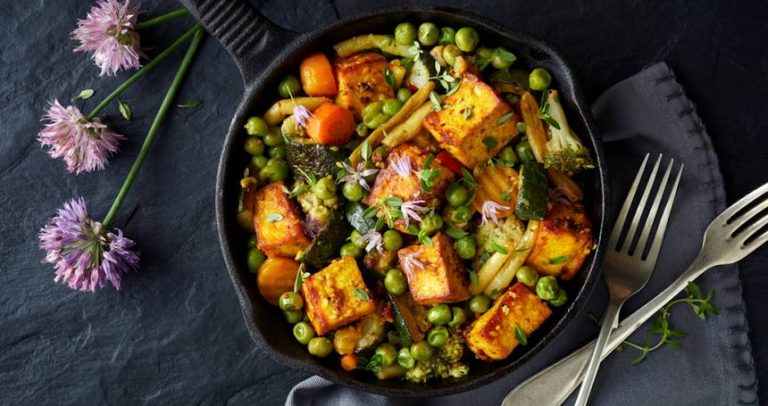
Five new studies show that eating healthy, primarily vegetarian foods is associated with lower risk of chronic diseases, weight gain and death. What science has to say about nutrition is notoriously fickle, but advice about the benefits of eating more plants and less meat has been pretty consistent in the modern era. Not only is a vegetarian diet great for the planet, but it's great for our personal health as well. Now adding to the consensus are five new studies presented at Nutrition 2018, the flagship meeting of the American Society for Nutrition. Each of the studies examine the health impacts of a plant-based diet – and importantly, a plant-based diet comprised of healthy plant-based foods.

The Empire Strikes Back Leaving Indian Farmers In The Dirt

In India, what we are currently witnessing is a headlong rush to facilitate (foreign) capital and the running down of the existing system of agriculture. While India’s farmers suffer as the sector is deliberately being made financially non-viable for them, we see state-of-the-art airports, IT parks and highways being built to allow the corporate world to spread its tentacles everywhere to the point that every aspect of culture, infrastructure and economic activity is commodified for corporate profit. GDP growth – the holy grail of ‘development’ which stems from an outmoded thinking and has done so much damage to the environment – has been fuelled on the back of cheap food and the subsequent impoverishment of farmers. The gap between their income and the rest of the population, including public sector workers, has widened enormously to the point where rural India consumes less calories than it did 40 years ago. Meanwhile, corporations receive massive handouts and interest-free loans but have failed to spur job creation; yet any proposed financial injections (or loan waivers) for agriculture (which would pale into insignificance compared to corporate subsidies/written off loans) are depicted as a drain on the economy.

Role Of Land-Grant Universities In Assessing And Ending Structural Racism In US Food System

Nine members of INFAS—the Inter-Institutional Network for Food, Agriculture, and Sustainability—were among the 66 people across eight working groups invited to help co-author a report about how public universities in North America should contribute to global food security. When the groups began writing in early fall 2016, convened by the Association of Public and Land-grant Universities (APLU) with support from the W.K. Kellogg Foundation, the report was provisionally titled The Challenge of Change: US Universities Feeding the World. One of the intended audiences, aside from universities themselves, was the incoming executive administration in the United States (US).

Food Co-ops Make A Difference

Food co-ops were formed by people in your community who wanted access to healthy, delicious food with reduced environmental impact and less waste, and co-ops remain community-owned and operated to this day. You help co-ops continue this proud tradition every time you choose to shop at one, invest in ownership or tell a friend about your local food co-op. You are the co-op difference. Thanks to co-op shopper support, local farmers and producers continue to have a market for their delicious food, organic agriculture continues to grow, local food pantries and nonprofit organizations have a strong partner and together we are making progress towards a fairer food system. People like you make it happen. When you shop at the co-op, your money makes a bigger impact in your local community than at a typical grocery store.

Dangerous Liaison: Industrial Agriculture And The Reductionist Mindset

A minority of the global population has access to so much food than it can afford to waste much of it, while food insecurity has become a fact of life for hundreds of millions. This crisis stems from food and agriculture being wedded to power structures that serve the interests of the powerful global agribusiness corporations. Over the last 60 years, agriculture has become increasingly industrialised, globalised and tied to an international system of trade based on export-oriented mono-cropping, commodity production for the international market, indebtedness to international financial institutions (IMF/World Bank).

Saturday: March Against Monsanto

Saturday, May 19, at 6:00 PM in Foley Square, New York City, the global grassroots organization March Against Monsanto will hold it's 7th marchto bring awareness to the public of the human and environment rights violations by the agriculture/chemical company Monsanto now known as Bayer-Monsanto since the merger with pharmaceutical giant Bayer. NYC March Against Monsanto (MAM NYC) is just one of hundreds of cities across six continents participating in this global awareness campaign. 

How Filipino Migrants Gave The Grape Strike Its Radical Politics

The great Delano grape strike started on September 8, 1965, when Filipino pickers stayed in their labor camps, and refused to go into the fields. Mexican workers joined them two weeks later. The strike went on for five years, until all California table grape growers were forced to sign contracts in 1970. The conflict was a watershed struggle for civil and labor rights, supported by millions of people across the country. It breathed new life into the labor movement and opened doors for immigrants and people of color. California’s politics have changed profoundly in the 52 years since then, in large part because of that strike. Delano’s mayor today is a Filipino. That would have been unthinkable in 1965, when growers treated the town as a plantation. Children of farm worker families have become members of the state legislature.

SNAP Threatened In House Farm Bill

The farm bill is finally making its way through the legislative process. The House Agriculture Committee last month passed H.R.2, the Agriculture and Nutrition Act of 2018 (the farm bill), on a partisan 26-20 vote. While the bill maintains and improves international food aid programs, it also proposes harmful changes to the Supplemental Nutrition Assistance Program (SNAP). House Speaker Paul Ryan (R-WI) is expected to bring the bill to the House floor this month. “The farm bill is an opportunity to help end hunger in the United States and around the world,” said Bread President David Beckmann.

Food Policy Action Plans Broad-Based Opposition To Draft Farm Bill

On May 8-9th, 2018, Food Policy Action (FPA) is mobilizing stakeholders from across the United States to voice their united opposition to the draft 2018 Farm Bill released by the House Agriculture Committee. Advocates have a narrow window in which to convince House members that supporting a Farm Bill that cuts support for SNAP, small farmers, and the working class is not only irresponsible but will lose them support at the ballot box, says FPA executive director Monica Mills. “We are already doing a dismal job providing support for new, young, and small farmers, and this bill is going to be incredibly harmful to rural economies if it eliminates what programs we do have. And the changes to SNAP feel like we’re waging war on the poor,” she told Food Tank.

How Agro-Chemical Giant Monsanto Been Destroying Environment, Human Lives For Decades

In 1995, the United States Environmental Protection Agency, EPA, listed Monsanto among the top 5 lethal corporations dumping toxic waste, as it was recorded dumping nearly 37 million tons of toxic waste, through air, water, and land. On April 10, the terrifying news of the U.S. court allowing a merger of the German chemical firm, Bayer, with U.S' Monsanto alarmed environmentalists, heralding it as "Bad News for the Planet."   The Bayer-Monsanto merger would create a company which controls over a quarter of the world’s seed and pesticide market. The two firms have individually caused immense harm to the environment, and a merger, which environmentalists have been protesting for months, would make them eminently stronger and harder to fight.

Chicago-Based Assata’s Daughters Announces Food Justice Through Gardening Project

Assata’s Daughters is a Chicago-based collective that embraces a Black radical perspective to serve their Washington Park community. One of their newest programs is a food justice-oriented garden. Members will provide food to the community, share knowledge about gardening and conservation, and teach “the importance of self-sustainment as a tool of resistance.” They also just announced a free farm stand and a partnership with a nearby corner store to provide free produce to their neighbors all summer. As Blavity noted in their report on the initiative, increasing access to fresh, nutrient-rich foods is key for Black communities, which are often disproportionately affected by food deserts. After cyber-sharing their wishlist for the garden project earlier this week, Assata’s Daughters announced on Tuesday that each item on it had been ordered and sent.
assetto corsa mods

Urgent End Of Year Fundraising Campaign

Online donations are back! Keep independent media alive. 

Due to the attacks on our fiscal sponsor, we were unable to raise funds online for nearly two years.  As the bills pile up, your help is needed now to cover the monthly costs of operating Popular Resistance.

Urgent End Of Year Fundraising Campaign

Online donations are back! 

Keep independent media alive. 

Due to the attacks on our fiscal sponsor, we were unable to raise funds online for nearly two years.  As the bills pile up, your help is needed now to cover the monthly costs of operating Popular Resistance.

Sign Up To Our Daily Digest

Independent media outlets are being suppressed and dropped by corporations like Google, Facebook and Twitter. Sign up for our daily email digest before it’s too late so you don’t miss the latest movement news.