Skip to content

Haiti

Class Struggle And History Behind Haiti’s 2016 Electoral Crisis

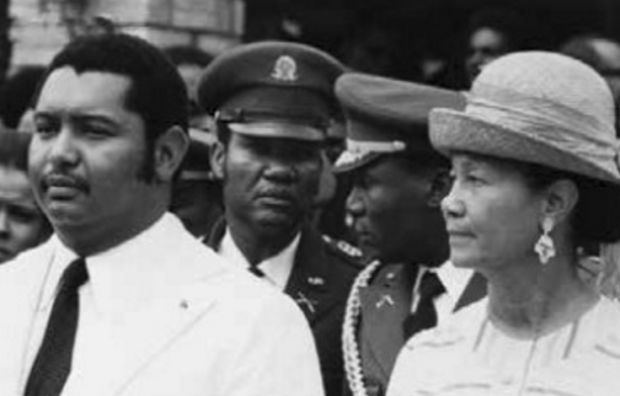
By Kim Ives for Haiti Liberte - Karl Marx once famously remarked that history repeats itself “the first time as tragedy, the second time as farce.” This maxim comes to mind when examining the class dynamics surrounding the final days of President Michel Martelly’s regime in Haiti today. They are similar to those of 30 years ago, when the dictatorship of Jean-Claude “Baby Doc” Duvalier was unraveling. To compare the Haiti of 1986 to that of 2016, one must understand the nation’s underlying class make-up.

Aid-Money Laundering As An NGO Racket. Haiti

By Dady Chery for Center for Research and Globalization - Rafael Blasco, one of Spain’s longest-lived and most indestructible politicians, became the first person to serve time for stealing Haitian reconstruction funds when he began a six-and-a-half-year prisonsentence on June 15, 2015 for committing embezzlement of public funds, administrative prevarication, and forgery while he was the Director of the Aid Ministry in Valencia’s regional government. Although the English-language press ignored this news, in Spain, the “Aid Case” was a major scandal that the media followed for three years, until the Spanish Supreme Court denied Blasco’s final appeal for clemency in May 2015.

Haiti: An Anti-Imperialist Popular Revolt

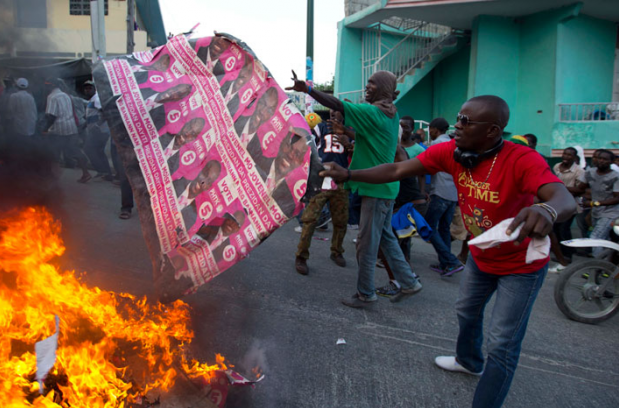
By Carlos Aznárez for Resumen Latinoamericano - Port-au-Prince and other Haitian cities are today the stage of the largest popular uprising in decades of the suffering Haitian nation. Tens of thousands of demonstrators have taken to the street to show their revulsion against the current government of Michell Martelly and his decision, against the will of the vast majority of Haitians, to hold elections on Sunday January 24. Opposition parties have labeled the whole process as an “electoral masquerade”. A Deafening scream has begun to rise from the poorest corners of the cities that has even overflowed into the residential streets of Petion-Ville with unusual ferocity.

Protests In Haiti Over Election Runoff Continue

By Staff of Jet and Associated Press - The violence amid protests of a postponed vote in Haiti continued for a third day as the international community appealed for dialogue and calm. But angered citizens continued to take to the streets after Saturday’s presidential and legislative runoff was put on hold indefinitely. The United Nations, international election observers and foreign governments urged the volatile Caribbean country’s feuding political actors to negotiate a solution to an electoral impasse that threatens to soon become a constitutional crisis.

Protesters Clash With Police As Haiti Elections Postponed

By Staff of France 24 - Pierre Louis Opont, president of Haiti’s electoral council, said the runoff vote was being pushed back for security reasons. But he did not say when the election, already postponed twice before, would be rescheduled. The announcement led to jubilation from demonstrators marching to oppose the election. They danced on the streets of the capital Port-au-Prince, but the mood quickly darkened. Gunshots were fired as protesters clashed with police.

The Blood Of The Earth: Agriculture, Land Rights, And Haitian History

By Beverly Bell for Other Worlds - Today we live in a crucial moment in which peasants are confronting challenges as they grapple with global warming, with the power of multinational companies over what they eat and how they live, and with an agricultural model that can’t provide them livelihood. Among the risks and catastrophes the peasants confront are lack of quality and quantity in food production, and their right to live as human beings. They also face a challenge in accessing the basic resources they need to produce, especially seeds and water.

Democracy Denied: US Turning Haiti Into Another Vassal State

By Cynthia McKinney for RT - Robert Baer just made an incredibly important admission that for me comes way too late, but still it’s good to know. The former CIA officer admits he was given millions of dollars which he used successfully to bribe politicians in Yugoslavia to betray their country’s interest. Robert Baer describes how the US brought democracy to Yugoslavia by destroying it. Of course, this policy financed by my tax dollars, didn’t benefit me or my next door neighbors; but certain individuals in both the US and Yugoslavia benefitted handsomely from the gambit. Oops, too bad about those hundreds of thousands of lives; too bad about Srebrenica.

Will Washington Greenlight Another Coup In Haiti?

By Natalie Miller for Foreign Policy In Focus - In October, Haitians went to the polls in a critical election for nearly 5,000 political positions, including the presidency. The preliminary results named Jovenèl Moïse, a member of outgoing President Michel Martelly’s party, as the frontrunner — though by a small enough margin that a runoff vote is planned for December 27th. Unfortunately, evidence of overwhelming fraud discredits these results. If the putsch is successful, Haiti could have yet another U.S.-backed president with a weak democratic mandate.

The 100 Year Occupation of Haiti By The United States

By Mark Schuller in NACLA - This Tuesday marks the 100th anniversary of the commencement of the U.S. Occupation of Haiti. On July 28, 1915, U.S. Marines landed on the shores of Haiti, occupying the country for 19 years. College campuses, professional associations, social movements, and political parties are marking the occasion with a series of reflections and demonstrations. Several have argued that the U.S. has never stopped occupying Haiti, even as military boots left in 1934. Some activists are using the word “humanitarian occupation” to describe the current situation, denouncing the loss of sovereignty, as U.N. troops have been patrolling the country for over 11 years. While the phrase “humanitarian occupation” may seem distasteful and even ungrateful to some considering the generosity of the response to the January 12, 2010 earthquake, there are several parallels between the contemporary aid regime and the U.S. Marine administration.

Plight Of Dominican Haitians Outrages Diverse Immigrants

By Pamela Constable in Washington Post - The plight of thousands of poor ethnic Haitians, threatened with potential expulsion from the Dominican Republic, has brought together an unusually diverse array of activists in the Washington region while evoking critical comparisons to U.S. deportation of illegal immigrants and recent episodes of violence against African Americans. The crisis has also galvanized many middle-class Haitian American émigrés to take a stand on an issue that seems far removed from their successful lives. It is an issue that raises uncomfortable echoes of the bitter history between the neighboring countries — both former dictatorships and slave colonies — on the Caribbean island of Hispaniola.

May Day In Haiti!

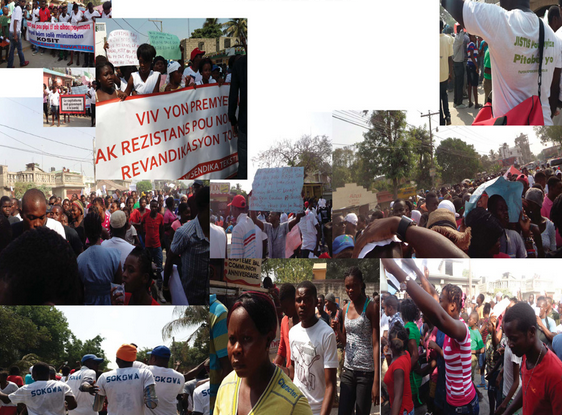
Below are some May Day photos from Cap Haitien, Port-au-Prince and Ouanaminthe. This is what class struggle looks like! The combative workers of Haiti should be an inspiration to us all, to step up our game and join up with this international struggle in the way we need to, everywhere. Share it, spread it. Solidarity with the international working class! The best expression of solidarity is for us to organize wherever we are. Slogans on the banners include: “Long Live Our Combative Union!” “Long Live Our Combative May Day! Continue our Resistance, Our Struggle foor the Demands of the Whole Working Class!” (From PLASIT, a platform of three Batay Ouvriye textile unions).

Haiti: Corporations Are The New Conquistadors

On the 12th of January 2010, Haiti was devastated by a magnitude 7.0 earthquake. An estimated 3 million people were affected, with upwards of 160,000 to 316,000 people killed. In the wake of this disaster a massive aid-campaign was initiated, with the United States leading the charge. However the allotted funds have not been used to help the people of Haiti, instead they have been funneled towards programs managed by USAID and Monsanto. The goals of these programs are to fundamentally restructure the Haitian economy, particularly the agricultural sectors. This is being done in order to maintain a corporate monopoly on both the import of food products into Haiti, as well as the means of food production within the country.

Solidarity Movement To End UN Occupation Of Haiti

We are no longer living in the 19th century with the specter of Haiti’s successful struggle for its freedom haunting the consciousness of slave masters across the Americas. Yet the military occupation of this country since 2004 by way of the United Nations Stabilization Mission in Haiti (MINUSTAH) is sending a clear message that the Haitians’ tentative step toward exercising control over the destiny in the 1990s and the early years of the new century is still “a source of alarm and terror” to imperial overlords such a Canada, France, and the United States. The MINUSTAH occupation army has a combined force of 7,408 soldiers and police personnel as of July 31, 2014. This armed entity has served as the muscle behind the schemes of the local elite and foreign interests in preventing the disenfranchised urban and rural laboring classes from seeking to capture the levers of national political, economic, and social power.

Haitian Tourism Project Leads To Damage And Repression

“Destination Île-à-Vache” is a government-driven tourist project planned for a small island off the northern coast of Haiti, Île-à-Vache. Plans include an international airport, golf courses,1,500 hotel bungalows, agri-tourism, and “tourist villages” which will include boutiques, restaurants and even a night club. Groundbreaking on the project occurred in August, 2013, without the inclusion or participation of the community. Once the construction on the road began in late 2013, the community began to peacefully protest and formed a local group in December, 2013 called KOPI (Collective for Île-à-Vache). In response, the government has coerced, repressed, and intimidated the population. A leader of the resistance movement has been a political prisoner - imprisoned without charge or trial – since February 24, 2014. The details of some of these acts are included in the declaration below.

Haitian Peasant Movement Creates Food Security, Protests Monsanto

Haiti’s peasant movements are reforesting the countryside, building irrigation systems, feeding communities – just to name a few activites that are improving lives for rural communities across the nation. In the video below, members of Haiti’s Group of Four (G4) and the Dessalines Brigade describe how Haiti’s peasant movement connects with the struggle for food sovereignty in the United States, and globally. The video includes Grassroots International partners from Haiti and Brazil speaking at an Occupy the Food Prize rally on October 17, 2013 in Des Moines. Haiti’s social movements, and its peasant movements in particular, have stepped up to the challenge of re-envisioning Haiti and putting that vision into practice. For Haiti’s peasant movements, agriculture – and the peasants who make it possible – is central to Haiti’s just development. Late last year, a union of the country’s four largest peasant movements known as the G4 (all supported by Grassroots International) shared the 2013 Food Sovereignty Prize with the Dessalines Brigade for their accompaniment of peasant farmers and zealous advocacy of peasant rights.
assetto corsa mods

Urgent End Of Year Fundraising Campaign

Online donations are back! Keep independent media alive. 

Due to the attacks on our fiscal sponsor, we were unable to raise funds online for nearly two years.  As the bills pile up, your help is needed now to cover the monthly costs of operating Popular Resistance.

Urgent End Of Year Fundraising Campaign

Online donations are back! 

Keep independent media alive. 

Due to the attacks on our fiscal sponsor, we were unable to raise funds online for nearly two years.  As the bills pile up, your help is needed now to cover the monthly costs of operating Popular Resistance.

Sign Up To Our Daily Digest

Independent media outlets are being suppressed and dropped by corporations like Google, Facebook and Twitter. Sign up for our daily email digest before it’s too late so you don’t miss the latest movement news.