Skip to content

Housing

Building One New York That Works For #AllOfUs

As the Post-Bloomberg Era Approaches: This is our moment. It's a new day, New York. The sun is setting on a city run by and for the 1%. A new day is dawning -- and we are rising, together. In 2014, we’ll have a new mayor, a new City Council and new citywide officials. Our city and state governments can and should begin a new era – by stopping the special deals for Wall Street and the people who have rigged the system and building a city that works for all of us. To make progress, we’ll fight to to stop the unchecked power of the 1%, break the links between big-money interests and the politicians that serve them, demand development policies that build broad prosperity not wealth for a tiny few, and support organizing to boost paychecks for low-wage workers. Join us during the first week of December as we build a New York that works for #AllOfUs.

Fracking the American Dream: Drilling Decreases Property Value

This clash of large-scale industrial activity and communities has surfaced a deep rift in the American landscape, where the legal doctrine of split estates allows one party to own mineral rights and someone else to hold the rights to soil and surface. With the oil and gas industry showing little self-restraint in where drilling happens, and almost no regulatory or legal precedents to protect them from having industrial activity in their back yards, communities are fighting back. Increased truck traffic, chemicals, lights, noise, heavy equipment, noxious air emissions and water contamination are liabilities for landowners, to the point that communities in Colorado, New York and other states have taken matters into their own hands. Feeling unprotected by weak state and oil and gas regulations—most of which were developed never contemplating drilling in urban and suburban landscapes—towns, cities and counties are instituting moratoria and bans on drilling within their borders.

Bohemia Occupiers In North Finchley Protest Against Anti-squatting Laws

Squatters who occupied The Bohemia pub in North Finchley held a demonstration outside an MP’s office to call for a relaxation in squatting laws. The protest, organised by members of the Occupy movement who were evicted from the High Road pub earlier this month, attracted a handful of people outside Finchley and Golders Green MP Mike Freer’s constituency office on Friday. Since their eviction by court order, the group have begun squatting a former Quaker Hall in Ballards Lane, opposite the Conservative politician’s Finchley headquarters. The protesters claimed they were targeting the Tory MP for his record of supporting anti-squatting laws. Up to 15 people waved placards that read ‘Hug the Homeless’, ‘Shame on You Mike Freer’, and ‘Mike Freer Wants You Homeless’.

Court: Activist Bird-Dogging & Confronting Politician Not Stalking, Protected Speech

Rep. Williams began labeling Mr. O’Connor and fellow activists from Move On, Colorado Progressive Coalition, and Occupy Denver as bullies when, to try and gain an audience with her, they held a sit in at the capitol prior to the vote on HB1249. Shortly thereafter, O’Connor responded to an email list that Williams included him on to share that he would work hard in Williams’ district in the coming year to share her unwillingness to meet with those who believed HB1249 would have protected them and the Colorado economy going forward. O’Connor has followed through by showing up at every one of her public Town Hall meetings and several of the District 7 Democrats meetings. When one such Town Hall was cancelled without notice, members of CFRC flyered William’s neighborhood, including her home, with literature that shared how they believed she had failed them and all Coloradans when she led her committee in killing HB1249. During this activity, Williams claimed that Mr. O’Connor had left a business card at only her home with the intent to send the message: you are not safe here. In her temporary restraining order (TRO), Williams claimed that O’Connor was escorted by an officer from her May Town Hall, and that at her October Town Hall, Commander Calo of District 2 had to tell him to back away from her.

How Wall Street Turned America Into Incarceration Nation

The U.S. leads the world in prisoners with 2.27 million in jail and more than 4.8 million on parole. Minorities have been especially hard hit, forming 39.4% of the prison population, with one in three black men expected to serve time during their lifetimes. How is it that our land, supposedly the beacon of freedom and democracy for the rest of the world, puts so many of its own people into prison? We usually attribute the prisoner increase to a combination of overt racism and Nixon's war on drugs, followed by Rockefeller's "three strikes" legislation in New York, and then the 1984 Sentencing Reform Act with its mandatory sentences. While racism and these laws certainly provide ample opportunity to incarcerate millions for violating senseless prohibition laws, they do not tell the whole story. Racism was just as virulent, if not more so, long before the dramatic rise in prisoners set in during the 1980s and 1990s. Just because there are draconian laws on the books, it doesn't explain why they are so dutifully enforced. It also doesn't explain why so many are willing to risk prison, knowing the increasing odds of getting caught. If we dig deeper, we'll see that the rise in incarceration corresponds with the rise of financialization and the dramatic increase in Wall Street incomes.

Tiny House: A New American Dream

The size of the average American home has more than doubled since the 1950s, but just how big does a home need to be? A Boulder, Colo., couple decided to put that question to the test when they started building their very tiny home -- 124 sq. ft. to be exact -- back in 2011. With no building experience, but with open hearts and minds, Christopher Smith and Merete Mueller started to build their dream home. They documented their surprising journey in a new film called "TINY: A Story About Living Small," which premieres on Al Jazeera America this Sunday. Smith and Mueller recently chatted with The Huffington Post about living tiny, sustainably and redefining the American dream. The Tiny House is about 124 sq ft. It has a living space with an 11-foot ceiling. There is a small galley kitchen, a small bathroom with a composting toilet and camping-style gravity fed shower and a sleeping loft. The main living space has an 11-foot ceiling, which helps the space to feel bigger than it actually is, with a small closet and two built-in bookshelves. There is also a built in desk and dining table that Merete made from scraps left over from our reclaimed hardwood flooring.

More Cities Consider Using Eminent Domain To Halt Foreclosures

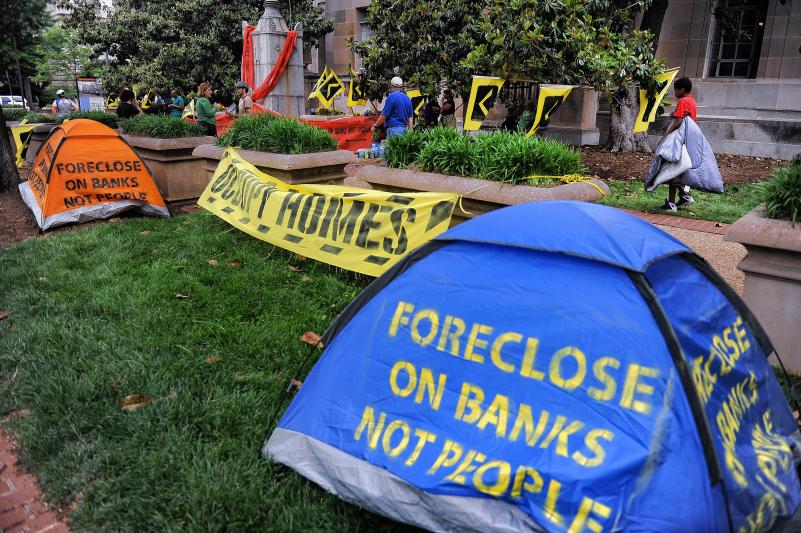
New cities are joining the effort to head off home foreclosures by using a twist on the power of eminent domain, despite threats of financial retaliation from Wall Street and Washington. On Saturday, Mayor Wayne Smith of Irvington, N.J., will announce that his mostly working-class city is proceeding with a legal study of the plan. Irvington could try to head off legal action and repercussions through what are called “friendly condemnations,” in which incentives are used to persuade the owner to drop any objections, he said. “We figure if this program works it can help anywhere from 500 to 1,000 homes.” This summer the similarly working-class city of Richmond, Calif., in a heavily industrial part of the San Francisco Bay Area, became the firstto identify homes worth far less than their owners owe, and offer to buy not the houses themselves, but the mortgages. The city intends to reduce the debt on those mortgages, saying that will prevent foreclosure, blight and falling property values. If the owners of the mortgages — mostly banks and investors — balk, the letters said, the city could use eminent domain to condemn and buy them. Cities hard hit by the housing crash are showing interest. Yonkers, just north of New York City, will soon take up a resolution to study the use of eminent domain to reduce debt, and support is building in Newark as well. In California, Pomona and Oakland are considering it as well.

Homeless Under Attack Across The Nation

My PBS movie is devoted not so much to the homeless themselves ... as to a spreading phenomenon that involves them (is aimed at them, to be blunt about it) in mid-sized American cities from Tampa to Seattle. A phenomenon that has so far generated insufficient media coverage nationally. For PBS's Religion and Ethics Newsweekly (check local listings for airtimes) correspondent Lucky Severson and I investigate cities' growing enforcement of new, or moribund but newly-revived ordinances in the streets of their downtown districts, as they work to spruce up those districts in the interest of post-recession recovery. One inescapable result of the recession was the dramatic increase in homelessness since 2008 that has brought it to the current high level, with considerable concentration in those downtown areas. Local governments and businesses appear united in their desire to now sweep away the homeless -- whose lingering presence, they feel, detracts from the economic improvement they have begun to experience and want to encourage. Their chosen tactic has been to act -- with police enforcement if need be -- against charities and churches who are attempting to help the homeless on downtown streets. Especially, it seems, by offering them food.

Occupy Madison Builds ‘Tiny Home’ For Homeless

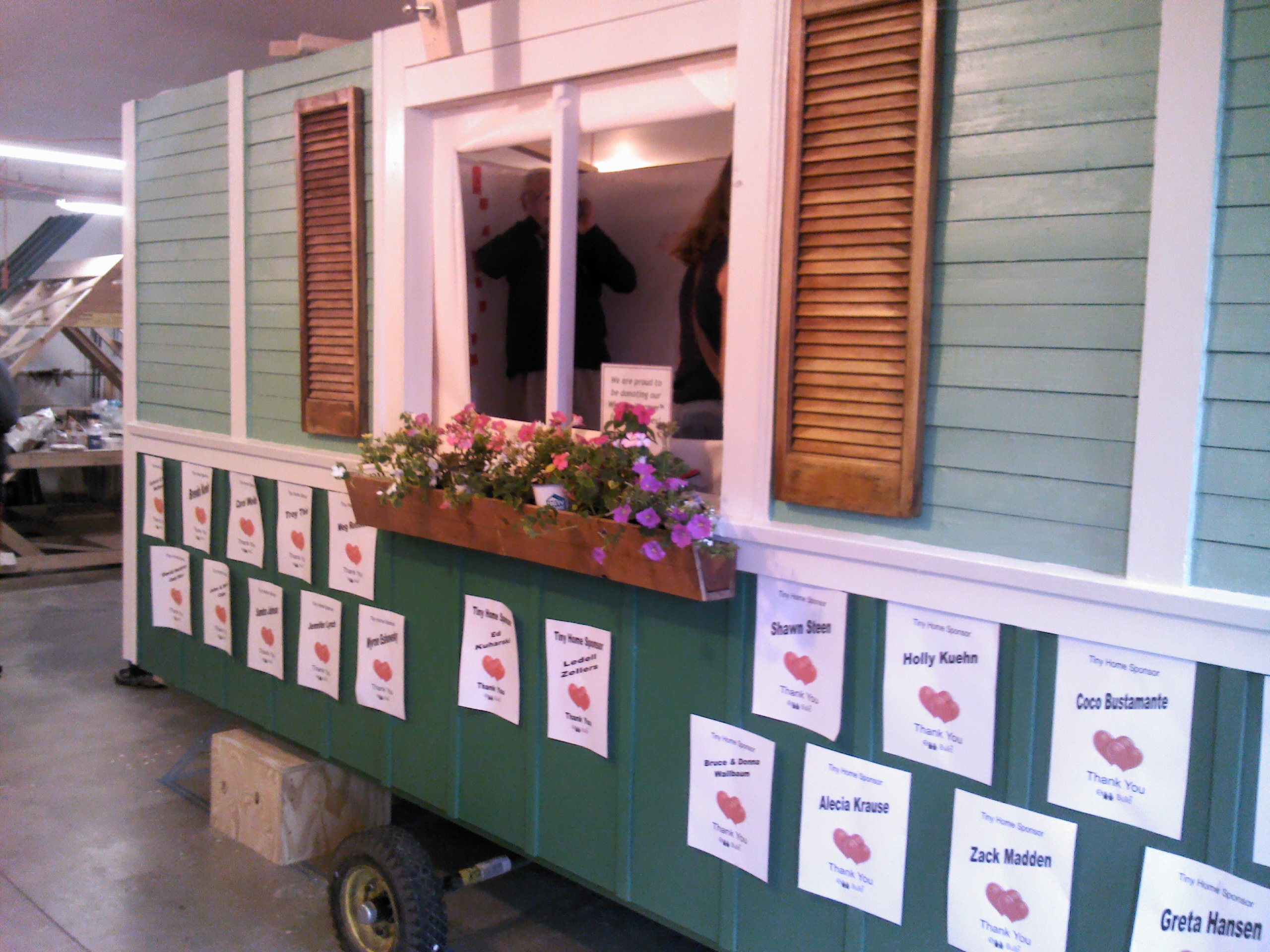
A group in Madison, Wisc. is taking an innovative approach to helping the homeless. Occupy Madison, an offshoot of the Occupy Movement, has built its first "tiny home" as part of their initiative called, "OM Build." They hope the house will become part of a cooperative village of eco-friendly homes. The tiny home is less than 100 square feet, and is built largely with recycled materials. RT's Sam Sacks talks with Occupy Madison organizer Luca Clemente about how OMB Build helps the homeless in more ways than just providing them shelter. News about Occupy Madison’s "OM Build" Tiny Homes initiative is spreading like wildfire, generating excitement and attracting donors of time and money, says project organizer Bruce Wallbaum. After news of homeless people beginning work on the first 98-square-foot house broke in early July, the initiative got its share of attention from local media. But a WMTV-15 story more than a month later — featuring video of the tiny house, nearly complete — sent coverage viral, Wallbaum recalls.

Home Defenders League Activist Reacts To JPMorgan Settlement

After five long years, reports of federal legal action against banks, including JPMorgan Chase, Wells Fargo and Bank of America, are raising hopes that Wall Street might finally be held at least partly accountable for their misdeeds. Some in the media are crying out as if the big bankers were being persecuted within an inch of their lives. As much as they complain, not a single banker has gone to jail as a result of the mortgage debacle. But I did. Here's how my journey to facing arrest in the nation's capital began: My husband and I built our own home here in St. Louis. We never missed a payment on our mortgage. Then came Wall Street's Great Recession. My husband lost his job. Our family was hit by health problems. Our own battle with the bank left our home empty and vandalized while Wall Street banks are larger, richer . . .

Create Strike Debt In Your Community, Broaden The Revolt

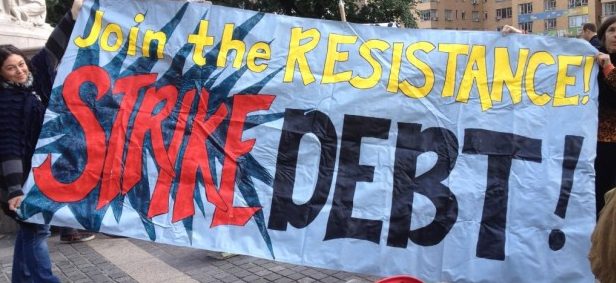
One of the great evolutions of the Occupy Movement is Strike Debt and the "You are not a loan" movement. Strike Debt Urges You To Take Action Fighting debt and our exploitative economic system will require both individual and collective action. Here are some immediate steps you can take to shift the balance of power, apply pressure to creditors, and help the debt movement keep rolling. They urge you to consider: (1) Fight back against debt buyers, (2) Hold a debt assembly, (3) Save houses and whole communities using Eminent Domain, and (4) Work together against student debt. More will be coming. Check this page often. We’ll be updating it regularly with new projects.

London Occupies Luxury Home Protesting Outrageous Rents

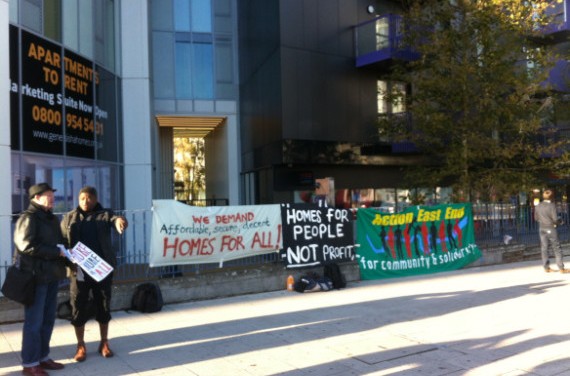
Activists have held a "housewarming" party, as they occupied a luxurious flat in a housing development in east London, in protest at outrageous rents in the capital. Drinking champagne and eating Waitrose canapes, the 15 campaigners from the group "Let Down", claim they are all private renters hit by sky-high rents, rising around 7% a year. The occupied flat was one built by property developers Genesis, which receives funding through a government subsidy. Rents at the ‘Stratford Halo’ development start from £1,700pcm for a two bedroom flat. Based on figures published by Shelter, these rents would only be affordable to families with an income of £76,000 or more. “Private renting is expensive and gives people no security – the last thing we need is more of it," said Emma Bradshaw, one of the activists from the Let Down campaign. "Rather than supporting developers to build expensive private rented housing that is only affordable to the very wealthiest, the government should bring in measures to keep rents under control and invest in good quality genuinely affordable social housing that gives ordinary people the security they need.”

5 (Of Many) People Keeping The Occupy Movement Alive

Two years ago today, when Occupy Wall Street was evicted from Zuccotti Park, many wondered what was next for the movement. Two years later, we profile five projects that got their starts in the encampments and are still making change today. It was a cold night in late January 2012. The New York subway doors opened and a tall, dark-haired, 30-ish young man dressed entirely in black—leather jacket, jeans, and boots—stepped into the car. Hanging from his backpack were an orange plastic bullhorn and a small drum; tied on top was a thin sleeping mat. He was one of the small army of Occupy Wall Streeters who had been driven from the park on November 15—two years ago today. He and some friends had been camping out in a vacant house to prevent the bank from foreclosing on it, he told us, but the winter weather had forced them to leave. After protesters like him were evicted, no one knew where the movement was going and what it was going to do next. Two years later, though, the answers to those questions are beginning to become clear. One way to get a handle on what became of the Occupy movement is to track the continuing work of its participants, five of whom we've profiled here. All of them were active in Occupy encampments . . .

Bill Moyers Journal: Fighting the Good Fight

“When people ask me ‘what kind of medicine are you practicing?’ I usually say, ‘I’m practicing political medicine because it’s the mother of all illnesses,’” Stein tells Bill. Flowers adds: “Once you start speaking truth to power and standing up for the right things, it’s very empowering.” Stein and Flowers serve as the president and secretary of health, respectively, for the Green Shadow Cabinet, an organization offering alternative policies to the “dysfunctional government in Washington, DC.” This week, Bill talks with them about their personal journeys fighting for policy change — including arrests for acts of civil disobedience — and the pressing challenges they’re focusing on, such as the fallout from the Fukushima nuclear plant in Japan.

The Smartest People in Seattle Politics

Having political smarts isn’t about brokering power. True political geniuses are bringing policy to the table and suturing it to the flesh and bones of our city. They’re working, usually behind the curtain, to change conversations about what’s possible. Seattle is wealthy. It’s educated. And the voters are liberal. We’ve got everything it takes to become a national model for building mass transit, closing achievement gaps in schools, innovating environmental policy, and treating everyone equitably. But way too often, the same cast of self-satisfied schmucks hogs the limelight while settling for a career of unmemorable civic housekeeping. For instance, the Seattle City Council lacks a vision for a citywide light-rail system while instead making noisy fanfare over largely inconsequential tweaks to the city budget.
assetto corsa mods

Urgent End Of Year Fundraising Campaign

Online donations are back! Keep independent media alive. 

Due to the attacks on our fiscal sponsor, we were unable to raise funds online for nearly two years.  As the bills pile up, your help is needed now to cover the monthly costs of operating Popular Resistance.

Urgent End Of Year Fundraising Campaign

Online donations are back! 

Keep independent media alive. 

Due to the attacks on our fiscal sponsor, we were unable to raise funds online for nearly two years.  As the bills pile up, your help is needed now to cover the monthly costs of operating Popular Resistance.

Sign Up To Our Daily Digest

Independent media outlets are being suppressed and dropped by corporations like Google, Facebook and Twitter. Sign up for our daily email digest before it’s too late so you don’t miss the latest movement news.