Skip to content

Sandinista Revolution

Nicaragua Celebrates The 46th Anniversary Of Its Revolution

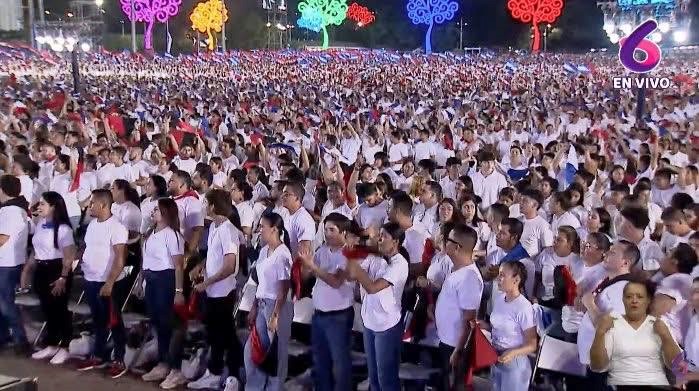
This year was different from celebrations since 2021 when there were perhaps 5,000 people invited – this year there were about 50,000! It took place in the Plaza de la Fe where the July 19th celebrations were held for years and years with open attendance of hundreds of thousands and little organization. That changed in 2020 with Covid. This time invitations were made and organized by the municipalities all over the country and those invited road in on Chinese buses down to the plaza. You can see from the photo, the organization was phenomenal to accommodate the 50,000.
46 Years On, Nicaragua’s Youth Still Lead The Revolution

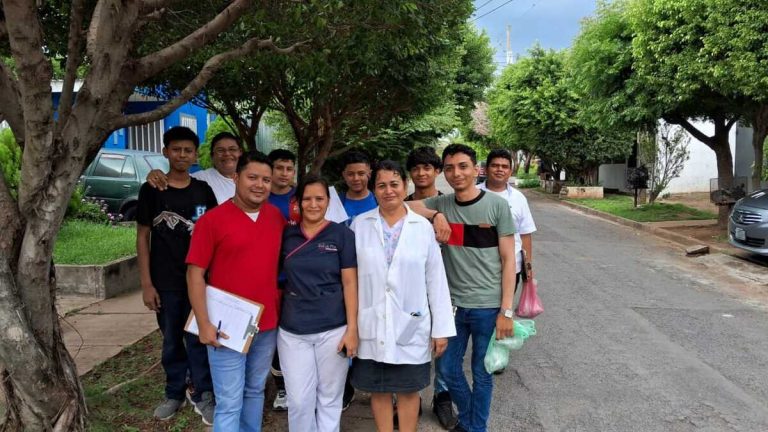
One of the questions I’m asked most frequently about Nicaragua is: “Does the revolution have a future?” Forty-six years ago, a popular revolution led by the Nicaragua’s youth overthrew the brutal Somoza dictatorship. Today, those viewing the country from the outside see that the surviving muchachos – the kids who defeated Somoza – are now in their 70s and 80s, and they worry that Nicaragua’s revolution won’t survive without them. To anyone who visits the country, however, it is obvious that Nicaragua’s revolution, which has managed to both revere its historical heroes and also treasure its youth, is stronger than ever.

50,000 Died In Nicaragua’s Struggle Against Dictatorship; Sócrates Was One Of The Last

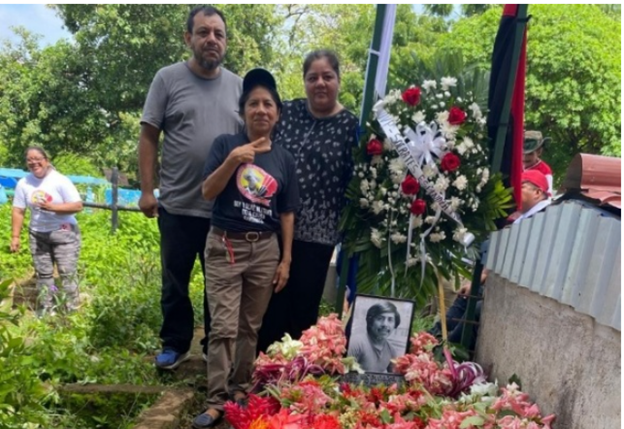
Nicaraguans will fill the streets later this month to celebrate the 46th anniversary of the Sandinista revolution. On July 19, 1979, the Somoza dictatorship finally fell, ending 18 years of guerilla fighting and urban insurrections. The regime had been supported for 43 years by successive US administrations (the history is told in Nicaragua: A History of US Intervention & Resistance). Only three weeks before, over the two days June 27-28, Sandinista forces had been forced to leave the capital, Managua, where the working-class barrios that they controlled in the east of the city came under aerial bombardment. Under cover of darkness, an enormous, silent retreat took place.

Latin America’s Long Fight Against The US For Sovereignty

“An American team will win the next soccer World Cup,” a Nicaraguan boy once told me. It took me a second to realize he meant Brazil or Argentina, not the United States. Greg Grandin’s new book shows that “America” (or, in Spanish, América) was the name used for the whole hemisphere by the late 17th century. In the 18th, the great liberator Simón Bolívar set out his vision of “our America”: a New World free of colonies, made up of distinct republics living in mutual respect. He even cautiously welcomed the newly declared Monroe Doctrine as a rejection of European imperialism. Bolívar died without realizing his dream of a Pan-American international order but, Grandin argues, his ideals live on in Latin America today.

Veterans For Peace Delegation Visits Nicaragua

In a powerful demonstration of international solidarity, seven members of Veterans For Peace (VFP) visited Nicaragua in mid-to-late March as an official VFP delegation. Veterans from five U.S. states flew to Nicaragua on March 19 for a week-long visit to community clinics, regional colleges, vocational schools, youth groups and mayors in several Nicaraguan cities, including the capital Managua, Matagalpa, Masaya and Ciudad Sandino. The veterans were most impressed to learn that Nicaragua, the third poorest country in the western hemisphere, is providing free, high quality healthcare and education for all its people.

Nicaragua Ranks Highest In Gender Equity In The Americas

If you asked 100 people in the U.S. or the U.K. to name the country leading gender equity in the Americas, it’s unlikely anyone would correctly answer Nicaragua. This lack of awareness reflects the success of a decades-long imperialist campaign to discredit and undermine Nicaragua’s remarkable achievements since the 1979 revolution. The U.S has continuously attempted to destroy the Sandinista revolution, from the contra wars, through active support for the 16 years of neo-liberal government, to the 2018 attempted coup, and the current punitive economic sanctions.

Report From Nicaragua: Solidarity With The Sandinista Revolution

In July I took my first trip outside of the United States as part of a solidarity delegation to Nicaragua in order to learn more about the Sandinista Revolution and the process of socialist construction in this Central American nation. Truthfully, I did not know what to expect when visiting Nicaragua, and in reality, I never could have imagined the profound impact that this experience would have on my life. During those nine glorious days our delegation traveled throughout Nicaragua, visiting various community development projects, museums and monuments. We attended a series of meetings with cadres of various organizations, such as labor unions and mass organizations. I was utterly amazed by the high political consciousness of the Nicaraguan masses.

President Daniel Ortega On The 45th Anniversary Of Sandinista Revolution

Here, No One Surrenders! Young people are in command and do command, the People is in command and does command, and Daniel obeys. Yes, thanks be to God that we are ready, we are prepared, and this is a task, a labor demanding a great deal of Love for Peace, and that is what Nicaraguans defend. First of all, we Sandinistas are committed to that Principle, and too, the Nicaraguan people are also convinced that only Peace brings Well-being, Employment, Schools, Hospitals, Roads, Housing, Transportation, Entrepreneurship, Education and Free Education, because that is a Right of the People, a Right of our Families, a Right of our Young People.

Cuba And Nicaragua: Two Sister Revolutions

There are no identical political processes, much less Revolutions, which are conditioned by history and the context in which they develop. However, in Our America there are no two processes with as many similarities as those of Cuba and Nicaragua. The hallmark of both revolutions is often referred to as the method used to seize power, through armed struggle, something that truly makes them unique and probably unrepeatable. We Cubans feel the joy of the Nicaraguan people as our own in celebrating this 45th Anniversary, and no occasion is more propitious to renew the commitment bequeathed by our heroes, to honor each day more these exemplary relations that forged years of struggle and sacrifice and that nothing and no one can stand between these two sister Revolutions.

We Are All Nicaragua: The Sexual Diversity Community

In 2008, following the Sandinista party’s return to power, a law was passed overturning the penalization of homosexuality and making it illegal to discriminate against someone based on sexual orientation. Since then, the Sandinista government has also passed laws specifically guaranteeing equal rights and opportunities for the LGBTQ+ community. Additionally, public institutions have administrative regulations in place to ensure that no one faces discrimination for their sexual orientation or gender identity. “If I compare Nicaragua with other countries in the world,” explains Julio, “we have regulations, public policy, legal framework and laws that support us.

More Sanctions On Nicaragua Will Deepen US Migration Crisis

For Barbara Larcom and Jill Clark-Gollub, increased US economic warfare waged against Nicaragua will only translate into a worsening of the already delicate migration problem in the US and affect supply chains in Central American and Caribbean countries that trade with Nicaragua. The two activists from the Nicaragua Solidarity Coalition were interviewed by Orinoco Tribune last Wednesday, March 6. Barbara Larcom is the current chair of the Nicaragua Solidarity Coalition, an international alliance of organizations and individuals that support Nicaragua’s sovereignty.

We Won’t Go Back Into Our Cages: Celebrating Women’s Day In Nicaragua

“We have painful stories, stories of marginalization, a history of being trampled because we are women and even more because we are rural peasant women, campesinas,” says Rosibel Ramos, bright eyes belying her age. “What were women’s spaces?” She asks. “The kitchen, taking care of kids, taking care of everyone else. We were supposed to just sit quietly in a corner.” Rosibel, now in her 60s, is telling the story of the founding of the Rural Feminist Ecological Cooperative “Las Diosas”* which means The Goddesses. The co-op is made up of hundreds of women from northern Nicaragua who grow, process and sell organic and fair-trade certified coffee, hibiscus and honey.  

Nicaragua: The Education Generation

Thanks to a complete overhaul of the country’s educational system in the past 15 years, record numbers of students are graduating from high school. Although recent international headlines claim academic spaces are closing in Nicaragua, there is now actually increased access to free public universities. That, combined with hundreds of free vocational programs around the country, means that the class of 2023 has more options open to them than ever before. In a few short weeks, our youngest daughter Orla will graduate from high school. Recently I went to her school to watch as she and her friends marched in blue and white one final time to celebrate Nicaragua’s Independence.

Improvements Under Sandinistas For Nicaragua Caribbean Coast Peoples

The Sandinistas defined several specific goals in their vision of how they wanted the country to change. Regarding the Caribbean region, the vision was for people there to become full participants in the country. He stressed that achieving the goals in the Caribbean region were difficult, but this struggle succeeded in being able to implement the autonomy process, which is allowing the region to make a number of important changes for the development of the region. One of the first hurdles was the old thinking that national unity meant uniformity and homogeneity. This included only recognizing Spanish as the official language and a deaf ear to the whole concept of multiculturalism.

Nicaragua: Example Of How To Defend Sovereignty And Independence

On June 27, 1986, the World Court condemned the United States for illegal war and aggression against Nicaragua and ordered the US to compensate Nicaragua for damages estimated to run to US$17 billion dollars, what today would be more than US$55 billion. On June 27 of this year, President Daniel Ortega demanded that the US fulfill its obligation. He stated, “On June 27, 1986, the International Court of Justice condemned the US and directed it to compensate Nicaragua for all damages caused as a consequence of military activities against Nicaragua. In a situation of armed aggression such as that carried out by the US, no amount of reparations – neither economic nor moral – could compensate for the devastation of the country, the loss of human lives and the physical and psychological wounds of the Nicaraguan people.
assetto corsa mods

Urgent End Of Year Fundraising Campaign

Online donations are back! Keep independent media alive. 

Due to the attacks on our fiscal sponsor, we were unable to raise funds online for nearly two years.  As the bills pile up, your help is needed now to cover the monthly costs of operating Popular Resistance.

Urgent End Of Year Fundraising Campaign

Online donations are back! 

Keep independent media alive. 

Due to the attacks on our fiscal sponsor, we were unable to raise funds online for nearly two years.  As the bills pile up, your help is needed now to cover the monthly costs of operating Popular Resistance.

Sign Up To Our Daily Digest

Independent media outlets are being suppressed and dropped by corporations like Google, Facebook and Twitter. Sign up for our daily email digest before it’s too late so you don’t miss the latest movement news.