Skip to content

Technology

Jeremy Hammond Deserves Our Praise For Hacking Stratfor

The mainstream media has devoted hundreds of articles to NSA whistleblower Edward Snowden, the subject of the Oscar-winning documentary “Citizenfour,” but it’s not devoted the same level of attention to many other whistleblowers and political prisoners, like Jeremy Hammond, no matter how sensational the facts they revealed. In November 2013, a federal court sentenced Hammond to 10 years in prison for his part in the hack of Strategic Forecasting, an Austin, Texas-based corporate intelligence agency, also known as Stratfor. Working on behalf of Lulzsec, an infamous subgroup of Anonymous, Hammond leaked 5 million private emails taken from Stratfor to the whistleblowing website WikiLeaks, a release that came to be known as the Global Intelligence Files, or GI Files.

Pushback Against Facebook: Internet Not

Mark Zuckerberg's plan for world domination is in deep trouble. The billionaire Facebook founder recently took to his social network in a bid to save Internet.org, his plan to give billions of the planet's poorest people a limited taste of the World Wide Web. "We have a historic opportunity ahead of us to improve the lives of billions of people," he said in an impassioned video plea. "It's just the right thing to do." Internet.org is essentially a mobile application that provides free access to a handful of other applications, platforms and websites, including Facebook, Wikipedia and the BBC. Use of Internet.org comes at no cost; local carriers stream data via the service for free. As apps go this might seem well and good but Zuckerberg sees Internet.org as far more than an app. If things proceed as planned, it will represent the entirety of the Internet for a significant proportion of the world's population.

EFF Joins With Diverse Coalition To Get Copyright Right

After decades of increasingly draconian statutes and judicial decisions, our copyright system has veered far away from its original purpose. To help get copyright back on track, EFF is joining forces with a variety of groups—including libraries, industry associations, and public interest advocates—to launch a new coalition focused on promoting smart, balanced copyright policy: Re:create. Restoring a sense of balance, fairness, and rationality to the copyright system has never been more urgent. Copyright is supposed to promote creativity, but too often we’ve seen it used to shut down innovation, new creative expression, and even everyday activities like tinkering with your car. When a farmer needs to ask the Librarian of Congress for permission to fix her tractor, it’s not just the tractor that’s broken.

Drones Will Now “Hunt” In Packs & Fly In Swarms

Drone technology is getting ever more deadly. The US Navy has released a video detailing LOCUST – the new tool allowing multiple drones to coordinate and swarm the enemy autonomously. It’s designed to protect large US vessels nearby. The concept was detailed by the Navy last year, which only this month allowed the Office of Naval Research (ONR) to demonstrate what LOCUST – or the Low-Cost Unmanned Aerial Vehicle Swarming Technology program – can do. They’re touting the tool as a new era in autonomous warfare. LOCUST is essentially a system that can launch swarming UAVs to overwhelm the enemy and provide the marines and sailors operating them with a massive tactical advantage, ONR explains in the press release.

Seed Libraries Fight For The Right To Share

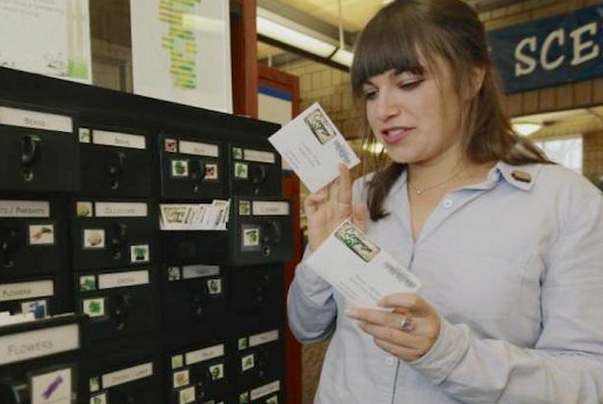
It’s easy to take seeds for granted. Tiny dry pods hidden in packets and sacks, they make a brief appearance as gardeners and farmers collect them for future planting then later drop them into soil. They are not “what’s for dinner,” yet without them there would be no dinner. Seeds are the forgotten heroes of food—and of life itself. Sharing these wellsprings of sustenance may sound innocuous enough, yet this increasingly popular exchange—and wider seed access—is up against a host of legal and economic obstacles. The players in this surreal saga, wherein the mere sharing of seeds is under attack, range from agriculture officials interpreting seed laws, to powerful corporations expanding their proprietary and market control.

Denver Cops Not Using Body Cams 75% Of Time

Body cams are suppose to help increase accountability of the police to the public, but they’re useless if the cops don’t turn them on. Denver police officers turned on their body cameras just once out of every four use-of-force incidents during its 6-month pilot program that concluded in December, according to the Denver Post. Denver's independent police monitor Nick Mitchell said in a report that there were many cases where officers punched people, used pepper spray or use Tasers that went unrecorded because cameras weren’t turned on or malfunctions occurred. Of the 80 use-of-force cases filed by officers, only 21 were recorded. Thirty-five of those cases involved sergeants and other supervisors or officers working off-duty assignments; ironically, none of those groups were required to wear body cameras.

Democracy In The Digital Era

We live in remarkable, transformative times. We have the library of Alexandria at our fingertips; all the recorded knowledge of the world is being digitized and made available through the Internet Archive, a free, non-profit digital library offering universal access to books, music, knowledge, news and web pages.1 None of this will help us, however, if we don’t know how to apply wisdom to this vast knowledge. The problems we face often feel monumental, almost impossible to solve. I am from the generation that lived under the shadow of possible nuclear war and the end of life on this planet. That risk is still there but others threaten the planet in a far more tangible way today – such as global warming and the monumental scale of environmental destruction. Meanwhile, our democratic models are hollow and crumbling at an alarming rate as we move further into a new era of complexity, technology and interconnectivity.

If Mass Surveillance Is A Permanent State — We Resist

From the Snowden files, people know for sure. There is mass surveillance. It is conducted on a global scale by various NSA schemes. In most countries there are national surveillance programmes. And in the EU, data retention means logging all our phone calls, text messages, e-mails, net connections and mobile positions. (This is done in most EU countries, despite the European Court of Justice having invalidated the EU data retention directive for breaching human rights.) Then we have the things we do not know. Obviously the Russians and the Chinese have their own global mass surveillance systems. And in the western world there are many surveillance programmes still unknown for the public. (Sometimes outsourced to private contractors.)

“Last Child In The Woods” Is A Must-Read For All

One of the best books I’ve read is “Last Child in the Woods: Saving Our Children from Nature-Deficit Disorder” by Richard Louv. Published in 2008, it’s as relevant as ever in our society where there’s a growing divide between children and the outdoors. Louv believes that kids nowadays suffer from “nature-deficit disorder” – a term of his own invention that describes “the human costs of alienation from nature, among them: diminished use of the senses, attention difficulties, and higher rates of physical and emotional illnesses.” The effects of this disorder are widespread and long lasting.

Mopping Up World’s Largest Oil Spill With Fungus

The dinner plate-sized mushroom encircles its host tree like a bloated tumor. I'm about to snap a photo of the beast when something flickers in the corner of my eye. Faint, smoky wisps give off the impression of smoldering coals. At this very instant, the fungus is releasing billions of microscopic spores. I feel as though I'm witnessing one of nature's secret acts, something an urbanite like me was only supposed to see on National Geographic. With a lush green canopy overhead, the hum of insects and warbles of tropical birds filling my ears, the moment would be Avatar­-worthy, save one jarring detail: The air reeks of petroleum. That's because I'm standing over a patch of blackened, crude-soaked ground.

Anonymous Hacker Deported To US As Canada Refuses Asylum

Matt DeHart, a former American soldier who sought asylum in Canada claiming torture by U.S. agents probing Anonymous hackers and WikiLeaks, was taken from his Ontario prison cell Sunday morning and delivered to U.S. agents at the border. Mr. DeHart, 30, was allowed to make a quick phone call en route to his parents, who are living in Toronto facing their own removal order, said his father, Paul. “He was peaceful and in good health,” Paul DeHart said in an interview but the family remains deeply worried. “We are concerned about Matt’s safety as he transits,” he said. “We said a prayer together on the phone and gave him into God’s hands for protection.” His claim for refugee protection in Canada, on the basis of his torture claim, was rejected last month by the Immigration and Refugee Board.

How The Government Outsourced Intelligence To Silicon Valley

For years, the outsourcing of defense and intelligence work was, with good reason, controversial in political circles. But in the last years of Bill Clinton’s administration, the president authorized the CIA’s creation of the first US government–sponsored venture capital firm, In-Q-Tel, designed to invest in cutting-edge Silicon Valley companies. The firm, named after Ian Fleming’s fictional character “Q,” who masterminds James Bond’s spy gadgets, was founded on September 29, 1999, when the intelligence agencies came to realize they couldn’t produce the technology required to make sense of the vast amount of data they had acquired. The firm’s mission is to “identify, adapt, and deliver innovative technology solutions to support the missions of the Central Intelligence Agency and broader US community.”

Corporate Debt To Society: $10,000 Per Household, Per Year

Over half (57 percent) of basic research is paid for by our tax dollars. Corporations don't want to pay for this. It's easier for them to allow public money to do the startup work, and then, when profit potential is evident, to take over with applied R&D, often with patents that take the rights away from the rest of us. All the technology in our phones and computers started this way, and continues to the present day. Pharmaceutical companies have depended on the National Institutes of Health. The quadrillion-dollar trading capacity of the financial industry was made possible by government-funded Internet technology, and the big banks survived because of a $7 trillion public bailout. A particularly outrageous example of a company turning public research into a patent-protected private monopoly is the sordid tale (here) of the drug company Gilead Sciences.

More Crimes By NSA

American and British spies hacked into the internal computer network of the largest manufacturer of SIM cards in the world, stealing encryption keys used to protect the privacy of cellphone communications across the globe, according to top-secret documents provided to The Intercept by National Security Agency whistleblower Edward Snowden. The hack was perpetrated by a joint unit consisting of operatives from the NSA and its British counterpart Government Communications Headquarters, or GCHQ. The breach, detailed in a secret 2010 GCHQ document, gave the surveillance agencies the potential to secretly monitor a large portion of the world’s cellular communications, including both voice and data.

IDF Expects UGVs, Robots To Play Ever-Greater Roles In Combat

The army will deploy new unmanned ground vehicles that can carry remote-controled weapons and sensors for surveillance missions to patrol the Gazan border this year. The Tomcar-based Guardium, produced by Israeli defense company G-NIUS Autonomous Unmanned Ground Vehicles, has spent the past six years patrolling the Gaza border, carrying out reconnaissance missions. This year, it will be replaced by a UGV called Border Patroller, which will soon enter operations. The new UGV, also produced by G-NIUS (a joint venture company established by Israel Aerospace Industries and Elbit Systems), is based on the Ford F-350 Super Duty Truck, which the army has converted into a remote-controled vehicle.
assetto corsa mods

Urgent End Of Year Fundraising Campaign

Online donations are back! Keep independent media alive. 

Due to the attacks on our fiscal sponsor, we were unable to raise funds online for nearly two years.  As the bills pile up, your help is needed now to cover the monthly costs of operating Popular Resistance.

Urgent End Of Year Fundraising Campaign

Online donations are back! 

Keep independent media alive. 

Due to the attacks on our fiscal sponsor, we were unable to raise funds online for nearly two years.  As the bills pile up, your help is needed now to cover the monthly costs of operating Popular Resistance.

Sign Up To Our Daily Digest

Independent media outlets are being suppressed and dropped by corporations like Google, Facebook and Twitter. Sign up for our daily email digest before it’s too late so you don’t miss the latest movement news.