Skip to content

Black America

What It Takes To Keep Kentucky’s Black-Led Farms Alive

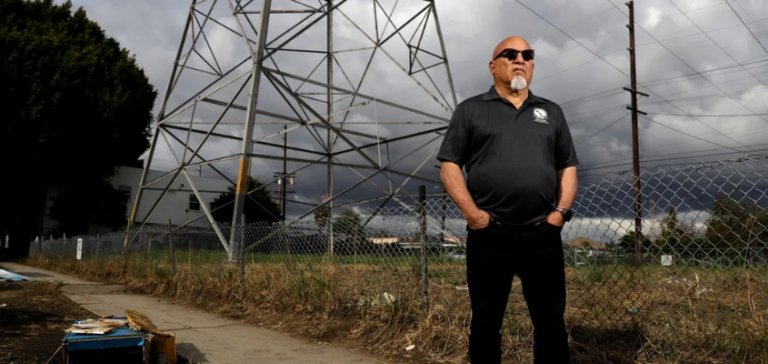
Near the eastern edge of Fayette County, Kentucky, sits the Coleman Crest Farm in the rural Black hamlet of Uttingertown. That’s where Jim Coleman works the land his great-grandfather tilled as an enslaved person — until he secured his freedom by fighting in the Civil War and returning to purchase the farm more than 130 years ago. Now, Coleman is continuing his family’s farming legacy, but not because it’s easy work. “Yesterday, I was pulling up mulch,” Coleman says, in between administrative calls. “I had harvested hard the day before. Did a little bit of harvesting [yesterday], invoiced it, packaged it, put it in the case, put it in my truck, drove to my customer, and delivered.” Coleman’s 13-acre plot is one of few in the county – and in Kentucky – that’s still Black- owned and operated. And among all farmers, the sheer volume of farmland has fallen, statewide and nationwide.
The Military Occupation Of Washington, DC: Then And Now

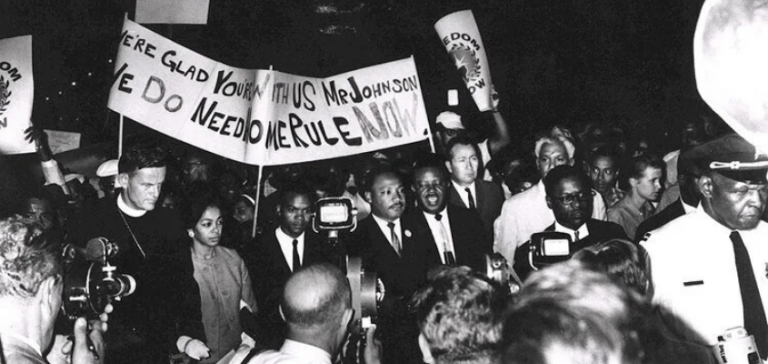
DC residents are living under an expanded military occupation ordered by Donald Trump that many are calling “unprecedented.” However, this is not the first time this action has been taken. Understanding this history is essential to properly contextualize what is happening now and to focus on the correct narrative and issue to fight going forward. I grew up in Southeast DC after my mom moved us from our hometown of Jarratt, VA to a little apartment in a four-unit building on Parkland Place when I was about five or six years old. We enjoyed free summer concerts in the park across the street from our building. I used to walk about a half a mile to Malcolm X Elementary school during the week, and to Liff’s Market across the street from that school every Sunday to get the paper for my mom and snacks for myself.

Supreme Court Asks Why It Shouldn’t Gut The Voting Rights Act

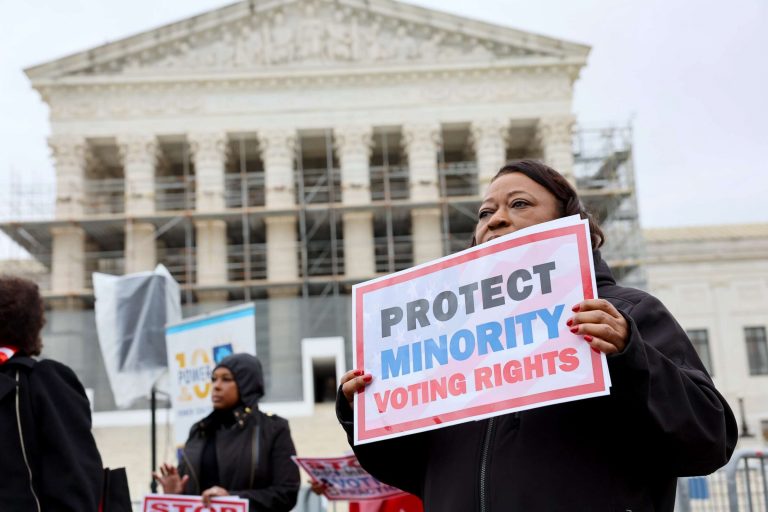
In what may prove to be the most consequential redistricting case to come before the Supreme Court, Louisiana is urging the court to gut the main provision of the Voting Rights Act of 1965 (VRA) and ban any consideration of race in redistricting. Louisiana filed its brief after the high court on August 1 asked the parties whether compliance with Section 2 of the (VRA) violates the Constitution’s 14th or 15th Amendments. By framing that question, the court may be signaling its intention to eviscerate the VRA. Louisiana v. Callais reached the Supreme Court after a coalition of civil rights organizations and Black voters sought to reinstate a map that the state legislature had adopted in 2024.

How Black Police And Soldiers Have Resisted Federal Takeovers

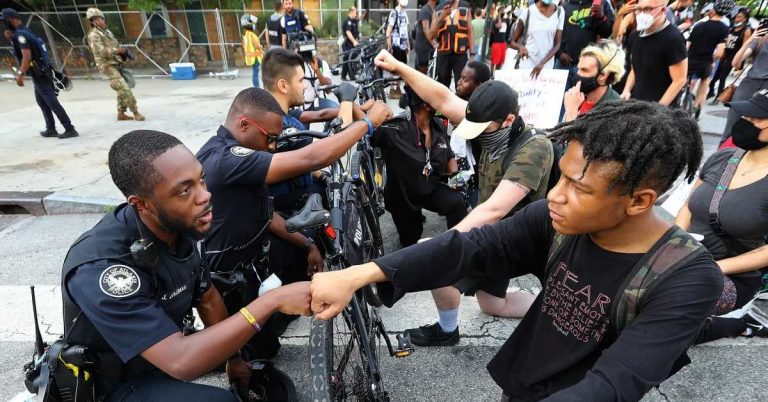
President Trump has deployed federal law enforcement officers and the National Guard in Los Angeles and Washington D.C. and threatened to take over predominantly Black Democratic cities by decree. The presidential orders are conducted on the pretext of fighting crime, but critics condemn them as nefarious acts of political provocation and racial intimidation. The deployments have spurred a debate over the legality of the administration’s use of federal police and the National Guard generally — and the role of Black cops and troops in carrying them out in particular. Should they follow orders of questionable legality, or instead disobey and protest through the appropriate channels?

He Who Pays The Piper Calls The Tune

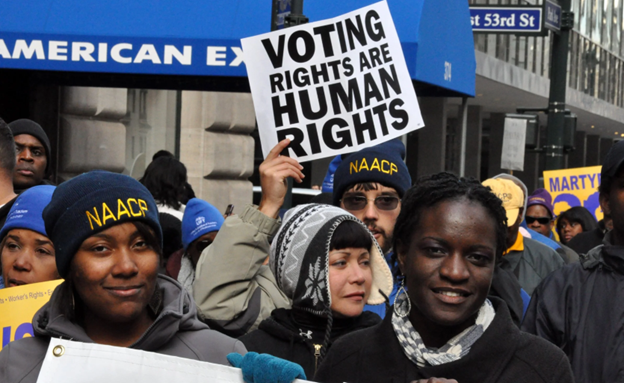
In theory, the fundamental premise of American democracy is “one man (or person), one vote.”  Under the original concept of Jeffersonian Democracy, in most states access to the franchise was limited to White males who owned at least a fifty-acre plot of land. Towards the end of the 18th century and early into the 19th century, states began lifting the property and education requirements for White males. African Americans were legally granted the right to vote with the ratification of the 15th Amendment to the U.S. Constitution in 1870.  Women were granted the right to vote with the ratification of the 19th Amendment in 1920.

Artificial Intelligence Furthers Environmental Racism In Black America

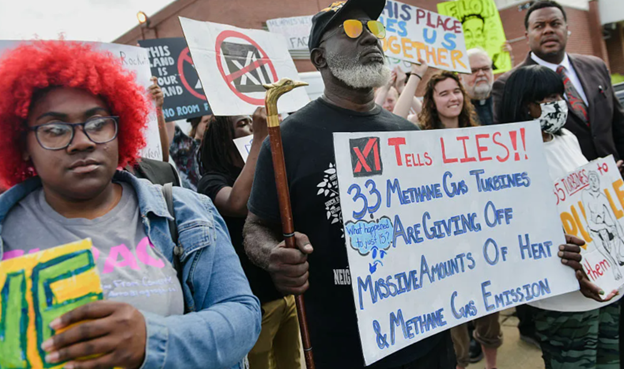
When one of my best friends (who is also a pastor) encouraged me to look into utilizing Artificial Intelligence (AI) tools for ministry purposes, I was exhilarated. It seemed like a game-changer at my fingertips. I used it to make presentations and outline Bible studies, saving time on the tasks that often fill my days. The opportunities seemed endless, and the convenience was remarkable. Regular projects and tasks that I had poured effort into before could now be completed in mere seconds. Not only did I start utilizing it, but I started singing its praises as well to all who would listen.

The Necessity Of Birthright Citizenship For Black People

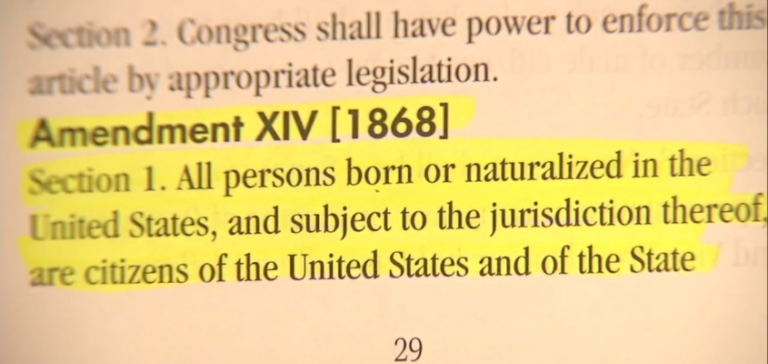
The idea of citizenship has always been a thorny one for Black people. The original United States constitution allowed the enslaved to be counted for purposes of determining congressional representation, but only as three-fifths of a person. The struggles for liberation during enslavement reached their nadir in the 1857 Supreme Court case of Dred Scott v. Sandford , in which not only were an enslaved man and his family wrongly deprived of their freedom, but Chief Justice Roger B. Taney infamously declared that not only were the Scotts not free, but that no Black person had any rights “which the white man was bound to respect.”

From Watts To D.C.: How 500 Black Neighborhoods Vanished In 45 Years

Ignited by a single arrest and fueled by decades of poverty and police brutality, the Watts Uprising of 1965 turned the Los Angeles neighborhood into a national symbol of Black struggle and resilience. Thousands of Black residents like Ted Watkins Sr. rose up in anger and desperation. They were fighting for resources to maintain their neighborhood. In the aftermath of the rebellion, Watkins founded the Watts Labor Community Action Committee to fight for continued investment in Black residents. Today, his son, Tim Watkins, is stuck in the same battles as president of the organization.

Seven Supreme Court Cases That Black Americans Should Track This Summer

From voting rights to health care to workplace equality, the U.S. Supreme Court will weigh in on a number of issues this summer that could have major implications for Black Americans. “In America, for Black people, we’ve had a long season where our rights were generally respected,” said Andrea Young, executive director of the ACLU, who has been closely following the Trump administration’s legal moves. “We have Black elected officials … Black leaders in corporate America, we have extreme poverty, but we also have thriving middle class communities. We have many areas where we have lots of highly educated black people. All of those things rest on a legal framework that allows those rights to be protected.”

The Fall Of 2020: How Liberals Ceded Solidarity

Last Sunday marked five years since the world witnessed the public lynching of George Floyd at the hands, or as it was, the knee of the State. The aftermath of the livestreamed white “supremacy” webinar on the denial of the human rights of Black/Afro-resident people in the United States was the proliferation of incendiary uprisings nationwide that saw the incineration of buildings that housed businesses and even police precincts. - The nation was jolted awake after months of being moribund due to State-sanctioned covid quarantines and isolation. The streets were transformed from apparition avenues to lively lanes of social activity as people of all races, ethnicities, and genders coalesced to demand “justice” for Floyd and Brianna Taylor, both executed by the State, and Ahmad Aubrey who was shot to death by a civilian lynch mob.

Black People, Palestine, And The Maintenance Of Empire

When Palestinian resistance forces broke free from their open-air prison in Gaza on October 7th, 2023, many did not realize the events that would unfold–that we were all about to bear witness to the world’s first live-streamed genocide. Israel thought this would be business as usual, that they could continue their brutalization of the Palestinian people, and the world would go about its business—as it has for decades. Not only did they have to contend with the resistance on the ground in occupied Palestine, but the groundswell of support around the world, and specifically from within the imperial core that is the U.S.

Ryan Coogler, Shedeur Sanders, Karmelo Anthony, Rodney Hinton, Jr

Ryan Coogler, Shedeur Sanders, Karmelo Anthony, and Rodney Hinton, Jr. have all captured the collective Black imagination, although for very different reasons. A successful film director, an athlete and two Black men in the throes of a punishing legal system are all the recipients of support and love from millions of Black people. It is true that the love of a “Black face in a high place” is a problematic phenomenon, but it is also true that Black people will rally around their own. That commendable instinct seems to be reserved for individuals, and not for the masses as a whole, and therein lies a problem.

Grieving Black Father Avenges Son’s Slaying By Killing A Police Officer

Around 2:00 in the morning, a white police officer–who would later acknowledge that the unarmed teenager startled him– fatally shot Thomas once in the chest. Three days later, the Over-the-Rhine neighborhood was on fire. Thomas’ death brought to 15 the number of African American men killed by Cincinnati police officers between 1995 and 2001. In the most high-profile of these cases, police mistook Roger Owensby Jr.--a sergeant in the U.S. Army who had no criminal record—for a drug dealer, put him in a chokehold, maced, and beat him. Officers were tried and acquitted. Thomas’ killing was the proverbial straw that broke the camel’s back.

Graylan Hagler: Capitulation Masquerading As Political Thought

One can only say that making such a dispensation is very generous of Rev. Graylan Hagler. It isn’t clear what he means by “emotionally understand” but the subtext is troubling. Is he insisting that a group whose people are victims of a genocide ought to support the perpetrators of the war crimes? If that is his stance it is not understandable, emotionally or in any other way. The statement encapsulates what is highly problematic about Hagler’s recent essay The Betrayal of the Black Community . Hagler’s 2,500 word screed is a muddled apologia to the Democratic Party after their ignominious defeat at the hands of Donald Trump, despite raising $1 billion in the effort to elect Kamala Harris.

Ready For The Revolution But Unable To See It

The snowflakes that began to pelt Chicago on an early January weekend in 1979 were bigger and wetter than anyone could remember, eventually burying the city under two feet of snow, shutting down O’Hare International Airport for only the second time ever, and producing snowdrifts that resembled a lumpen Sahara of marshmallow-white sand, swallowing cars, collapsing roofs, and disabling “L” trains. The transit cars that remained operational, however, were just as problematic, skipping stops in the city’s African American neighborhoods and whizzing off to the lily-white northwestern suburbs, stranding Black commuters and reducing public transportation to a taxpayer-funded private shuttle service for whites.
assetto corsa mods

Urgent End Of Year Fundraising Campaign

Online donations are back! Keep independent media alive. 

Due to the attacks on our fiscal sponsor, we were unable to raise funds online for nearly two years.  As the bills pile up, your help is needed now to cover the monthly costs of operating Popular Resistance.

Urgent End Of Year Fundraising Campaign

Online donations are back! 

Keep independent media alive. 

Due to the attacks on our fiscal sponsor, we were unable to raise funds online for nearly two years.  As the bills pile up, your help is needed now to cover the monthly costs of operating Popular Resistance.

Sign Up To Our Daily Digest

Independent media outlets are being suppressed and dropped by corporations like Google, Facebook and Twitter. Sign up for our daily email digest before it’s too late so you don’t miss the latest movement news.