Skip to content

China

Taiwan Local Election Shocks US Imperialism

On November 26, local elections were held throughout Taiwan, an island that has always been part of China, but since 1949 has been ruled by a fascist leadership driven out of the mainland by the victorious Chinese People’s Liberation Army (PLA). Taiwan has since been “protected” by the military U.S. fleet, while Taiwan’s rulers maintained 48 years of martial law and a brutal regime of “White Terror”. In 1987, the regime allowed bourgeois elections. Before the 2022 elections, Taiwan’s president, Tsai Ing-wen, had campaigned for her ruling “Democratic Progressive Party” (DPP) candidates with the assertion that Taiwan is an independent nation, and should prepare to wage war. As a Nov. 25th CNN article describes: Polls opened in Taiwan on Saturday in local elections that President Tsai Ing-wen has framed as being about sending a message to the world about the island’s determination to defend its democracy in the face of China’s rising bellicosity.

The Complex And Evolving US-China Relationship

The US China relationship has become the dominant influence on the overall dynamics of international relations. China’s rise counters US hegemonism; it challenges the system of imperialist rule-making; at the same time China’s socialist orientation shows there is an alternative to capitalism. These three intertwined contradictions are fundamentally antagonistic but as Mao suggested antagonistic contradictions can also be handled in a non antagonistic way – of course depending on the circumstances. Today it is amidst the increasingly complex context of polycrises – of climate change, the pandemic, debt and economic recession, and now the Ukraine war – that we see the US and China engaged in a sharpening trial of strength.

The Road To De-Dollarisation Will Run Through Saudi Arabia

On 9 December, China’s President Xi Jinping met with the leaders of the Gulf Cooperation Council (GCC) in Riyadh, Saudi Arabia to discuss deepening ties between the Gulf countries and China. At the top of the agenda was increased trade between China and the GCC, with the former pledging to ‘import crude oil in a consistent manner and in large quantities from the GCC’ as well to increase imports of natural gas. In 1993, China became a net importer of oil, surpassing the United States as the largest importer of crude oil by 2017. Half of that oil comes from the Arabian Peninsula, and more than a quarter of Saudi Arabia’s oil exports go to China. Despite being a major importer of oil, China has reduced its carbon emissions.

Xi’s Visit And The Future Of The Middle East

The problem with most Western media’s political analyses is that they generally tend to be short-sighted and focused mostly on variables that are of direct interest to Western governments. These types of analyses are now being applied to understanding official Arab attitudes towards Russia, China, global politics and conflicts. As Chinese President Xi Jinping prepares to lead a large delegation to meet with Arab leaders in Saudi Arabia on December 9, Western media conveys a sense of dread. The Chinese leader’s visit “comes against the backdrop” of the Biden Administration’s “strained ties with both Beijing and Riyadh” over differences, supposedly concerning “human rights and Russia’s invasion of Ukraine,” Reuters reported.

Nothing Good Will Come From The New Cold War For Australia

On 15 November 2022, during the G20 summit in Bali (Indonesia), Australia’s Prime Minister Anthony Albanese told journalists that his country ‘seeks a stable relationship with China’. This is because, as Albanese pointed out, China is ‘Australia’s largest trading partner. They are worth more than Japan, the United States, and the Republic of Korea… combined’. Since 2009, China has also been Australia’s largest destination for exports as well as the largest single source of Australia’s imports. For the past six years, China has largely ignored Australia’s requests for meetings due to the latter’s close military alignment with the US. Now, in Bali, China’s President Xi Jinping made it clear that the Chinese-Australian relationship is one to be ‘cherished’. When Albanese was asked if Xi raised the issue of Australia’s participation in several military pacts against China, he said that issues of strategic rivalry ‘[were] not raised, except for in general comments’.

Zero Covid And The Protests In China

Establishment media have seized on protests over Covid lockdowns to rehearse their favourite anti-China narratives. Ever since the world’s first Covid outbreak in Wuhan, the virus has been used as a stick to beat China. Donald Trump cynically portrayed the pandemic as a Chinese weapon — “the worst attack we’ve ever had on our country … worse than Pearl Harbour.” Trump’s ravings were seldom taken seriously even by US allies. But the resurrection of the “lab leak” conspiracy theory by the Joe Biden administration made it respectable, and the judgement of a World Health Organisation scientific team, that the virus likely evolved in bats and was “extremely unlikely” to have originated in a laboratory, was howled down.

China’s Leadership Shines Bright In Asia’s Moment

Asia possesses many of the world's largest and fastest-growing economies. In this era of growing discord and crisis in the West, the majority of nations around the world are looking to Asia to set a different example. The region took center stage in the week of November 11 to 18 as the emerging economies of Cambodia, Indonesia, and Thailand hosted the Association of Southeast Asian Nations (ASEAN) Summit, the G20, and the Asia-Pacific Economic Cooperation (APEC) Economic Leaders' Meeting respectively. These important exchanges provided numerous opportunities for major countries to assert their leadership on the world stage. And in this regard, it was China that shined the brightest. One of the highlights was Chinese President Xi Jinping's meeting with U.S. President Joe Biden in Bali, Indonesia ahead of the convening of the G20 summit.

NATO Members Discuss Ways To Confront China At Bucharest Summit

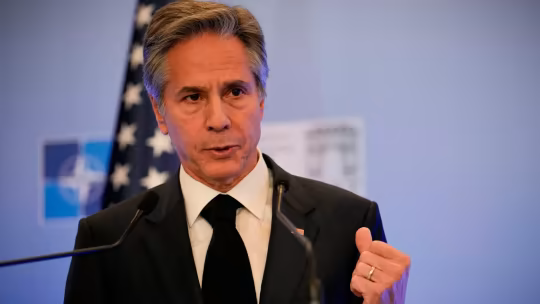
NATO foreign ministers on Wednesday discussed ways to confront what they call the “challenge” posed by China as Secretary of State Antony Blinken is trying to convince alliance members to take a more hawkish stance toward Beijing. “What we talked about today is . . . working to adapt in concrete ways to meet the challenge,” Blinken said after the meeting. He said ways that European countries could take action against China is to use “export controls” to protect sensitive technology. The North Atlantic military alliance officially declared in a strategy document back in June that China poses “systemic challenges.” Blinken said that he now sees a “growing convergence” on how NATO and the EU view China, although some European countries are reluctant to go along with the policies the US is pursuing.

China To Run United Nations Biodiversity Conference

As the world parses what was achieved at the U.N. climate change conference in Egypt, negotiators are convening in Montreal to set goals for curbing Earth’s other crisis: loss of living species. Starting on Dec. 7, 196 nations that have ratified the U.N. Convention on Biological Diversity will hold their 15th Conference of the Parties, or COP15. The convention, which was adopted at the 1992 Earth Summit in Rio de Janeiro, is designed to promote sustainable development by protecting biodiversity — the variety of life on Earth, from genes up to entire ecosystems. Today, experts widely agree that biodiversity is at risk. Because of human activities – especially overhunting, overfishing and altering land — species are disappearing from the planet at 50-to-100 times the historic rate. The United Nations calls this decline a “nature crisis.”

Xi vs Trudeau: How China Is Rewriting History With The Colonial West

Though brief, the exchange between Chinese President Xi Jinping and Canadian Prime Minister Justin Trudeau on the sidelines of the G20 summit in Indonesia on November 16 has become a social media sensation. Xi, assertive if not domineering, lectured the visibly apprehensive Trudeau about the etiquette of diplomacy. This exchange can be considered another watershed moment in China’s relationship with the West. “If there was sincerity on your part,” the Chinese President told Trudeau, “then we shall conduct our discussion with an attitude of mutual respect, otherwise there might be unpredictable consequences.” At the end of the awkward conversation, Xi was the first to walk away, leaving Trudeau uncomfortably making his way out of the room. For the significance of this moment to be truly appreciated, it has to be viewed through a historical prism.

Circuits Of War: On Biden’s Technological Offensive Against China

A world war was declared on 7 October. No news station reported on it, even though we will all have to suffer its effects. That day, the Biden administration launched a technological offensive against China, placing stringent limits and extensive controls on the export not only of integrated circuits, but also their designs, the machines used to ‘write’ them on silicon and the tools these machines produce. Henceforth, if a Chinese factory requires any of these components to produce goods – like Apple’s mobile phones, or GM’s cars – other firms must request a special licence to export them. Why has the US implemented these sanctions? And why are they so severe? Because, as Chris Miller writes in his recent book Chip War: The Fight for the World’s Most Critical Technology (2022), ‘the semiconductor industry produces more transistors every day than there are cells in the human body’.

Xi Jinping, Justin Trudeau And White Supremacist Ideology

The Group of 20, or G20, comprises those nations said to be those with the largest economies in the world. The heads of state who attend the annual summit may have meaningful meetings with one another but the recently convened G20 in Bali, Indonesia was more a source of U.S. inspired drama than anything else.  For example, it wasn’t clear if Chinese president Xi Jinping would meet with Joe Biden after the numerous insults involving Taiwan, including sending the Speaker of the House there after China made clear that this was a red line provocation. Of course, being more mature than the Americans, Xi met with Biden, perhaps only to determine if he was up to some new foolish behavior. The summit was fully devoid of any seriousness when the traditional group photo was eliminated because the U.S. and its NATO/EU vassals didn’t want to be seen with Russian foreign minister Sergei Lavrov.

Filipino Movements Criticize US Vice President’s Visit 

United States Vice-President Kamala Harris ended her three-day visit to the Philippines on Tuesday, November 22, amid protests by peace advocates and social movements in the country. Harris is the first top-level US official to visit the Philippines after President Ferdinand “Bongbong” Marcos Jr took office in June earlier this year. While President Marcos arranged for a warm reception for Harris, social movements received her visit with a massive demonstration to protest the US’ role in the worsening human rights situation in the Philippines. On Monday, November 21, thousands participated in a massive rally in Manila, organized by several groups under the left-wing progressive coalition Bagong Alyansang Makabayan (Bayan).

Pakistan And China Partner To Build Climate Resilience

As part of an ambitious initiative to build climate resilience in the aftermath of disastrous floods, Pakistan has, with Chinese assistance, put up a high-tech environmental observation station to anticipate weather and research climate change. Disasters such as floods, droughts, and cyclones have struck Pakistan in recent years, causing widespread destruction. Since the monsoon season started in mid-June, Pakistan has seen extremely heavy rains—about three times higher than the country’s 30-year average. As a result, Pakistan is facing its worst floods this century, with rivers spilling their banks, flash flooding, and bursting glacial lakes. The climate minister of Pakistan has declared that floodwaters have spread across one-third of the country, making this the worst flooding event in the country’s history.

French Ambassador: US ‘Rules-Based Order’ Means Western Domination, Violating International Law

France’s former ambassador to the United States, Gérard Araud, has publicly criticized Washington, saying it frequently violates international law and that its so-called “rules-based order” is actually an unfair “Western order.” The top French diplomat warned that the United States is engaged in “economic warfare” against China, and that Europe is concerned about Washington’s “containment policy,” because many European countries do not want to be forced to “choose a camp” in a new cold war.
assetto corsa mods

Urgent End Of Year Fundraising Campaign

Online donations are back! Keep independent media alive. 

Due to the attacks on our fiscal sponsor, we were unable to raise funds online for nearly two years.  As the bills pile up, your help is needed now to cover the monthly costs of operating Popular Resistance.

Urgent End Of Year Fundraising Campaign

Online donations are back! 

Keep independent media alive. 

Due to the attacks on our fiscal sponsor, we were unable to raise funds online for nearly two years.  As the bills pile up, your help is needed now to cover the monthly costs of operating Popular Resistance.

Sign Up To Our Daily Digest

Independent media outlets are being suppressed and dropped by corporations like Google, Facebook and Twitter. Sign up for our daily email digest before it’s too late so you don’t miss the latest movement news.