Skip to content

Class Struggle

Why People Say There’s A ‘Nonprofit Industrial Complex’

Lots of nonprofits do important work — like, say, In These Times, which is a reader-supported 501(c)(3). But the “nonprofit-industrial complex” refers to the larger ecosystem of elite foundations and corporate influence-peddling. Incite, a network of radical anti-state violence activists, convened a conference to detail this relationship in 2004, titled, “The Revolution Will Not Be Funded: Beyond the Non-Profit Industrial Complex.” Incite had been grant-funded by the Ford Foundation— funding Incite lost because of its support for Palestine. As outlined at the conference, nonprofits that depend on corporate and foundation funding do so often to the detriment of their missions. Time and energy is spent laundering the reputation of corporate funders, for example, rather than on their stated purpose.

The Plea Bargain Originated To Undermine Working-Class Solidarity

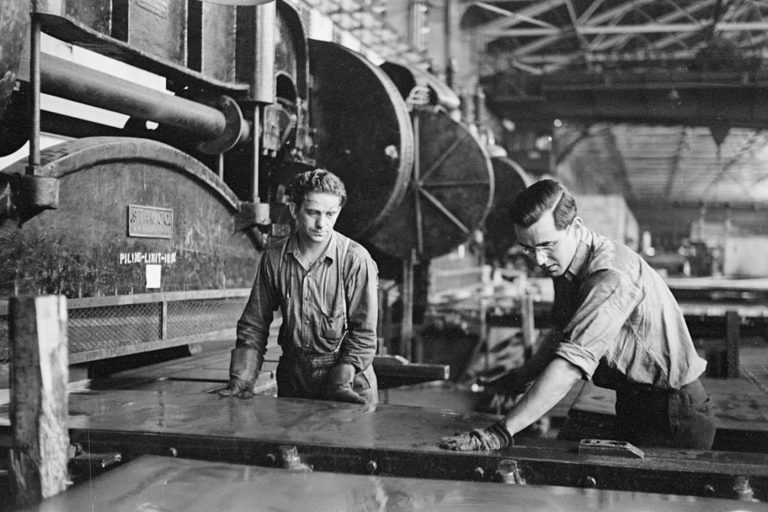
The U.S. criminal legal system is terrible by so many metrics: We lock up more people than anywhere else in the world, our penalties tend to be harsher, our arrest rates are many times higher than other democracies, and so on. Plea bargaining is not often at the top of the list when we think of all harm done by the system, but the U.S. is an outlier in this area as well. More than 95 percent of all American criminal cases end in a guilty plea, mostly due to bargained agreements, making our plea-deal rate much higher than that of any other country in the world. In my book Pleading Out: How Plea Bargaining Creates a Criminal Class, I argue that the widespread use of plea bargaining is a chief enabler of our criminal legal system’s ills.

Independent Unions Can Help Break Through The Economic Crisis

In a period of extreme social and economic crises, when the major labor unions have reduced their organizing programs to a fraction of what they once were and the courts stand athwart any effort to protect workers’ interests, scrappy new independent unions raise hope against hope that maybe — just maybe — workers can fight back and win. I’m writing, of course, about the early 1930s. A newly published book finds some surprising parallels between that era and our own. An eleventh volume in the prolific Marxist labor historian Philip S. Foner’s History Of The Labor Movement In The United States has just been published, after it was discovered that Foner had completed the manuscript before he died in 1994. Subtitled The Great Depression 1929–1932, the book covers a period in which the established unions of the American Federation of Labor were not conducting many organizing campaigns or strikes and had little idea how to successfully contest for power in the large mass production industries that played a dominant role in American life.

As Enough Is Enough Launches, The Working Class Is Fighting Back

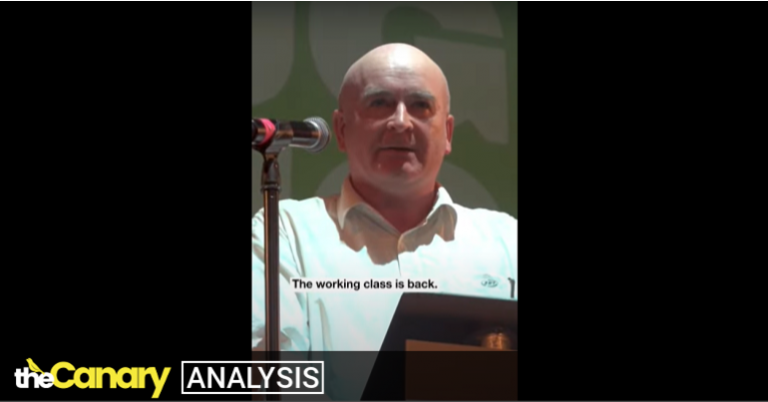
Organised workers are on the move. After years of stagnancy, UK trade unions are starting to ramp up activity again. Needless to say, there’s been little help from the Labour Party. But the waves of strikes are unmistakeable signs of rising working class militancy. The increased popularity of trade union leaders, such as the RMT’s general secretary Mick Lynch and Unite’s Sharon Graham, suggests the post-Corbyn hangover is easing. At the launch of the Enough is Enough campaign on Wednesday 17 August, Lynch told the audience: “The working class is back.” Enough is Enough (EIE) is a new force in the class war. Its supporters include a number of socialist MPs, such as Zarah Sultana and Liverpool’s Iain Byrne. The Tribune, Acorn and the Communication Worker’s Union (CWU) are also backers.

Class Struggle Or Degrowth?

In his recent book, Climate Change as Class War, Matthew Huber argues that the ecological crisis is primarily caused by the capitalist mode of production, especially the preponderant deployment of fossil capital, ‘the forms of capital that generate profit through emissions’. For many on the anti-capitalist left, this is a conclusion that hardly bears repeating. Nevertheless, Huber is right to centre the claim. Ecological collapse is accelerating and requires immediate action. While the global average of emissions must reach zero by 2050 to stay within 1.5–2 °C heating, in order to do this at pace, the parts of the world most responsible for emissions must reach net zero by 2030. But not only are we failing to make progress toward these goals, emissions continue to rise with no end in sight. Huber puts it bluntly: ‘We’re still losing.’

Organized Plunder

At the turn of the twentieth century, Brookside, Alabama was a mining town in the orbit of the industrial center of the New South, a region transitioning away from an agrarian economy and into an industrial one. From 1887 until its closing, the Brookside coal mine run by the Sloss Iron and Steel Company produced the coke that fueled blast furnaces in Birmingham. During this period, miners were both native born and immigrant white, the latter being especially constituted by Eastern European workers. They were also Black, a number of whom, we can presume, had been enslaved a mere twenty-three years prior. And some of them were convicts leased out for labor. But all populations took part in the wave of interracial union organizing in the Alabama coal fields led by the United Mine Workers.

An Objective Look At US Foreign Policy: Joe Lombardo Interview

Joe Lombardo is the co-coordinator of the United National Antiwar Coalition (UNAC) and has been an organizer in the anti-war movement and a labor activist for decades. He is a cofounder and lead organizer for Bethlehem Neighbors for Peace, a local anti-war group based near Albany, New York, a member of the Troy Area Labor Council, and former staff person of the Vietnam era National Peace Action Coalition (NPAC). He is the author of many articles and a frequent radio and TV commentator. We focus here on the realities of the international power struggle unfolding in real time, specifically addressing the role of the U.S. in the tensions and its capacity to reduce them. We are looking for paradigm-shift ideas for improving the prospects for peace. His responses below of are exactly as he provided.

New Report: Gilded Giving 2022

We estimate in Gilded Giving 2022 that if foundations had a 10 percent minimum payout and DAFs had a three-year mandated payout between 2018 and 2020, at least $193 billion in additional donations would have flowed to charities. “As wealth concentrates in fewer hands, it causes troubling distortions in the charity sector,” noted Chuck Collins, director of the Charity Reform Initiative at the Institute for Policy Studies and co-author of the report. “When wealthy donors can claim big tax deductions for charitable giving to private foundations that they control in perpetuity, it allows them to opt out of paying their fair share in taxes to support the systems on which we all depend. This effectively enables already powerful multi-millionaires and billionaires to maintain a taxpayer-subsidized form of private power and influence.”

Ghost Stories Of Capitalism: Watching The Shutters Of Austerity Close

By the end of the 1970s,U.S. capitalism entered its neoliberal phase where austerity and privatization reigned supreme. Federal agencies such as the Department of Housing and Urban Development (HUD) were reduced to near non-existence. Welfare was eradicated all together in 1996 and tens of thousands of public housing units were demolished or privatized under the Bill Clinton administration. CAP agencies either shut their doors permanently or offered only the services that were supported by a mixture of private philanthropy and meagre government subsidy. It was out of this environment that Tri-CAP formed to address the growing problem of extreme poverty, addiction, and homelessness in the cities of Everett, Malden, and Medford. By the time I arrived as a caseworker in the fall of 2013, Tri-CAP had already experienced years of shrinking state and federal funds

The Language We Use To Talk About Inequality, Power, And Class Matters

In the US, discourses of inequality seldom are rooted to the nation’s long history of violent class conflict. Two examples of that history which come quickly to mind are the 1892 Homestead steel strike in Pittsburgh, which earned a place in labor history as the Homestead Massacre and the 1921 coal strike known as the Battle of Blair Mountain in which workers saw their homes bombed as they faced army troops. These were extreme but not unique moments in the history of labor. Oppressive working conditions and inadequate pay have never been an accident or the result of an oversight — they have been for profit.

Economist Michael Hudson On Inflation And Fed Plan To Cut Wages

Hey, everyone, this is Ben Norton, and you are watching or listening to the Multipolarista podcast. I am always privileged to be joined by one of my favorite guests, Michael Hudson, one of the greatest economists living today. We’re going to be talking about the inflation crisis. This is a crisis around the world, but especially in the United States, where inflation has been at over 8%. And it has caused a lot of political problems. It’s very likely going to cause the defeat, among other factors, of the Democrats in the mid-term elections in November. And we’ve seen that the response of the US government and top economists in the United States is basically to blame inflation on wages, on low levels of unemployment and on working people.

The Chris Hedges Report: Struggle Makes Us Human

The neofascist movements currently rising around the globe differ from the fascist movements of the 20th century. Fascism in the last century arose to break radical workers’ movements, many organized by the Communist Party. But the current neofascists, figures such as Jair Bolsonaro in Brazil and Narendra Modi in India, do not need to focus on destroying unions, which have already been decimated by globalization. Instead, they can directly channel the anger of the unemployed and underemployed towards minorities and the vulnerable. Vijay Prashad addresses these deformations—and explains how we can fight back—in conversation with Frank Barat in his new book Struggle Makes Us Human: Learning from Movements for Socialism.

New Global Movement Against Capitalism And For Socialism

Working class communities around the world are organizing against capitalism. They are also forging a new international movement of solidarity and cooperation in the International People’s Assembly. How can organizers build international unity, and oppose the tools used by the ruling class to divide and defeat the popular movements that are expanding democracy while fighting to save the planet? Brian is joined at the People's Summit for Democracy by Stephanie Weatherbee Brito with the International Peoples' Assembly.

The Trend Toward A Multipolar World Is Defined By Class Struggle

In the post-Soviet era, it has become fashionable to strip all geopolitical developments of their class roots. Wars have been explained away by bourgeois propaganda: the War on Terror, Great Power Competition, and matters of “national security.” The Ukraine crisis is a case in point.  Russia’s military operation in Ukraine has been labeled a war without a cause by Western detractors. But underneath the cacophony of capitalist ideology and propaganda is a class struggle occurring on the global stage for multipolarity where the Russia-Ukraine conflict is but one flashpoint. Vladimir Lenin is perhaps the most well-known Marxist revolutionary to advance a modern theory of international relations rooted in the class struggle brought about by imperialism.

The Struggle For What’s Essential

Just over two years ago when lockdowns were being declared like dominoes around the world, there was a brief moment when the COVID-19 pandemic seemed to hold the potential for much-needed reflection. Could it lead to a reversal away from the profit-driven ecological and socio-economic dead end we’ve been propelling toward? Arundhati Roy’s call to critical reflection was published in early April 2020. At the time, she was observing the early evidence, on one hand, of the devastating toll of the pandemic as a result of extraordinary inequality, the privatized health care system, and the rule of big business in the U.S., which continued to play out along lines of class and race.
assetto corsa mods

Urgent End Of Year Fundraising Campaign

Online donations are back! Keep independent media alive. 

Due to the attacks on our fiscal sponsor, we were unable to raise funds online for nearly two years.  As the bills pile up, your help is needed now to cover the monthly costs of operating Popular Resistance.

Urgent End Of Year Fundraising Campaign

Online donations are back! 

Keep independent media alive. 

Due to the attacks on our fiscal sponsor, we were unable to raise funds online for nearly two years.  As the bills pile up, your help is needed now to cover the monthly costs of operating Popular Resistance.

Sign Up To Our Daily Digest

Independent media outlets are being suppressed and dropped by corporations like Google, Facebook and Twitter. Sign up for our daily email digest before it’s too late so you don’t miss the latest movement news.