Skip to content

Cooperatives

Envisioning A Co-Operative Reset For Canada

The title of Ludovic Viger’s new book The Great Canadian Reset says it all. Faced with a series of interlocking political, economic, and environmental crises, the current system isn’t sustainable and can’t be fixed with some minor tweaks. Instead, a full “reset” is required. The subtitle of his book is clear on what he believes it is: Why Co-ops Are the Answer to Our Toughest Problems. “I was looking for one model, or one solution that could help at least make it viable for most Canadians to live in an era of decline,” he says. “And that’s why I came across cooperativism.”

Federation Of Southern Co-ops Sets Out Shutdown Support Measures

With the US federal shutdown entering its second month, the Federation of Southern Cooperatives/Land Assistance Fund has set out its effort to support people suffering food insecurity. The shutdown, which began on 1 October, has affected food stamp payments issued through the Supplemental Nutrition Assistance Program (Snap) benefits. This month, the Trump administration said claimants will be given half their normal monthly allotment, taken from emergency funding. The Federation has pointed to the ”urgency” of the situation and its impact on programmes like SNAP, “which millions depend on for food access”, and says it has “built infrastructure to address crises like this”.

How The Rhizome Therapy Cooperative Counters Burnout

“One of the things I don't think a lot of people outside the mental health field realize,” says clinical social worker Evelyn Heflin, “is that a lot of community mental health agencies, because they're underfunded, and private practices that are larger agency format, really sort of take advantage of the therapists at the bottom.”  Faced with unsustainable caseloads, a lack of additional support, and inadequate pay for the work they do—a situation grown drastically worse since the COVID pandemic began—over half of mental health clinicians reported experiencing burnout in surveys conducted between 2021 and 2024.

Worker Cooperatives Make The World Better

I have been a witness to how worker ownership tends towards humanisation. In the lead up to Christmas 2014, Ingham Poultry announced that it was planning to shut its turkey processing facility near the town of McLaren Vale just outside of Adelaide on the Fleurieu Peninsula. The plant was represented by my union at the time — the National Union of Workers (NUW). The local manufacturing workforce, with the recently announced shut down of the Australian car manufacturing industry that hit South Australia particularly hard, did not have many other options. The local turkey and poultry farmers, meanwhile, did not have any other accessible processing facilities in the area. A group of workers and farmers got together to campaign to re-open the factory under the operation of a joint worker-farmer cooperative.

In The Year Of The Cooperative, Rural Grocers Find Power In Partnership

As 2025 marks the United Nations’ International Year of Cooperatives, communities across the U.S. are spotlighting how cooperative models can sustain local economies and strengthen food systems. That mission was front and center during a recent Rural Grocery Initiative webinar that unveiled findings from a two-year project on local sourcing in rural grocery stores. Led by Rial Carver, program director for RGI at Kansas State University, the project was designed to identify innovative ways to help small-town grocers connect with local producers — and, in doing so, keep grocery access alive in communities often bypassed by large retail chains. “Rural grocery stores are anchor institutions,” Carver says in an RGI webinar. “Without them, communities lose out on economic, health and cultural benefits.”

Brazil’s Co-Ops Have Big Asks Ahead Of COP30

With the UN Climate Change Conference (COP30) taking place in Belém, Brazil, in November, the country’s co-op movement is trying to boost its presence in climate discussions and reaffirm its commitment to sustainable development. Co-ops are key players in Brazil, accounting for 75% of wheat, 55% of coffee, 53% of corn, 52% of soybeans, 50% of pigs, 46% of milk and 43% of beans produced. The nation’s 4,500 co-ops represent 23 million members. In March, the Brazilian Cooperative Organisation (OCB) published a COP30 Manifesto, after a series of conversations with member organisations and co-op leaders which started at the 15th Brazilian Cooperative Congress in 2024.

Reshaping The Music Industry Through Solidarity

The music industry doesn’t have to be exploitative. What if artists owned the platforms we depend on? What if musicians shared resources, power, and profits—together?  Recorded live at AmericanaFest 2025, this panel explores how music cooperatives are reshaping the industry through solidarity, not exploitation. We discuss:  Why artists need alternatives to Spotify and corporate streaming.  How cooperatives create sustainable careers for musicians.  Building movements rooted in community, equity, and ownership.  This conversation is just the beginning. Together, we can build the music industry we actually want to exist in.

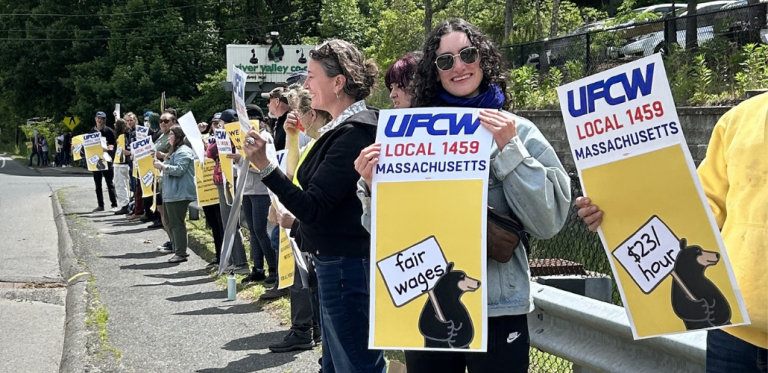
River Valley Co-Op Workers Opened Up Bargaining And Won Big

River Valley Co-op is a consumer-owned cooperative grocery store with two locations in Western Massachusetts. We have been unionized with Food and Commercial Workers (UFCW) Local 1459 for the last decade with 175 workers in our bargaining unit. This year, beginning in January and ending in June, we held thirteen bargaining sessions with RVC management and their attorneys in a process that was transformative for our union. Negotiations were tense and at times, adversarial. Workers took a stand in ways they never had before, strengthening our relationships and faith in our ability to fight and win. We made significant strides in the contract, including $2 an hour raises across the board, union orientation for new hires, and protections for our immigrant co-workers. Our contract was ratified with 77 percent of workers turning out for a nearly unanimous ‘yes’ vote.

Crypto Companies Are Eyeing Credit Unions

I've written a couple of blog posts in the past about crypto currency and why I think co-ops need to stay far away from everything to do with them. I now realize, however, that I was somewhat misguided - not in sounding an alarm about the crypto hype, but in the audience that I was directing my warnings to. I was focused on worker co-ops, where I was happy to not see any real uptake. However, I failed to realized that the most obvious place for crypto to infiltrate the co-op sphere was not in worker co-ops, but in credit unions. In retrospect, this was a huge oversight on my part. Of course the funny money people would be going after our financial institutions - and it appears they've managed to hook their first big fish in the CU space.

Avoiding The AI Hypetrain

I have to admit, I do find it a bit amusing to watch someone climb onboard a hypetrain at the exact moment that said train is hurtling off a cliff. It does spoil the fun though, when that someone is an apex organization for the national coopererative movement. Unfortunately, that's what it felt like last week when I happened upon a video of NCBA CLUSA's most recent Co-op Circle Happy Hour. The topic for the event was "Cooperatives on AI, Data, and Democracy"; and the first 10 minutes consisted of a presentation by NCBA's Senior Director of Information Technology about ways that co-ops can use "AI." I put "AI" in scare-quotes because that term covers a broad range of tools that have very little, if anything, in common with each other.

Unifying With Cooperative Principles

Polarization of public opinion has accelerated in recent years. Throughout history political and military leaders have unified people against others to garner support for conducting civil or foreign wars. In recent years some politicians, without wanting war, have gained loyal supporters by demonizing opposition leaders and their supporters. This strategy is traced back to the philosopher, Leo Strauss (1899-1973). He asserted that “People can only be unified against other people” (Buruma, 6). Over the last three decades or longer Strauss’s teachings and writings have been adapted by some political operatives as a strategy for winning elections.

Following Sol Power Solar’s Example, R.I. Worker Co-Ops Gain Energy

Charlestown, R.I. – Sol Power Solar has installed renewable energy for more than 1,100 customers since becoming an early pioneer in Rhode Island’s solar industry in 2013. The staff credit this success to the company’s business model, in which each employee is an equal owner of the company. Now, Sol Power and a group of fellow cooperative businesses are trying to pave the way for workers to democratically run their own workplaces across the state. When Eric Beecher founded Sol Power, he always knew he wanted it to be democratically run. “It just seemed to me like the best way to run a company, kind of the fairest and most sustainable way to do it,” said Beecher, who notes the company is technically an LLC because it was established before the state allowed businesses to register as workers’ cooperatives.

Mobile Home Mobilization

For Gayle Pezzo, it started with the snowplows. In the fall of 2018, following a winter distinguished by the biggest snowfall in years, the town of Colchester, Vt., stopped plowing the nearly five miles of roads that snake through Westbury Mobile Home Park, where Pezzo, 72, lives. She and her neighbors were furious that the local government could simply withdraw its services and leave the park in the lurch. According to the Colchester Selectboard, the town’s five-member governing body, clearing Westbury’s roads was not the responsibility of public plows. They had decided that Westbury was a private residence — in effect, one with a long, rambling driveway that happened to shelter 250 working-class Vermont families.

Reimagining NGO Relationships With Cooperatives

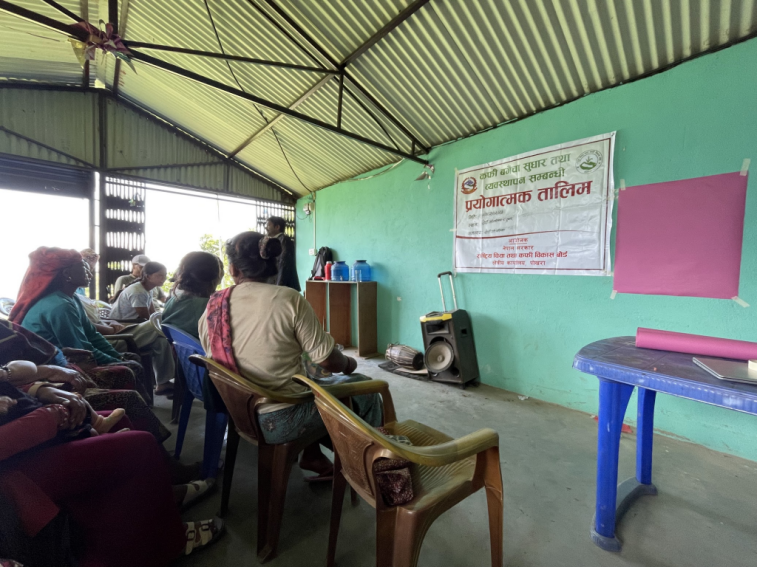
On her last commute, she sprained her ankle. Still, every morning in the beginning of the month, Lalmaya—the president of Milijuli cooperative—walks two hours down steep hills to reach its office. Halfway there, she pauses to rest, smiles through the pain, and says, “See, we have to have love, you know?” Behind her face, I see the resilience of enduring a lifetime of gender- and caste-based oppression as a Dalit in Nepal, yet continues to pour her passion into transforming the economic lives of women in her village through the collective power of the Milijuli Cooperative. In Nepal, more than 34,000 cooperatives—known locally as sahakari—have sprung up over the past few decades. With principles democratic member control and economic participation, the cooperative stands apart from similarly ubiquitous organizations in Nepal: NGOs.

What The World Can Learn From Uruguay’s Housing Co-Ops

More than 1.8 billion people lack access to adequate and affordable housing. Yet too few countries have taken meaningful steps to ensure dignified housing for their most vulnerable citizens. We research how cooperative housing can serve as one solution to the affordable housing crisis. There are a variety of cooperative housing models. But they generally involve residents collectively owning and managing their apartment complexes, sharing responsibilities, costs and decision-making through a democratic process. Some countries have embraced cooperatives. In Zurich, Switzerland, almost one-fifth of the city’s total housing stock is cooperative housing.
assetto corsa mods

Urgent End Of Year Fundraising Campaign

Online donations are back! Keep independent media alive. 

Due to the attacks on our fiscal sponsor, we were unable to raise funds online for nearly two years.  As the bills pile up, your help is needed now to cover the monthly costs of operating Popular Resistance.

Urgent End Of Year Fundraising Campaign

Online donations are back! 

Keep independent media alive. 

Due to the attacks on our fiscal sponsor, we were unable to raise funds online for nearly two years.  As the bills pile up, your help is needed now to cover the monthly costs of operating Popular Resistance.

Sign Up To Our Daily Digest

Independent media outlets are being suppressed and dropped by corporations like Google, Facebook and Twitter. Sign up for our daily email digest before it’s too late so you don’t miss the latest movement news.