Skip to content

Cuba

While Normalizing Relations With Cuba, US Still Funds Destablization

By Staff for Telesur. The US Empire seeks to dominate other countries with a variety of tools. Some critical tools of destablization are the National Endowment for Democracy and the US Agency for International Development. These groups have been involved in a multiplicity of coups and destablization efforts. They have been caught in a series of covert operations in Cuba during the Obama administration. They were also central to the coup in the Ukraine and they were involved in the mass protests in Hong Kong over the last year as well as in Venezuela and other nations. This type of work used to be done by the CIA, no doubt the CIA still takes such actions, but now these "democracy" and "aid" agencies have been added to the team. Despite movement toward normalization of relations with Cuba, the US has allocated $30 million to so-called democratization of Cuba.

IFCO & VB: Relevance Of Civil Disobedience In Solidarity With Cuba

The blockade is still in place. Travel restrictions still exist. Guantánamo Bay is still illegally occupied by the U.S. military and used as a venue for imprisonment and torture. And the U.S. government still funds USAID projects aimed at undermining the Cuban government. While this is undoubtedly a time for celebration, it is critical today more than ever that the VB, IFCO, and all friends of Cuba unite and are persistent in defending Cuba’s national sovereignty and right to self-determination. Today, energized by the example of the Cuban Revolution and empowered by community activists who came before them, members of IFCO, the VB, and other international Cuba solidarity movements continue to look to Cuba as a role model. Cuba has shown us that another world is possible. In the words of the late Reverend Lucius Walker, founder of IFCO/Pastors for Peace: “We act not just in defiance of our government, but in obedience to our conscience.”

Voices & Images From The People’s Summit In Panama

The Summit of the Americas, beginning Friday in Panama City, has incorporated parallel meetings. The Youth forum, the Academic forum, the Business forum and the Civil Society and Social Actors forum were organized after a process of selection by the Organization of American States, which also organizes the presidential summit. However, more than 2,000 social movements and progressive organizations have organized the People's Summit, an event that seeks to express backing for the policies advanced in the region in recent years, following the election of numerous left-wing governments. The social movements that will participate in the parallel summit include small farmers, indigenous groups, human rights activists, political movements, worker unions and environmentalist organizations. With such a diverse array of different issues the organizations agreed on an extensive agenda to discuss the most important problems which they believe will not be present in the official presidential event. “We are not an anti-(Americas) Summit. We are a summit that aims at giving voice to the popular movements that are not part of the Summit of the Americas. Our objective is to raise the issue of fighting poverty, for social equality and the sovereignty and right to self determination of the people. We are discussing things completely different to the Americas Summit agenda,” explained Dr. Fernando Cebamanos, organizer of the People's Summit and President of the Broad Front for Democracy party in Panama.

Che Guevara Murderer Attending Summit Of The Americas

According to some reports, Felix Rodriguez has arrived in Panama to attend the OAS forums. According to Yoanislandia, quoting “friends in solidarity with Cuba,” the man who murdered Ernesto “Che” Guevara, Felix Rodriguez, arrived in Panama on Tuesday to attend the Summit of the Americas forums. Rodriguez is a Cuban and an ex-CIA agent. He is also known for having participated in the Bay of Pigs invasion. The CIA also sent him to Bolivia to kill revolutionary leader Guevara in 1967. He ordered that Guevara be “shot below the neck” so that it could be “proved” that he had been “killed in combat.” On Tuesday, the official Cuban delegation to the Civil Society Forum that is happening parallel to the Summit of the Americas, denounced that various “well known” and paid “mercenaries” – professionals paid to oppose the Cuban government – were also attending the forums.

OAS Election Indicates Waning US Influence In Latin America

Today’s election of Luis Almagro as the new Secretary General of the Organization of American States (OAS) is “another indication of declining U.S. influence in Latin America,” Center for Economic and Policy Research Co-Director Mark Weisbrotsaid today. As foreign minister of Uruguay from 2010—2015, Almagro was involved in strengthening regional integration through organizations such as the Union of South American Nations and the Community of Latin American and Caribbean States. Almagro finished the race unopposed, but he previously had been running against the former foreign minister of Guatemala, Eduardo Stein. Stein received the backing of countries such as Honduras, Panama and the Dominican Republic prior to withdrawing his candidacy, while Almagro received strong support from South American nations, including Colombia.

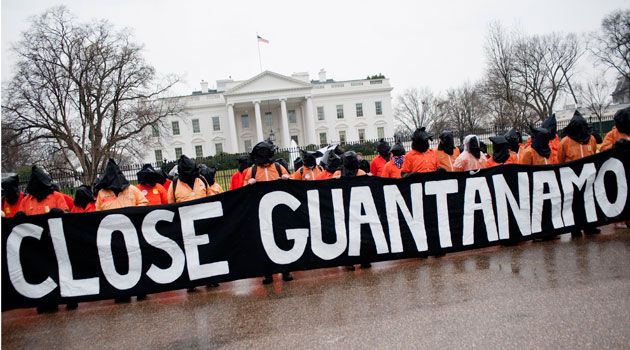
End US Blockade Of Cuba & Military Occupation Of Guantanamo!

Cuba has secured these rights for black people, however… there is still much work to do. We have a responsibility, as people of color worldwide to defend all of the advances that Cuba has made. Cuba is a country that has stuck its neck out for Black liberation struggles around the world, not to mention the liberation struggles in Angola and many of countries and the strong role Cuba played in the liberation of South Africa in freeing Nelson Mandela. One must acknowledge what is currently happening, that Cuba was the first country to step up to fight the Ebola virus. When most countries, only committed money (and we don’t know where this money goes), Cuba actually put up the lives of its doctors to stop the virus. It’s amazing how Cuba has offered scholarships to young black people from all over the African continent and all across the America’s to come study here and become professionals.

Op-Ed On Venezuela Slips Past NYT Factcheckers

A February 15, 2015, op-ed on Venezuela by Enrique Krauze seems to have slipped by theNew York Times' factcheckers. Krauze's thesis (a tired one, but very popular with Venezuelan and Cuban right-wingers in South Florida) is that Venezuela has not only followed "the Cuban model," but has recently outdone Cuba in moving Venezuela further along a socialist path even as Cuba enacts economic reforms. This idea is not merely an oversimplification--as it might appear to the casual observer of Latin American politics--but is largely misleading. To bolster his case, Krauze--a prominent Mexican writer and publisher--includes numerous false statements and errors, which should have been caught by the Times' factcheckers.

Redacted Tonight: Political Prisoners, War Criminals And Monsanto

Think political prisoners is a problem only OTHER countries face? Think again. The US has many political prisoners from Chelsea Manning to former governor Don Siegelman. Most of them are behind bars for trying to reveal various crimes by our government. Most of these prisoners should be called heroes. Comedian Lee Camp breaks it down on his show "Redacted Tonight" - and he makes it somehow seem a lot funnier than this description lets on! Also Team Redacted celebrates Monsanto's loss, McDonald's struggle, and the death of King Abdullah. They also weigh in on crazy wealth inequality and America's love affair with Cuba.

Guantánamo Diary Exposes Brutality Of US Rendition & Torture

The groundbreaking memoir of a current Guantánamo inmate that lays bare the harrowing details of the US rendition and torture programme from the perspective of one of its victims is to be published next week after a six-year battle for the manuscript to be declassified. Guantánamo Diary, the first book written by a still imprisoned detainee, is being published in 20 countries and has been serialised by the Guardian amid renewed calls by civil liberty campaigners for its author’s release. Mohamedou Ould Slahi describes a world tour of torture and humiliation that began in his native Mauritania more than 13 years ago and progressed through Jordan and Afghanistan before he was consigned to US detention in Guantánamo, Cuba, in August 2002 as prisoner number 760. US military officials told the Guardian this week that despite never being prosecuted and being cleared for release by a judge in 2010, he is unlikely to be released in the next year.

Cuban Scholars: “US-style Democracy Not Only Option”

On December 17, 2014, President Obama announced that he was ordering “the most significant changes to our policy in more than fifty years” and that the United States was “changing its relationship with the people of Cuba.” While only Congress can lift the embargo, the changes Obama announced were indeed significant: re-establishing diplomatic relations, opening a review of Cuba’s designation as a sponsor of state terrorism, and further easing travel, trade, and aid restrictions. The speech came on the heels of a series of embarrassments for the United States, as clumsy covert programs aimed at promoting ‘civil society’ in Cuba were revealed and WikiLeaks cables acknowledged that US-supported ‘dissidents’ had little importance to Cuban society.

Diplomatic Relations With Cuba & Sanctions For Venezuela

I think Venezuela is seen, certainly by this group of legislators that form a very small minority of the Congress but that hold very powerful positions on committees, Venezuela is seen as a bigger threat these days than Cuba, due to its rather large regional influence. And so they are now focusing more and more. They were very pleased to see see this legislation go through. And it made, I think, this opening towards Cuba slightly more palatable to these members of Congress. It is supported by some of the opposition. It's supported by what's sort of called the extremist or radical opposition, those who actually promoted the violent protests that took place back in March--February, March of this year. These protests, of course, involved a lot of violence that was carried out directly by protesters, and it's something that the mainstream media, of course, didn't cover very well at all.

I Am A 20th Century Escaped Slave

y name is Assata Shakur, and I am a 20th century escaped slave. Because of government persecution, I was left with no other choice than to flee from the political repression, racism and violence that dominate the US government’s policy towards people of color. I am an ex-political prisoner, and I have been living in exile in Cuba since 1984. I have been a political activist most of my life, and although the U.S. government has done everything in its power to criminalize me, I am not a criminal, nor have I ever been one. In the 1960s, I participated in various struggles: the black liberation movement, the student rights movement, and the movement to end the war in Vietnam.

Freed Guantánamo Detainees Adjust To Life In Uruguay

The group of four Syrians, a Tunisian and a Palestinian is still bound by the silence imposed by Washington regarding their experiences in the prison. IPS met with them for the second time Dec. 30 in the house where the Syrians are living in downtown Montevideo. A few are already speaking some Spanish and struggling to adjust to their new reality. Contacts with relatives have been established and the men are now looking for ways to reunite with their families, with the support of the Uruguayan government. After the shock of liberation, the six men are still struggling to fully understand where they are and to match as much as possible their beliefs and expectations for a new life with Uruguay’s social norms. Difficult, but necessary, is to reconcile the diverse social and political expectations and interests surrounding the group since the government of José Mujica decided to host them as refugees on humanitarian grounds.

National Protest Against Prison At Guantanamo Planned For Miami

Following the recent CIA torture report, determined activists in Florida are gearing up for the annual march and protest to shut down the U.S. torture prison at the Guantanamo Bay Naval Base, Cuba. Anti-war leaders expect hundreds will protest outside the gates of the U.S. Southern Command (SOUTHCOM) on Jan. 11 in Doral, Florida, which is located near Miami. Notable speakers from across the country include Nancy Mancias of CodePink!, Camilo Mejia of Veterans for Peace and Holly Kent-Payne of Chicago with the Committee to Stop FBI Repression. “We need to continue to oppose U.S. torture of citizens and non-citizens alike. The detention centers at Guantanamo Bay are symbols of oppression and violence and must be shut down,” said Pamela Maldonado, an organizer with People’s Opposition to War, Imperialism, and Racism (POWIR).

One Step Forward, One Step Back In US-Latin America Policy

Venezuela has just joined Cuba as one of only two countries in the Western Hemisphere subject to U.S. sanctions. Legislation mandating sanctions against Venezuelan officials was approved by voice vote in the Senate on Dec. 8 and then sailed through the House on Dec. 10. On Dec. 18, just one day after his speech on a "new course" on Cuba, Obama signed the sanctions bill into law. Cuban-American Sen. Bob Menendez (D-N.J.), who authored the legislation, called it "a victory for the Venezuelan people." The trouble is, the people of Venezuela don't seem to agree with Menendez. A survey carried out by independent pollster Datanalisis showed that nearly three quarters of Venezuelans oppose U.S. sanctions. The Caracas-based human rights organization PROVEA — a frequent critic of Venezuelan President Nicolás Maduro — also vigorously rejects the measure. Other Latin American governments oppose the sanctions as well.
assetto corsa mods

Urgent End Of Year Fundraising Campaign

Online donations are back! Keep independent media alive. 

Due to the attacks on our fiscal sponsor, we were unable to raise funds online for nearly two years.  As the bills pile up, your help is needed now to cover the monthly costs of operating Popular Resistance.

Urgent End Of Year Fundraising Campaign

Online donations are back! 

Keep independent media alive. 

Due to the attacks on our fiscal sponsor, we were unable to raise funds online for nearly two years.  As the bills pile up, your help is needed now to cover the monthly costs of operating Popular Resistance.

Sign Up To Our Daily Digest

Independent media outlets are being suppressed and dropped by corporations like Google, Facebook and Twitter. Sign up for our daily email digest before it’s too late so you don’t miss the latest movement news.