Skip to content

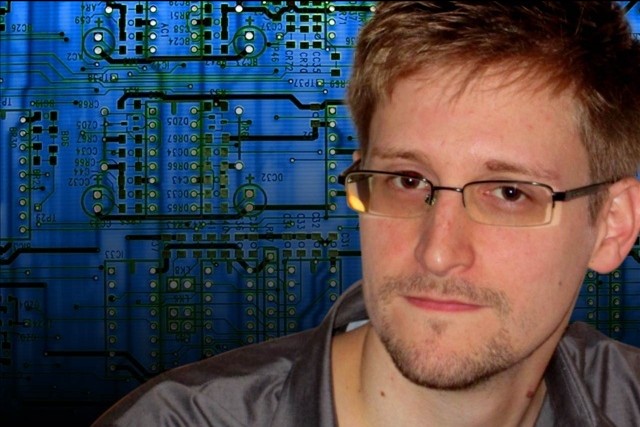
Edward Snowden

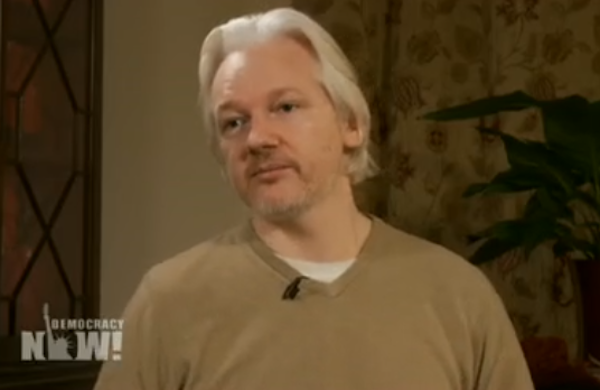
Julian Assange On Wikileaks, Snowden

AMY GOODMAN: The Ecuadorean Embassy in London, where Julian Assange is holed up—he has been here for just over two years, just celebrated his 43rd birthday inside the embassy. Here you can see the British police, and right in front of me is the balcony where Julian Assange has come out and addressed his supporters and addressed the media. The Ecuadorean flag hangs from that balcony. As to when Julian Assange will come out, well, he is concerned, if he steps foot outside, he will be arrested by the British police. So, for now, he’s inside, this nomad of the digital age. We’re in the Ecuadorean Embassy in London, where Julian Assange took refuge two years ago. He’s been detained in Britain for close now to four years. Welcome to Democracy Now!, Julian. JULIAN ASSANGE: Thank you, Amy. AMY GOODMAN: How are you doing here? It’s been over two years that you have really not seen daylight for any extended period of time. JULIAN ASSANGE: There’s been nearly four years that I’ve been detained without charge, in one form or another, here in the United Kingdom, first in prison, the solitary confinement, then under house arrest for about 18 months, and now two years here in the embassy.

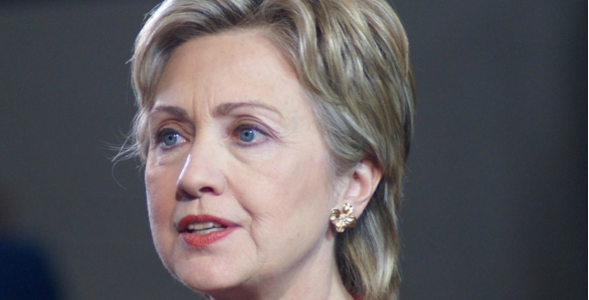
Hillary Urges Snowden: Come Home To Face Indictments

The former US secretary of state Hillary Clinton has said Edward Snowden should have the right to launch a legal and public defence of his decision to leak top-secret documents if he returns to the United States. "If he wishes to return knowing he would be held accountable and also able to present a defence, that is his decision to make," Clinton said in a video interview with the Guardian on Friday. Snowden, who is currently in Russia where he has been afforded temporary asylum, has been charged with three separate violations of the US Espionage Act. These charges include stealing government property and sharing classified documents with the Guardian and the Washington Post.

A New Play About Edward Snowden Opens In London

Edward Snowden is holed up in a hotel in Hong Kong. He has left his life in Hawaii, abandoned paradise for a life on the run. Tortured by thoughts of his girlfriend, his mother and father and the ghosts of other whistleblowers from Chelsea Manning in solitary confinement to Thomas Drake, charged with 35 years imprisonment, he waits. But will the CIA and the National Security Agency find him first? This story has not yet finished. The revelations of mass surveillance by the U.S. and British security services keep coming out. Never mind about Angela Merkel, are they listening to your conversations, reading your messages, checking your emails?

Showing Solidarity With Whistleblowers, Defending Our Right To Know

Sarah Harrison is a British journalist, legal researcher and WikiLeaks investigation editor. She works with WikiLeaks and is a close adviser to Julian Assange. Harrison accompanied National Security Agency whistleblower Edward Snowden on a high-profile flight from Hong Kong to Moscow while he was sought by the United States government. She is director of the new Courage Foundation, which seeks to defend whistleblowers as well as our right to know. Kevin Zeese: Sarah, tell us what the Courage Foundation is and what the goals of the organization are. Sarah Harrison: The Courage Foundation was born from the idea that whistleblowers need protection from prosecution. When we first started to help Edward Snowden, there were many other NGOs and organizations around the world that should have been able to help him; but, when it comes to high risk people with huge persecution from places like the United States, the reality is that to move quickly and robustly to provide the support they need is actually very difficult. So after we helped Snowden, we realized that there was a need for an organization that was able to do this for future Snowdens as well. So we set up Courage on that basis. In addition, Courage will be fighting for policy and legal changes to give whistleblowers the protections they deserve. I'm very pleased that you accepted to be on our advisory board Kevin.

Clinton Sides With NSA Over Snowden Disclosures

Likely 2016 presidential candidate Hillary Clinton has taken a firm stance against the actions of NSA whistleblower Edward Snowden, denying his revelations have brought any positive impacts and slamming him for accepting asylum in Russia. Speaking with NPR's Terry Gross on Thursday, Clinton claimed Snowden could have "expressed his concerns" in other ways "by reaching out to some of the senators or other members of Congress or journalists in order to convey his questions about the implementation of the laws surrounding the collection of information concerning Americans' calls and emails." Her comments sparked criticism from progressives, journalists and civil liberties advocates. "[Clinton] is just piling on with others who criticized Snowden, not recognizing that if it were not for him and his courageous disclosures, we wouldn't even know our government is routinely violating our 4th amendment rights," Matt Rothschild, senior editor of The Progressive magazine, told Common Dreams.

US Was Working To Capture Snowden When He Evaded Them

Below are two articles that describe how multiple agencies of the Untied States were moving to capturing Edward Snowden when he evaded capture by going to Russia en route to Latin America -- where he hoped to receive political asylum. The United States had a CIA rendition airplane -- an unmarked plane that did not file its flight path -- ready in Europe to take Snowden back to the US. This kidnapping from another nation without any judicial process would not have been unusual for the United States and very likely would have been upheld by the courts which have upheld kidnapping as a legal tactic in other cases, a line of cases coming from the war on drugs. Once Snowden got to the Moscow Airport multiple agencies were meeting regularly under the leadership of Homeland Security looking for an opportunity to snatch him, hoping he would make a mistake . . .

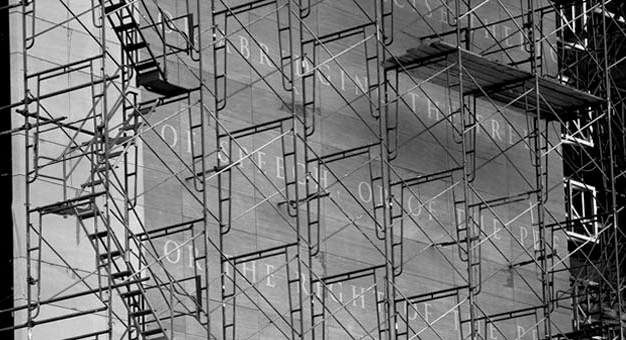
The Constitution Impaired; The Bill Of Rights Annulled

The separation of powers established by the Constitution is eroding. Rights guaranteed by constitutional amendments are becoming irrelevant. Reporting a crime may be a crime, and informing the public of the truth is treason. Here in post-Snowden America, the language and the principles of the Fourth Amendment of the Constitution sound almost quaint: The right of the people to be secure in their persons, houses, papers and effects, against unreasonable searches and seizures, shall not be violated, and no Warrants shall issue, but upon probable cause, supported by Oath or affirmation, and particularly describing the place to be searched, and the persons or things to be seized.41 The amendment, however, has an abiding intention and a context that are not-so-quaint. In the American colonies, it was an unpopular yet common practice of the British government to issue general search warrants for tax collection purposes. Law enforcement authorities and customs officials searched whole towns, house by house, in an effort to identify every taxable possession or activity. This practice was—and is—easily recognizable as the conduct of a tyrannical government, which gives law enforcement the sweeping authority to search anyone at any time for any reason. Or for no reason at all.

Defending Our ‘Right To Know’ With Courage

Yesterday in Berlin, a new international organization was announced whose purpose is to (1) defend whistleblowers when they are facing prosecution; and (2) defend the public’s right to know. In a video to the Courage Foundation opening announcement Edward Snowden described how we need to confront surveillance because in order to participate in a democratic government we need to know “what the government is doing to us and what they are doing in our name.” It the people are not informed about what the government is doing “the government becomes a force unto itself not a public servant but a public master.” Snowden believes that public officials who take illegal or unethical action must be held accountable. Snowden goes on to say that since government is not protecting whistleblower we must say “we will protect them as a global society.” For him the Courage Foundation is “a new rapid response team for global democracy” saying now, when “we see someone facing unjustified retaliation for performing a public service we can rally to their defense.”

Al Gore: NSA Dragnet Surveillance Killing Democracy

Edward Snowden has secured his highest endorsement yet in the US when former vice-president Al Gore described the leaking of top secret intelligence documents as "an important service". Asked if he regarded Snowden as a traitor or whistleblower, Gore veered away from the "traitor" label. He refused to go as far as labelling him a whistleblower but signalled he viewed him as being closer to that category than a traitor, saying: "What he revealed in the course of violating important laws included violations of the US constitution that were way more serious than the crimes he committed." Snowden, the former CIA and National Security Agency computer specialist, leaked US and British documents to the Guardian and Washington Post in June last year, starting a worldwide debate on the balance between surveillance and privacy. His revelations have led to proposed changes in legislation in the US and a backlash against government surveillance by major telecoms and internet companies. But he remains a polarising figure in the US. An NBC poll a fortnight ago showed 24% backing him and 34% disagreeing with his actions, with 40% having no opinion.

Snowden: Now We Know We’re Under Surveillance

Edward Snowden: Today, our most intimate private records are being indiscriminately seized in secret, without regard for whether we are actually suspected of wrongdoing. When these capabilities fall into the wrong hands, they can destroy the very freedoms that technology should be nurturing, not extinguishing. Surveillance, without regard to the rule of law or our basic human dignity, creates societies that fear free expression and dissent, the very values that make America strong. In the long, dark shadow cast by the security state, a free society cannot thrive. That’s why one year ago I brought evidence of these irresponsible activities to the public—to spark the very discussion the U.S. government didn’t want the American people to have.

Snowden Sounds Call To Reset The Net

It's been one year since news broke that Edward Snowden had leaked troves of US government documents detailing the National Security Agency's secret spying programs. And, to mark this anniversary Internet advocates have launched a pro-privacy campaign and day of action called Reset the Net. Not only have some top tech titans signed on, like Google, Mozilla, and Reddit, but Snowden himself has also thrown his weight behind the movement. In a statement issued via his attorney on Wednesday, Snowden said that in the face of government foot dragging, Reset the Net is a way citizens can "take back" their privacy. "Today, we can begin the work of effectively shutting down the collection of our online communications, even if the US Congress fails to do the same," Snowden wrote. "This is the beginning of a moment where we the people begin to protect our universal human rights with the laws of nature rather than the laws of nations." Reset the Net aims to circumvent policy makers and put the power directly in the hands of Internet users. The advocacy group behind the movement, Fight for the Future, has been rallying tech companies to join the cause and create encryption tools for users.

Edward Snowden, World’s ‘Most Wanted Criminal’

In the past several months, we have been provided with instructive lessons on the nature of state power and the forces that drive state policy. And on a closely related matter: the subtle, differentiated concept of transparency. The source of the instruction, of course, is the trove of documents about the National Security Agency surveillance system released by the courageous fighter for freedom Edward J. Snowden, expertly summarized and analyzed by his collaborator Glenn Greenwald in his new book, "No Place to Hide." The documents unveil a remarkable project to expose to state scrutiny vital information about every person who falls within the grasp of the colossus - in principle, every person linked to the modern electronic society. Nothing so ambitious was imagined by the dystopian prophets of grim totalitarian worlds ahead.

ExposeFacts.org: New Group To Aid More Whistleblowers

ExposeFacts “aims to shed light on concealed activities that are relevant to human rights, corporate malfeasance, the environment, civil liberties and war,” the group says -- and its website will feature a whistleblower submission system known as “SecureDrop.” The new organization, ExposeFacts.org, “aims to shed light on concealed activities that are relevant to human rights, corporate malfeasance, the environment, civil liberties and war. At a time when key provisions of the First, Fourth and Fifth Amendments are under assault, we are standing up for a free press, privacy, transparency and due process as we seek to reveal official information -- whether governmental or corporate -- that the public has a right to know.” The ExposeFacts.org website goes live on Wednesday.

Oliver Stone To Helm Edward Snowden Film

Oliver Stone and long-time producing partner Moritz Borman have nabbed the rights to “The Snowden Files, The Inside Story of the World’s Most Wanted Man,” written by journalist Luke Harding. Stone will pen and helm the film, drawing from Harding’s account of events surrounding the Guardian newspaper’s reporting of the disclosures provided by Edward Snowden. Stone has started to write the screenplay and Borman is fast-tracking it as a European co-production to start filming before the end of the year. The book was described by the New York Times as “a fast-paced, almost novelistic narrative that is part bildungsroman and part cinematic thriller.” Stone said: “This is one of the greatest stories of our time. A real challenge. I’m glad to have the Guardian working with us.”

Snowden Would Not Get Fair Trial, Kerry Is Wrong

But John Kerry is wrong, because that's not the measure of patriotism when it comes to whistleblowing, for me or Snowden, who is facing the same criminal charges I did for exposing the Pentagon Papers. As Snowden told Brian Williams on NBC later that night and Snowden's lawyer told me the next morning, he would have no chance whatsoever to come home and make his case – in public or in court. Snowden would come back home to a jail cell – and not just an ordinary cell-block but isolation in solitary confinement, not just for months like Chelsea Manning but for the rest of his sentence, and probably the rest of his life. His legal adviser, Ben Wizner, told me that he estimates Snowden's chance of being allowed out on bail as zero. (I was out on bond, speaking against the Vietnam war, the whole 23 months I was under indictment). More importantly, the current state of whistleblowing prosecutions under the Espionage Act makes a truly fair trial wholly unavailable to an American who has exposed classified wrongdoing.
assetto corsa mods

Urgent End Of Year Fundraising Campaign

Online donations are back! Keep independent media alive. 

Due to the attacks on our fiscal sponsor, we were unable to raise funds online for nearly two years.  As the bills pile up, your help is needed now to cover the monthly costs of operating Popular Resistance.

Urgent End Of Year Fundraising Campaign

Online donations are back! 

Keep independent media alive. 

Due to the attacks on our fiscal sponsor, we were unable to raise funds online for nearly two years.  As the bills pile up, your help is needed now to cover the monthly costs of operating Popular Resistance.

Sign Up To Our Daily Digest

Independent media outlets are being suppressed and dropped by corporations like Google, Facebook and Twitter. Sign up for our daily email digest before it’s too late so you don’t miss the latest movement news.