Skip to content

Europe

Europe’s Iron Curtain: Why The Refugee Crisis Is About To Get Worse

A recent European Council summit in Brussels was meant to articulate a united policy on the burgeoning refugees and migrant crisis. Instead, it served to highlight the bitter divisions among various European countries. Considering the gravity of the matter, Europe’s self-serving policies are set to worsen an already tragic situation. True, several European leaders, including Italy’s Prime Minister Giuseppe Conte, went home to speak triumphantly of a ‘great victory’, achieved through a supposedly united European position. Italy’s Interior Minister, Matteo Salvini, used more derogatory terms in explaining his country’s new policy on refugees and migrants. “They will only see Italy on a postcard”, he said, referring to refugees who have been arriving in Italy with the help of humanitarian rescue boats.

America Bombs, Europe Gets The Refugees. That’s Evil

The US Government (with France and a few other US allies) bombs Libya, Syria, etc.; and the US regime refuses to accept any of the resulting refugees — the burdens from which are now breaking the EU, and the EU is sinking in economic competition against America’s international corporations. America’s corporations remain blithely unscathed by not only the refugees that are breaking up the EU, but also by the EU’s economic sanctions against Russia, Iran, and other allies of governments that the US regime is trying to overthrow in its constant invasions and coups. The US Government makes proclamations such as “Assad must go!” — but by what right is the US Government involved, at all, in determining whom the leaders in Syria will be?

Italian Debt Crisis Erupts: Is This A Greek Debt Crisis Writ Large?

With no independent monetary policy and strict limits on its fiscal policy, all Italy could do in a recession or financial crisis, such as 2008-2010, was borrow money from the ECB and the Euro Commission (with help from the IMF–together the three pan-European institutions called the ‘Troika’). As it borrowed its government and private debt escalated. When the Eurozone slipped into a double digit recession in 2011-13, Italy’s crisis deepened. It borrowed still more, to pay the interest on the debt it had previously borrowed–the interest payments going to the Troika, and from the Troika to the northern Europe banks (especially Germany) from which the Troika in turn raised funds with which to lend to Italy (and other economies during the debt crises in Europe 2010-2015).

Trump’s Withdrawal From Iran Nuclear Deal Gives Europe A Choice: Become Vassals Or Be Independent

May 13, 2018 "Information Clearing House" -  Donald Trump’s trashing of the Iran nuclear deal this week was not just an attack on Iranian sovereign interests. The US president was also poking European allies in the eye. In abruptly withdrawing the US from the international nuclear treaty, Trump warned that his administration was preparing to re-impose harsh sanctions on Tehran, and that those sanctions would also hit European commercial interests in Iran. The American president’s high-handed manner was to be expected towards Iran. He has constantly denigrated the Joint Comprehensive Plan of Action (JCPOA), signed in July 2015 by his predecessor Barack Obama, along with other members of the UN Security Council, Britain, France, Russia, China plus Germany. Trump’s contempt for Iran as an alleged state terrorism sponsor has also been relentless.

Armenia Opposition Leader Demands Snap Election After PM Resigns

Armenia's opposition leader has demanded a snap parliamentary election in the wake of former Prime Minister Serzh Sargsyan's resignation over widespread anti-government demonstrations. Nikol Pashinyan told a rally on Monday in Armenia's capital, Yerevan, he is "ready to discuss conditions of Sargsyan's resignation and transfer of power". "The National Assembly shall be entitled to nominate candidates for prime minister within a week. Until then, an interim government will be formed, after that snap extraordinary parliamentary elections are needed," Pashinyan said, according to Armenian website NEWS.am. Sargsyan resigned earlier on Monday following days of protests in Yerevan against his government, which critics accuse of corruption and authoritarian rule.

Crisis Of Social Democracy: From Norway To Europe

The crisis of social democracy is being debated throughout Europe. Several of the historically strong labour parties have almost been wiped out in elections while others seem unable to recover from defeat. In the last few years, a number of social democratic parties have ended up with only one-digit election results (Greece, Ireland, Iceland, The Netherlands, France), while others have experienced major setbacks. The Norwegian Labour Party, for example, has experienced two of its worst elections – 2001 and 2017 – since the 1920s. Significant parts of the trade union movement believe that the party made serious blunders in what should have been an easy victory during last year’s parliamentary elections. There is no doubt that social democracy is in a deep international crisis, although conditions vary widely between different countries.

The Army Of The EU

The current president of the European Commission wants it. So did his predecessors. And now the whole EU is taking steps towards the creation of a unified European military, along with unified defence research. Since our vote to Leave, the EU establishment has moved rapidly towards setting up an EU army with a single central command, without any national, democratic controls. Given the EU’s aggression in the past – look at Kosovo, Ukraine, and the bellicose stance against Russia – this is a dangerous development. It would give the EU, acting as a bloc, a free hand to beat the drums of war where it chooses in the world. Our governments act aggressively too, of course. But they are subject to control by the people, when we choose to exercise it. Brexit should bring increasing awareness and exercise of our power to do so.

Weedkiller Vote Poisons European Politics

By Simon Marks and Giulia Paravicini for Politico - An EU vote approving the use of a controversial weedkiller for another five years triggered an immediate backlash from Paris and Rome, and is poisoning German politics on the eve of grand coalition talks. After more than two years of fierce political debate over whether glyphosate causes cancer, EU countries on Monday voted to renew the license of the world’s most common herbicide thanks to a dramatic U-turn from Berlin. Germany ultimately gave the green light after months of abstaining on the issue. Most recently, Berlin’s envoys said that their hands were tied because Chancellor Angela Merkel’s conservatives had been exploring a coalition deal with the fiercely anti-pesticide Greens. Those talks fell apart a week ago, freeing Merkel to approve glyphosate. The EU vote in a food safety committee attended by national officials came as a relief to farmers across the Continent, who see the weedkiller as vital to preserving bumper crop yields. At the height of the debate, it often looked as if environmental campaigners would win the political battle by arguing that glyphosate was both carcinogenic and harmful to the soil. While northern and eastern European countries largely voted in favor of a new glyphosate license in Brussels on Monday, France and Italy sought to block it. Any hopes that the vote would lay the glyphosate debate to rest were immediately confounded by French President Emmanuel Macron and Italian Agriculture Minister Maurizio Martina, who said Paris and Rome would still ban glyphosate over the next three years.

“Towards A Second Forum For Left, Green And Progressive Forces”

By Staff of Transform! Europe - The aim was to focus on the progressive alternatives to the authoritarian, patriarchal, and anti-social policies of many European governments and European Union, and workers’ diminishing rights. We stand for social and sustainable policies so as to prevent the absolute destruction of the environment and to defend a Europe of Peace. Based on our discussions, and the strong consensus that has emerged therefrom, it is clear that the time has come to help build a space enabling leftist, green and progressive forces from all over Europe to jointly face the challenge of crafting a strategic proposal for developing an alternative model of European integration; one that is horizontal, egalitarian, socially advanced, in solidarity with peoples from other parts of the world, one that fosters a new, fairer international order, and one that is capable of countering current attempts to build an ultra-liberal, authoritarian Europe, displaying a complete lack of solidarity and even xenophobia. What is needed is a powerful consensus that can stave off the advance of the reactionary and fascist forces. To build concrete alternatives, we need to talk, to engage in dialogue, to pool ideas and projects so that we can reach out to the workers that the extreme right is trying to attract, and show them that there is hope, that there are forces, diverse and plural in nature, but which nonetheless all share progressive, feminist, ecologist and leftist values.

UK Panel To Rule On FOIA Requests In Assange Case

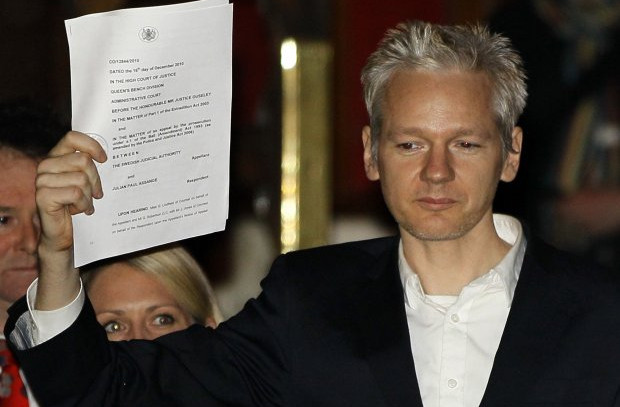
By Staff of Courage Found - Seven years since the issue of an European Arrest Warrant against Julian Assange, and five since Ecuador granted him political asylum, a freedom of information case in the UK is shedding light on what was happening behind the scenes during that period. Assange has spent more than five years isolated in the Ecuadorian Embassy in London, in what a UN Advisory Group ruled was arbitrary detention that contravened international law. Ecuador recognised the political persecution of Assange and granted him the status of political refugee, judging his life to be at grave risk. Despite the UN group’s determination, British police maintain their threat to arrest Assange if he leaves the embassy. Following years of debate over where Assange should be interviewed, Swedish prosecutors finally questioned the detained publisher in the Ecuadorian Embassy at the end of 2016, after which Sweden ultimately dropped its investigation. Italian journalist Stefania Maurizi, who has worked on WikiLeaks releases as a media partner since 2009, has made a series of FOI requests in the different countries involved in the Assange case. In 2015 she managed to get 44 pages released on from Sweden’s prosecutorial authority.

European Parliament Resoundingly Votes To End Glyphosate Use

By Staff of Greenpeace - From 16 December 2022, all remaining uses should be ruled out. This is an important shift in the Parliament's position. While today's vote is for a ban, in 2016 the Parliament had voted for a seven year licence coupled with restrictions on the uses of glyphosate. Franziska Achterberg, Greenpeace EU food policy director said: “The Parliament clearly says that glyphosate has got to go. Although the phase out periods are longer than technically needed, the Parliament’s proposal is a breath of fresh air. More than one million Europeans and now the Parliament are calling for ban on this dangerous chemical. It’s time for the Commission and national governments to hear this message.”

Native American Women Going After Europe’s Banks To Divest From Oil

By Shannan Stoll for The Nation - Last December, calls to defund the Dakota Access pipeline and “Stand with Standing Rock” led individuals to divest millions of dollars from banks extending credit to that project. As cities and tribes got involved, that amount increased to now more than $4 billion. Seattle was the first, then more cities followed, and the movement to defund Big Oil is still growing. In May, Indigenous leaders launched a new campaign, the Treaty Alliance Against Tar Sands Expansion, targeting four proposed tar sands pipelines. The strategy is to stop banks’ financial commitment before ground is broken. One of these projects – TransCanada’s Energy East Pipeline – was terminated earlier this month. Now, the movement that began at Standing Rock has gone global, since much of the DAPL funding came from overseas banks. Some European banks such as BNP Paribas have taken steps to stop funding fossil fuel projects that trample Native peoples’ rights. Others such as Norway’s DNB and ING have done some divesting. Last week, a delegation of Indigenous women returned from a trip to Europe where they met with leaders of financial institutions in Norway, Switzerland, and Germany, the “home bases for several of the world’s largest financial and insurance institutions supporting dangerous extraction developments,” according to the delegation’s news release.

Portuguese Children To Sue European Govs Over Climate Change

By Staff of The Herald - Seven children are to sue European governments in a landmark lawsuit over the impact that climate change is having on their lives. The Portuguese youngsters, some from the Leiria region which has been devastated by wildfires twice this year, are seeking a ruling to force 47 countries to dramatically cut greenhouse gas emissions. And they want the European Court of Human Rights in Strasbourg to order nations to keep remaining fossil fuel reserves in the ground. One of the children spearheading the unprecedented case is 18-year-old Claudia from the Leiria district, who said older generations have a responsibility to stop releasing dangerous pollution. "What worries me the most about climate change is the rise in temperatures, which has contributed to the number of fires taking place in our country," she said. Claudia said she is taking the case "for the children and for the future generations who are not responsible for the current state of the environment". Three days of national mourning are being held in Portugal after scores of people died as deadly forest fires twice hit the country this year. Outbreaks in June claimed 64 lives and another 41 are believed to have been killed in the last week after winds associated with Storm Ophelia fanned flames sparked in drought-like conditions.

Monsanto Banned From Lobbying European Parliament

By Whitney Webb for Mint Press News - Monsanto, accustomed to lobbying its way to favorable treatment by governments the world over, pushed the EU Parliament too far. Banning lobbyists is a rare move, but one the EU turned to after Monsanto decided to play hardball and no-show a key regulatory hearing. Agrochemical giant Monsanto’s fight to renew the chemical license for its most popular herbicide, glyphosate (aka “Roundup”), was dealt a major blow this past Thursday when the European Parliament officially banned lobbyists representing the interests of the corporation. The move came after the controversial corporation and its lobbyists refused to attend a parliamentary hearing regarding allegations that Monsanto had sought to unduly influence studies examining glyphosate’s safety. As a result of the ban, Monsanto officials and those on the company’s payroll will be unable to meet with members of the EU Parliament (MEPs), attend parliamentary committee meetings, or use digital resources available in Brussels or Strasbourg. During fiscal year 2016, Monsanto spent between €300,000 to €400,000 (c. $354,000 to $471,000) on lobbying efforts at the EU Parliament. Given parliament’s looming decision regarding the renewal of glyphosate’s license, it is likely that such spending has been greater over the past year.

In Europe, Hate Speech Laws Used To Suppress Left-Wing Viewpoints

By Glenn Greenwald for The Intercept - TERRORIST ATTACKS, and the emotions they spawn, almost always prompt calls for fundamental legal rights to be curtailed in the name of preventing future attacks. The formula by now is routine: The victims of the horrific violence are held up as proof that there must be restrictions on advocating whatever ideology motivated the killer to act. In 2006, after a series of attacks carried out by Muslims, Republican Newt Gingrich called for “a serious debate about the First Amendment” so that “those who would fight outside the rules of law, those who would use weapons of mass destruction, and those who would target civilians are, in fact, subject to a totally different set of rules.” Of Islamic radicals, the former U.S. speaker of the House argued that they do not believe in the Constitution or free speech, and the U.S. should thus “use every technology we can find to break up their capacity to use the Internet, to break up their capacity to use free speech, and to go after people who want to kill us to stop them from recruiting people.” In an essay defending his remarks, Gingrich argued that “free speech should not be an acceptable cover for people who are planning to kill other people who have inalienable rights of their own,” adding that “the fact is not all speech is permitted under the Constitution.”
assetto corsa mods

Urgent End Of Year Fundraising Campaign

Online donations are back! Keep independent media alive. 

Due to the attacks on our fiscal sponsor, we were unable to raise funds online for nearly two years.  As the bills pile up, your help is needed now to cover the monthly costs of operating Popular Resistance.

Urgent End Of Year Fundraising Campaign

Online donations are back! 

Keep independent media alive. 

Due to the attacks on our fiscal sponsor, we were unable to raise funds online for nearly two years.  As the bills pile up, your help is needed now to cover the monthly costs of operating Popular Resistance.

Sign Up To Our Daily Digest

Independent media outlets are being suppressed and dropped by corporations like Google, Facebook and Twitter. Sign up for our daily email digest before it’s too late so you don’t miss the latest movement news.