Skip to content

Food and Agriculture

The History Of Industrial Agriculture And Its Impact

Rashid wisely begins by sharing the history of the west’s conceptualization of “the way that we think about ourselves and our relation to the material world that exists around us.” He notes that prior to this “man had a much closer relationship to nature than he does today.” He then comments about how this altered conceptual framework in our attitude toward nature has impacted agricultural science and systems that has both negatively effected our lives and has ultimately not been good for humans and the world overall.

Time To Confront Scourge Of Capitalism In Food System

In December, the Kraft Heinz Company launched a multimillion-dollar advertising campaign in response to "prolonged negative perceptions" about the health risk associated with its products. Between 2014 and 2016, Kraft Heinz's net income fell by an astounding 24 percent, due in no small part to concerns about the corporation's nutritional record. Kraft's new "Family Greatly" campaign attempts to dissuade parents from substituting Kraft classics for more nutritious alternatives. Ostensibly, it enjoins parents to cut themselves some well-deserved slack, by reminding them "nobody's perfect." The predatory character of this advertising campaign should come as no surprise given that it has been administered by the Leo Burnett Co. advertising house of the creator of both Marlboro Man and Ronald McDonald, the originator behind both "lifestyle advertising" and "lifestyle diseases."

Enabavi Banishes Chemicals For Rich Organic Rewards

There was a time when Enabavi was just another impoverished village in the arid plains of Warangal in Telengana, full of frustrated farmers, some of whom committed suicide to escape indebtedness and penury. But the tiny village of 52 households refused to give up and banded together to change their fate. In 2006, it created agrarian history by becoming the first village in Telengana to be fully organic and entirely free of pesticides, fertilizers and genetically modified crops. Since then, thousands have visited Enabavi to draw inspiration from its sustainable lifestyle, which was crowned by an appearance on Sathyameva Jayathe, a popular TV talk show hosted by film star Aamir Khan.

Saving The Ecosystem With Wild Backyards

This week on Love (and Revolution) Radio, Sherri Mitchell and Rivera Sun speak with citizen scientist and master gardener Adrian Fisher about reconciliation ecology and how her neighborhood outside Chicago, IL used wild plant gardening to not only connect two wildlife preserves on either side of her, but also a bi-continental migration route for innumerable wild species.

Is Big Food’s Lobbying Arm On The Brink Of Extinction?

At the height of the GMO labeling battle, we not-so-fondly referred to the Grocery Manufacturers Association (GMA) as “Monsanto’s Evil Twin.” Last week, a former GMA executive told Politico that to him, the food industry lobbying group seems like “the dinosaur waiting to die.” For consumers who blame the GMA for engineering the defeat of four state ballot initiatives that would have required labels on genetically engineered foods, then teaming up with Monsanto and some Big Organic brands to ram through federal legislation that stripped states of the right to pass GMO labeling laws, visions of the GMA drawing its last bullying breath are accompanied by the sweet taste of karma. Consumers can take satisfaction in the fact that they’ve played a role in what some say is the diminishing power of the GMA over Washington policy. For many, gratification—even the delayed variety—is worth stirring up trouble in the marketplace if it results in brands cleaning up their acts on issues of health, transparency and accountability. #GMAExit—a ‘burgeoning trend’? On Friday, Dec. 1, Mars, Inc., the sixth-largest privately held food company in the U.S., confirmed reports it will exit the GMA. Mars is the fourth Big Food company to exit GMA this year. The first was Campbell Soup Co., which said in July that it wouldn’t renew its membership. Campbell CEO Denise Morrison said at the time that Campbell’s had found itself “at odds with some of [GMA’s] positions.”

America’s Farmers Killing Themselves In Record Numbers

Rosmann, an Iowa farmer, is a psychologist and one of the nation’s leading farmer behavioral health experts. He often answers phone calls from those in crisis. And for 40 years, he has worked to understand why farmers take their lives at such alarming rates – currently, higher rates than any other occupation in the United States. Once upon a time, I was a vegetable farmer in Arizona. And I, too, called Rosmann. I was depressed, unhappily married, a new mom, overwhelmed by the kind of large debt typical for a farm operation. We were growing food, but couldn’t afford to buy it. We worked 80 hours a week, but we couldn’t afford to see a dentist, let alone a therapist. I remember panic when a late freeze threatened our crop, the constant fights about money, the way light swept across the walls on the days I could not force myself to get out of bed. “Farming has always been a stressful occupation because many of the factors that affect agricultural production are largely beyond the control of the producers,” wrote Rosmann in the journal Behavioral Healthcare. “The emotional well-being of family farmers and ranchers is intimately intertwined with these changes.”

Food Should Be A Commons, Not Capitalism

No consumer, farmer, or activist participates in the food system without also participating in capitalism. To Eric Holt-Giménez, the director of Food First, this is a basic truth that’s too often overlooked in the struggle to change our broken food system. In his new book, A Foodie’s Guide to Capitalism, Holt-Giménez delineates the basic truths of capitalism and how they are connected to the history of our food system. Part history book, part practical guide, the book links many of the injustices associated with food to other inequities, arguing that capitalism fuels and is fueled by oppression. If we better understand “the rudiments of how capitalism operates,” he explains, “we can better grasp why our food system is the way it is, and how we can change it.” Civil Eats spoke with Holt-Giménez recently about the book, the current food crisis, and the future of food activism.

Day 7 Of Countdown To Launch: Carlos Martinez

By Popular Resistance. Carlos Martinez began shooting for his local newspaper at the age of 15 years in Houston, Texas. He worked his way up to being the Chief Photographer and Photo Editor for El Dia. Now, Carlos uses his media skills for social change, particularly when it comes to taking on corporations that profit from unhealthy foods. He is a power house behind the Occupy food movement that grew from the Occupy Wall Street movement and has been exposing the truth behind our food system ever since. Carlos joined forces with Popular Resistance in 2016 when he organized a rally against the TransPacific Partnership (TPP) after several years of attending our national TPP calls.

Investigation Reveals Cannibalism, Hepatitis At Major Turkey Supplier

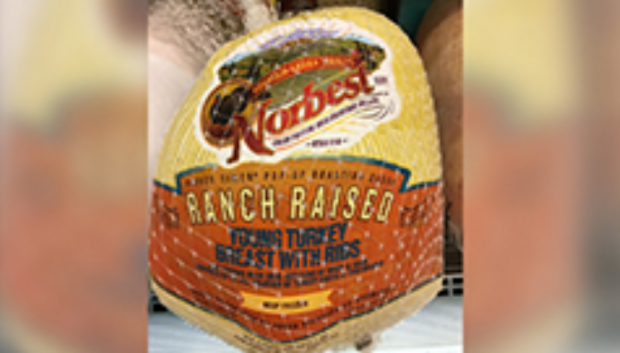
By Michael Sainato and Chelsea Skojec for The Real News Network - On November 20, animal rights network Direct Action Everywhere (DxE) released findings from a 9 month investigation into Norbest LLC, one of the United States’ largest turkey suppliers. Activists entered the Norbest facility, where they found turkeys packed in cramped, filthy, industrial sheds. Records obtained by the group found that turkeys in the facility were contracting hepatitis, and that penicillin was distributed to the turkey populations through water. A video from the investigation revealed intensive confinement of turkeys in Norbest’s facilities. Cannibalism was documented among the turkeys, many struggling with open wounds, tumors, cysts, and other injuries sustained from the living conditions. Dead birds littered the 14 industrial barns in Utah where the group conducted their investigation. The turkeys’ claws and beaks were burned off, a standard industry practice to prohibit the turkeys from clawing and pecking one another to death when they are packed by the thousands in tight-space living conditions. “I think this is a lesson we learned from human history over the past 10,000 years since the beginning of human civilization; unaccountable institutional power is dangerous,” said co-founder of Direct Action Everywhere (DxE), Wayne Hsiang, in an interview with the Real News.

Boycott Driscoll’s This Week In Support Of Workers

From the Boycott Driscolls Campaign. The 80,000 farmworkers in San Quintin, Baja California (Mexico), who are fighting for a collective-bargaining agreement with BerryMex, the Mexican subsidiary of Driscoll's Corporation, need your support. These are workers who toil in semi-slave-like conditions. They want improved wages and working conditions; they want an end to the sexual harassment of women fieldworkers; they want dignity and the recognition of their newly formed independent trade union: SINDJA.

Newsletter – People Act Where US Fails On Climate

By Margaret Flowers and Kevin Zeese. The climate crisis is upon us. It seems that every report on climate conditions has one thing in common: things are worse than predicted. The World Meteorological Report from the end of October shows that Greenhouse Gases (GHGs) are rising at a rapid rate and have passed 400 parts per million. According to Dr. Kevin Trenberth of the National Center for Atmospheric Research, "the changes we’re making today are occurring in 100 years, whereas in nature they occur in 10,000 years." The United States is experiencing a wide range of climate impacts from major hurricanes in the South to unprecedented numbers of wildfires in the West to crop-destroying drought in the Mid-West.

Organic Farm Co-op: World’s Largest Will Use 100% Renewables

By Staff of Co-operative News - Organic Valley is creating a solar partnership that is set to increase overall usage in Wisconsin by 15%, and will incorporate insect-friendly habitat. Organic Valley, America’s largest co-operative of organic farmers, is set to become one of the largest food companies in the world to source 100% of its electricity from renewable sources. The co-op is collaborating with the Upper Midwest Municipal Energy Group (UMMEG) and OneEnergy Renewables to create the solar community partnership. Together, the partners will initiate over 12 megawatts (MW) of solar installations in Wisconsin. The electricity created by this partnership will not only enable Organic Valley to cover 100% of its electric energy needs from renewable sources by 2019 but also increase overall solar energy use in Wisconsin by 15%. Beyond the 12 MW project portfolio, an additional 17-plus MW expected to be constructed as well, resulting in nearly 30 MW of new solar in the region. Organic Valley will purchase renewable energy credits from the solar projects near their headquarters and distribution centre enabling the co-operative to be fully renewable-powered. It is hoped the partnership will deliver lower and more stable electric costs for all participants, alongside the environmental benefits of renewable power. Additionally, the solar community partnership will adopt pollinator-friendly solar standards, which Organic Valley says reflects its commitment to “animals, people and the planet”.

With Roundup On Rocks, Monsanto’s Dangerous New Plan

By Whitney Webb for Mint Press News - So far, this year has not been very kind to Monsanto. First, collusion between Monsanto and the Environmental Protection Agency (EPA) was revealed, whereby the company worked in tandem with the federal agency to discredit independent research conducted by the World Health Organization’s International Agency for Research on Cancer (IARC). The IARC, in 2015, found that glyphosate – the key ingredient in Monsanto’s best-known product, Roundup — most likely causes cancer, a reality that Monsanto had secretly known for decades. Furthermore, Monsanto’s own head toxicologist, Donna Farmer, admitted that he “cannot say that Roundup does not cause cancer” as “we [Monsanto] have not done the carcinogenicity studies with Roundup.” With their lobbyists now banned from the EU parliament amid the body’s deliberations over whether to ban glyphosate entirely, Monsanto seems to be betting on the chemical it hopes will solve its glyphosate troubles — a herbicide known as dicamba. While dicamba has existed for decades, Monsanto has been busy retooling the herbicide, hoping to use it to replace glyphosate – not in response to concerns about glyphosate’s dangerous effects on human health but in order to tackle the development of widespread resistance to glyphosate among weeds in the United States and elsewhere. Monsanto has aggressively marketed its genetically modified, dicamba-tolerant seeds along with its associated herbicide, hoping to capture half of the entire U.S. soybean market by 2019.

Meat Industry Linked To Largest Toxic Dead Zone In US History

By Alexandra Jacobo for Nation of Change - The meat industry, more specifically corporate giants such as Tyson foods, has been directly linked to the environmental catastrophe know as the toxic dead zone. Corporations that are a part of the meat industry use industrial-scale agriculture to raise their animals, which is the number one source of water pollution in the country. Even though there are better solutions available to minimize the impacts on the environment, corporations continue to use resource-intensive and ecologically destructive practices. This pollution has lead to toxic “dead zones”, which are areas where there is no longer enough oxygen for fish to survive. The largest dead zone in the United States is in the Gulf of Mexico. America currently houses five times as many livestock animals as humans. More than a third of America’s agricultural land is dedicated for the production of corn and soy, key ingredients in animal feed products. American humans only consume 10 percent of that which is produced. A new campaign launched by Mighty Earth is aiming to expose Tyson’s role in the process of livestock feed production that causes major pollution – and hold them accountable for it.

‘Appetite For Destruction’: How Feeding Livestock Strains The Planet

By Dharna Noor for The Real News Network - DHARNA NOOR: Welcome to The Real News Network. I'm Dharna Noor joining you from Baltimore. There's a growing awareness that meat production puts a strain on water, land use and habitats, and that it increases greenhouse gas emissions, which drives climate change. But few know the largest environmental impact actually comes from what the animals are being fed. To discuss a recent study on this topic, it's from the UK branch of the World Wildlife Fund, and it's titled Appetite for Destruction. We're joined by Duncan Williamson. He's the food policy manager for WWF UK. Thanks for joining us today, Duncan. D. WILLIAMSON: Well, thank you very much for having me. DHARNA NOOR: So, your recent report says that producing crops to feed livestock is putting an enormous strain on our natural resources, and it's a driving force behind wide scale biodiversity loss. How does livestock feed actually have that kind of impact? D. WILLIAMSON: It's two things. It's the numbers of animals that we're producing globally, and where we are growing the crops to feed them, so for example, we know there's 23 billion poultry animals on the world at the moment. That's enough for three animals each basically, and most of these animals are grown in intensive systems, so they don't have access to the outside, so they have to be fed on something, and their feed tends to be maize and soy.
assetto corsa mods

Urgent End Of Year Fundraising Campaign

Online donations are back! Keep independent media alive. 

Due to the attacks on our fiscal sponsor, we were unable to raise funds online for nearly two years.  As the bills pile up, your help is needed now to cover the monthly costs of operating Popular Resistance.

Urgent End Of Year Fundraising Campaign

Online donations are back! 

Keep independent media alive. 

Due to the attacks on our fiscal sponsor, we were unable to raise funds online for nearly two years.  As the bills pile up, your help is needed now to cover the monthly costs of operating Popular Resistance.

Sign Up To Our Daily Digest

Independent media outlets are being suppressed and dropped by corporations like Google, Facebook and Twitter. Sign up for our daily email digest before it’s too late so you don’t miss the latest movement news.