Skip to content

Food and Agriculture

Home Grown Axis Of Evil

As is now well known, oil is but one of the major interests the US has in Iraq. Because wars are invariably a pretext for economic expansion and opportunities for corporate greed, I knew that US corporate agribusiness was not about to be left out of the picture. My concerns were realized when, in April of 2003, Bush’s Secretary of Agriculture Ann Veneman appointed Daniel Amstutz, formerly an executive of the Cargill Corporation, to oversee the "rehabilitation" of agriculture in Iraq. With Cargill having the reputation of being one the worst violators of the rights and independence of family farmers throughout the world, I knew Iraqi farmers were doomed. Cargill is massive. This corporate agribusiness grain trader has 800 locations in 60 countries and more than 15 lines of business. It is the largest private company in the US and the 11th largest public or private company in terms of sales.

MA Begins Commercial Food Waste Ban

A great starting point for businesses and institutions trying to divert waste from landfills and save money is to reduce the total volume of food waste they generate. Some methods to accomplish this include reducing the number of items offered on menus, providing flexible portioning choices, discounting items close to expiration at supermarkets, ordering and scheduling food deliveries more efficiently and utilizing proper food storage techniques. Another option is to donate surplus food to local food banks or pantries. Not only does this keep valuable materials out of landfills, it also provides consistent sources of food to people in need throughout your community. Learn more about starting a food donation program at your business at recyclingworksma.com/donate

USDA’s Greenlighting Of ‘Agent Orange’ Crops Sparks Condemnation

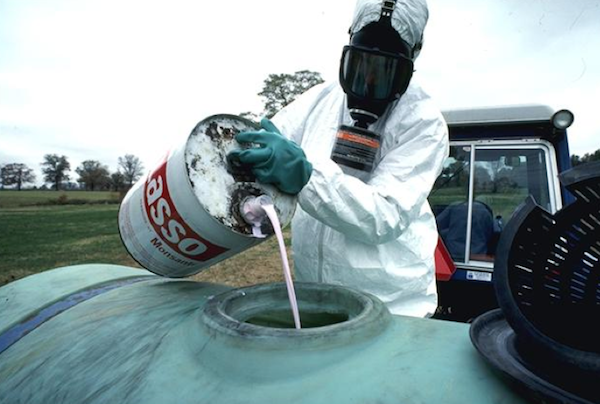
The U.S. Department of Agriculture’s decision this week to approve two new genetically engineered crops is being denounced by watchdog groups as a false solution to herbicide-resistant weeds and a move that threatens human and environment safety alike. The crops are Dow AgroSciences’ Enlist corn and soybeans, engineered to be resistant to its Duo herbicide, which contains 2,4-D, a component of the notorious Agent Orange. 2,4-D has been linked to Parkinson’s, birth defects, reproductive problems, and endocrine disruption. Dow states that the new system will address the problem of weeds that have become resistant to glyphosate, the active ingredient in Monsanto’s widely-used Roundup. Food and environmental safety groups, however, say that it speaks to the failure of the genetically engineered crops strategy that fosters herbicide expansion—profitable for the chemical companies—and ignores the paradigm shifted needed in the industrial agriculture system.

OCA Criticizes Agent Orange Food Crops

FINLAND, Minn. - The U.S. Department of Agriculture (USDA) issued final approval today, over the objections of hundreds of thousands of citizens and more than 50 members of Congress, of Dow AgroSciences Enlist-brand corn and soybeans, genetically engineered to resist massive doses of a combination of 2,4-D- (one of the active ingredients in Agent Orange) and glyphosate (the key ingredient in Monsanto's Roundup herbicide). The Organic Consumers Association (OCA) issued the following statement: "The USDA's approval of these crops is proof that today's destructive, industrial agriculture model, based on a system of GMO mono-crops, is a failure," said Ronnie Cummins, international director of the Organic Consumers Association and its Mexico affiliate, Via Organica.

U.S. Farmworkers and Palestinian Farmers Share Prize

Des Moines, IA — The US Food Sovereignty Alliance (USFSA) is honored to name the Union of Agricultural Work Committees (UAWC) of Palestine, based in Gaza and the West Bank, and Community to Community Development /Comunidad a Comunidad (C2C) of Bellingham, Washington, as co-recipients of the 2014 Food Sovereignty Prize. Their stories of continuous struggle to defend the rights of their communities – farmers and fishers in the occupied Palestinian territories and migrant Mexican farm workers in Washington State, both seeking to produce their own food, on their own land, in their home communities – stand in stark contrast to the storylines coming from agribusiness: that technological changes to crops can meet human needs and resolve hunger.

German Supermarket Giants Demand Return To GMO-Free Fed Poultry

Germany’s top supermarkets, the powerhouses of Europe when it comes to retail, have delivered a blow to the biotech industry by forcing the German poultry industry to return to the use of non-GMO feed. It was announced last Thursday that the German supermarkets, with a broad consensus, recently demanded from the German Poultry Association (ZDG) to stop using GMO feed for both egg and poultry meat production, starting from January 1st 2015. That is the date when the retailers want to receive GMO-free fed products again, meaning poultry suppliers will have to rush to get their feed supply chains free from GMO feed once more. In February this year, the ZDG unilaterally declared that it was stopping using GM-free animal feed, following similar moves by other associations in England and Denmark. The reasons provided for the step after over a decade of GMO-free feeding were an alleged shortage of GMO-free soya, the risk of contamination, and the associated legal uncertainty. However, following close consultation with Brazilian authorities, the German supermarkets have realized that the reasons given by ZDG do not stand up: There is clearly enough Brazilian GMO-free feed in the system to supply Europe’s needs.

Who Else Labels GMOs?

There are currently 64 countries around the world that require the labeling of genetically modified foods. This includes all of the nations in the European Union, Japan, Australia, Brazil, Russia, and China. Most major food producers in America already have labels on their products with GMO ingredients if they sell their products in these foreign markets. GMO labeling requirements like the Oregon Right to Know initiative promote and protect economic development while enabling shoppers to make informed purchasing decisions.

Week Of Actions For Climate Justice In Appalachia

While much of the national climate movement has focused on gearing up towards the People’s Climate March in New York City later this month, frontline communities in Appalachia have been working hard at the local and regional level to address climate justice issues at the source. “Our people have been producing energy for this nation for over 100 years. We are proud of our heritage. But we can’t stay stuck in time,” said Teri Blanton, a long time organizer with Kentuckians For The Commonwealth and The Alliance for Appalachia. “In Appalachia we’ve already seen what climate change can do — denuded and destroyed landscapes, poisoned water and a corrupt political system — it’s all together and it’s all connected. We have seen first hand that what they do to the land, they do to the people.” One of the key issues Appalachian leaders are organizing communities around is water pollution; lack of access to safe water has been an issue for decades in the region, a grim irony considering the area is a temperate rainforest.

How One Hospital Is Using Organic Produce To Help Heal Patients

In 431 B.C. Hippocrates said, “Let food be thy medicine and medicine be thy food” More than 2500 years later, we are inundated with advertisements boasting the latest, greatest cure-all super drug. From a young age, we learn that it doesn’t matter how or what we eat, there is a quick fix around the corner for whatever ails us—whether we’re obese, have high blood pressure or bad cholesterol—just to name a few of the issues plaguing our society. It now seems almost revolutionary to think that we can change our health by changing the food we eat. But, one hospital in Pennsylvania thought just that. In 2014, Rodale Institute, in partnership with St. Luke’s University Health Network, launched a true farm to hospital food program. The Anderson Campus at St. Luke’s has more than 300 acres of farmland, much of which had historically been farmed conventionally with crops like corn and soy. The hospital administration recognized the impact that providing fresh, local organic produce could have on patient health and approached Rodale Institute to transition the land to organic and farm vegetables to be used in patient meals as well as in the cafeteria.

Old Barns Good For More Than Reclaimed Wood

Jeff Marshall rolls along the Pennsylvania Turnpike, counting barns on the horizon — 50 so far today, many of them disintegrating. Marshall heads the National Barn Alliance, a nonprofit that works with advocacy groups across the country. He’s speaking on the phone about how many barns have been lost in recent years, as farmers can no longer afford to maintain them, and federal and local funds for restoration dwindle. According to the American Farmland Trust, we’ve lost 72 million acres of farmland since 1982, with the trend expected to hasten as farmers retire and die. How many barns there once were and how many remain isn’t really known. But Marshall says a salvation of sorts is taking place. From Texas to Maine, smaller, sustainable farms are finding new uses for their noble barns — and we’re not talking about the weddings that have made both farmers and their neighbors crazy in recent years. These are agricultural uses. A former dairy barn becomes a cheese-making operation, a shelter for draft horses, or a winery. A small whelping barn becomes a place to grow mushrooms, micro greens, and spinach. “Right now I’m looking out the window, just east of Harrisburg, and guess what I’m passing?” Marshall exclaims. “A barn that is Santa’s Workshop!” The resignation is evident in his voice: While the North Pole elf theme is far removed from farming, at least a barn is saved.

America’s Growing Food Inequality Problem

Income inequality isn't the only gap the U.S. needs to mind these days; the country is amassing a sad and expensive discrepancy between what its poor and rich eat. America's wealthiest people are eating better, while its poorest are eating worse, concludes a new study published this week in The Journal of the American Medical Association Internal Medicine, which measured the quality of diets among American adults between 1999 and 2010. "Socioeconomic status was associated strongly with dietary quality, and the gaps in dietary quality between higher and lower SES [socioeconomic status] widened over time." the study said. On the one hand, the analysis found that the American diet, on the whole, improved during the observed period. "Our study suggests that the overall dietary quality of the U.S. population steadily improved from 1999 through 2010," the study said, suggesting that Americans are likely responding to recent nutrition education efforts. That's consistent with a number of macroeconomic food trends, including America's shift away from soda.

The Share Economy Creating Sustainable Food Systems

At the end of the first week of August 2014, two different crowdfunding pitches closed almost simultaneously. FarmDrop, based in the UK, had raised three quarters of a million pounds, which was not far from double their original goal, from 359 investors. Open Food Network, based in Australia, had raised Aus$35,877 from 398 investors. Peering through the windows opened up by these two initiatives gives a clear view of rather different trajectories of the burgeoning "sharing economy." Crowdfunding’s heady mix of creative expression, cultivating an audience of potential investors, media-savvy PR pitch, and technical provision of ‘due diligence’ information about business plans and risk seems appropriate to the somewhat contradictory ethos surrounding the spread and growth of the sharing economy. As William Deresiewicz argued in the New York Times in 2011 in "Generation Sell": "Today’s ideal social form is not the commune or the movement or even the individual creator as such; it’s the small business.... The small business is the idealized social form of our time. Our culture hero is not the artist or reformer, not the saint or scientist, but the entrepreneur. Autonomy, adventure, imagination: entrepreneurship comprehends all this and more for us. The characteristic art form of our age may be the business plan."

Oil Before Food: As Oil Trains Roll, Food Rots

The furious pace of energy exploration in North Dakota is creating a crisis for farmers whose grain shipments have been held up by a vast new movement of oil by rail, leading to millions of dollars in agricultural losses and slower production for breakfast cereal giants like General Mills. The backlog is only going to get worse, farmers said, as they prepared this week for what is expected to be a record crop of wheat and soybeans. “If we can’t get this stuff out soon, a lot of it is simply going to go on the ground and rot,” said Bill Hejl, who grows soybeans, wheat and sugar beets in the town of Casselton, about 20 miles west of here. Although the energy boom in North Dakota has led to a 2.8 percent unemployment rate, the lowest in the nation, the downside has been harder times for farmers who have long been mainstays of the state’s economy.

Act Now To Stop Agent Orange Food

On August 6 (2014), the U.S. Department of Agriculture (USDA), over the objections of 50 members of Congress, and more than 500,000 citizens, scientists, farmers and health professionals, moved one step closer to approving Dow’s new Enlist-brand soy and corn crops. We have until September 8 to convince the USDA to reject Dow’s “Agent Orange” crops. Please sign the petition today! Dow’s new GMO crops are engineered to withstand massive doses of Enlist Duo herbicide, concocted from a combination of 2,4-D (used to make Agent Orange) and glyphosate, the key ingredient in Monsanto’s Roundup. The USDA has admitted that approval of Dow’s new crops will cause the use of 2,4-D to skyrocket from 26 million pounds to 176 million pounds. Scientists predict worse. Dow’s 2,4-D is already the seventh largest source of dioxins in the U.S. It’s been linked to a host of ills, including birth defects, infertility, allergies, Parkinson’s disease, endocrine disruption and cancer. It’s unconscionable that the USDA would approve these crops. Yet the agency is is on the verge of doing just that. Unless we stop it. Thanks for taking action!

What’s Holding Back The Organic Revolution?

There is growing alarm among conscious consumers and activists that our 21st Century food and farming system, and the government-corporate cabal that that props it up, is spiraling out-of-control. Chemical-intensive, energy-intensive, climate-destabilizing factory-farmed and genetically engineered food and farming are destroying not only our health and our environment, but also the soil fertility, biodiversity, and climate stability that make civilization possible. U.S. sales of certified organic products hit $35 billion in 2013. Given that the organic products industry has seen four decades of steady growth, at a rate of 10-15 percent, sales will likely hit $40 billion in 2014. This amounts to approximately 5 percent of all grocery store purchases, 10 percent of retail fruits and vegetables, and over 20 percent of baby food. Organic sales are increasing 10-15 percent annually, more than five times the anemic 2 percent growth rate of conventional (i.e. chemical) foods.
assetto corsa mods

Urgent End Of Year Fundraising Campaign

Online donations are back! Keep independent media alive. 

Due to the attacks on our fiscal sponsor, we were unable to raise funds online for nearly two years.  As the bills pile up, your help is needed now to cover the monthly costs of operating Popular Resistance.

Urgent End Of Year Fundraising Campaign

Online donations are back! 

Keep independent media alive. 

Due to the attacks on our fiscal sponsor, we were unable to raise funds online for nearly two years.  As the bills pile up, your help is needed now to cover the monthly costs of operating Popular Resistance.

Sign Up To Our Daily Digest

Independent media outlets are being suppressed and dropped by corporations like Google, Facebook and Twitter. Sign up for our daily email digest before it’s too late so you don’t miss the latest movement news.