Skip to content

Inequality

Pope: The Bible Demands The Redistribution Of Wealth

Pope Francis called for “the legitimate redistribution of economic benefits” on Friday, arguing that the Bible demands an economic system that cares for the “poorest and those most excluded.” Francis made the comments while speaking before a gathering of several United Nations agency leaders, including U.N. Secretary-General Ban Ki-moon. As he reflected on the U.N.’s target for Future Sustainable Development Goals, the first Latin American pope asked those present to resist participating in an “economy of exclusion” and to strive to have “a real impact on the structural causes of poverty and hunger.” “In the case of global political and economic organization, much more needs to be achieved, since an important part of humanity does not share in the benefits of progress and is in fact relegated to the status of second-class citizens,” Francis said. Francis grounded his argument in the biblical story of Zacchaeus, a rich (and likely corrupt) tax collector who dramatically altered his economic behavior after encountering Jesus Christ.

The Six Principles Of The New Populism

More Americans than ever believe the economy is rigged in favor of Wall Street and big business and their enablers in Washington. We’re five years into a so-called recovery that’s been a bonanza for the rich but a bust for the middle class. “The game is rigged and the American people know that. They get it right down to their toes,” says Senator Elizabeth Warren. Which is fueling a new populism on both the left and the right. While still far apart, neo-populists on both sides are bending toward one another and against the establishment. Left and right-wing populists remain deeply divided over the role of government. Even so, the major fault line in American politics seems to be shifting, from Democrat versus Republican, to populist versus establishment — those who think the game is rigged versus those who do the rigging.

Fighting The Big Apple’s Big Inequality Problem

New York City can sometimes feel like ground zero for the battle over inequality. Up until a few months ago, its mayor was one of the world's richest men; it is home to Wall Street and movie stars, and it seems as though every oligarch from every country in the world has an apartment here. Here, too, are the millions of working people who make the city run, and all too many of those working people are barely making enough to get by. In her introduction to the new book New Labor in New York, out now from Cornell University Press, sociologist Ruth Milkman points out that while New York has the nation's highest union density, the city also has one of the highest levels of income inequality among large cities. It is against this background that worker centers and other forms of non-union labor organizing have flourished, won victories, hit setbacks and managed to grow. And it is against that background that Milkman and her colleague Ed Ott, both professors at the City University of New York's Joseph S. Murphy Institute for Worker Education and Labor Studies, decided to teach a course that would ask students at the Murphy Institute and the CUNY Graduate Center to write an in-depth profile of one worker center or labor organization and its innovations. After two semesters of field research, study, and collaborative workshopping, these profiles were collected into the book. Taken together, they make up a valuable resource for evaluating today's labor organizing, its successes and failures.

The People Are With Us

It is a persistent belief among many in the political and media establishments that the United States is a “center-right nation” which finds progressives to be far too liberal for mainstream positions of power. If you look purely at electoral outcomes, those who assert this appear to have a fairly strong point. The last several decades of federal politics have been dominated by center-right policies and truly left wing politicians have been largely marginalized (ex. Bernie Sanders). Even Clinton and Obama—the last two Democratic presidents who, theoretically, should be leftists—are corporate-friendly moderates who have triangulated during negotiations with Republicans to pass center-right policy compromises (ex. Obama’s Heritage Foundation inspired ACAor the Clinton Defense of Marriage Act compromise). While electoral results support the idea of a center-right USA, looking beyond electoral politics—which involve a mixture of policy choices, party politics, fundraising, and propaganda—and focusing purely upon raw policy preferences, leaves us with an entirely different picture -- the people are progressive and leaning left on almost all critical issues.

Fast-Food CEOs Making 1,200 Times Workers’ Wages Are Clueless

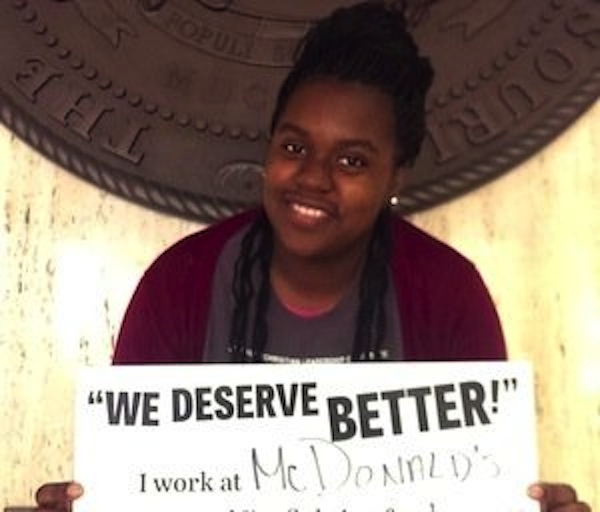
A grand canyon of inequality exists between fast food CEOs and the workers who make their corporate and personal fortunes. In the past decade, fast-food CEOs’ wages have increased more than 400 percent, while workers wages increased 0.3 percent, according to a new report by Demos. The result is that the CEO-to-worker pay ratio is now 1,200-to-one, with the average fast food CEO salary at $23.8 million in 2013 and the average worker salary at $19,000. This ratio is more than quadruple what’s typically found in the nation’s economy, which continues on its path of increasing economic disparity. Another new report by the National Employment Law Project found that there are now 1.85 million more low-wage jobs than before the Great Recession, but 2 million fewer jobs in mid- and high-wage industries, confirming the slide down the economic ladder. While we can comprehend the big picture behind these figures, it is another thing to see what this inequality looks like for people stuck in low-wage jobs. Below are the experiences of three McDonalds workers who are trying to survive, while fighting for higher wages and a union.

Snapshots Of A Plutocracy In Decline: The United States

As America's new economy starts to look more like the old economy of the Great Depression, the divide between rich and poor, those who have made it and those who never will, seems to grow ever starker. I know. I’ve seen it firsthand. Once upon a time, I worked as a State Department officer, helping to carry out the occupation of Iraq, where Washington’s goal was regime change. It was there that, in a way, I had my first taste of the life of the 1%. Unlike most Iraqis, I had more food and amenities than I could squander, nearly unlimited funds to spend as I wished (as long as the spending supported us one-percenters), and plenty of U.S. Army muscle around to keep the other 99% at bay. However, my subsequent whistleblowing about State Department waste and mismanagement in Iraq ended my 24-year career abroad and, after a two-decade absence, deposited me back in “the homeland.” I returned to America to find another sort of regime change underway, only I wasn't among the 1% for this one. Instead, I ended up working in the new minimum-wage economy and saw firsthand what a life of lousy pay and barely adequate food benefits adds up to. For the version of regime change that found me working in a big box store, no cruise missiles had been deployed and there had been no shock-and-awe demonstrations. Nonetheless, the cumulative effects of years of deindustrialization, declining salaries, absent benefits, and weakened unions, along with a rise in meth and alcohol abuse, a broad-based loss of good jobs, and soaring inequality seemed similar enough to me.

A May Day 2014 Lament For American Labor

Today, May 1, 2014, is International Labor Day. It is worth summing up how well American workers—and their unions—have fared over the past year; since the so-called economic recovery began in mid-2009; and for the recent decades preceding. What’s happened to jobs, wages and incomes, health and retirement security, and other indicators of the quality of life for the more than 100 million non-supervisory wage and salary earners—the core of the working class in America—over the past decade and especially since 2009? What a summary of the facts tell us is as follows: *While jobs have been created for managers, supervisors, and highly skilled business and technical professionals since 2009, job levels for the core of the American working class—the category of the more than 100 million ‘Production & Non-Supervisory Workers’—is still 11 million below 2007 pre-recession levels. Manufacturing jobs are still 1.4 million fewer today than in 2007, and Construction jobs 1.3 million fewer.

A Government Of The Rich, 3% Are Millionaires But They Dominate Government

People who care about American democracy have recently been paying a lot of attention to new research by Martin Gilens and Benjamin Page, which shows that for decades wealthy Americans and business interests have consistently gotten their way in public policy – even when their views conflict with what the vast majority of Americans want. These troubling findings have many observers asking urgent questions: Why do the rich have so much influence in politics? And is there anything we can do about it? Many people have pointed the finger at two culprits. They point at the political participation problem that poor and working-class people vote less than wealthier and white-collar Americans. And they point at money in politics, at the billions spent on lobbying and political campaigns. Those are important problems, but we also have to remember another big reason why the wealthy have more influence in politics: Wealthy people are the ones in office themselves. If millionaires in the United States formed their own political party, that party would make up just 3 percent of the country, but it would have a majority in the House of Representatives, a filibuster-proof super-majority in the Senate, a 5-4 majority on the Supreme Court and a man in the White House.

The Global Transition Tipping Point Has Arrived

Last Friday, I posted an exclusive report about a new NASA-backed scientific research project at the US National Socio-Environmental Synthesis Center (Sesync) to model the risks of civilisational collapse, based on analysis of the key factors involved in the rise and fall of past civilisations. The story went viral and was quickly picked up by other news outlets around the world which, however, often offered rather misleading headlines. 'Nasa-backed study says humanity is pretty much screwed', said Gizmodo. 'Nasa-funded study says modern society doomed, like the dodo', said the Washington Times. Are we doomed? Doom is not the import of this study, nor of my own original research on these issues as encapsulated in my book, A User's Guide to the Crisis of Civilisation: And How to Save It. Rather what we are seeing, as I've argued in detail before, are escalating, interconnected symptoms of the unsustainability of the global system in its current form. While the available evidence suggests that business-as-usual is likely to guarantee worst-case scenarios, simultaneously humanity faces an unprecedented opportunity to create a civilisational form that is in harmony with our environment, and ourselves.

Rally to Raise Minimum Wage, Cut Corporate Tax Breaks

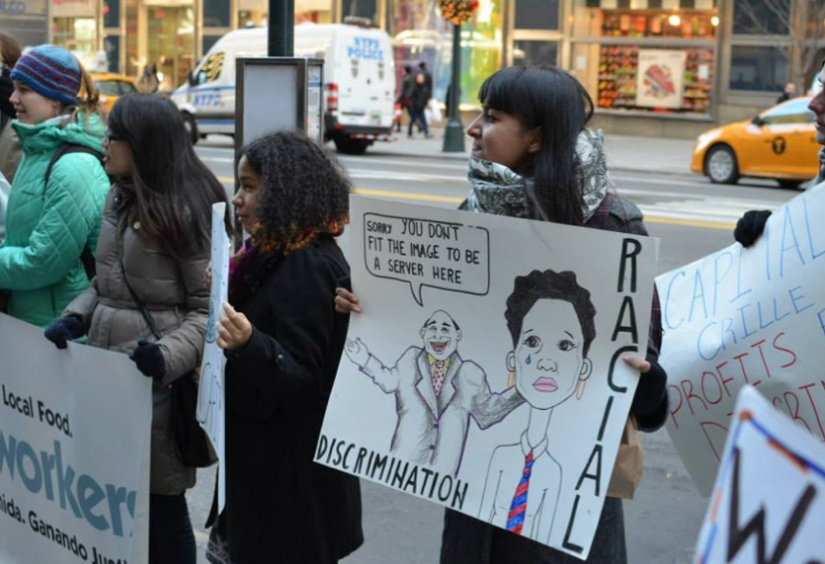
As Congress returned from a two-week recess, more than 1,500 people gathered at the Capitol to protest the growing chasm between rich and poor Americans, calling on Congress to stand with everyday people instead of corporate special interest groups. Immediate demands included a raise in the minimum wage and cuts to corporate tax breaks, both key causes of rising economic inequality and the result of Congressional lawmakers who cater to out of control corporate interests. “Today we came together and marched 1,500 strong to take back the capitol by saying NO to poverty wages and NO to corporate giveaways. Congress must put workers and their families before profits. We're showing that our labor and our voices matter, and together we're fighting for a new economy that will work for us all,” said Gilda Blanco, a member of the National Domestic Workers Alliance (NDWA). Together, members from a range of worker and economic justice groups — including National People’s Action (NPA), Restaurant Opportunities Centers (ROC) United, the National Domestic Workers Alliance, and OurDC — came together as part of a broad and growing movement to underscore the wide-spread damage big corporations do to everyday, working people.

40% Of US Workers Now Earn Less Than 1968 Minimum Wage

Are American workers paid enough? That is a topic that is endlessly debated all across this great land of ours. Unfortunately, what pretty much everyone can agree on is that American workers are not making as much as they used to after you account for inflation. Back in 1968, the minimum wage in the United States was $1.60 an hour. That sounds very small, but after you account for inflation a very different picture emerges. Using the inflation calculator that the Bureau of Labor Statistics provides, $1.60 in 1968 is equivalent to $10.74 today. And of course the official government inflation numbers have been heavily manipulated to make inflation look much lower than it actually is, so the number for today should actually be substantially higher than $10.74, but for purposes of this article we will use $10.74. If you were to work a full-time job at $10.74 an hour for a full year (with two weeks off for vacation), you would make about $21,480 for the year. That isn’t a lot of money, but according to the Social Security Administration, 40.28% of all workers make less than $20,000 a year in America today. So that means that more than 40 percent of all U.S. workers actually make less than what a full-time minimum wage worker made back in 1968. That is how far we have fallen.

Now That We Know The Wealth Divide Grows, What Do We Do?

When a product sells phenomenally well, as Thomas Piketty’s new book is currently doing, popular economic theory says that means one of two things: either it’s filling a substantial unmet demand, or the product is exceptionally well executed. In the case of “Capital in the Twenty-First Century,” both statements are true. We are told that “Capital” is now at the top of the Amazon sales charts, outselling even mass-market novels with movie tie-ins like “Divergent.” That kind of meritocratic success story is, as Piketty’s work demonstrates, increasingly rare. Piketty has given us a superior product. He has brilliantly and eloquently analyzed the crisis of inequality that threatens the global economy. The question now is, what do we do about it? There’s a certain irony in the fact that this book, rooted in historical economic principles and concerned with the threat of oligopoly wealth, is putting a few more dollars in the pocket of Jeff Bezos, Amazon’s owner. But these surprising sales figures tell us something very important: People are yearning for an explanation of the dire economic straits in which they find themselves.

Homelessness And Extreme Inequality In America

Homelessness is on the rise. Despite the fact that we have more than enough houses to adequately shelter our population, three and half million homeless men, women, and children live and sleep in the streets. Imagine how it feels to be freezing to death, looking at one of the 18.5 million vacant houses in America . . . homes that are owned by banks that bought the foreclosed properties with bailout money that came from our taxpayer dollars. It rankles the soul. On Occupy Radio this week, homeless advocate Jean Stacey likened the unhoused to the canaries in the coal mine of our nation. They are signs that something has gone terribly wrong. (Listen here) Some argue that the something is the economy, but I’d say there’s nothing wrong with the economy as far as the wealthy are concerned. 95% of the 2009-2012 income gains dove into the pockets of the wealthy 1%. The rest of America saw little sign of economic recovery. For many, poverty is just one step closer.

Income Inequality Institute Will Pay Paul Krugman $25,000 Per Month

In late February, the City University of New York announced that it had tapped Princeton economist and New York Times blogger Paul Krugman for a distinguished professorship at CUNY’s Graduate Center and its Luxembourg Income Study Center, a research arm devoted to studying income patterns and their effect on inequality. About that. According to a formal offer letter obtained under New York’s Freedom of Information Law, CUNY intends to pay Krugman $225,000, or $25,000 per month (over two semesters), to “play a modest role in our public events” and “contribute to the build-up” of a new “inequality initiative.” It is not clear, and neither CUNY nor Krugman was able to explain, what “contribute to the build-up” entails. It’s certainly not teaching. “You will not be expected to teach or supervise students,” the letter informs Professor Krugman, who replies: “I admit that I had to read it several times to be clear ... it’s remarkably generous.” (After his first year, Krugman will be required to host a single seminar.)

Noam Chomsky: Ecology, Ethics, Anarchism

There can be little doubt about the centrality and severity of the environmental crisis in the present day. Driven by the mindless "grow-or-die" imperative of capitalism, humanity's destruction of the biosphere has reached and even surpassed various critical thresholds, whether in terms of carbon emissions, biodiversity loss, ocean acidification, freshwater depletion, or chemical pollution. Extreme weather events can be seen pummeling the globe, from the Philippines - devastated by Typhoon Haiyan in November of last year - to California, which is presently suffering from the worst drought in centuries. As Nafeez Ahmed has shown, a recently published study funded in part by NASA warns of impending civilizational collapse without radical changes to address social inequality and overconsumption. Truthout's own Dahr Jamail has written a number of critical pieces lately that have documented the profundity of the current trajectory toward anthropogenic climate disruption (ACD) and global ecocide: In a telling metaphor, he likens the increasingly mad weather patterns brought about by ACD to an electrocardiogram of a "heart in defibrillation."
assetto corsa mods

Urgent End Of Year Fundraising Campaign

Online donations are back! Keep independent media alive. 

Due to the attacks on our fiscal sponsor, we were unable to raise funds online for nearly two years.  As the bills pile up, your help is needed now to cover the monthly costs of operating Popular Resistance.

Urgent End Of Year Fundraising Campaign

Online donations are back! 

Keep independent media alive. 

Due to the attacks on our fiscal sponsor, we were unable to raise funds online for nearly two years.  As the bills pile up, your help is needed now to cover the monthly costs of operating Popular Resistance.

Sign Up To Our Daily Digest

Independent media outlets are being suppressed and dropped by corporations like Google, Facebook and Twitter. Sign up for our daily email digest before it’s too late so you don’t miss the latest movement news.